
I don’t usually write about automobiles.
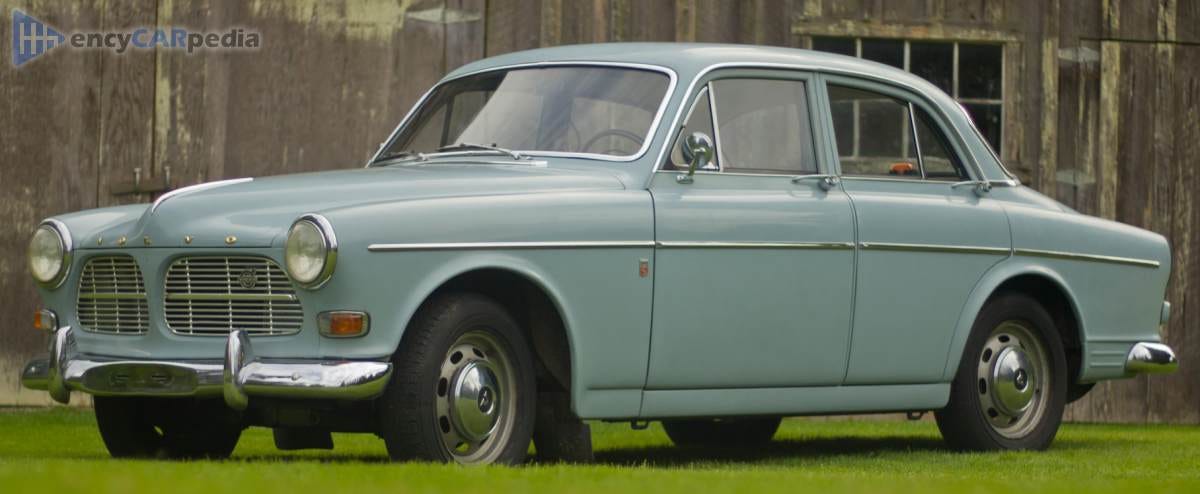
The first car I owned was a powder blue 1966 Volvo 122S, shaped like a miniature ’40 Ford. With two carburetors, 30 mpg, and bucket seats, what it lacked in outward pizzazz was made up for by a cool lean-back-and-cruise style. I’m pretty sure I bought it in 1977 for $225.
My current ride is a black 2023 Hyundai Kona Limited EV. It’s blocky and pedestrian, but with Harman Kardon sound, a 254-mile range, and a smooth, quick engine, it’s already a lock for my hall of fame.
In between I’ve commanded another Volvo, a Saab, a Jeep, two Toyotas, a Datsun, three BMWs, a Jag, a Mazda, a Dodge, a Chevy, and a Chrysler. Or put another way, one one-seater (the Jeep had been a postal vehicle), eight sedans, a pickup truck, two minivans, and two station wagons. Plus a Harley dirt bike which I sold the day after I rode it drunk. It was either drinking or motorcycling.
I’m writing this for the kids, who didn’t know cars in the Seventies, Eighties, and Nineties, before the precise robotic factories of the modern age.
Cars used to break down.
You just never knew.
We grew up a little more fatalistically in the Fifties and Sixties, stranded on the shoulders of roads with the hood up while Dad despaired, smoke poured out, and Mom handed us graham crackers from her front seat stash.
Tires blew, radiators sprung leaks, water pumps failed, gaskets and belts shredded, fuel lines and spark plugs clogged, mufflers fell off, oil sprayed, fuses blew, wires melted, engines knocked, and god help you if a piston ring wore out. With the exception of that last, the feared timing belt of our days, all these disasters happened to every car, usually within the first 60,000 miles. Plus before sunset you couldn’t get a good AM radio signal ten miles outside of town.
Standing around and waiting for a wrecker was routine. You prayed for a Good Samaritan to stop and agree to tell the service station up the road to send a tow truck. Or else Dad trudged off over the horizon. Gas stations were manned by mechanics, and just about every one sported a tow truck parked nose out, ready to rescue. Back on the shoulder, a couple of balls and a Frisbee were kept in the trunk for emergency amusement. Later, as cruising teenagers stuck at the side of the road we’d hustle our baggy of weed into the fringe woods in case a cop stopped to get us help. I missed my girlfriend’s graduation from college because my yellow Volvo 142’s engine with 114,000 miles on it seized. People were late a lot and a breakdown was a believable excuse.
This was all completely normal. Rich people were as conditioned to it as poor people; fancy cars were the most finicky. Everyone knew that Italian cars were fried by unreliable electrical systems, German cars blew gaskets, Cadillac suspensions collapsed, and while Japanese cars were better built they were too small.
Everything automotive-wise started to change in 1974 when the Mideast oil cartel raised gas prices by controlling supply. Gas lines were bad, but dollar-per-gallon fuel was worse. Now these Japanese light cars with high miles per gallon suddenly made sense. Detroit scrambled to imitate them, but their first efforts were laughably inferior. My favorite was the anemic, three-cylinder Chevy Chevette owned by my friend Bob. A 40-horsepower VW Bug could get up a hill faster than the Chevette. Plus the Chevette broke down a lot even by 1970s standards. (Bob had a thing for brie cheese, which sour smell permeated the Chevette’s plastic; he also played a single Carpenters eight-track on permanent repeat. I never complained; cars were the only freedom a young man had, and if your buddy owned one, you accepted his bad taste in accompaniments.)
The motorsport press compared the US and Japan econoboxes and pointed out that the imports were far more effective at getting you where you wanted to go. But between brand loyalty, built-in-America jingoism, and young buyers interested more in style than substance, it took thirty years for American cars to catch up in reliability. Service stations held on to their tow trucks. And owners of Japanese cars knew not to spoil the Detroit party by mentioning that their cars didn’t break.
Neither of my Toyotas, both Eighties cars, ever broke down. Every other car of mine built before the 21st Century aged poorly, until my first BMW, a 1999 740, which was last seen at 245,000 miles without a serious service problem. For all I know it’s still going. That tank was bulletproof.
So if you don’t know cars before the turn of this century, you might think it’s in the DNA of cars to run and run, and repairs are the fault of negligent owners.
Unfortunately, I have a long memory.
A little over a year ago, I aged out of my wonderful 2014 Chevy Spark, built in Korea. Spiffy in all other respects if a bit basic and slow, known as the Half-A-Car for its ability to squeeze into non-spaces, the Spark’s cramped cockpit severely tested my 35-inch inseam. As I neared 70 years old, it got harder to unbend my stiffened legs when emerging from the car. So I researched rides with superior driver legroom.
Eventually I settled on a BMW 530e, which is a bells-and-whistles plug-in hybrid. What the hell, I thought. Let’s have fun. It happened that I had just received the biggest book advance of my life. Did you know that Raymond Carver blew his first big advance, from Scorsese to draft a script based on The Brothers Karamazov, on a brand new Mercedes? I did.
BMWs are designed to appeal to aggressive young men who like to take curves too fast, smash down on jackrabbit starts, and blast along two-lane blacktops at ninety. Which my 530e could do; the manufacturer even added a special fun button that re-tuned the engine to add forty horsepower for 10-second stretches.
Every setting can be adjusted on a BMW, and if you plug in a reader, all sorts of hidden settings are unlocked. A rainbow effect can be added to the interior lighting, the seat warmer can automatically come on at the ambient temperature of your choice, and the ride can be softened or hardened exactly to your liking if you have the adaptive suspension.
Motorheads don’t build BMWs. Electricians and programmers do. Hundreds of relays and monitors and controllers are hidden under the trunk, behind the dashboard, in the doors, and around the engine compartment.
The more I enjoyed fiddling with the settings and customizing my ride, the more worried I got. Let’s say an average car has a couple of hundred points of failure with a dozen that might be catastrophic. A BMW seems to have thousands of the former and several dozen of the latter. As a BMW owner you can run an online diagnostic report that will typically return as many as fifty inconsequential failures in a month, usually monitors briefly noting that a particular brake or loudspeaker sensor hadn’t operated for a fraction of a second.
The more I drove the car, the more it seemed to resemble the automobiles I grew up with, a steady anticipation of trouble. This was irrational; the car never broke down and none of its visible systems failed even for a nanosecond. But by the third month I was online daily, investigating when things would start falling apart. This, despite having purchased breakdown insurance that would take me safely to 2029. I discovered a world of 530e haters in pitched Reddit battles with its rabid defenders. They all knew so much more than me; how could I be so naïve to buy a car that was designed to be coddled, not driven? Wretched a/c compressors, flimsy CV boots, buggy head units. No repair under $1,000, some over $5,000. At least when one of the carburetors blew on my Volvo 122s in 1973, I could buy a rebuild kit for fifteen dollars and repair it myself. BMW technicians have the training of microsurgeons.
But as it turned out, it was something else entirely that closed my mind to the joy that had accompanied the first weeks of owning this supercar. One day when we were returning from a No Kings rally, folded softly into the sleek cabin, blasting the Dead through its souped-up sound system, I mentioned to Annie that I might slap on an EAT THE RICH bumper sticker.
“You can’t,” she said.
“Why not?”
“You can’t put an EAT THE RICH bumper sticker on a BMW.”
From that moment I recognized that I was a douche driving a douche car.
I wore shades and kept a cap with a big, low brim on when I drove through town, like Larry David midway through a Curb episode. I got my chores done and scuttled home. No more joy rides.
Within weeks I had replaced the mighty 530e with my little Kona Limited EV. Which can park in almost as tight spaces as my Chevy Spark, now driven by our grandson. The modest Kona has a nearly as good sound system as the Bimmer, more sprightliness, far better sightlines, smoother driving assistance, as comfortable seats, and all the controls and settings that a regular human being might need and no more. Only South Korea haters (are there any?) would call me a douche for driving it, and I can wave at my neighbors. There’s a better than 50-50 chance it won’t break down tomorrow.
Comments
Nothing yet. Say the first thing.
Sign in to join the conversation.