
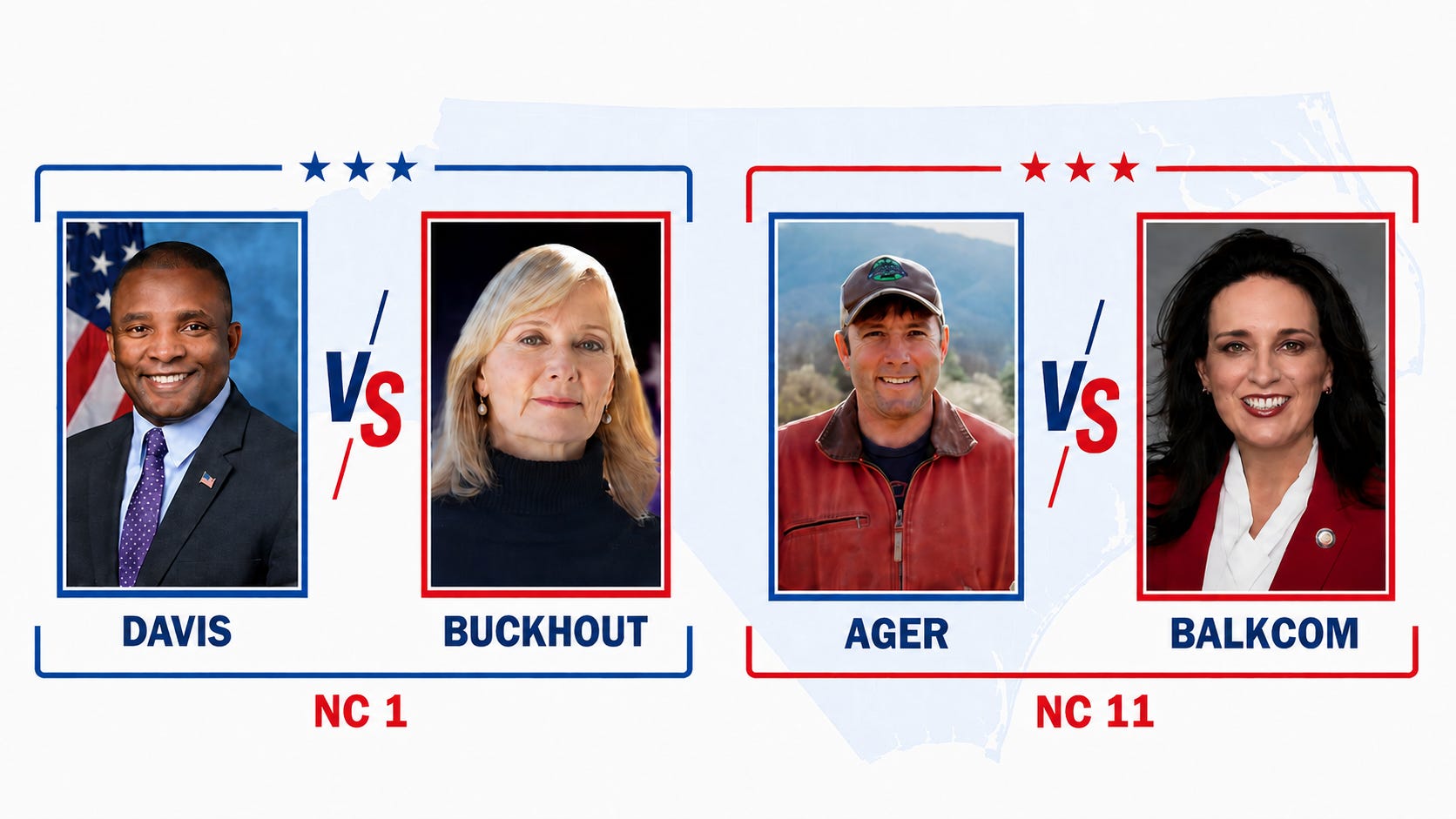
Despite being labeled “competitive,” Republicans have solid advantages in two North Carolina House races that have caught national attention.
There’s a rematch in the east, and a political reset in the mountains.
NC-1 is the easier case to understand. Democratic Rep. Don Davis edged out Republican Laurie Buckhout in 2024. Now he is defending the eastern district that is considerably more Republican than the one he won.
NC-11 is messier. Donald Trump carried the western North Carolina district by nearly 9.5 points in 2024. Republican Rep. Chuck Edwards won by more than 13. Then, Edwards dropped his reelection bid, forcing local Republicans to replace him with state Rep. Jennifer Balkcom.
That gave Democrat Jamie Ager an opening. The district didn’t suddenly flip to the Democrats.
Davis beat Buckhout in 2024 with 49.52 percent of the vote to her 47.84 percent. Libertarian Tom Bailey took another 2.64 percent. It was a close race before legislators touched the district again.
The new map makes Davis’ situation tougher.
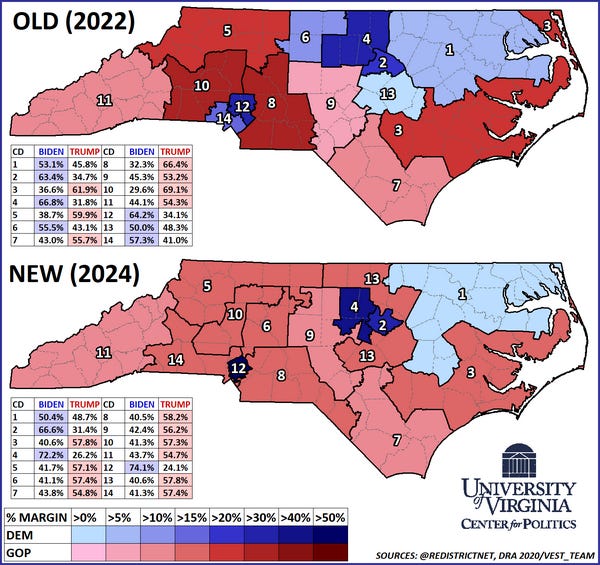
Several counties from his old district are gone, replaced by more Republican territory along the coast. After redistricting, NC-1 moved from roughly even politically to about R+8.
That is a substantial change for a Democrat who barely won under the old lines.
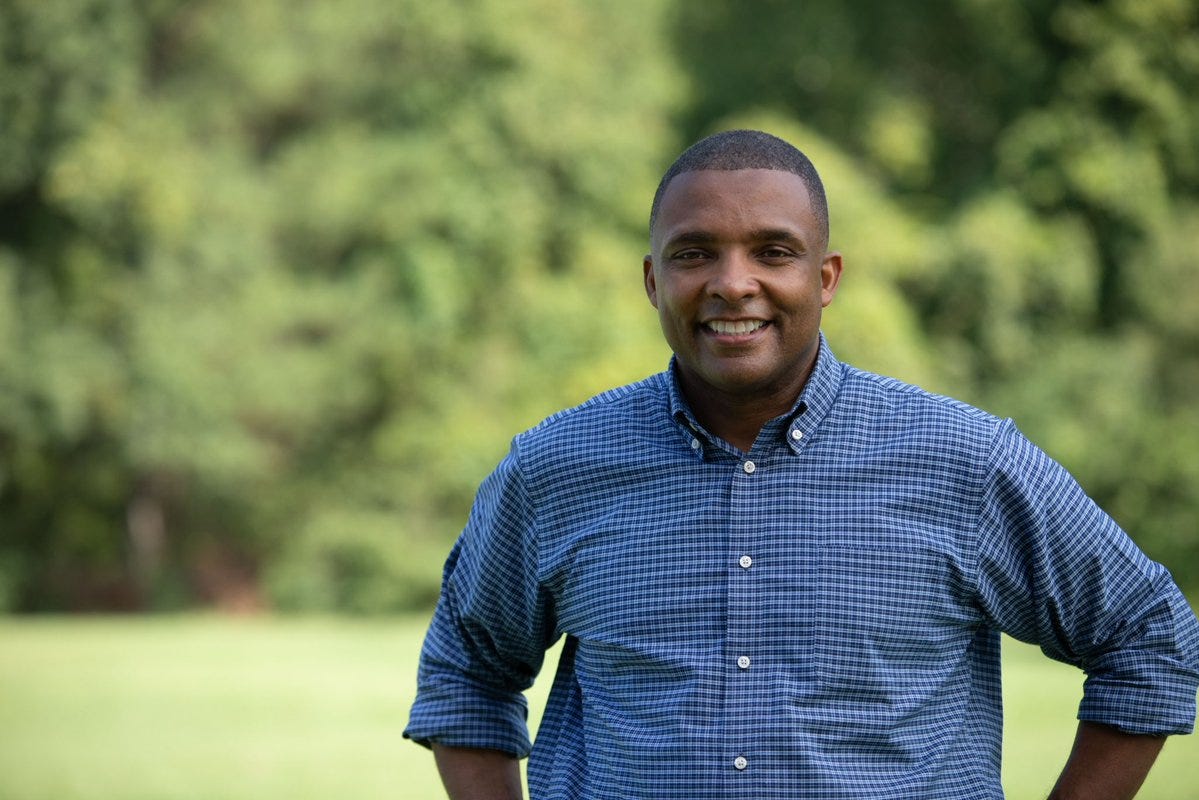
Davis is still a serious candidate.
A military veteran and Air Force Academy graduate, he served as Snow Hill mayor, then in the state Senate for over a decade, before joining Congress. His seats on Agriculture and Armed Services fit eastern North Carolina well. Farming, military affairs, and rural economic concerns loom large there.
He also has money. Davis entered July with about $3.6 million cash on hand, compared with $1.8 million for Buckhout.
That advantage matters because some voters in the redrawn district have never had Davis on their ballot. He has to introduce himself while also persuading Republican-leaning voters to separate him from the national Democratic brand.
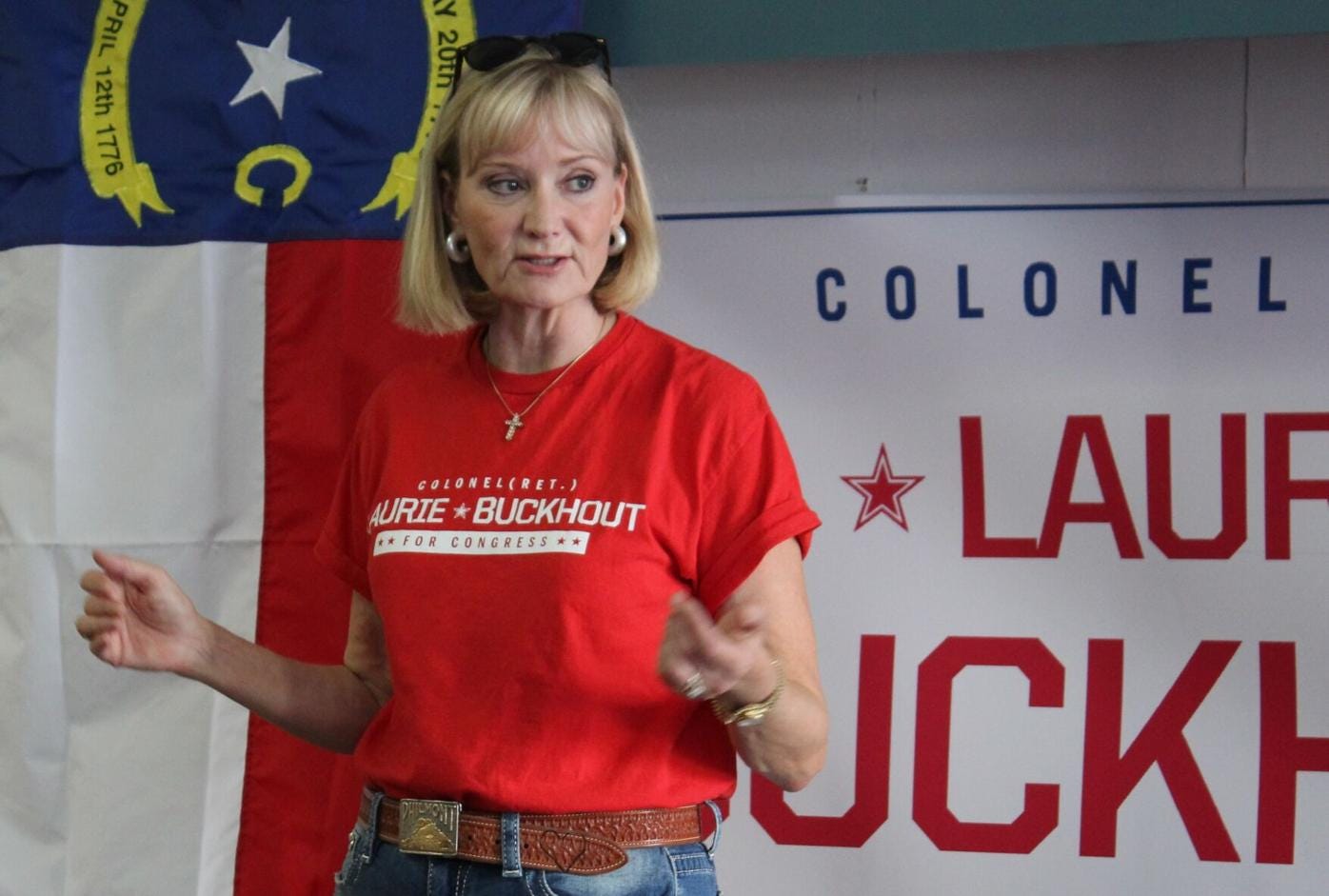
Buckhout has done much of the introductory work. She narrowly lost a districtwide race two years ago, and has earned respect as retired Army colonel.
Republicans do not need a new approach to the race. They need the base in the new district to turn out for the election.
That makes NC-1 a tough hold for Davis. His personal standing, fundraising, and incumbency may keep him competitive, but he must also prove those advantages can overcome a district drawn to elect a Republican.
In a favorable Democratic year, they can. In anything close to a neutral environment, Buckhout is sitting pretty.
NC-11 requires more explanation. Volatility surrounding the race can obscure what the district looks like.
Trump won it comfortably. Edwards beat Democrat Caleb Rudow by more than 13 points. Outside Asheville and Buncombe County, Republicans still have a large reservoir of voters across western North Carolina.
Before Edwards withdrew, no one talked about this race as a top-tier Democratic pickup.
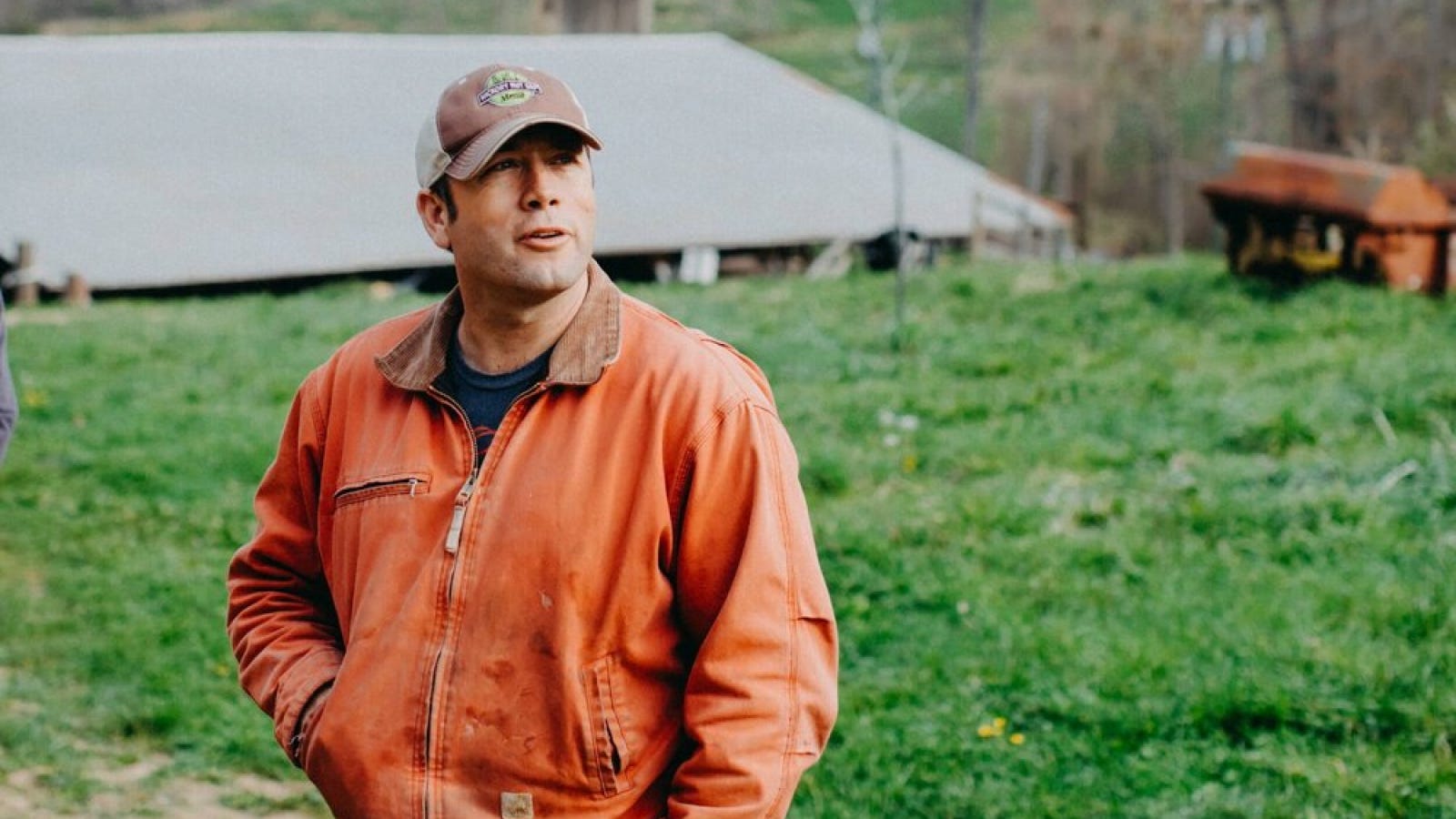
Ager deserves credit for making Republicans pay attention before that happened. The farmer and businessman has deep roots in the mountains and has styled himself as a “Mountain Democrat,” emphasizing Hurricane Helene recovery, affordability, and farming issues. By July, he had nearly $2.2 million in cash.
Then Edwards left, and the Republican side had a nominee problem.
Balkcom was selected on August 10. She now has less than three months to move from a state House operation to a congressional campaign covering a large and politically varied part of western North Carolina.
That is the vulnerability.
But there has been a tendency to treat the late switch as though it erased the district’s Republican fundamentals. It did not.
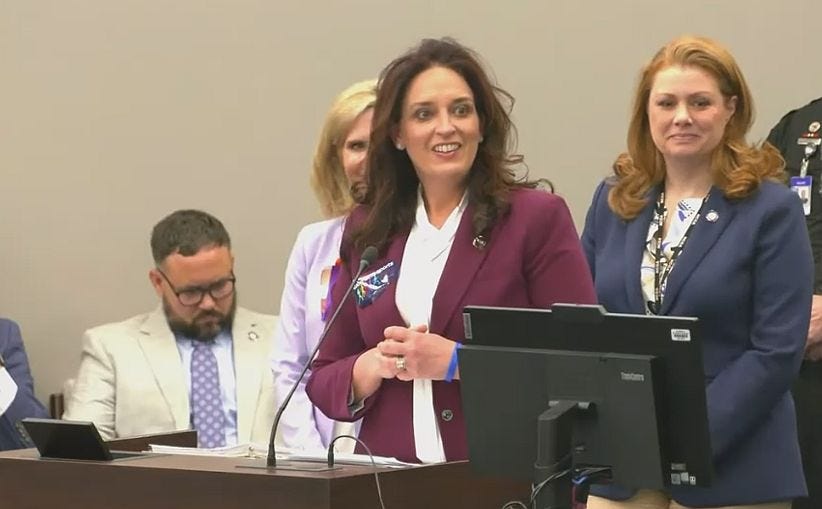
Balkcom is not creating a Republican majority where one does not exist. She is organizing and turning out one that already does.
Republicans did not choose a blank slate.
Balkcom’s legislative record firmly situates her within the conservative wing of the North Carolina GOP. The Assembly reports that Balkcom sponsored thirty bills that became law. This legislative session, she has voted with Republicans 785 times, breaking with the party just once, on a minor traffic bill.
She helped sponsor the Fairness in Women’s Sports Act, which restricts female school athletic teams based on biological sex. She also backed legislation stopping China and Russia from buying land near farmland and military bases.
Her congressional messaging has leaned on affordability, public safety, farmers, and Hurricane Helene recovery, which is where the race needs to go for her. Outside the district, it is easy to miss how visceral Helene still is in western North Carolina politics. Recovery connects to roads, businesses, housing, and people’s frustration with the government’s response.
Ager is trying to compete on that terrain too.
His problem is that local credibility does not change the partisan math. Asheville and Buncombe County can give him a big Democratic vote, but he still has to keep Republican margins down across the surrounding mountain counties.
That is a steeper task than just capitalizing on a messy Republican nomination process.
Balkcom also has an unusual political biography that Democrats are certain to use. The Assembly reported she was once registered Libertarian, later registered as a Democrat and became a Republican in 2016. She says the Democratic Party moved away from her values.
Maybe that matters to some voters. It could also reinforce her argument to conservatives who believe the parties have radically changed over the past decade.
The money problem is harder to explain away.
Balkcom’s state legislative campaign had raised less than $38,000 this year. Ager entered July with about $2.2 million in his federal account. The accounts operate under different rules, so the numbers are apples to oranges. But the practical contrast is obvious.
Ager has been raising federal money and campaigning across the district. Balkcom was preparing for another state House race.
Still, congressional campaigns don’t operate in isolation. Republicans have national committees, donors, and outside groups that can move quickly when a seat becomes vulnerable. NC-11 is precisely the district they have every reason to defend fiercely.
If Balkcom can get enough money for ads, get staff into the field, and establish herself with Republican voters outside her legislative base; the district landscape gives her considerable room for error.
Ager has less.
His rural biography helps him argue that he is different from a generic national Democrat. But, Ager needs that argument to work in several counties like Jackson and Transylvania, at once.
Sabato’s Crystal Ball moved NC-11 to Toss-up in late July. Recent reporting has cited Cook Political Report at “Lean Republican.”
The Lean Republican rating better reflects the underlying tension. Ager has run the more developed campaign. Balkcom is still competing on Republican ground.
And that ground matters.
NC-1, by comparison, does not require imagination. Republicans redrew the seat in their favor and brought back the candidate who nearly won it under a less favorable map. Davis may still survive, but he is trying to beat both Buckhout and the new district lines.
NC-11 is more volatile because of timing, money and the abrupt candidate switch. It is also a district where a Republican will begin with an advantage.
That is why the next several weeks matter so much for Balkcom.
If she looks disorganized, underfunded or unable to expand beyond her state House base, Ager has a path that would have seemed unlikely earlier in the cycle.
If she gets the basic mechanics right, Republicans may find that the drama was caused by the calendar, not a fundamental change in western North Carolina.
For now, NC-1 looks like the cleaner Republican pickup opportunity.
NC-11 looks like a Republican seat that became vulnerable because Republicans created a campaign problem for themselves.
Comments
Nothing yet. Say the first thing.
Sign in to join the conversation.