
I love keeping a mental record of the origins of our garden, pointing out individual plants and where they came from. There’s the geranium that was grown from a cutting taken from a family garden in Pinole, the princess flower gifted to us from my mother-in-law in Sunnyvale, the lion’s ear from a neighbor in the Excelsior…and now, back against the far fence, an acanthus swiped from Alcatraz(!).
Ok, maybe “swiped” isn’t the right word. More like “rescued”. A bunch of newly excavated roots were headed to the chipper, and when the Head Gardener at Alcatraz asks if you want to take home a living piece of the island, it’s hard to say no!
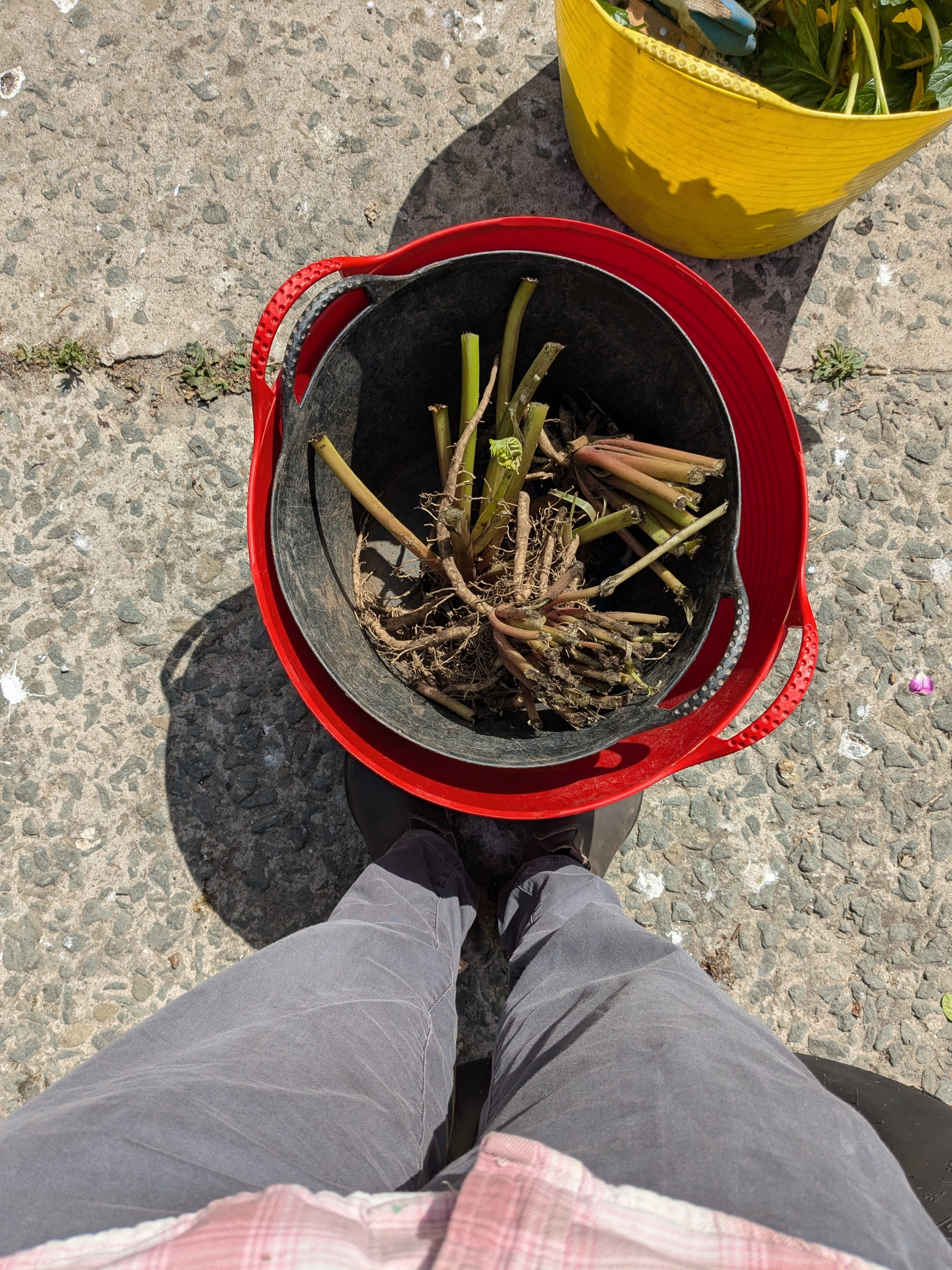
This all happened a couple weeks ago, on a sunny Thursday at the end of April. I had signed up to be a volunteer at Alcatraz Gardens (PSA: anyone can do this! I highly recommend it1) and spent the morning helping prep the historic gardens for the upcoming American Public Gardens Association’s annual conference, which is being hosted in the Bay Area this year and includes a field trip to Alcatraz.
There was a larger than usual group of volunteers that day: a couple of companies doing belated Earth Day volunteering, some first timers, one second timer (me), plus all the regulars, who check in and then head off to care for their own dedicated spots. We took the 8:30am staff ferry, arriving on the quiet island ahead of the first tourists.
(For long-time staff, I wonder if it ever gets old seeing the cellhouse coming into view through the fog, pulling up to the dock as gulls circle overhead, all the ghosts and history contained on this big rock out in the bay. I’ve only done this a few times, but whenever that sight comes into view, it takes my breath away.)
After quick intros, us newbies grabbed a bunch of tools from the shed near the old guardhouse and followed the Head Gardener/Program Manager, Shelagh, up to the west side. Shelagh had four tasks in mind for us, and asked us to raise our hands for the ones we wanted to help with. We could choose between removing and breaking down strappy perennials from a slope (I forget the plant, maybe Agapanthus?), pulling weeds (Ehrharta! my nemesis) around the pathways, digging out a patch of overgrown Acanthus mollis, or deadheading spent flowers to encourage new blooms.
I swiftly raised my hand for the acanthus excavation. I’ve done a good amount of volunteer gardening this year so far, and while all of it has been rewarding, it’s been a LOT of weeding and pruning. This was a more intensive task (big shovels! sweat! digging in the dirt!), so it was nice to challenge myself and do something a bit more physical.
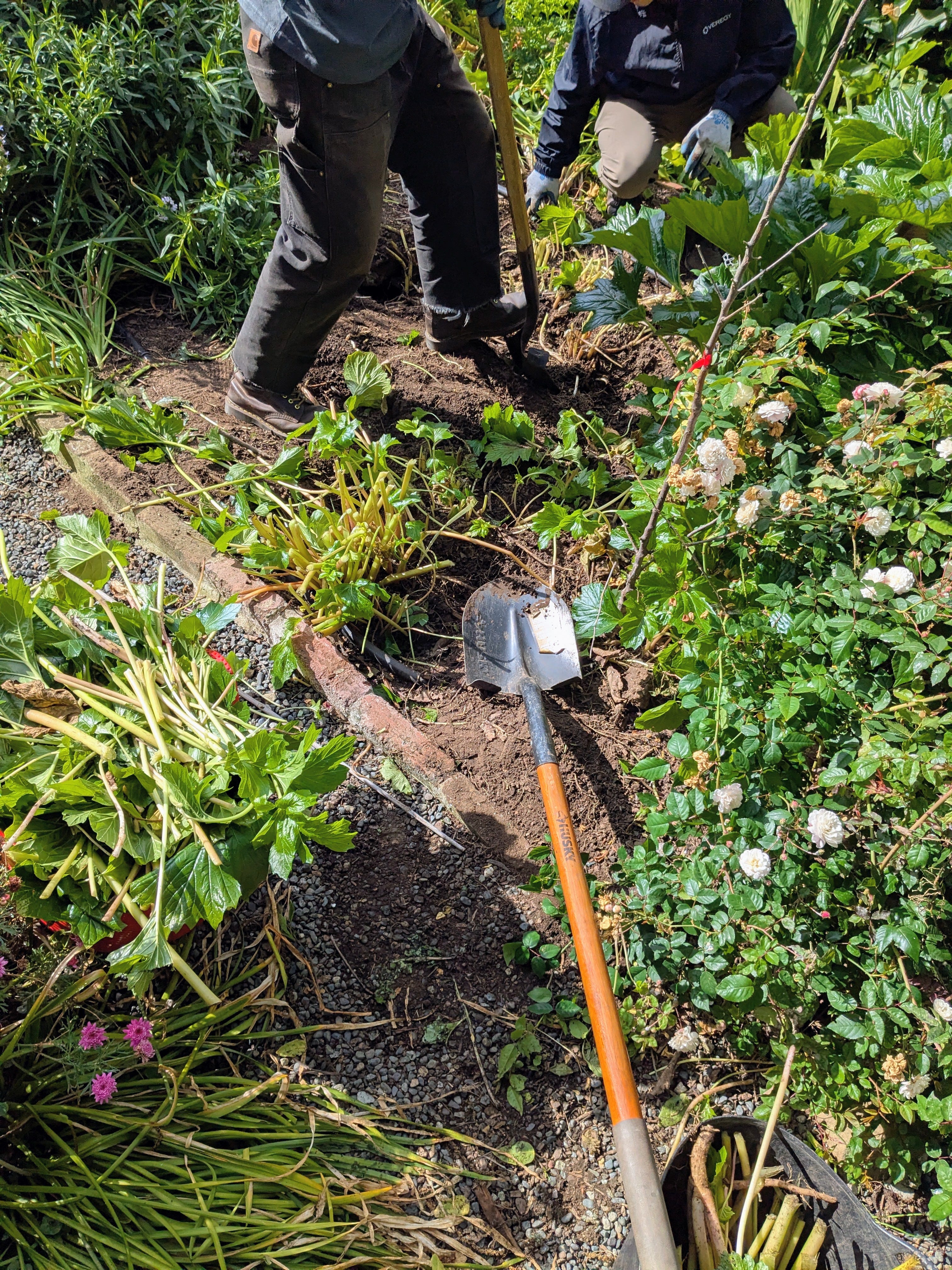
So, acanthus!
They call it bear’s breech, a name I refuse to use because I do not see the leaves’ resemblance to a bear’s behind (or more specifically, TROUSERS for a bear’s behind) at all. Searching for validation, I found this passage from William T. Stearn’s scholarly article “The Tortuous Tale of ‘Bear’s Breech’, the Puzzling Bookname for Acanthus mollis” (emphasis mine):
‘Bear’s breech’, being a corruption of medieval branca ursina and referring to the spiny floral bracts of Acanthus mollis, has survived as a bookname from before 1597 until now, a longevity undeserved.
So the name doesn’t even refer to the enormous leaves, which could mayyyybe pass as something related to a bear, but the flowering part of the plant?? It’s all very confusing.
Questionable name aside, I do really love this plant. The Greeks loved it too! It has strikingly tall flower spikes and huge, lush, glossy leaves. It seems like the kind of exotic plant reserved for the botanical garden, but once you know it, you see it everywhere: in utilitarian concrete planters downtown, in a neighbor’s front yard, in the BART parking lot.
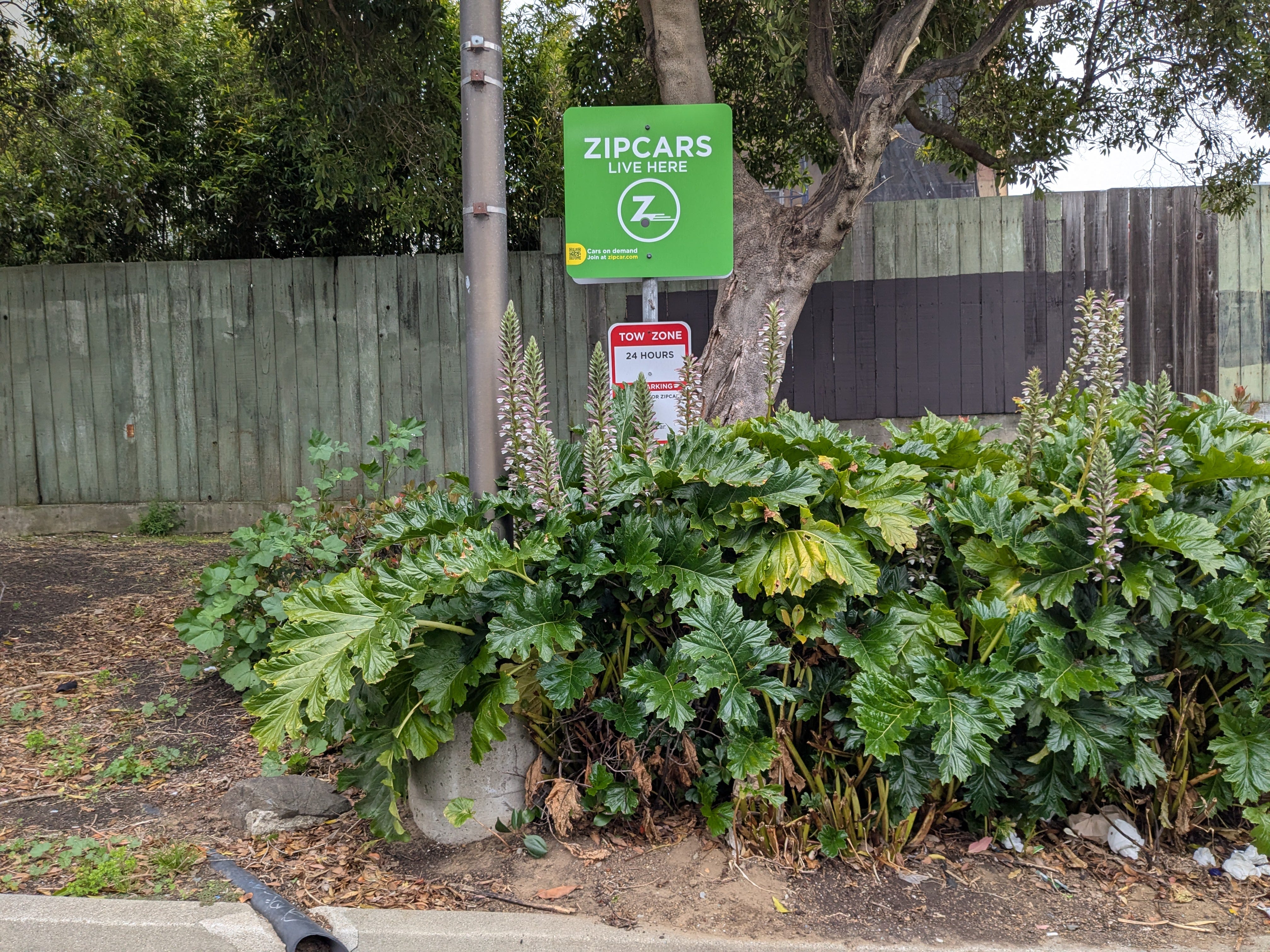
Come to the “wild” west side of Alcatraz and you’ll find acanthus in abundance. I call it the wild side because the weather is much harsher than the east side of the island, with its Victorian cut flower gardens and former officers’ quarters. The west side is home to the former prisoner recreation yard, surrounded by rocky windswept slopes overlooking the bay.
As volunteer gardeners, our task was to clear out two sections along a pathway where the acanthus had become overgrown, so that new plants could be put in their place. The other four people who had volunteered for this particular job were muscular men between the ages of 20 and 40, and I briefly wondered if I was in over my head. But it turns out digging up acanthus is just like digging up the calla lily or naked lady (another questionable common name) in our backyard, which I’ve had plenty of experience with.
The task is hard, not necessarily because it’s backbreaking, but because these plants are so hard to fully eradicate. They all spread by underground rhizomes/bulbs that are capable of growing from even small bits left behind. I’ve gone through several seasons of digging out what I thought was the remainder of lilies in a section of our yard, only for them to return reliably (and numerously) the next spring.
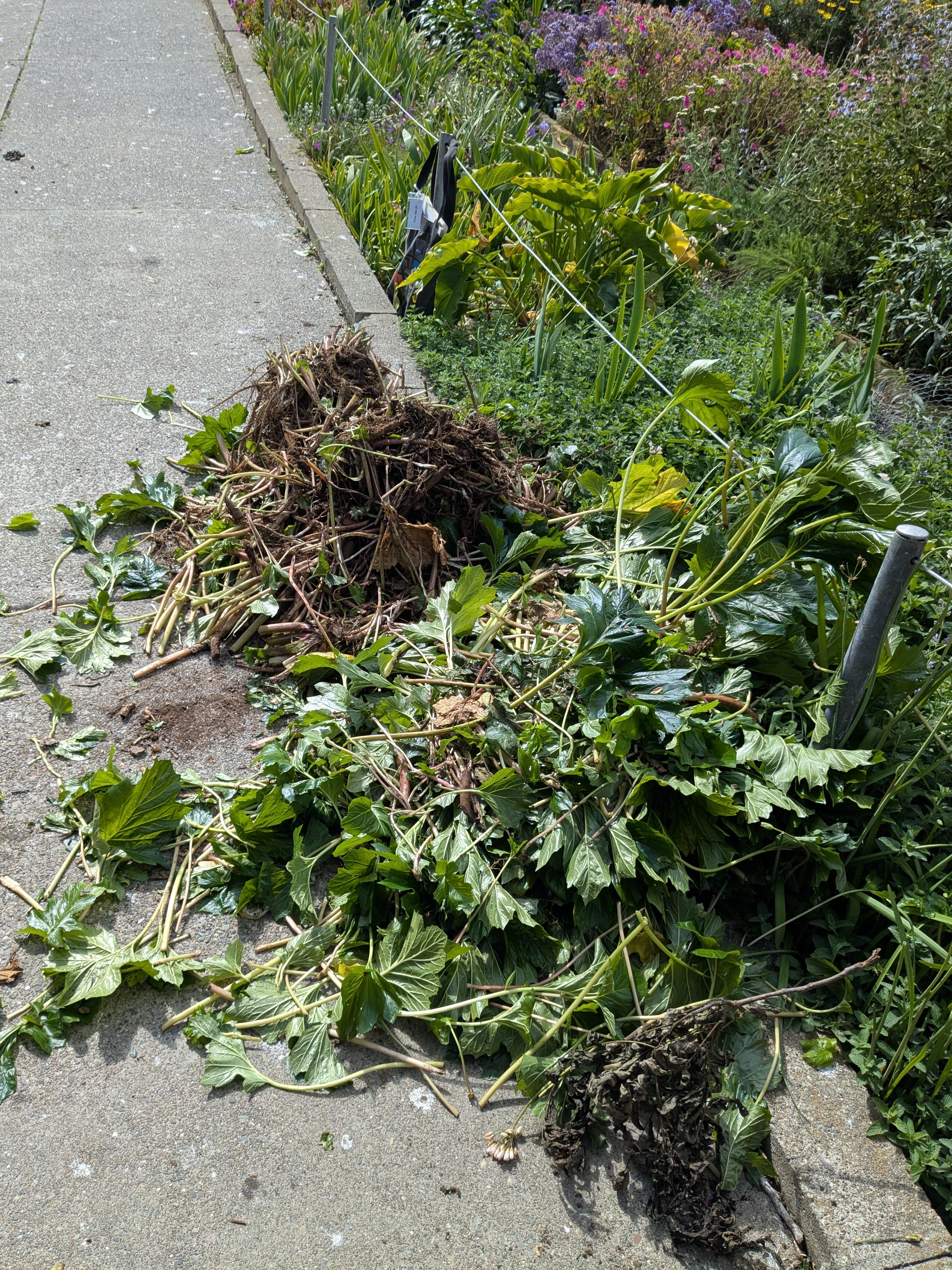
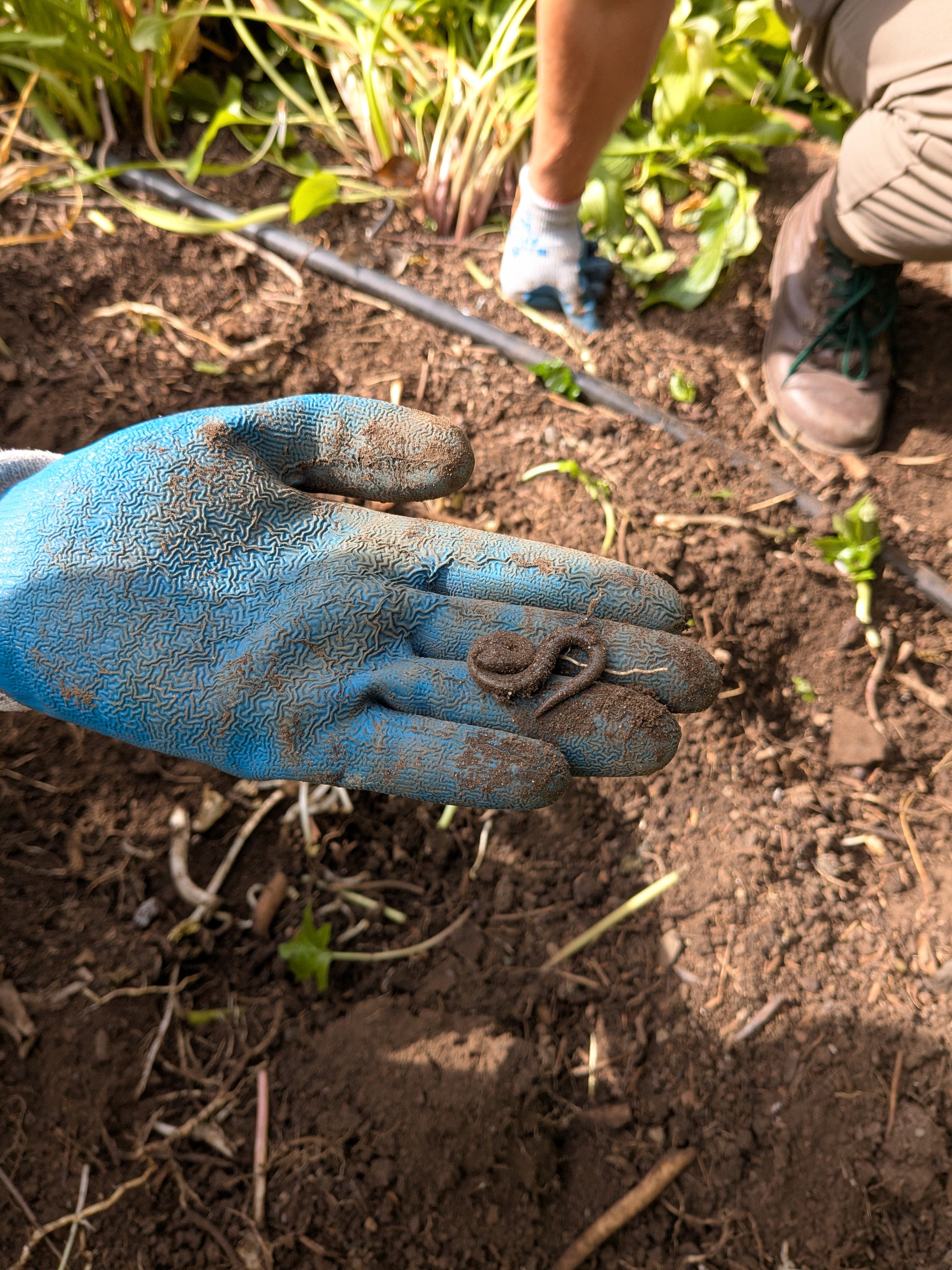
As we dug out roots and relocated small critters2 found in the earth, I got to know my fellow volunteers a little bit. One guy was an engineer who was there with his company, but had spent time volunteering on a farm in New Zealand. Another had studied music history and was planning on applying to San Francisco’s Apprentice Gardener program. We talked about careers, classic rock, and home gardens.
In the pockets of silence between conversation, while plucking stray pieces of acanthus roots out of the ground—being careful not to disturb the roots of the historic apple tree in the same section—I had to keep reminding myself that all of this was man-made. For millennia, Alcatraz was a bare rock with no fresh water or soil, inhabited only by birds3. The reason soil was brought there in the first place was to provide ballast for cannons when the island was made into a military fortress in the 1850s.
When military personnel brought their families to live on the island (talk about a harsh relocation!), it was the military wives who started taking some of that cannon soil to plant the seeds and plants they’d brought with them, in an effort to make the island feel more like home.
A hundred years later, after Alcatraz had transitioned to a federal penitentiary, the gardens that were started by the military wives were tended by a few inmates who had earned the rare and coveted job of gardener. As far as I know, none of these prisoners ever tried to escape while on the job, and some of them who were transferred or released even said they wished they could stay longer on Alcatraz so they could continue working in the gardens.4
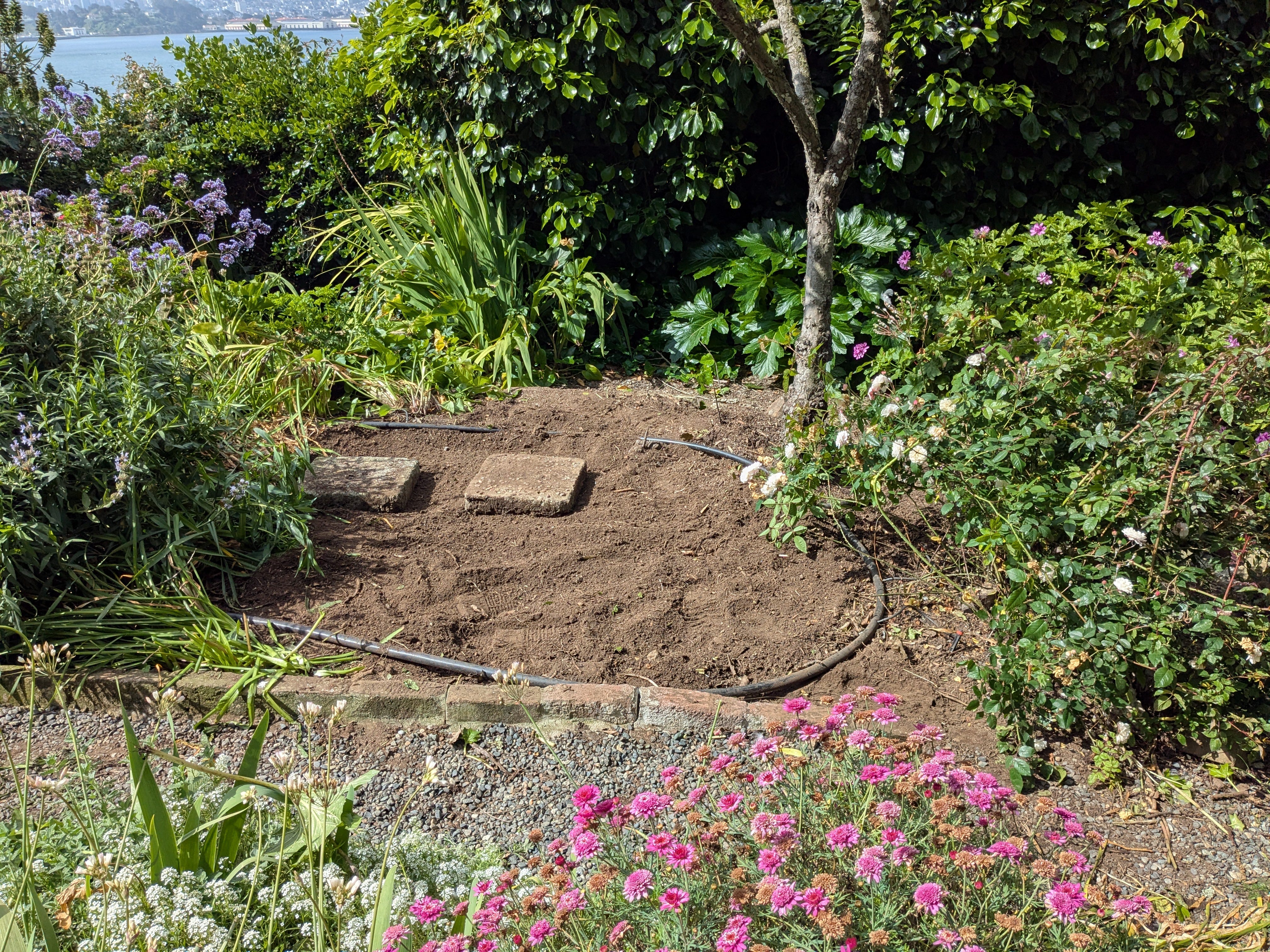
Our volunteer group organized the excavated acanthus into two piles: greens for compost, and roots to be ground up by the chipper, ensuring they won’t spread and grow. Before taking away the roots, Shelagh asked if we wanted to take any home with us. She pulled out several of the clumps we’d dug up, explaining how to plant them and predicting they would give us a decent sized plant within a year.
That was enough convincing for me! I took one clump and another volunteer took two for his neighbor. I must say, it was mildly thrilling transporting a big soily root ball in my backpack as I rode the ferry back from the island that afternoon, hopped on my bike to visit the WeWork at Embarcadero Center—where I proudly showed it to Jawnt’s cofounders (“it looks like celery” - Jeff)—and then finally zoomed home on BART.
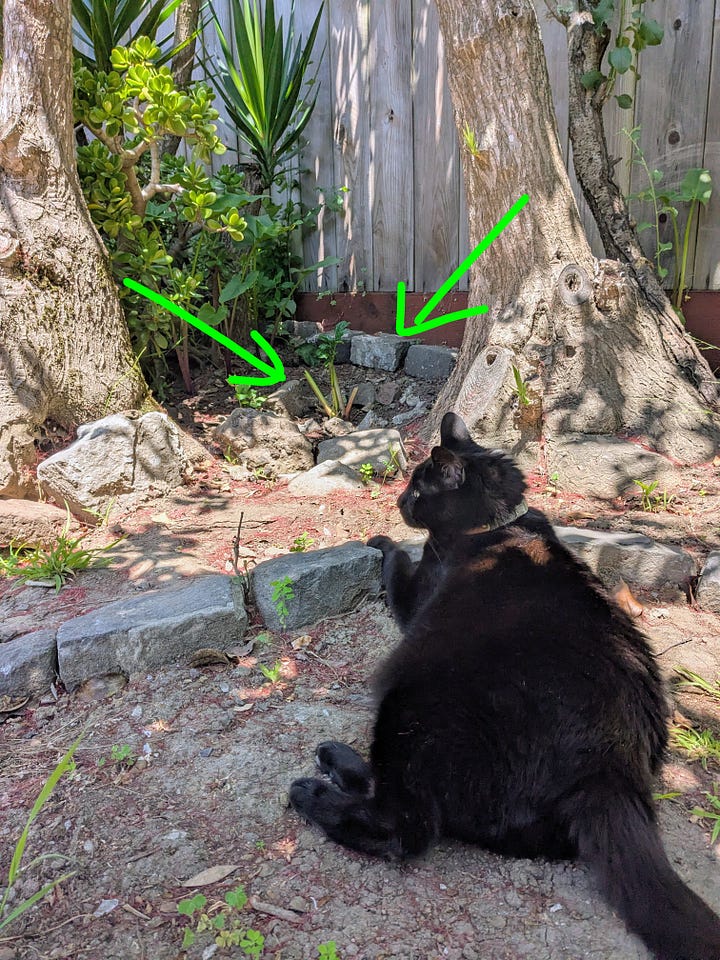
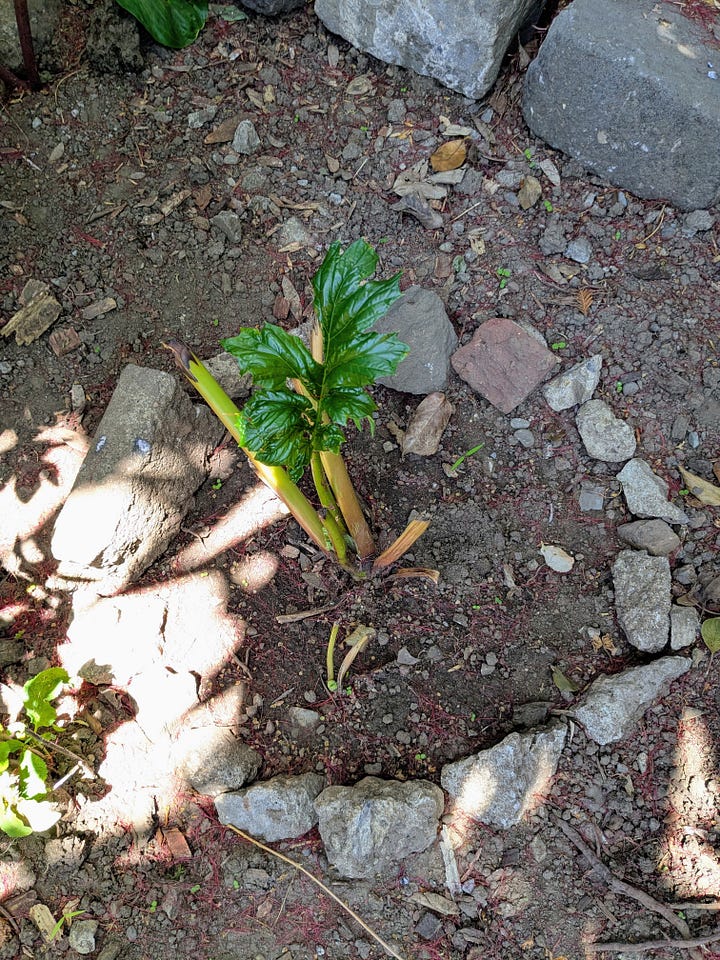
That weekend I cleared out a shady spot along the far side of the fence, previously overrun by weeds. If I can get the acanthus to grow there, it’ll be a much nicer border plant than the weeds!
Almost a month later, the one wilted leaf has perked up and I’m taking that as a sign that the acanthus is starting to establish itself. Worst case, the plant doesn’t make it, and it’s fine because it would’ve just gone to the chipper anyway. Best case, it survives and then we have a big leafy friend that may have descended from a plant tended by inmate gardeners in the 1940s and ‘50s—a pretty cool origin story.
I feel like I uncovered a life hack when I learned about the volunteer gardener program at Alcatraz. As a volunteer gardener, you get a staff-only ferry ride to the island, spend the morning beautifying the historic gardens, get to learn the history of the island, then can stay as long as you want afterward: take a tour, walk around the prison cells, sit and read a book, whatever…before hopping on another ferry back to Pier 33. So if you ever want a free visit to Alcatraz and don’t mind gardening for a few hours on a weekday, let me know. I’ve been trying to find excuses to go back every chance I can get.
We came across a couple of slender salamanders in our digging. They pop up occasionally in our yard, too. A California native!
The birds still rule the rock, as you’ll quickly learn when you visit the island. It’s currently bird nesting season, and there are certain areas of the island where no one, not even staff, are allowed to disturb the birds during this time. This is a fun article about why the birds have chosen Alcatraz as their preferred nesting location.
No posts
Comments
Nothing yet. Say the first thing.
Sign in to join the conversation.