
Hello dear readers,
What a summer! Some days, with so much going on, it felt like I squeezed multiple days into one! I have some fun updates to share.
Also, read to the bottom for a new 6-week program on SMART goals I’m offering for paid and founding subscribers to the newsletter!
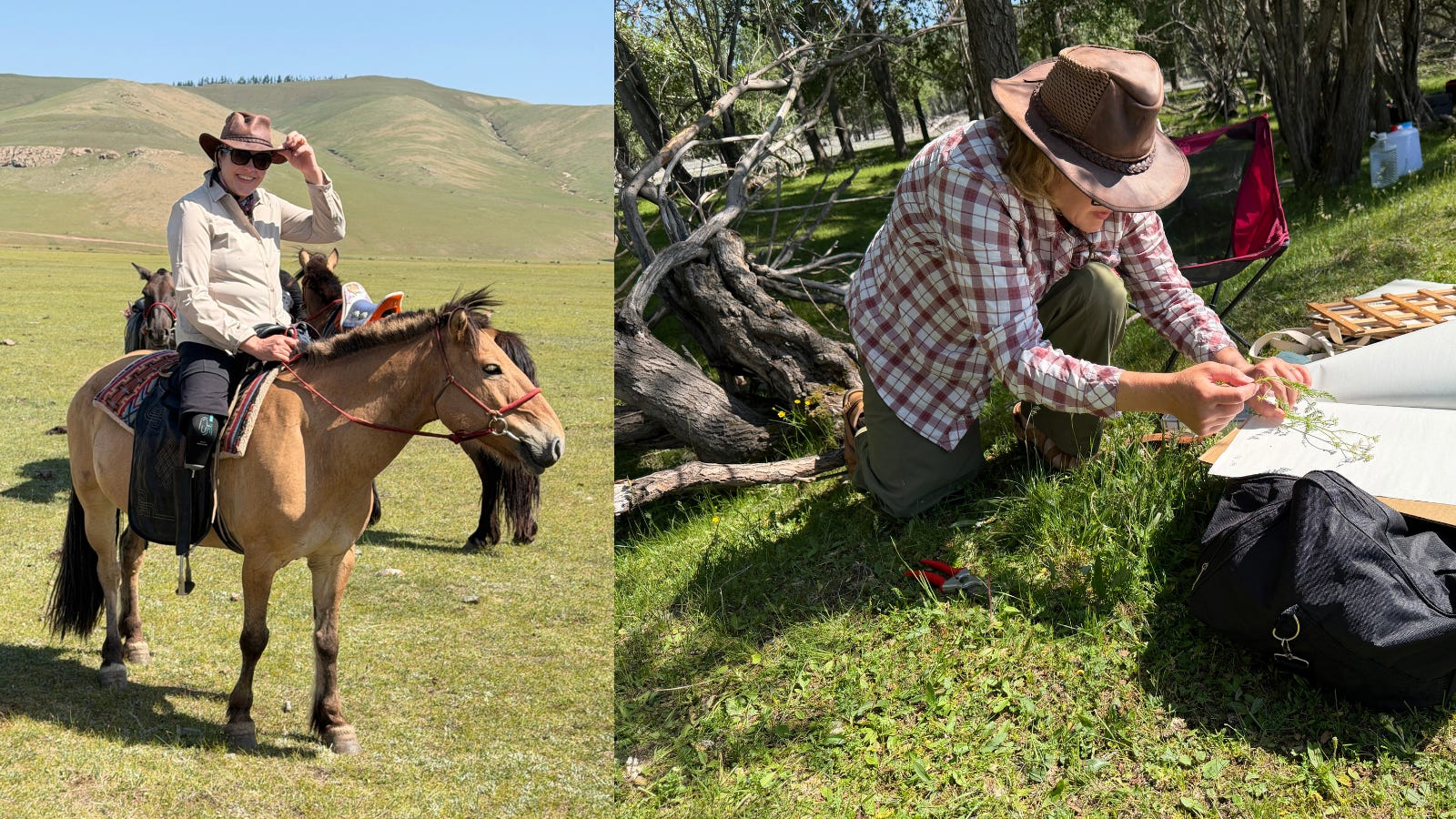
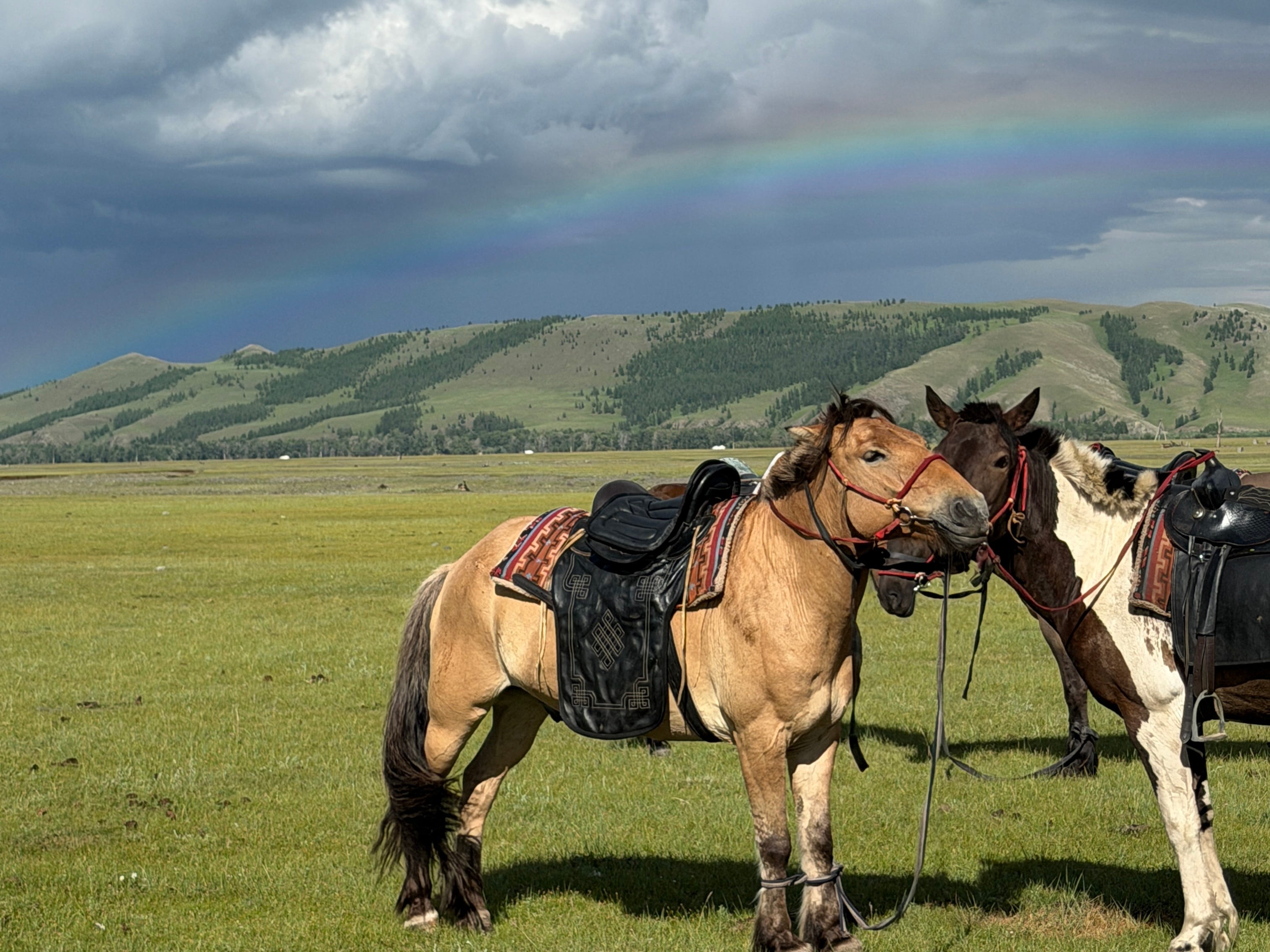
My summer field collections in the Arkhangai province of Mongolia went incredibly well! I fell in love with the plants, the landscape, the food, the people, and the culture. Plus, horses! Many of my days were spent on horseback, riding across the steppes and forest-steppes to reach sites where I collected wild medicinal and food plants, plus an interesting poisonous (Aconitum) species!
The best, and most unexpected, part of this trip is that it reawakened my deep childhood love of horseback riding. For long days in the saddle, I found that riding without my prosthetic leg was actually the most comfortable. One of my new fitness goals is to try to get back in the saddle more often at home and take some lessons on adaptive riding for amputees. If you’d like to see more photos and videos from the trip, I’ve been posting some on my instagram page (handle: QuaveEthnobot).
If you’re a fan of the Foodie Pharmacology podcast, we have the second half of season 8 coming very soon! I’ve been busy this month recording with some incredible guests and we’ll start airing again on Mondays, the week after Labor Day (Sept. 14th). You can listen anywhere you stream podcasts. If you’d like to watch the video version of episodes, you can find them at the Teach Ethnobotany YouTube channel. Some of our most popular episodes this season so far have included:
Coming soon: I just recorded two fascinating episodes to air soon on the topics of:
Development of the gut microbiome in the first 1000 days of life with gastroenterologist Dr. Savita Srivastava; and
How computational models can be used to discover new medicines from nature for the treatment of anxiety disorders with Dr. Jacob Hooker.
Be sure to subscribe to the show wherever you stream podcasts! If you love the podcast, please leave us a 5-star review on Apple Podcasts. That goes a long way in getting the word out on the show!
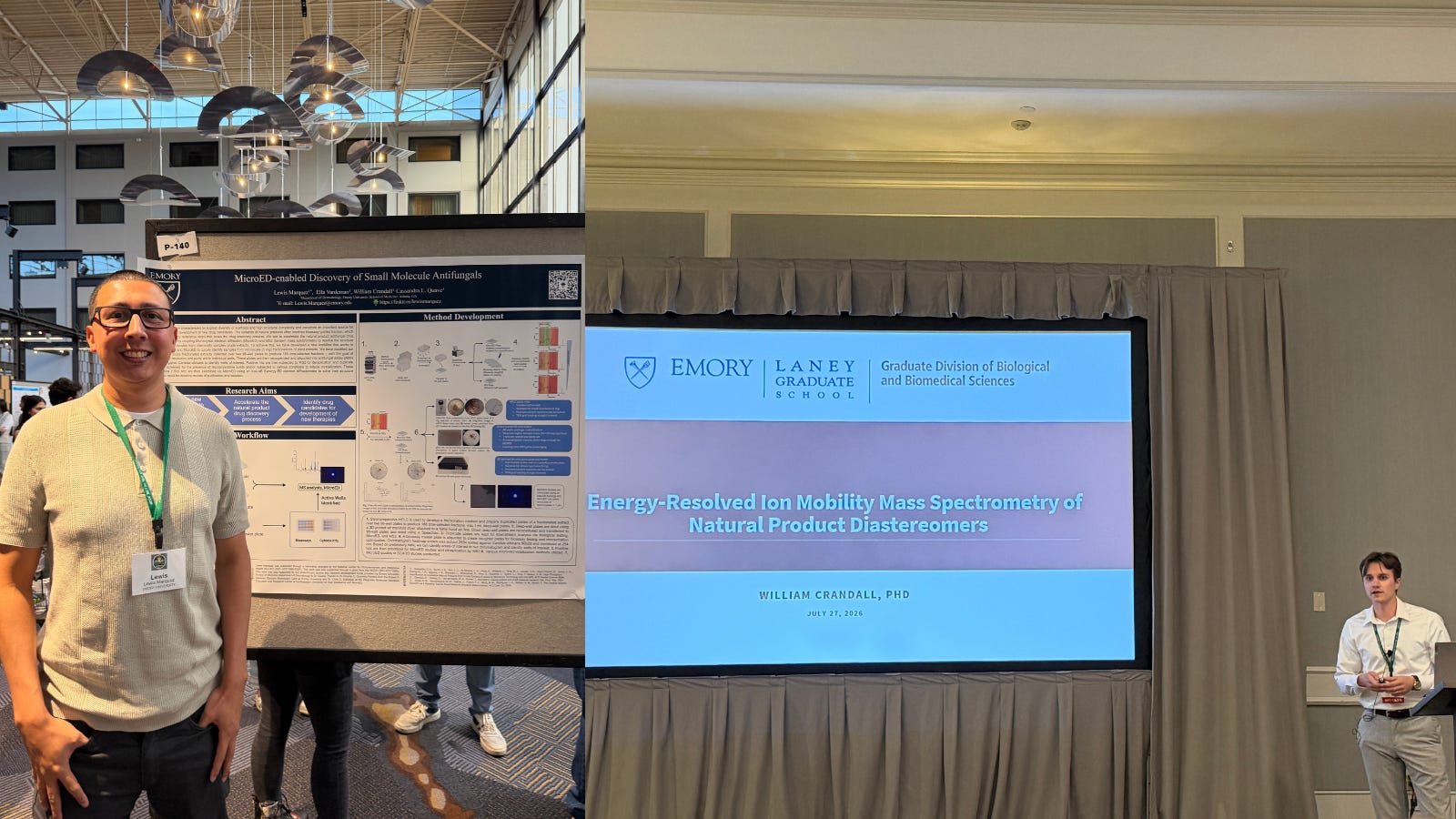
Along with postdocs Dr. Lewis Marquez and Dr. Will Crandall from my lab team, I traveled to the American Society of Pharmacognosy meeting held in Denver, Colorado to present some of our latest work in the lab. The meeting was full with inspiring science, showcasing research pushing frontiers into the new era of drug discovery from nature. I do have some new speaking events coming up, I’ll share more about those in a future post.
I am honored to have been selected as a recipient of one of Emory’s Disruptive Discovery Seed Program grants (supported by Emory's Office of the Provost) for our project entitled “Structure-Resolved Metabolomics: A New Paradigm for Definitive Metabolite Discovery”. This award will support my lab’s emerging work in solving structures of drug metabolites detectible in tiny quantities with a year-long pilot project.
Project description: Modern metabolomics and drug metabolism workflows can detect thousands of metabolic products, yet metabolite identification and definitive structural characterization remains a major bottleneck. Current approaches rely heavily on mass spectrometry and computational prediction to infer metabolite identities, but these methods often fail to distinguish low-abundance metabolites, regioisomers, stereoisomers, and unexpected biotransformation products. As a result, much of biologically relevant small molecule chemistry remains structurally unresolved. This project addresses a fundamental challenge in small-molecule science: the inability to directly determine the structures of many metabolites that govern drug action and human health. By integrating advanced metabolite discovery workflows with atomic-resolution structure determination by Microcrystal Electron Diffraction (MicroED), we seek to make previously invisible metabolic chemistry experimentally observable. This capability eliminates longstanding dependence on synthetic reference standards, large-scale metabolite production, and inference-based structural assignment.
We are also excited to share that our collaborator, Emory Winship oncologist Dr. Pamela Allen, received her first National Institutes of Health R21 (two year project) grant as PI for the project “Microbial Drivers of Radiation Resistance and Large Cell Transformation in Mycosis Fungoides and Sezary Syndrome”. As co-investigator on the project, my lab will oversee the isolation of Staphylococcus aureus bacteria from clinical samples collected from cancer patients and will characterize the virulence factors (toxins) made by these bacteria for this project.
Project description: Cutaneous T-cell lymphoma (CTCL), and its most common variants, mycosis fungoides and Sezary syndrome (MF/SS) are incurable skin lymphomas in which progression to large cell transformation (LCT) and resistance to radiation therapy lead to poor outcomes. This project will investigate how an imbalance between pathogenic bacteria such as Staphylococcus aureus and protective commensals such as S. epidermidis alters the tumor immune microenvironment and tumor signaling, driving transformation and radiation resistance. Findings will guide development of microbiome-targeted therapies to improve radiation response and extend survival in high-risk patients.
This week, my lab and the herbarium team is at the Jones Center at Ichauway for our research group retreat! We’ve been so fortunate to partner with the Jones Center over the past decade on research and educational initiatives. Our research group retreat will focus on four core conceptual goals:
CONNECT: Build trust, connection & community
GROW: Develop skills for excellent and sustainable careers
EXPLORE: Encounter new tools, technologies & ways of thinking
CREATE: Generate ideas together that none of us would reach alone
In addition to our planned activities in field methods training (plant collections, drone operation, environmental sampling), introductory mass spectrometry and MicroED lessons, team-building activities, and scientific presentations from all team members, a large portion of the retreat is focused on professional development. Topics will include goal setting, time management, grant writing and science communication, with different team members leading various workshop sessions.
I’ll be leading the session on setting SMART goals. I’ve used this approach with my team over the years, and we’ve found it extremely helpful for prioritizing and achieving the goals that matter most—including both personal wellness and health goals, as well as research and professional goals.
This round, each member of the lab (including me) will be setting SMART goals to work toward over the next 6 weeks (August 22-October 2). We’ll be using a SMART goal guide that I’ve crafted for this purpose, with weekly check-ins to assess progress. We’ll also be covering time management techqniques to ensure that a healthy balance is found, with time for goals protected.
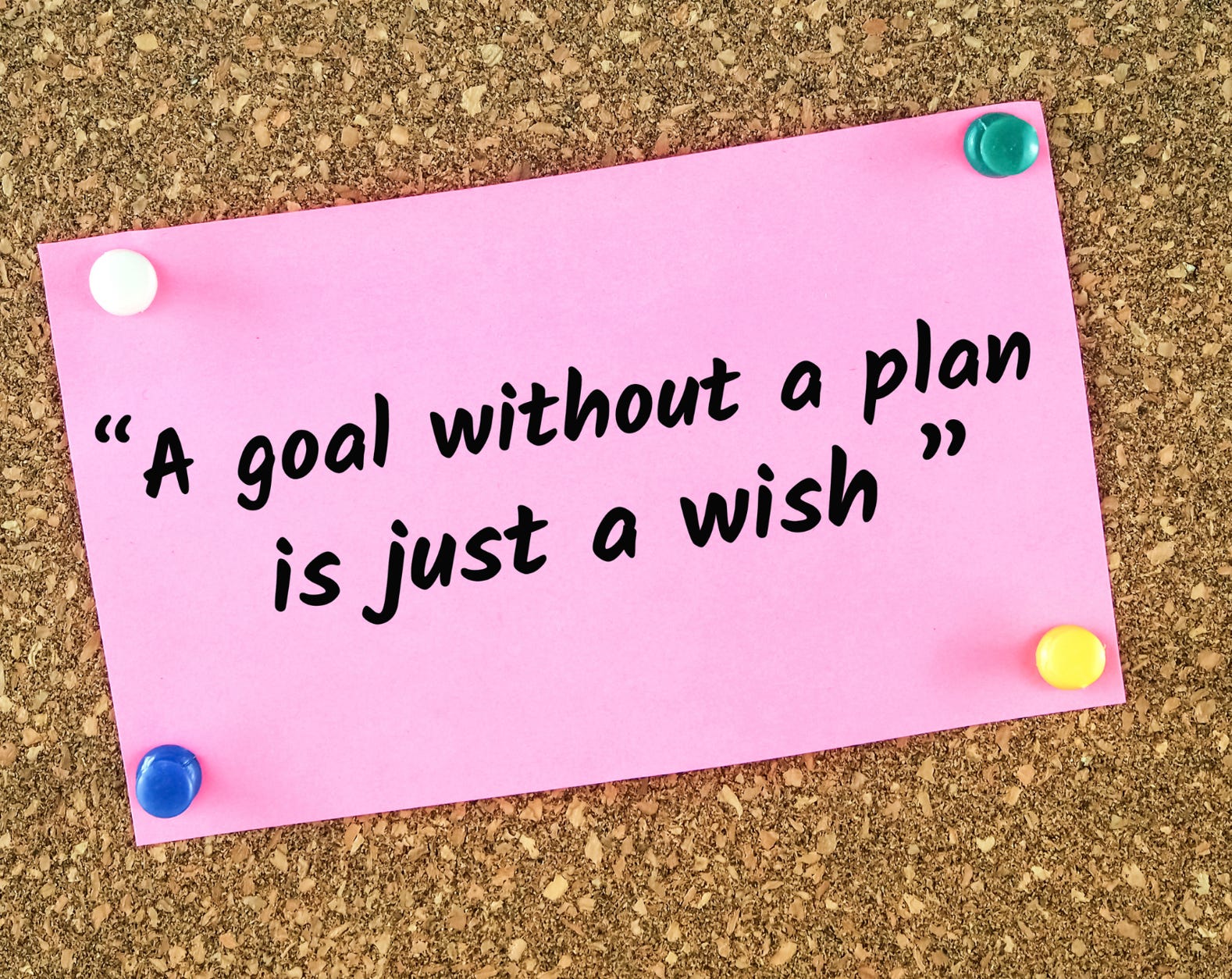
“How does she do it all?” This is seriously one of the most common questions I get from people. My secret is simple! I use SMART goals and time management skills! And these are very teachable skills anyone can pick up with practice and reflection.
While I developed this activity guide with my team of scientists in mind, you don’t have to be a scientist to find SMART goals useful! SMART goals are Specific, Measurable, Achievable, Relevant, and Time-bound. This framework can help all of us turn broad ambitions into clear, actionable goals with concrete steps and a defined timeline for success. For example, if I want to get in better shape by swimming more regularly, I have to define and execute a plan to get there. If I want to submit a new grant proposal by the deadline in October, I need to sort out all of the steps required to meet that target while producing quality work!
The opportunity: I’m offering this training exercise to any of my Paid and Founding Subscribers to participate in. Scroll down to the bottom of this post to access the PDF of the 43 page activity guide, the time management slide deck, and access the zoom links for the meeting dates. Each step in the guide also includes examples to facilitate brainstorming as we work through the process together. I encourage participants to print it out and we’ll work through it together with check-ins every week.
Here’s the meeting schedule to be held on Zoom (PT: Pacific Time; ET: Eastern time; CEST: Central Europe):
Wednesday, 8/19 at 2 PM PT / 5 PM ET / 11 PM CEST (1 Hour): SMART Goal Setting. We will review the workbook, set SMART goals, and map out our week 1 plans for meeting these goals. To be recorded.
Friday, 8/21 at 9:30 AM PT / 12:30 PM ET / 6:30 PM CEST: Time management. The behaviors that make reaching SMART goals possible. To be recorded.
Fridays 8/28, 9/4, 9/11, 9/18, 9/25, 10/2 at 9:30 AM PT / 12:30 PM ET / 6:30 PM CEST: (30 min): Weekly SMART goal check-ins. These sessions will be an opportunity for the group to discuss their progress and share tips on what did or didn’t work for them. The will NOT be recorded.
What if you can’t make all the sessions? No worries.
I’ll record the first two lectures (8/19 and 8/21) and will make them available to all Paid/Founding subscribers. I will not record the weekly check-ins following these two didactic sessions because I want participants to feel comfortable talking about their goal progress if they wish to.
We will also have a special chat thread in Substack for this group to post in if you wish to engage with the community as we go over our progress and weekly reflections.
I hope you’ll join us in setting SMART goals to make your goals come to fruition!
Yours in health, Dr. Quave
Cassandra L. Quave, Ph.D. is a Guggenheim Fellow, CNN Champion for Change, Fellow of the National Academy of Inventors, recipient of The National Academies Award for Excellence in Science Communication, and award-winning author of The Plant Hunter. Her day job is as Professor and Herbarium Director at Emory University, where she leads a group of research scientists studying medicinal plants to find new life-saving drugs from nature. She hosts the Foodie Pharmacology podcast and writes the Nature’s Pharmacy newsletter to share the science behind natural medicines. To support her effort, consider a paid or founding subscription to Nature’s Pharmacy or donation to her lab research.
Comments
Nothing yet. Say the first thing.
Sign in to join the conversation.