
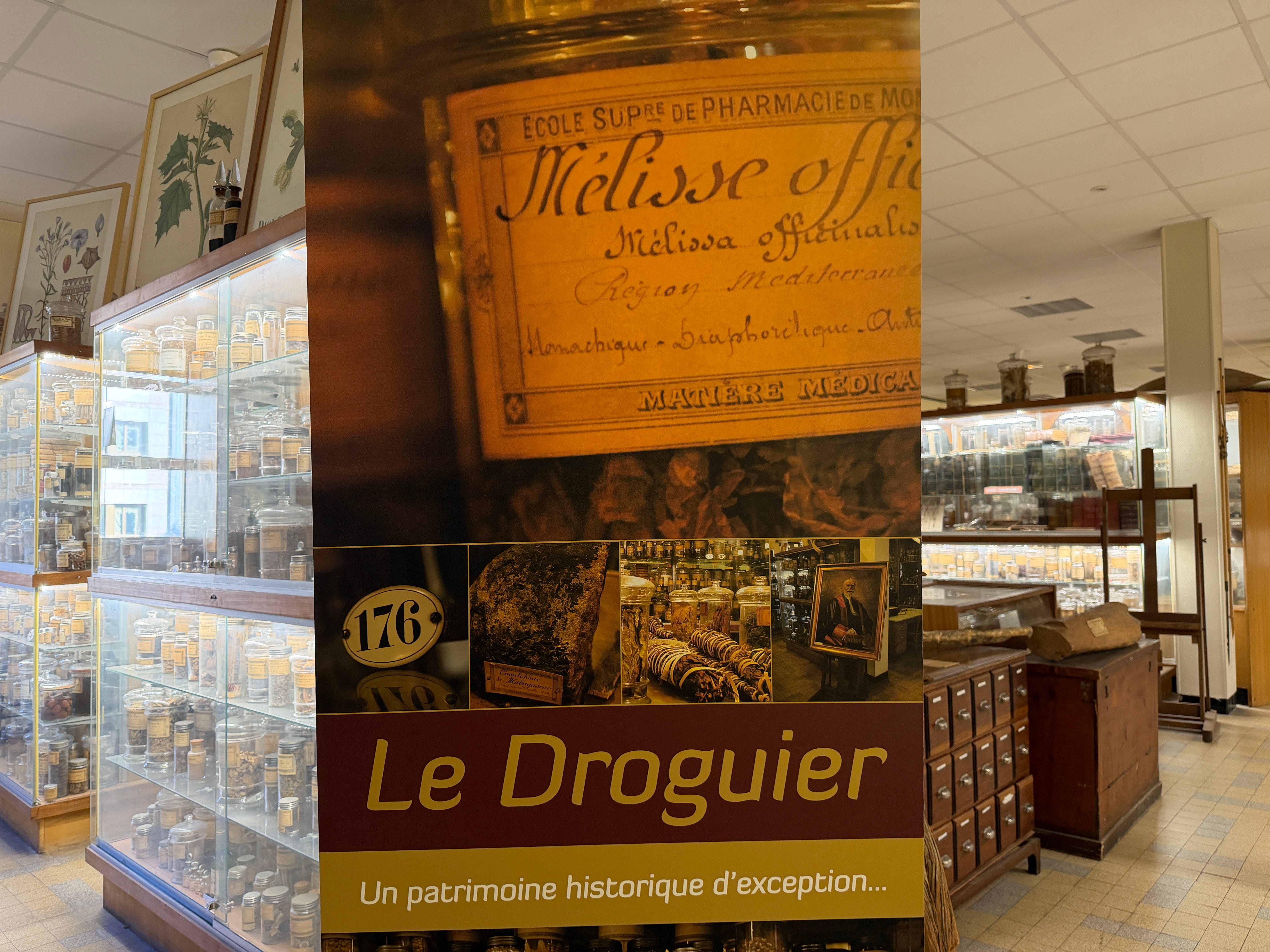
I’ve always been a museum lover, especially when it comes to historic collections of materia medica. There is something just magical (to me, at least!) about standing in front of shelves filled with dried plants, roots, resins, minerals, and handwritten labels that have survived for centuries. These collections are more than cabinets of curiosities, though. They represent snapshots of how people understood health, disease, and the healing power of nature long before modern pharmaceuticals existed.
Over the years, I’ve been fortunate to enjoy behind-the-scenes visits to some extraordinary collections, including the herbarium and ethnobotanical collections at the Naturalis Biodiversity Center in Leiden, Netherlands where I marveled at jars of nutmeg from the Banda Islands, and the renowned Economic Botany Collection at the Royal Botanic Gardens, Kew in London where some of the oldest samples of quinine bark are stored. This summer, another longstanding wish came true with a visit to Le Droguier at the University of Montpellier.
One of my own professional dreams has long been to expand the Emory Herbarium beyond a traditional collection of preserved plants into a biocultural collection that also preserves medicinal materials and the stories surrounding their use. The challenge, as with so many academic endeavors, comes down to space, staffing, and funding. Collections require careful stewardship, specialized storage, and long-term institutional commitment.
If I ever have the opportunity to build such a collection, one of the first resources I’d reach for is Curating Biocultural Collections: A Handbook, edited by Jan Salick, Katie Konchar, and Mark Nesbitt. The book highlights how biocultural collections preserve not only biological specimens, but also the cultural knowledge, historical context, and human relationships that give those specimens meaning. A dried medicinal plant tells only part of the story. Knowing who used it, how it was prepared, what ailments it treated, and how that knowledge was passed through generations transforms a specimen into a living record of human ingenuity.
That philosophy comes to life in the Montpellier collection. Let me tell you a bit about it.
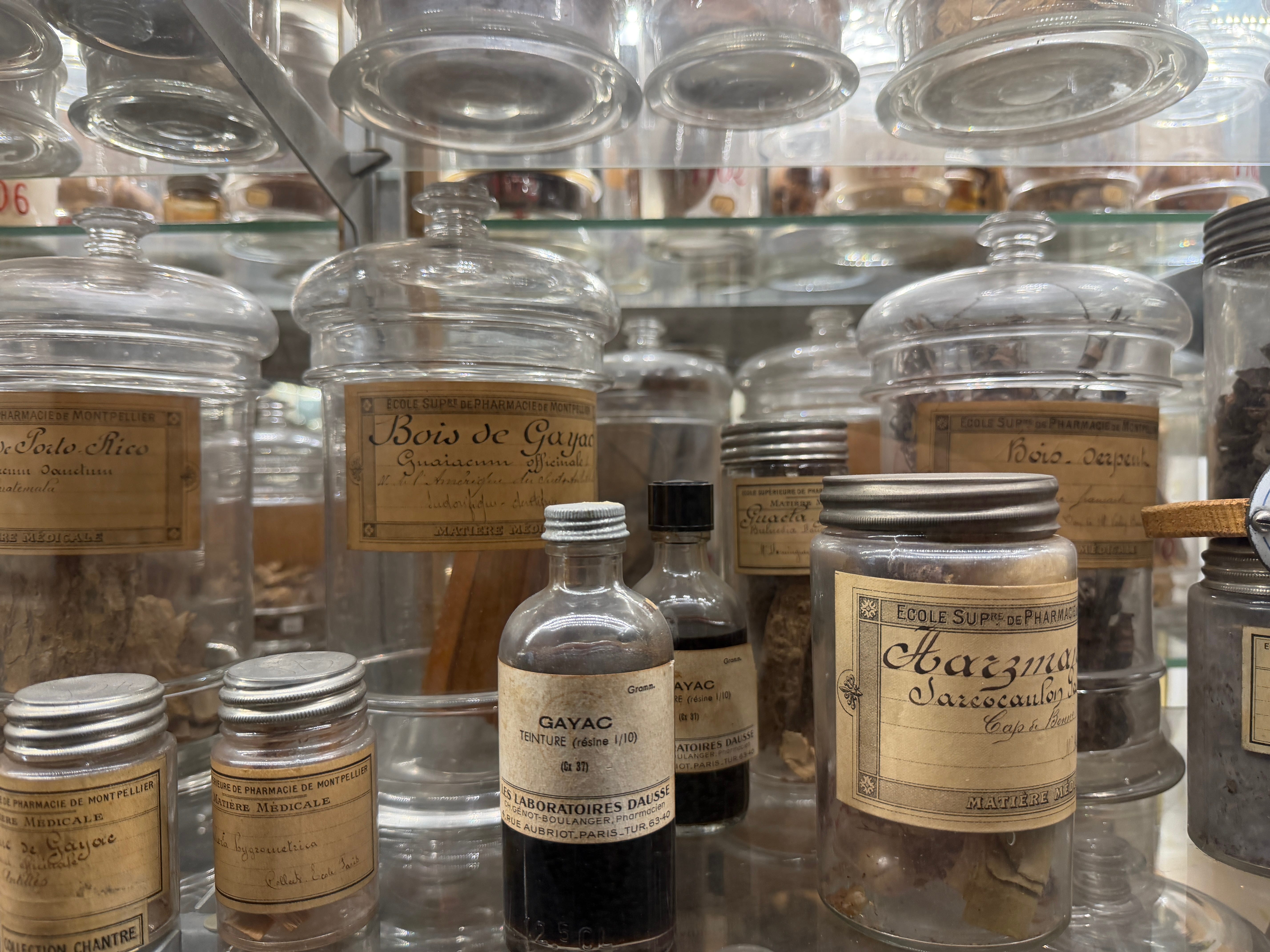
Montpellier, France has long been recognized as one of Europe’s great centers of medical education. In the sixteenth century, physician Guillaume de Rondelet established one of France’s earliest botanical gardens to support the study of medicinal plants. Soon afterward, in 1588, the apothecary Bernardin II Duranc assembled a teaching collection of medicinal substances where students could learn to identify the plants and materials used to prepare medicines of the day.
That early teaching collection evolved into what is now known as Le Droguier de Montpellier. Over the centuries the collection expanded through exploration, scientific exchange, donations, and research. It was revitalized after the establishment of the School of Pharmacy in 1803 and today resides within the Faculty of Pharmacy at the University of Montpellier. Recognized as a Historic Monument since 2009, it remains one of the last great surviving collections documenting the history of the European pharmacopoeia. In fact, it ranks second in France only to the famous collection in Paris.
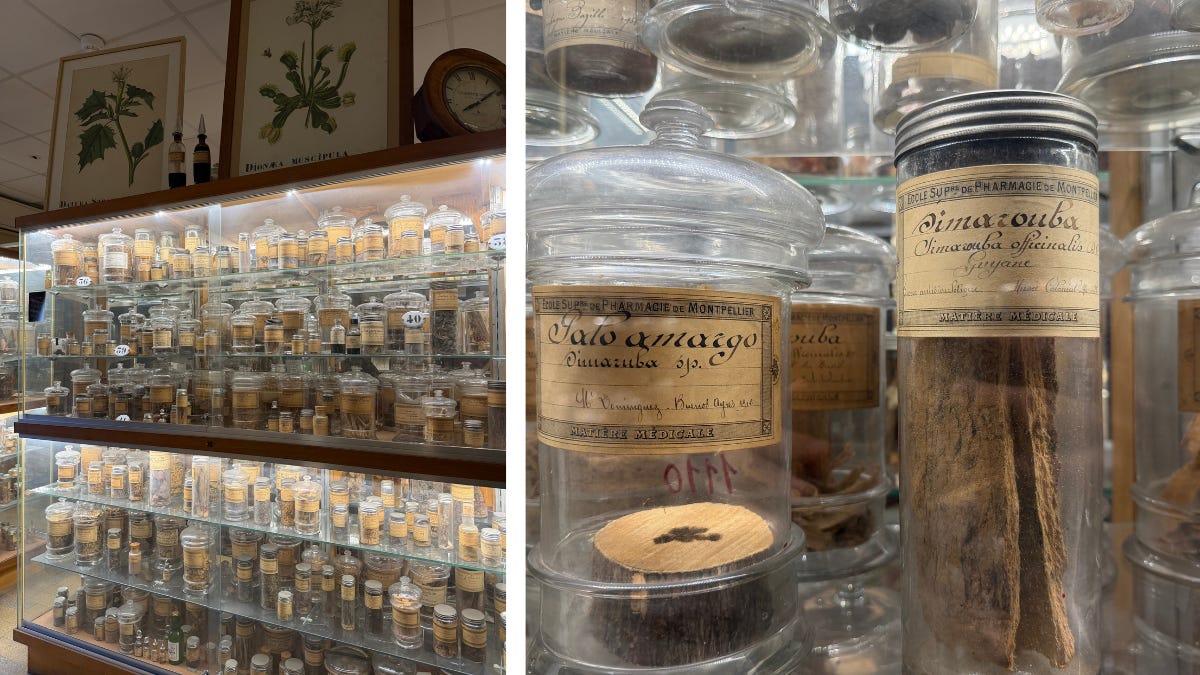
Walking through the museum, I was surrounded by shelves filled with hundreds of glass jars and carefully preserved specimens representing medicinal plants, minerals, fungi, resins, and animal-derived medicines. Some are instantly recognizable, while others hint at therapeutic traditions that have long since faded from modern practice. Together they represent roughly 10,000 medicinal specimens collected over more than four centuries.
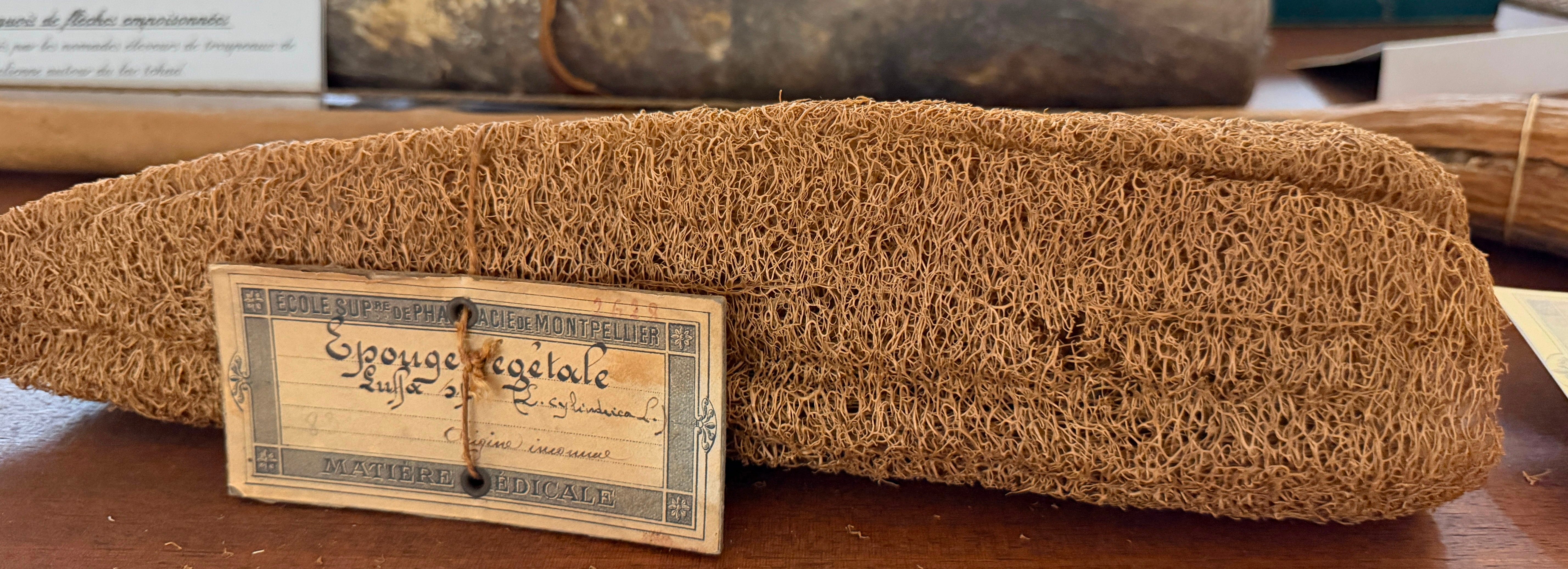
Nearby, the Montpellier Herbarium preserves another remarkable treasure: around 4 million dried specimens of vascular plants, algae, mosses, and fungi. It’s the second largest herbarium in France after the Muséum de Paris, and features specimens gathered through centuries of exploration, collaboration, research, and exchange with botanists around the world. These collections continue to grow today through ongoing research and donations. These are not static archives but evolving scientific resources.
What impressed me most about Le Droguier is that it is not simply a museum preserving old medical relics. It is also an active center for education and research in the field of ethnopharmacology.
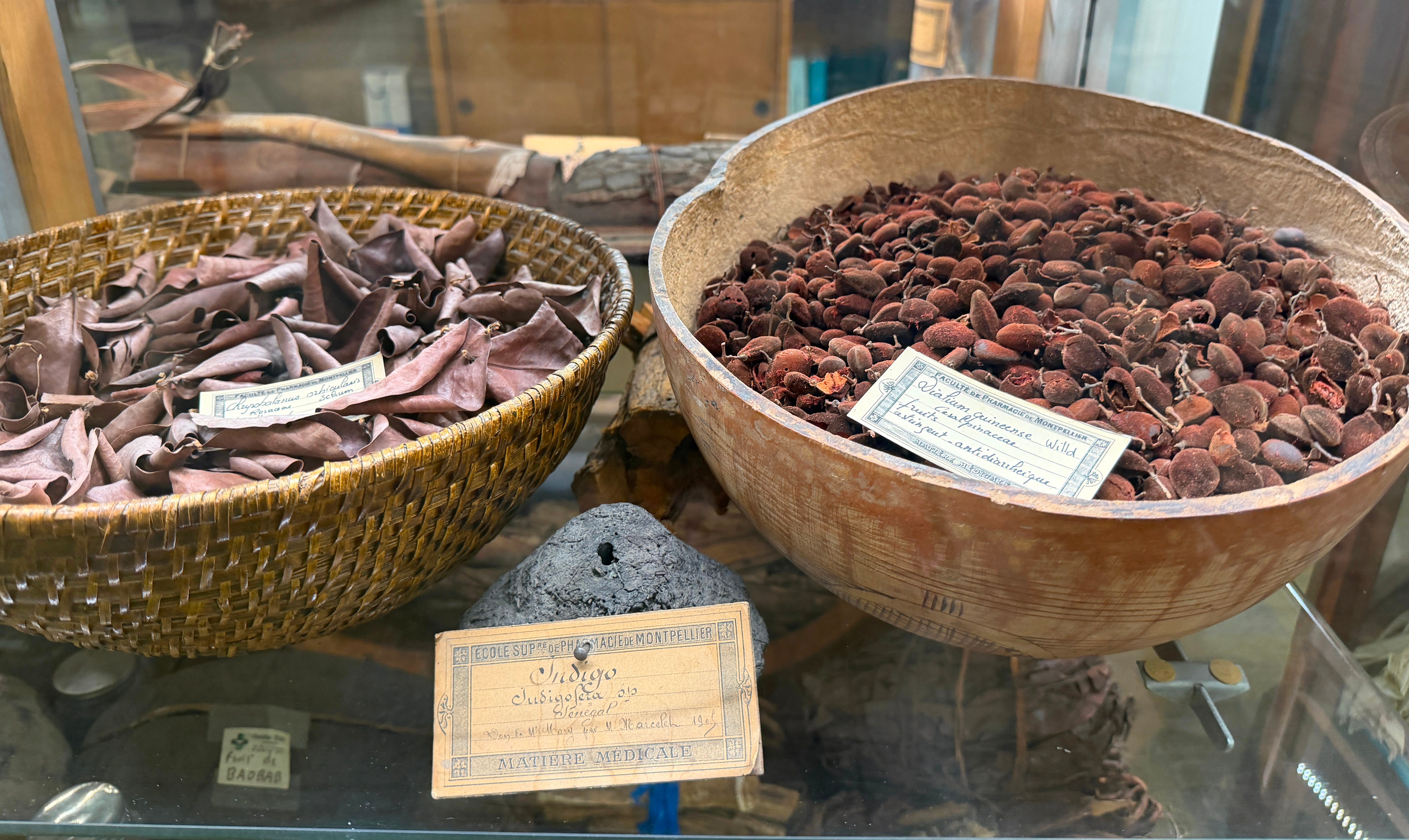
Ethnopharmacology explores traditional knowledge surrounding medicinal plants and seeks to understand how those practices can inform modern science.
As biodiversity declines and traditional ecological knowledge disappears in many parts of the world, preserving these collections becomes increasingly important. Every carefully labeled specimen preserves information that can never be recreated if it is lost. Historical labels record names that have changed, collection sites that may no longer exist, and medicinal uses that might otherwise be forgotten or even extinct today.
Perhaps most exciting is that these centuries-old specimens continue to reveal new discoveries. Modern techniques such as metabolomics, genomics, and advanced structural biology allow scientists to ask questions that the original collectors could never have imagined. A specimen collected hundreds of years ago can still contribute to new research, helping us understand plant chemistry, evolution, biodiversity, and even the search for future medicines.
Have you ever seen a materia medica collection before? What types of questions might you ask about these specimens?
Yours in health, Dr. Quave
Cassandra L. Quave, Ph.D. is a Guggenheim Fellow, CNN Champion for Change, Fellow of the National Academy of Inventors, recipient of The National Academies Award for Excellence in Science Communication, and award-winning author of The Plant Hunter. Her day job is as Professor and Herbarium Director at Emory University, where she leads a group of research scientists studying medicinal plants to find new life-saving drugs from nature. She hosts the Foodie Pharmacology podcast and writes the Nature’s Pharmacy newsletter to share the science behind natural medicines. To support her effort, consider a paid or founding subscription to Nature’s Pharmacy or donation to her lab research.
Comments
Nothing yet. Say the first thing.
Sign in to join the conversation.