
I tend not to have favourites1, but I’m a big fan of spring, particularly May, and that’s due to what I must admit is probably my favourite bird: the swift.
Not only are they a joy to watch,2 but they seem to defy all logic. Simply put, they’re like no other bird. Like no other being.
As I write, there are a handful outside my window performing acrobatic stunts despite the rain, working tirelessly to catch enough insects to sustain both themselves and their young - no easy feat, but one they never fail to look FUN.
This Sunday is World Swift Day, so what better excuse to share some facts about these incredible, endangered, birds?
Each spring, common swifts will migrate from Central and Southern Africa to the UK (and other parts of Europe), racking up over 3,000 miles (one way), which some birds manage to do in less than a month - not landing once that whole time!!
It is estimated that swifts can fly about 500 miles each day, sometimes more!
Swifts almost never land. They are to the sky as fish are to water3. Swifts eat, drink, sleep and mate while in flight. They wash themselves in clouds and gentle rain.
Swifts are in flight for 10 months of the year, only landing at their nesting sites in Europe.
No one is quite sure how swifts manage to sleep in the sky, but when they do, they ascend to 2,000-3,000 metres (that’s almost 10,000 feet!). Then they either put half of their brain to sleep while the other half stays awake to help them avoid obstacles (this is called “unihemispheric sleep”), or they take regular micro-naps.
Swifts are faithful to both their nesting sites and their nesting partners, and they can live for 15 years or more! This is why it’s so important we make sure there are places for them to nest – imagine returning to the home you’ve lived in for over a decade only to discover it’s no longer there.
Swifts are the fastest birds on the planet (peregrine falcons can dive faster, but swifts are the fastest in level flight) and common swifts can fly up to speeds of 70-80 miles per hour!
There are thought to be around 113 species of swift around the world. In the UK, we tend to see the common swift (Apus apus). Swifts form an ancient group called the Apodidae. There’s fossil evidence of swifts from 49 million years ago!
A parasite called the swift louse-fly is unique to swifts, which means they probably evolved in tandem with the birds.
Swifts are insectivores, eating up to 10,0004 insects every day. The birds catch insects mid-flight, which they collect in a special pouch at the back of their throats. There, the insects are bound together by saliva until they form a kind of pellet/ball called a “bolus”. The bolus, which can contain anything from about 300 to 1,000 insects, is regurgitated and fed to swift chicks.
Parents feed each chick about 20,000 small insects and spiders EACH DAY, but unlike other chicks (who tend to be needy little things who must be fed multiple times an hour), swift chicks are also capable of going many hours, or even days, without food. Sometimes, in bad weather, dedicated swift parents will travel for days, across countries, to find enough food for their young. Meanwhile, the chicks go into a sort of partial hibernation while they wait for their parents to return with some sustenance.
Once they’re about a month old, young swifts do “press-ups” on their wings to develop their strength before leaving the nest.
Swifts may not breed until they are three or four years old. This means that when a swift chick fledges (leaves the nest), they might not land, even once, for SEVERAL YEARS!!
The swift’s scientific name is Apus apus, which comes from the Greek for “without feet”. Swifts do (of course) have feet, but because they hardly ever land, and their feet are hard to see in flight, people once suspected they didn’t have any! It’s thought that swifts have actually evolved to have smaller feet, due to the fact they hardly ever use them! Swifts can't actually perch - all four of their toes are at the front, so they can only hang, and can't grip on to a branch or wire like most other birds do.
Swifts were once known as “devil birds” probably because of their piercing screams (they sound like no other bird!). In the past, people didn’t know about migration, and thought that swifts (and many other migratory birds) hibernated underwater, in pond mud, over winter.
Swifts are severely in decline - the most recent Breeding Bird Survey results suggest a 73% population decline since 1994. The climate crisis and a decline in insect numbers (due to pesticide use and loss of habitat) plays a part, but one of the biggest reasons for the reduction in swift numbers is a lack of nesting sites. As we make our homes more energy efficient, or look ‘prettier’, we are inadvertently closing up the gaps and holes swifts use as their nests. Luckily, swifts take to artificial nest boxes and bricks readily, so we can help them out (scroll down for some links to help you).
Look out (and listen) for swifts between May and July. However, this year I saw my first swift on 25th April and in some places a few swifts may stay into August.
If, like me, you’re lucky enough to have swifts nesting where you live, PROTECT THEM AT ALL COSTS! If you don’t have a local swift colony, I highly recommend taking a look at swiftmapper.org.uk to find out where your local colony of swifts is and going to watch them perform at dusk.
If you know you have swifts nesting in your home, please please don’t block their access holes. If you’re having work done on your house and scaffolding needs to be erected, ensure it’s not blocking any access holes.
If you don’t already have nesting swifts, why not provide them with a home and see if they turn up in the future? Swifts will happily nest in pre-made nest boxes and swift bricks, as long as they’re placed high up enough and not in a location that’ll get too hot. Find more guidance on this here. You can play swift calls to attract them, but be patient: it could take years for them to take you up on your kind offer of accommodation.
Survey your local swifts on swiftmapper.org.uk - For the past couple of years I have done this where I live and it’s how I ended up being in contact with my local swift group, High Weald Swifts, who are now going to be installing over 70 new nesting sites in my area in order to protect my local colony, thanks to funding from Maidstone Council. We’re hoping to run some community events over the summer to get people excited about our local swifts. So far, we’ve run a workshop to make a huge, flapping, wearable willow swift sculpture, seen here worn by trustee, Justin, next to the one and only Michaela Strachan:
As you’ve read, swifts need to eat a lot of insects! Help them find food by gardening in a wildlife-friendly way - plant wildflowers and build a pond to attract insects.
Find your local swift group and get in touch to see how you can help them or get more involved. If you don’t have a local group, consider starting one yourself!
Talk about swifts and their decline to anyone who will listen! World Swift Day this weekend is a great excuse to bring them up in conversation, as is Swift Awareness Week, which runs from Saturday 27th June to Sunday 5th July 2026.
The Screaming Sky by Charles Foster is a book I come back to every year around May.
Nature Needs You by Hannah Bourne-Taylor details Hannah’s fight to change the law and make ‘swift bricks’ mandatory in the UK. Spoiler alert: the government are still dragging their feet on this, but Scotland recently put swift bricks into law!
Super Swifts by Justin Anderson, illustrated by Clover Robin, is a gorgeous book made for children but every adult should have a copy!
I’m currently reading One Midsummer’s Day by Mark Cocker.
Two other swift books I am yet to read: Swifts and Us by Sarah Gibson / Swifts in a Tower by David Lack (first published in 1956!).
Wildlife Trusts: Swift profile
Oxford Museum of Natural History: Swift Diary 2025 / 2026
The Swift Conservation website admittedly looks like it’s not changed since the year 2000 but it’s packed full of useful swift information.
A lovely post by Juliet Wilson, aka The Crafty Green Poet:
Watch a map of one swift’s migration journey in this RSPB video (it’s only 48 seconds and well worth a viewing!).
Devil Birds: The Life of the Common Swift (Derek Bromhall) Derek Bromhall’s iconic study of the Oxford Natural History Museum’s Swift colony was filmed using pioneering techniques and remains one of the best films about swifts.
The Other Taylor Swift is a lovely film that highlights a fabulous woman who has dedicated her life to helping swifts. (Use password: swiftsanctuary123)
Don’t forget to log your sightings at swiftmapper.org.uk!
Many thanks to Justin Holmes from High Weald Swifts for support with this post.
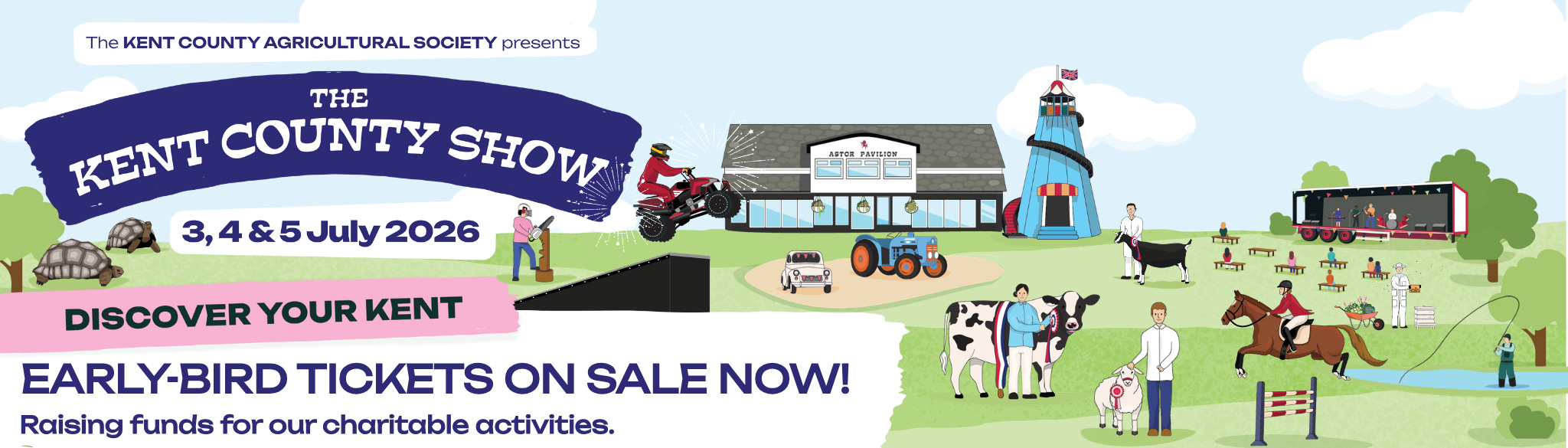
I’ll be at Kent County Show with High Weald Swifts on 3rd and 4th July (and someone else will be there on Sunday 5th July), talking about swifts with whoever will listen. Come along and meet our giant swift sculpture, which will also be paraded around the Torry Hill Woodland Ring at noon on Friday and Sunday and 2:45pm on Saturday.
You can also still book tickets for my event ‘Find Your Creative Flow: Sketch & Cruise’ on the Kentish Lady (a boat!) in Maidstone on 18th June. I walked down the river this morning to think about some of the tasks I’m going to set for attendees and saw a kingfisher twice, which I think is a good omen!
Tickets for my Making Nature Zines and Journals Walk & Workshop at The Linnean Society on 6th August are also still available - I’d love to see you there!
Listen out for screaming
·
May 5, 2025
The first thing I noticed when I arrived at the front door of our new house last June was screaming. Thankfully it wasn’t our new neighbours having a row, or the previous residents trapped inside, but a huge flock of swifts soaring overhead...
My “hot take” is that favourites are utterly pointless and I don’t believe in them (unless you’re a child… children are allowed to have favourites). That being said, swifts probably are my favourite birds to watch, and to talk about. But I’m also a big fan of goldcrests, wrens, parakeets, kestrels, pigeons... Don’t make me choose!! OK, maybe this is just my opinion on favourites because I’m incredibly indecisive!
Last summer, I noted down some of the descriptive terms I overheard/came out with myself while watching swifts around dusk one evening: “That was like fireworks”, “It’s like a pinball machine”, “It’s like watching a rollercoaster”, “They’re like the Red Arrows”, “That was absolute chaos”. They really are like a firework display, mostly because it’s almost impossible not to say “WEEEEEE” or “AHHHH” or “WOAHHHH” while watching swifts.
I can’t take credit for this beautiful description, I’ve seen it a few times from other writers none of whom I can currently remember (sorry!)
Some sources say up to 100,000 insects a day!
Nature Notice Board is free for everyone to enjoy but researching and writing it takes up a big chunk of my time, so if you can afford to, please consider becoming a paid subscriber. Thank you to the 6 generous people who currently pay me for my time - you’re the best!
Comments
Nothing yet. Say the first thing.
Sign in to join the conversation.