

Since time immemorial, Indigenous people have lived on, stewarded, and governed Turtle Island, the land we now call the United States of America. Before the arrival of European colonists, hundreds of civilizations spanned North America with distinct languages, governments, agricultural systems, and trade networks.
Tribal Nations influenced the early United States in profound ways. Our founding fathers found inspiration for the U.S. Constitution in the Haudenosaunee Confederacy, the oldest democracy in North America. Corn, potatoes, and countless American staples grew through Indigenous innovation. Inventions like kayaks and lacrosse emerged from Indigenous engineering and creativity.
Yet, the relationship between the United States and Tribes has not been reciprocal—instead, it has been marked by disease, genocide, displacement, and cultural erasure that removed Indigenous peoples from their homelands and forced them onto reservations.
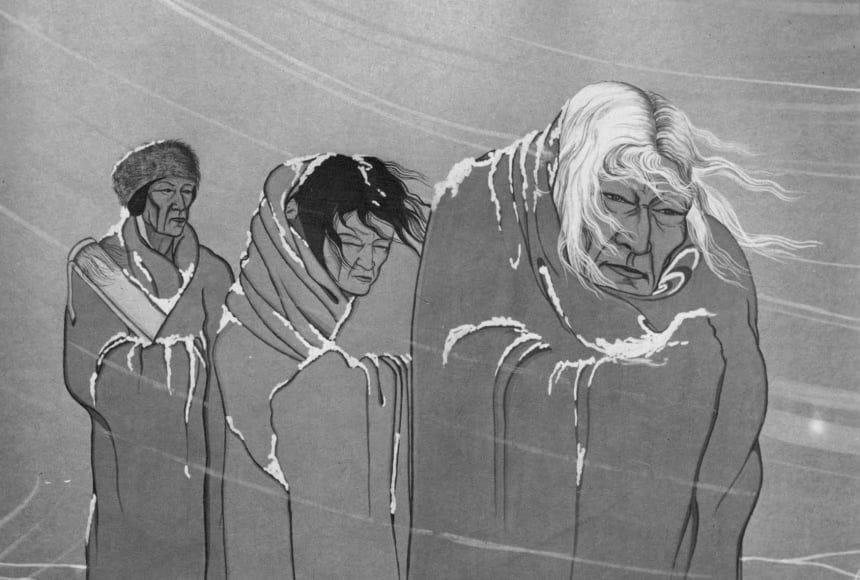
Today, there are 574 federally recognized Tribes in the United States. These Tribes are distinct, independent, and sovereign nations which work to serve their citizens and future generations by preserving their lands, culture, languages, and traditions.
Native American Heritage Month is a time to reflect on the shared history and enduring relationship between the United States and Tribal Nations. While the federal government has made progress in upholding our trust responsibility and building a stronger government-to-government relationship, the Trump administration has perpetuated continual disregard and disrespect for Tribal sovereignty and Native peoples.
In Trump’s America, Tribal sovereignty is under threat on numerous fronts.
Time and time again, his administration has undermined the inherent authority of Tribal Nations to govern their land, waters, and traditions while weakening the very agencies that provide critical educational and healthcare services to Tribal citizens. These reckless, shortsighted moves make one thing clear: Trump has no respect for the trust and treaty rights of Tribal Nations.
This June, Trump blew up the Resilient Columbia Basin Agreement, a rare win forged between the federal government, the Nez Perce Tribe, Confederated Tribes and Bands of the Yakama Nation, the Confederated Tribes of the Warm Springs Reservation, the Confederated Tribes of the Umatilla Indian Reservation, and the states of Oregon and Washington.
The Biden-era agreement halted a long-running legal battle over the impacts of the lower Snake River dams in the Pacific Northwest, putting the lawsuit on hold for up to a decade to invest $1 billion towards restoration and conservation for endangered salmon and steelhead populations integral to Tribes’ way of life.
With a stroke of a pen, Trump erased a historic agreement that supported salmon recovery, reliable clean energy, and Tribal water and food security across the Pacific Northwest. It was grounded in science, built on consensus, and designed to protect salmon from extinction while preparing the region for a clean energy future. Trump threw all that away to score cheap political points.
And its Tribes, working families, and our environment who will pay the price.

Oak Flat, or Chí’chil Biłdagoteel, has deep cultural and religious significance to several Tribal Nations in Arizona, including the San Carlos Apache Tribe. Located in the Tonto National Forest and listed on the National Register of Historic Places as a Traditional Cultural Property, Native peoples have gone to Oak Flat to pray, hold cultural ceremonies, and gather traditional medicines and food since time immemorial.
In December 2014, a provision was inserted into the must-pass National Defense Authorization Act (NDAA) that mandated the public land transfer of the Oak Flat area to the Resolution Copper mining project.
This April, the Trump administration published their notice of intent to issue the final environmental impact statement (FEIS) of the public land transfer of the Oak Flat area to Resolution Copper. While the 2014 NDAA language says the land transfer must happen within 60 days of the publication of the FEIS, the transfer could happen immediately after the FEIS is published.
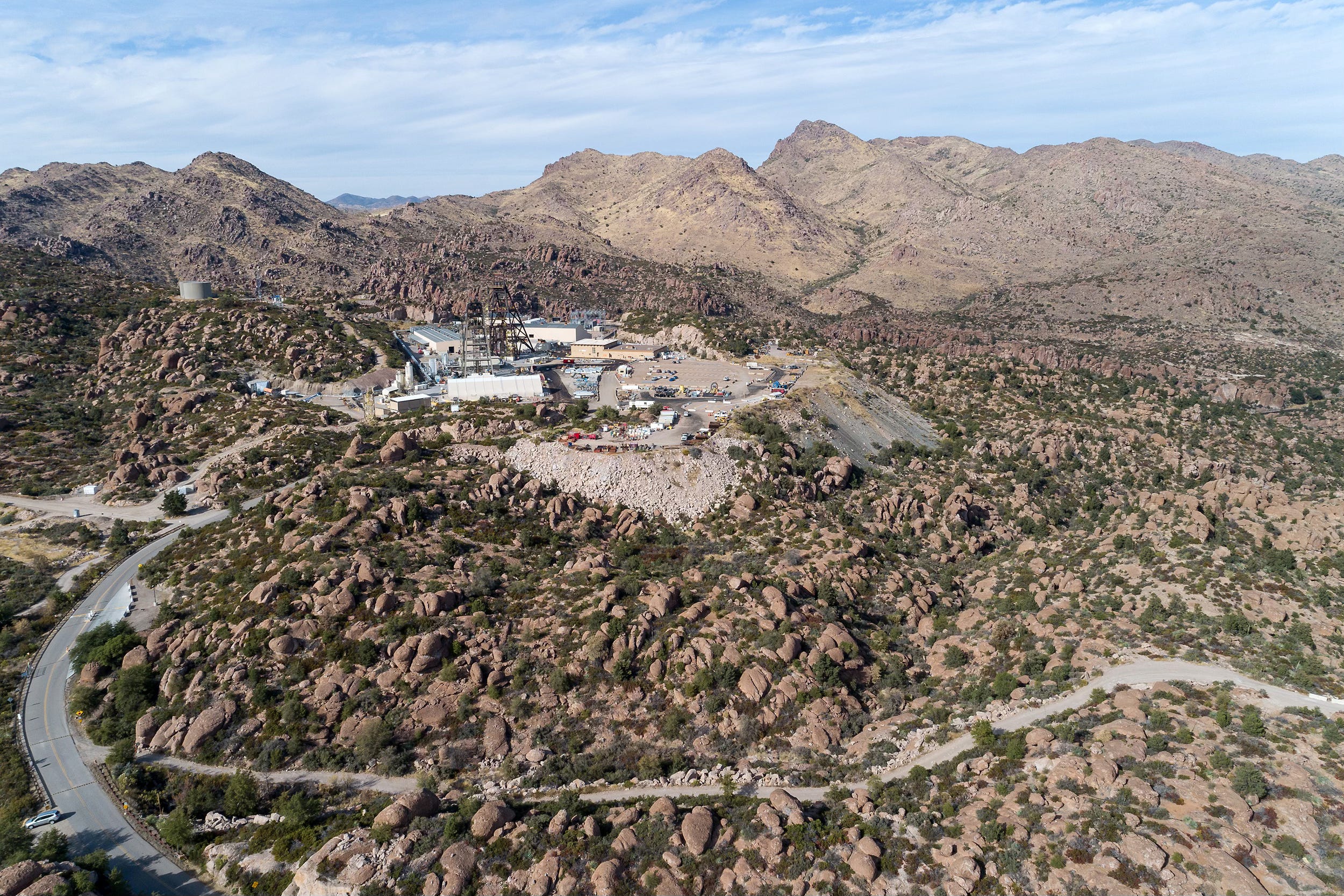
Four different legal challenges to the land transfer and Resolution Copper mine are currently working their way through the courts. Alongside the Arizona Mining Reform Coalition and Inter-Tribal Association of Arizona, the San Carlos Apache Tribe has asked the Arizona District Court to pause the land transfer while their challenges to the transfer are considered.
Resolution Copper is just the latest chapter in a long, shameful history of extracting wealth from Native lands while destroying the communities who live there.
If the transfer moves forward, a Chinese-backed mining company will irrevocably destroy Oak Flat, making it nothing more than a two-mile-wide, thousand-foot-deep crater. As Ranking Member Huffman said: “This will spell the end of the Apaches’ religious practices forever, just so foreign mining corporations can make a quick buck. Because in Trump’s America, your right to worship is sacred—unless what you worship sits on valuable real estate.”
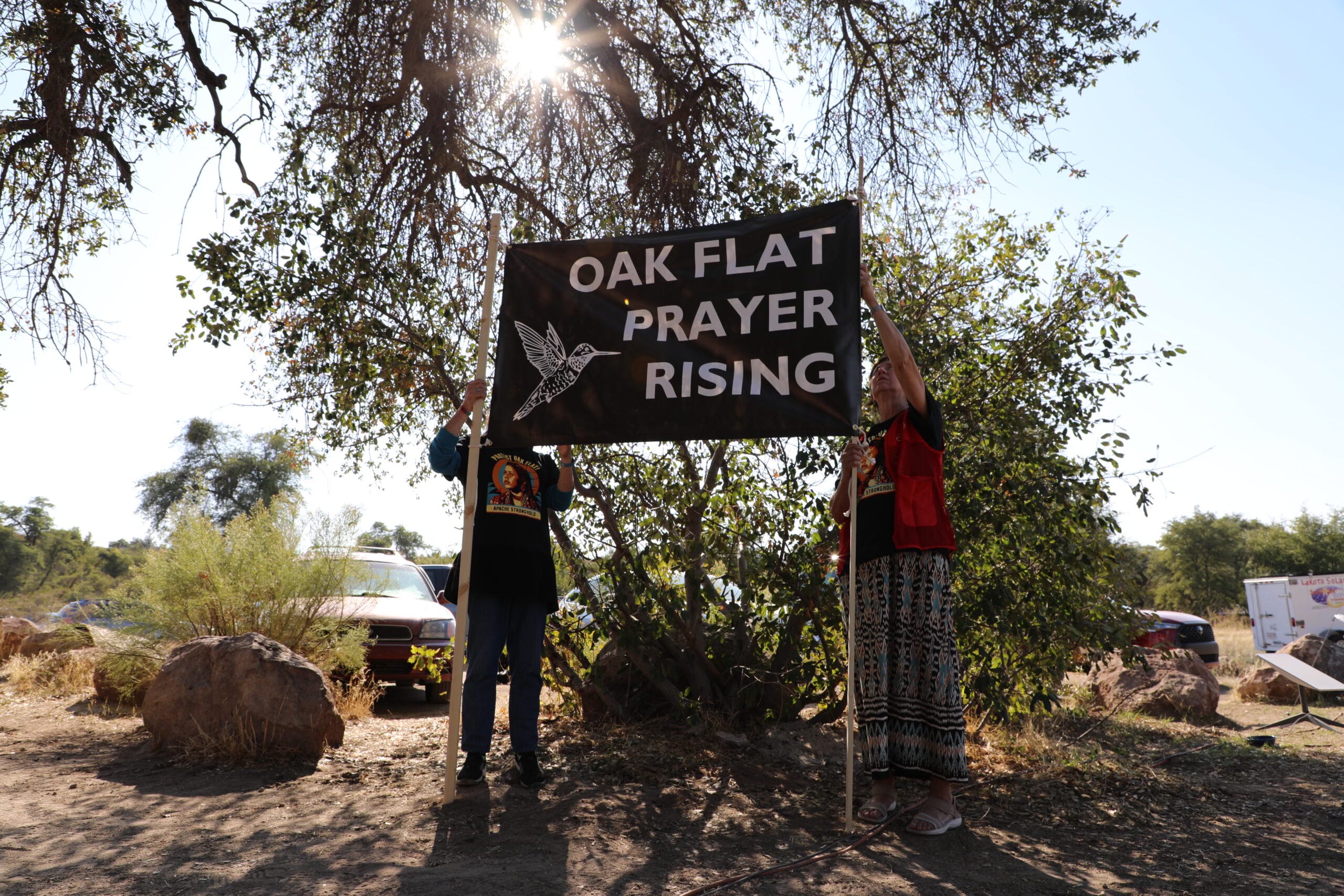
On August 18, 2025, the 9th Circuit Court of Appeals issued an emergency injunction pausing the land transfer of Oak Flat to Resolution Copper, representing a victory for Tribes, the environment, and everyone in this country who has the right for their voices to be heard.
Beyond the Colombia River and Oak Flat, threats to Tribal sovereignty are made daily in Trump’s America. In his second term alone, Trump has:
Conducted mass firings, Reductions in Force, and hiring freezes, leading to significant staffing declines in the already understaffed Bureau of Indian Affairs, Bureau of Indian Education, and Indian Health Service. These agencies provide critical social, natural resources, law enforcement, economic development, healthcare, and educational services to Tribal citizens per established trust and treaty responsibilities.
Proposed hundreds of millions of dollars of cuts to Tribal programs and services under the Bureau of Indian Affairs, including $140 million in cuts to public safety and justice at the BIA.
Removed a mandated report on Missing and Murdered Indigenous Peoples from the Department of Justice’s website and the Navajo Code Talkers from U.S. military websites. These actions stemmed from Trump’s crusade against anything they’ve labeled DEI, which has dragged Tribal history, Tribal safety programs, and treaty obligations into a manufactured culture war.
Issued a Columbus Day proclamation to “reclaim” what he called the famed explorer’s “extraordinary legacy of faith, courage, perseverance, and virtue.”
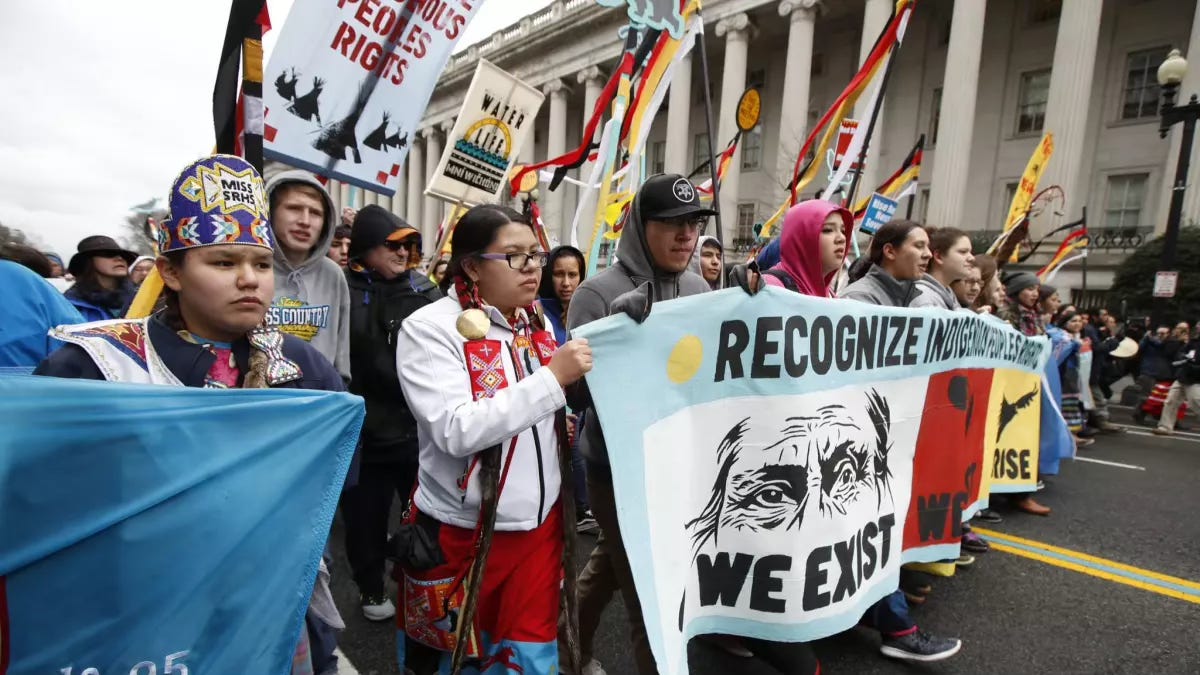
Earlier this year, Ranking Member Jared Huffman introduced H.R. 3444, a bill that strengthens the role of Tribal Nations in decisions about nearby forests. Tribes have effectively managed lands and forests for generations with their deep ancestral knowledge. The bill supports true partnership on lands with cultural, spiritual, and ecological importance and builds a stronger path for shared work between federal agencies and Tribes.
Representative Emily Randall is leading H.R. 3654, the Tribal Emergency Response Resources (TERRA) Act, which would give Tribal governments authority to run one unified emergency response plan for federal resources in their area, helping Tribal communities respond faster and more effectively when fires, floods, and other threats hit their lands.
Representative Melanie Stansbury’s H.R. 635, the WaterSMART Access for Tribes Act, removes a major barrier for Tribes trying to secure water and climate resilience funding by letting the Department of the Interior waive matching fund requirements for Tribes in specific cases. Meanwhile, Indian and Insular Affairs Subcommittee Ranking Member Teresa Leger Fernández is leading a number of Tribal water rights settlement bills for New Mexico.
Committee Democrats remain committed to advancing these bills because every community deserves clean, safe, and dependable water and protection during emergencies.
Democrats will stand with Tribal Nations in the fight to honor trust and treaty responsibilities. Democrats will fight to protect treaty rights and scared sites, prevent further cuts to critical agencies, and advocate for increased funding. And Democrats will continue today, and every day, to advance self-determination and self-governance.
No posts
Comments
Nothing yet. Say the first thing.
Sign in to join the conversation.