
From September 2023 until March 2025, I was employed as a project archivist at the Mulberry Bush, an Oxfordshire primary school for children with early years trauma. The Mulberry Bush also owns and manages the former Planned Environment Therapy Archive in Toddington, Gloucestershire. This contains the records and other ephemera of several therapeutic communities and significant individuals in the field of alternative psychiatry, progressive education, and psychoanalysis. Now, after finishing the project, I wanted to revisit this eighteen-month period with fresh eyes, and discuss some of the key points which emerged along the way.
Overview - Collection, Organisation, Approach
Before beginning this analysis, though, a short description of the Mulberry Bush, and of my task working there. The school was founded in 1948 in Standlake, Oxfordshire by Barbara Dockar-Drysdale, who had developed skills looking after traumatised children hosting evacuees from London during the Second World War. With support from her husband's family, who had grown wealthy through the spice trade in the nineteenth century, Dockar-Drysdale purchased a farmhouse and large plot of land in order to house a larger number of children and care workers on a semi-permanent basis.
Following several refurbishments, new buildings, and considerable changes in the way the school operates, the Mulberry Bush remains on this site today. Over 850 children have passed through the school since its establishment, with anywhere from a dozen to almost thirty children living on-site at any one time. Children typically stay for a period of three years, although the mid-twentieth century saw some pupils staying for up to six years at a time. The records of the children, including their psychological evaluations, school reports, letters to and from parents, and other relevant information, are stored in paper form (and, more recently, digitally). This information is complemented by daily logs, incident reports, and observations of children in class and in their residential setting on-site.
Over 75 years of continuous operation, a large archive of records builds up, which, if not managed consistently, can become very disorganised. For this reason, I was hired as a project archivist to catalogue, organise, preserve and make the collection accessible to wider audiences. I was given relatively free rein to do so - senior staff members told me that "anything I could do" would be good enough! Given this wide scope and limited direction, I spent some time at the beginning of the project considering what my approach should be, and where my time would be best spent. This resulted in three main angles of attack, under which the rest of the project could be divided: cataloguing existing material, collecting new material, and engaging stakeholder groups in participatory cataloguing.
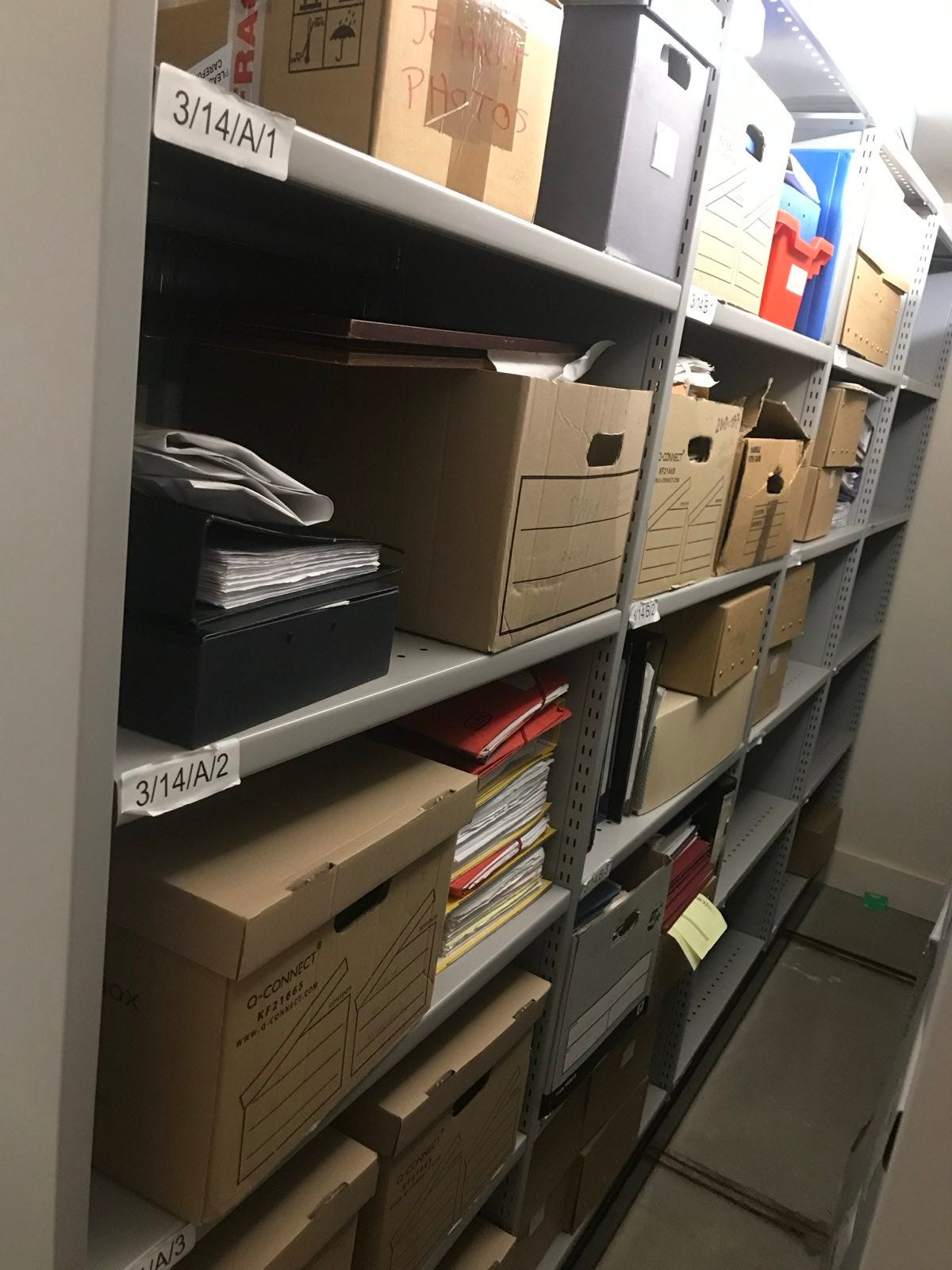
Dividing my approach like this allowed me to make my task seem a little more manageable. The project did seem a little daunting when I first approached it, particularly when faced with the sheer level of disorganisation and inherited, contradictory catalogue structures that appeared when I first opened the archive door. The pupil files, for example, had been stored alphabetically by surname, divided seemingly arbitrarily into two large sections. This created two different A-Z lists of pupils, two sets of boxes, and two places where pupil files might be found, leaving the collection very hard to browse without hours of rummaging. Logbooks were stored haphazardly, rather than in chronological order, while the collection of photographs remained in complete disarray, slowly degrading due to storage in commercial photograph albums.
The digital archive was in a similar state. Material had, at various different points, been stored by accession number, by format, by depositor, and by collection. This led to material being spread all across the digital archive, often duplicated twice or more. The digital archive was hosted on Sharepoint, with minimal fixity checking, backups, or format control. A significant amount of material was also stored on the successor to a school-based shared drive, since migrated to another Sharepoint instance. This drive contained a mixture of active-use and legacy files, as well as some staff's personal folders (containing personal financial information and even signatures!). A challenge was presented by the digital archive - how does the archivist preserve and catalogue digital material when there is so little infrastructure in place to ensure file fixity and long-term accessibility?
Environmental Factors
Soon after beginning to catalogue the Mulberry Bush collection, I realised that the storage environment, resource allocation, and digital preservation facilities were in several ways inadequate for absolute best-practice storage and preservation to take place. Additionally, the eighteen months allocated to the project would not be sufficient for full item-level processing. Accordingly, I adopted a "More Product, Less Process" (MPLP) approach - ensuring that a minimal amount of time and energy was spent making the maximum amount of material accessible.1
In an archive where Subject Access Requests under UK GDPR are frequent. ease of access to individual pupils' information can be facilitated by a robust and well-laid-out set of series-level descriptions (Logbooks, Observation Books, Pupil Files, etc.) even if each individual item is not catalogued. Creating this set of series then allowed me to come back later to create item-level descriptions, without impacting the usability of the collection in the meantime. This also allowed time and space later in the project to be devoted to removing paperclips, staples, and other elements which would prove harmful to the archive in the long run.
Another practical challenge facing the project was the storage environment. Rather than being stored in one large climate-controlled room, the archive consists of several smaller connected rooms. At the beginning of the project, the storerooms were climate-controlled only with portable oil radiators and industrial dehumidifiers, draining into open buckets on the floor. In winter, the radiators prevented the temperature from sinking too low, but there was no way to cool the stores' temperature in summer or during heatwaves. This led to a relatively large range of possible temperatures, which would lead to faster degradation of physical material in the archive. While the Mulberry Bush collection principally consisted of paper and bound notebooks, other collections contained glass slides, reel-to-reel films, and other more sensitive material. Film of this kind should be preserved in an environment which does not fluctuate rapidly in temperature or relative humidity - unfortunately, this environment couldn't be created at the archive in Toddington.2
As this problem could only be fully solved with the installation of a proper air-conditioning system (which did end up happening towards the end of my project!), my approach largely focused on beginning the process of digitisation, and ensuring that physical copies were clearly labelled and documented. I also made sure to document my approach clearly, to ensure accountability and transparency. In an archive where previous archivists had made decisions that appeared illogical (and had not documented their thought processes in any way), this documentation was particularly important to create.
This MPLP approach was also taken on the digital side of cataloguing. My colleagues and I were working with the knowledge that while we could ensure some preservation, we were working with a rather small budget and relatively poor quality digital facilities. One of my colleagues was running a long-term appraisal and migration operation of the entire digital store; I therefore found it expedient to simply arrange files in a way that matched their catalogue IDs, and let him get to file migration when he was able to. Dividing up the labour in this way allowed us both to get larger amounts of work done: file migration is very time-consuming, as is digital appraisal and cataloguing, so both of us switching between the two tasks would have led to greater inefficiency.
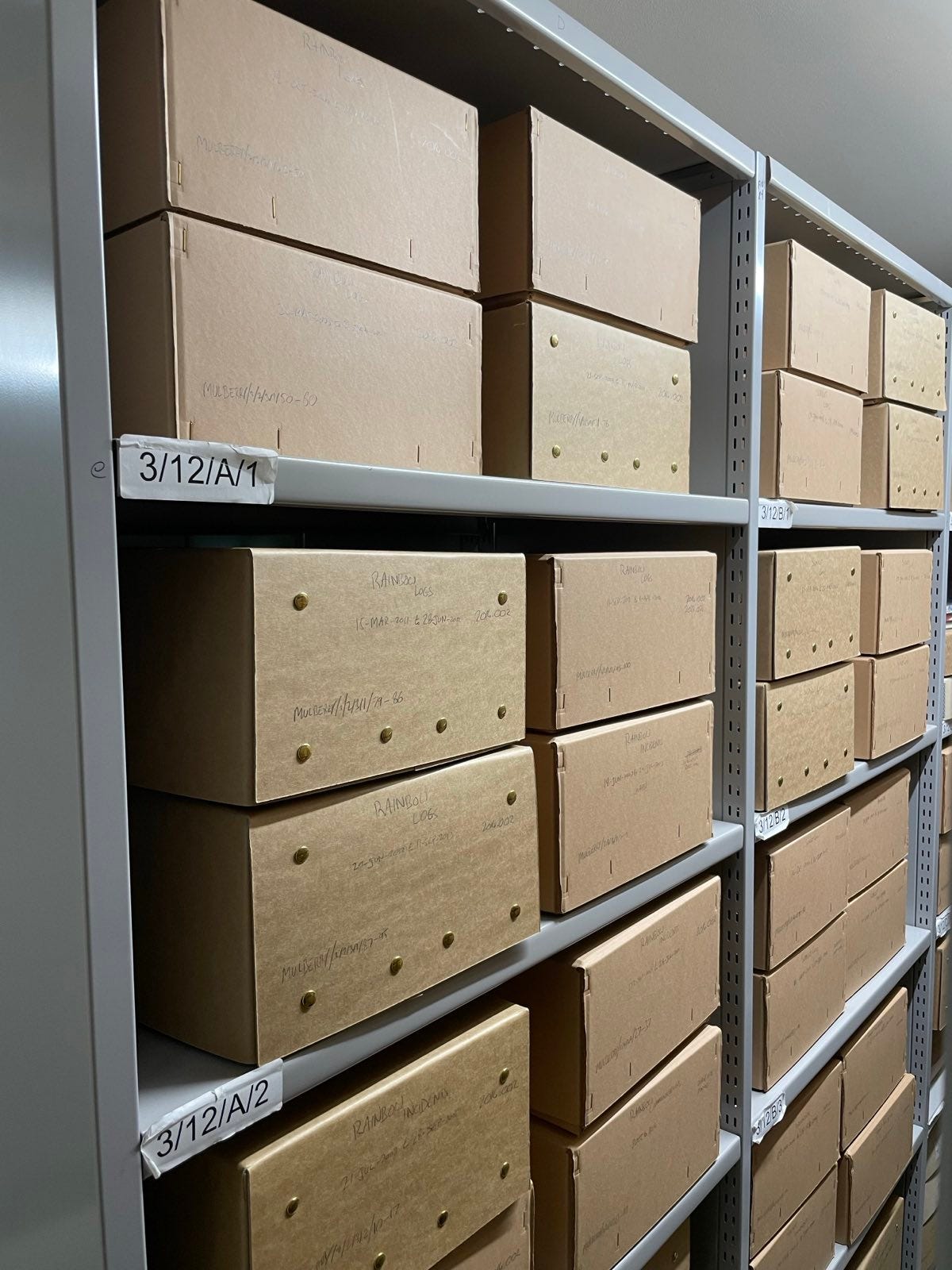
Overall, efficiency was the name of the game during this project. I was aware that if I got sucked into removing every paperclip, creating a name authority for every ex-pupil, and Melinexing every photograph, I wouldn't come close to cataloguing the whole collection in eighteen months. Taking an MPLP approach, prioritising and setting clear goals and expectations, allowed me to catalogue the entire collection to a good standard within the time allotted, while conducting outreach and stakeholder engagement on the side.
Affect, Impact, Trauma
When working with material regarding traumatic events, it is likely (or, indeed, inevitable) that the archivist will be affected by what they read in the records. The Mulberry Bush archive (at least nominally) works in a trauma-informed way, attempting to explicitly acknowledge and address the vicarious (second-hand) trauma the archivist may experience from processing difficult material. The concepts of affect, trauma-informed practice and sensitive approaches to traumatic material are not new in the wider world, but in the archives field they have only gained prominence in the last decade. As such, the Mulberry Bush is one of only a few archives explicitly using a trauma-informed approach to cataloguing on an institutional level. While this does make it a ground-breaking institution in some ways, it also means that the approach it takes is somewhat experimental, rather than building on tried-and-tested workflows already used in other archives.
Affect theory has been applied to archives since the mid-2000s, focusing on the power of archival material to affect its users and archivists. Of particular relevance to my work at the Mulberry Bush is the idea that archives can be "containers of feelings or emotions," which embody not only the memory of trauma encoded in the information they contain, but also the appraisal, cataloguing, and storage processes the material has been subjected to over time.3 The trauma-informed approach to archives continues in this vein, centring the experiences of archives service users, archivists, and the people documented within the archival material itself. With this in mind, it aims to reduce the amount of stress and trauma inflicted upon these groups in the course of the archive's work. The principles of **safety, trust and transparency, choice, collaboration, and empowerment** are used to construct an environment in which groups can work together as equitably and productively as possible, while ensuring that structures of care and accountability are set in place to support the task of the archive.4
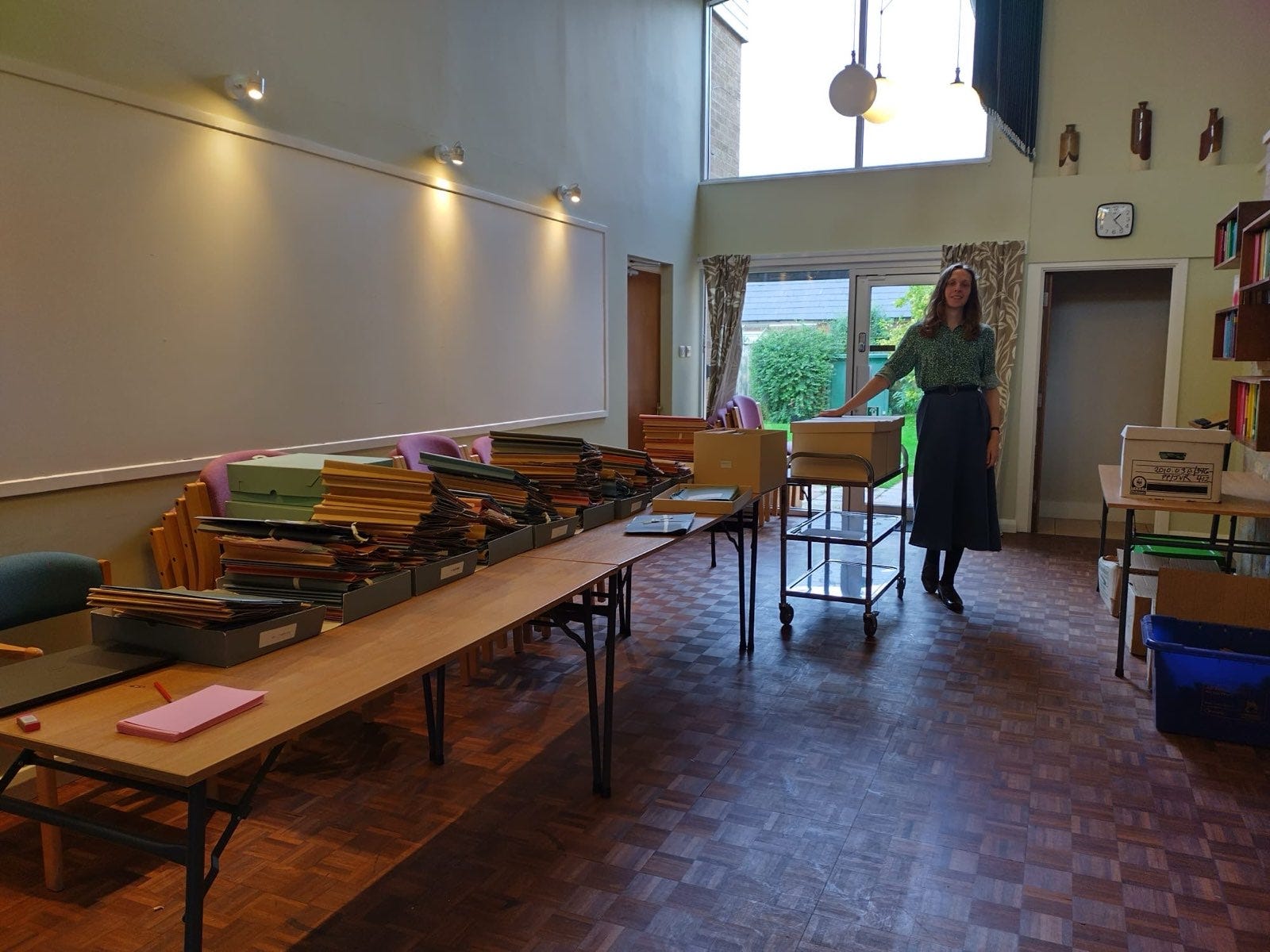
The Mulberry Bush collection contains significant amounts of material regarding child abuse of all kinds, and as such it was expected that working with it could prove difficult. However, the true extent of such material contained within the archive was not known (or communicated to me) before the project began. This led to me being the first person to uncover a great deal of traumatic information without warning - I spent a lot of time needing to take breaks and rethink my approach to cataloguing. This was one of the motivations behind my MPLP approach - I found that going over pupil files with a fine-toothed comb removing staples led to me reading every page of every file, presenting me with enormous quantities of traumatic material. In light of the emotional impact of this process, I altered my approach. I stopped reading the reports in detail, instead just focusing on the material as a series of objects. When I needed to read text in order to gain more information about the school's history, I would make sure to prepare myself mentally, and have an "escape plan" if I needed to take a break.
Vicarious Trauma
However, this approach can only work up to a certain point. Despite isolating myself to the greatest extent possible, I was still working with traumatic material on a daily basis. This, in turn, led to vicarious trauma on my part - a kind of second-hand trauma experienced by those dealing with or caring for those who have experienced first-hand trauma of their own. The conceptualisation of vicarious trauma in the theory world stems in part from feminist ethics of care - the archivist can be considered a caretaker of records as well as a custodian, thus demanding a certain level of empathy and emotional labour on their part.5 The archivist thus cannot (and, indeed, should not attempt to) maintain emotional distance and so-called "professional detachment" from the task at hand. While this was previously the ideal in the archives field (see my previous blogs on subjectivity and inclusivity!), we have more recently begun to accept and encourage this kind of care relationship between archivists and the records they work with.
At the Mulberry Bush, these ethics of care were more concrete and evident than they may have been at, for example, a university archive. As the children whose records I processed frequently maintained contact with the school in one way or another, and frequently submitted Subject Access Requests with which they needed considerable assistance, the care relationship extended to encompass the subjects of the records in a far more concrete way.
The effects of vicarious trauma that I experienced were wide-ranging and unpredictable. Most impactful was my increased startle response. I began jumping almost out of my skin at the slightest noise, if someone entered a room behind me, or if I dropped something on the floor. I began to be far more nervous and unpredictable, which began strongly affecting my life both within and outside the work environment. This effect has lingered with me for some time now, and only several months after the end of my contract has it begun to lessen.
From several months into the contract until the very end, my sleep began to be disturbed by nightmares, waking at night, and trouble falling asleep. While winding down for the evening and waking up in the morning, my mind was filled with the contents of the archive, and words and phrases I'd seen in the previous weeks would flash into my head. I found this particular phenomenon to be by far the most harmful to my general health and wellbeing - cycling to and from work on anywhere from five to seven hours of sleep became an almost daily ritual. I found it somewhat hard to fully switch off, even though the daily commute offered something of a buffer.
Although my time at the Mulberry Bush is now up, and has been for some time, some of these effects remain with me, and I believe are here to stay. I am more chronically tired than I was before I began the contract, and disturbed sleep has become far more frequent. I remain skittish and easily startled, which is often a considerable hindrance living in one of the busiest cities in Germany. Luckily, the trauma-informed approach is becoming more well-known method in the archives field, and more detailed and fully-fleshed-out workflows are being developed. Hopefully, in the future, archive services will have more systems in place to support their archivists who deal with traumatic material.
Conclusion
Having had a few months since the end of the Mulberry Bush project, I feel like I'm able to look back on it in a more holistic way. I found it, overall, to be a genuinely interesting project which allowed me to bring together my theoretical and practical understanding of the archives world to create a full, well-ordered, accessible catalogue. I'm proud of my work, and I think it holds up as a good example of ISAD(G)-compatible cataloguing and digital preservation in a workplace with limited resources and staffing. While the experience I gained and skills I honed at the Mulberry Bush will definitely stand me in good stead for future work in the field, my experiences of vicarious trauma have certainly made me more jaded about the realities of archive work. The work of an archivist is often so much broader in scope than just cataloguing the records and speaking to stakeholders - organisational politics, scheduling, and navigating financial shortcomings all significantly played into my experience at the Mulberry Bush.
As first jobs go, working at the Mulberry Bush veered rapidly between being a baptism of fire and a baptism of warm milk - simultaneously exhausting, overwhelming, and also surprisingly gentle in places. Being given so much leeway to catalogue and manage the collection how I saw fit was a huge responsibility, but it allowed me to sharpen my skills and develop expertise in handling large amounts of material in a way I didn't expect. There were significant archival challenges, but also a small team of experienced archivists who were always on hand to provide advice and assistance. Overall, I found it to be an excellent foundation for my next project - which I'll be covering in some detail in my forthcoming blogs. Stay tuned!
If you’d like to browse the Mulberry Bush collection, here’s a link:
The Mulberry Bush Organisation Archive
If you’d like to subscribe to my blog, here’s a button:
Mark Greene and Dennis Meissner. "More product, less process: Revamping traditional archival processing." The American Archivist 68, no. 2 (2005): 212-213.
“Fundamentals of AV Preservation - Chapter 1.” 2025. Northeast Document Conservation Center. 2025. https://www.nedcc.org/fundamentals-of-av-preservation-textbook/chapter1-care-and-handling-of-audiovisual-collections/chapter-1-section-4.
Marika Cifor. "Affecting relations: introducing affect theory to archival discourse." Archival Science 16 (2016): 13-14.
Kirsten Wright and Nicola Laurent. "Safety, collaboration, and empowerment: trauma-informed archival practice." Archivaria 91 (2021): 38-73.
Victoria A. Fernandez, "Exploring Vicarious Trauma in the Archives: A Brief Survey of American Archival Experiences." (2020).
No posts
Comments
Nothing yet. Say the first thing.
Sign in to join the conversation.