
What a $40 billion budget crisis taught me about living
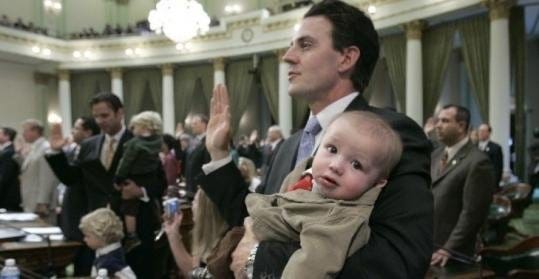
“Can you point out which one of these is Fletcher so I can get on to the next newbie?”
She smiled when she said it.
I smiled back.
I had officially been a member of the California State Assembly for maybe an hour. My new office was filled with people attending a celebratory reception. She was a well-known capitol figure, and I had been honored when she stopped to introduce herself.
Then I realized she had no idea she was actually talking to Fletcher.
The Capitol is built to make you feel the importance of the institution. Marble floors. Massive chandeliers. Vaulted ceilings. Portraits of presidents and history hanging on the walls. Standing on the Assembly floor, I thought about the people who had served before me and those back home who had trusted me enough to send me there.
The office was important. But, I wasn’t. Just the next in line to occupy it.
I pointed her towards a slightly older guy about my size with an air of importance and then quickly turned around before I busted out laughing.
I lived across the street from the Capitol in a no-bedroom apartment I rented month to month. A mattress on the floor. A coffee pot. And one folding chair I had owned forever. I had named him Hank. Hank had followed me to Sacramento and served as my dining chair, reading chair, coffee drinking chair and, depending on the day, a place to throw my suit. I really liked Hank.
Early each morning, I rode a borrowed bicycle a few miles to a CrossFit gym for a 6am workout with people who didn’t know anything about me. Just another veteran doing some dumb workout in a warehouse. It was a refuge. Sweating with a group of people who weren’t a part of the chaos of my professional life.
It was one hour when I didn’t have a vote. No expectations to live up to. Just some gym buddies who cussed too much and loved working out to the point of throwing up. It was great.
Then I would leave. Back to shower, get my suit off of Hank and head across the street to work.
California was facing a budget deficit of more than forty billion dollars on a general fund budget of roughly one hundred billion.
We could have cut all funding for every state university, closed all the state prisons and cut a month off the K-12 school year and still would only solve for maybe half the deficit. It was hard to comprehend the scale of it.
There were no easy solutions. Every proposal carried consequences. Every decision meant someone would hurt.
The Capitol itself carried a tension that overtook the fake smiles and handshakes.
Sound echoed down the hallways. Heels clicking across hard floors. Doors opening and closing. Staffers shuffling quickly while staring at their phones. Reporters lurking outside committee rooms. The ever present security and of course lobbyists. Lobbyists everywhere, waiting for meetings, hoping to catch a legislator in the hallway, or simply hanging around to see what happened next.
In some ways, it felt like a busy market I had walked through in Somalia less than two years earlier.
A bustling sea of humanity. Everyone moving. Everyone struggling to get somewhere. Energy, tension, fear and uncertainty. Everyone needing something.
Except this one had air conditioning and everyone wore business attire.
Then there were the protestors.
Loud, boisterous. Well organized. The groups had perfected chanting. Hundreds if not thousands of voices becoming one. Bullhorns and drums. The sound would rise through the rotunda and reverberate through the building.
You could hear it in your office with the door closed. You could feel it.
Billions of dollars were on the line. But budgets aren’t numbers. They are lives.
Classrooms, hospital beds, treatment programs. Firefighters and cops.
There were no good options. Just a perpetual struggle to find the “least bad” path.
Every decision meant someone would lose something they depended on.
For a new legislator still trying to learn the ropes, it was exhausting.
Pressure itself was not new to me. I had spent years in combat zones.
What I misunderstood was the permanence of this kind of conflict.
I remember thinking, “If we can just get through this one thing.”
Get through this budget and we can catch our breath.
After months of arguing, negotiating and failing to find an option anyone liked, a messy compromise came together.
It wasn’t a victory. But it passed.
I expected the pressure to ease.
Instead, another controversy immediately took its place.
A different issue drove headlines. Different protesters filled the building. Different interest groups demanded meetings. Different accusations flew back and forth.
And then after that one. Another.
The budget crisis ended.
The crisis never did.
Years later, I visited the capitol when the situation was much different. California had a record budget surplus. No cuts to make. No new taxes to pass. This time the debate was over new programs, investments and tax cuts. It should have felt completely different.
It didn’t.
It felt the same. A bustling sea of humanity. Everyone moving. Everyone struggling to get somewhere. Energy, tension, fear and uncertainty. Everyone needing something.
Hallways full of people shuffling around staring at their phones looking like they really needed sleep. Lobbyists desperate to plead their case. And protestors! Chanting, bullhorns, drums and outrage. You could hear it. You could feel it.
That was when it clicked.
It never ends.
I had believed that the pressure was temporary. That calm was waiting on the other side of the current fight.
But there was always going to be another issue. Another decision. Another problem demanding immediate attention.
Waiting for the Capitol to run out of conflict is like waiting for a ranch to run out of work.
At some point, I realized that if I wanted any kind of sanity, I could not wait for conflict to disappear.
I had to learn to live while it was happening.
But the reality is this lesson is not about politics.
It is about life.
We’ve all been there. If we can just get through this.
This financial strain. This challenge with a kid. This problem at work.
This loss. This illness. This heartache.This fucking year.
If we can just get through this one thing
Then things will settle down.
Then we can relax. Take a breath. Enjoy life a little.
But unless your life is radically different from mine, it rarely calms down.
At least not for long. One challenge gives way to another.
That does not mean life is only hardship. It means hardship is just part of it.
And if we postpone everything good until the hard parts are completely gone, we end up postponing all the good.
A problem may deserve part of the day. It doesn’t deserve all of it.
In Man’s Search for Meaning, Viktor Frankl describes a prisoner in a concentration camp urging everyone outside to see the sunset.
They stood amid the mud and suffering and watched the sky change color.
The sunset did not alter their circumstances. But it gave them a moment in which those circumstances did not possess every part of them.
My circumstances were not remotely comparable. But looking back, I recognize a small version of the same instinct.
Each morning, I rode a borrowed bicycle away from the chaos and conflict. The budget did not improve while I was gone. Nothing got worse either.
But for one hour, the problem did not get all of me.
I did not understand it then, but I was learning not to wait for perfect peace. I was learning to take it where I could find it.
Looking back, I smile at the thought of that young legislator with the perfect double windsor knot, the mattress on the floor and Hank waiting across the street.
He believed that if he could just get through the budget crisis, life at the Capitol would calm down.
That day never came. But the lesson did.
These days, I do better. Coffee on the porch swing watching the sun rise over the valley. Time with the horses before it gets too hot. And the satisfaction of a good day or at least a day with some good parts in it.
The challenge is not waiting for life to stop making demands.
It is making sure we don’t give those demands all of us.
If you enjoyed this piece, you can subscribe for free to be notified with new essays. Everything posted is free, but if you’d like to support the work, there’s also an optional paid subscription:
If you know someone who might enjoy reading this, please share:
No posts
Comments
Nothing yet. Say the first thing.
Sign in to join the conversation.