
I’ve mentioned this before on this newsletter, but when you are an educator, time moves differently than it does for most other people. The year doesn’t really begin in January and end in December. Rather, it begins in August and ends in May, at least for those of us who teach at schools that follow a more traditional academic calendar. The holidays come mid-year. Summer is a season unto itself, with different rhythms. Yes, teachers work over the summer. But for many of us, the summers offer a different pace, different schedule, and, often, completely different responsibilities than we are accustomed to during the “school year.”
This week marks the beginning of the 2026-2027 academic year at North Greenville University (NGU). Most graduate and online courses began on Monday. Today is the first day for traditional undergraduate courses. One of my classes will meet for the first time today. Another one begins meeting tomorrow. Tonight, I’m hosting a back-to-school event for about forty undergrads. For me, today is the real New Years Day. I even have some resolutions (or at least goals) I aim to accomplish over the next nine months.
This year marks my nineteenth year as a full-time professor, and my twentieth year as a teacher. (I was an adjunctive instructor for a year while I was finishing my PhD.) When I taught my first college course in the fall of 2006, I was only six or seven years older than most of my students. A few of my non-traditional students at what is now Judson College were quite a bit older than me. In 2026, I’m old enough to be the father of ever single student I teach at NGU. Time flies, friends.
In the fall of 2006, the first class I ever taught was Church History I. This fall, I’m teaching Church History I again, for the first time since the spring of 2017. I can hardly believe it has been nearly a decade since I taught this course. From 2015 to 2023, I was primarily an academic administrator with a minimal regular teaching load. I did teach a one-semester Christian History survey course twice when I was the Dean of the School of Theology and Missions at Union University, but it was really a completely different course because it was a 30,000-foot view of all of church history. The vast majority of the courses I taught during my administrative years were graduate-level courses, and about half of them were doctoral seminars at Southeastern Baptist Theological Seminary, where I’ve continued to supervise PhD students since I departed the full-time faculty there in 2015.
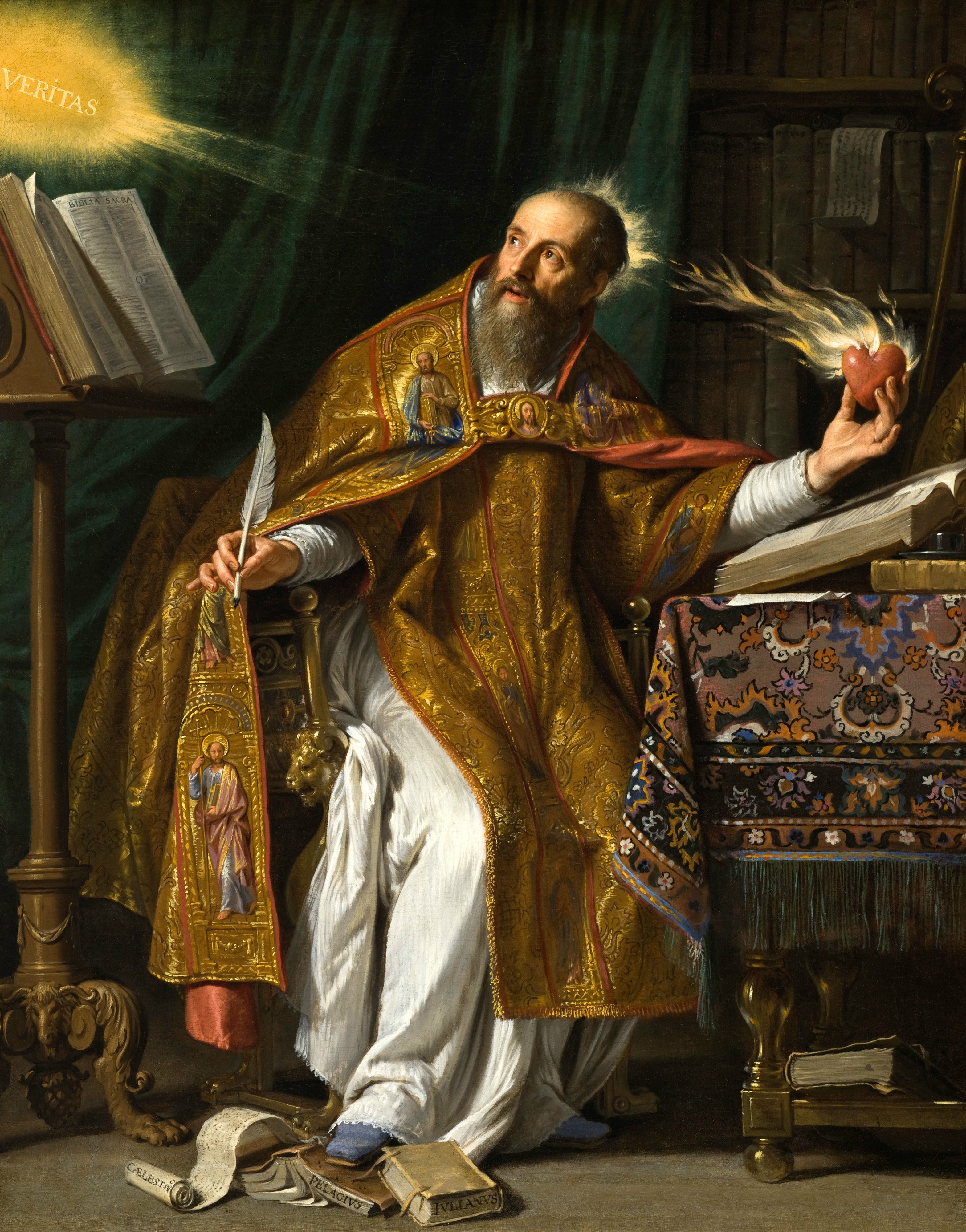
This fall, following nearly a decade of wilderness wandering, I’ve come home to Church History I. The course begins with the New Testament era and concludes with the time right before the Reformation. Though my expertise is modern church history in the English-speaking world, Church History I was always my favorite course to teach. I love introducing students to the strange new world of the Early Church Fathers, the ecumenical councils where the classical Christian orthodoxy was articulated, the intellectual world of early African Christianity, the first apologists and missionaries and monks, the gradual division between Eastern and Western expressions of Christianity, medieval clashes between church and state, the coalescence of Western Culture, the theology of Augustine, Anselm, and Aquinas. What a joy to introduce a new generation of students to their Christian heritage.
I will open the course four quotations, each of which have informed the way I think about the Christian past.
Most of all, perhaps, we need intimate knowledge of the past. Not that the past has any magic about it, but because we cannot study the future, and yet need something to set against the present, to remind us that the basic assumptions have been quite different in different periods and that much which seems certain to the uneducated is merely temporary fashion. A man who has lived in many places is not likely to be deceived by the local errors of his native village: the scholar has lived in many times and is therefore in some degree immune from the great cataract of nonsense that pours from the press and the microphone of his own age. (From C.S. Lewis, “Learning in War-Time”)
Tradition is the living faith of the dead, traditionalism is the dead faith of the living. And, I suppose I should add, it is traditionalism that that gives tradition such a bad name. (From Jaroslav Pelikan, The Vindication of Tradition)
The modern view that history is a luxury, a hobby for “buffs” and know-it-alls, puts us fundamentally out of step with our spiritual forebears. The past tense is essential to our language of faith; without it our conversation is limited and thin—and growing thinner all the time. (From Margaret Bendroth, The Spiritual Practice of Remembering)
But when the fullness of time had come, God sent forth his Son, born of woman, born under the law, to redeem those who were under the law, so that we might receive adoption as sons. (Galatians 4:4-5, ESV)
Just reading these quotes gets me excited for the Church History I class!
I’m also teaching a course on Human Flourishing for the Honors Program at NGU. Here is the course description: “An interdisciplinary Honors seminar on how Christians should understand authentic human flourishing. The course engages with Scripture and the Christian intellectual tradition to explore the meaning, implications, and pursuit of ‘the good life.’” I created this course, I teach it regularly, and I love the conversations it provokes among my students. Every iteration of the class has its own unique personality. I can hardly wait to meet with my Human Flourishing students this afternoon.
I know this is a bit rambly, but I hope you see something of my love for teaching in my words. I’m grateful to God for the immense privilege of being a professor, especially at a Christ-first university like North Greenville. Please join me in praying that the Lord would bless us mightily during this new academic year.
No posts
Comments
Nothing yet. Say the first thing.
Sign in to join the conversation.