
While visiting family in Belgium for Christmas, I dipped my toe into the Franco-Belgian bande dessinee comics tradition. It’s a proud one that stands distinct from American comics, and appears to displace them; I visited three comic book stores in Belgium, and was surprised to see that the American Marvel and DC material that dominates shelf space over here barely rated a corner in any of these shops. A few of the current hot indies featured more prominently, but by and large, Belgian comic shops appeared to be selling home-grown product with little reliance on capes, cowls, or (God help me) Funko Pops to make their nut. If I can find translations, I’m looking forward to diving in and learning more about this area of comics culture.
What better place to start my bande dessinee journey than the Brussels Comic Art Museum?
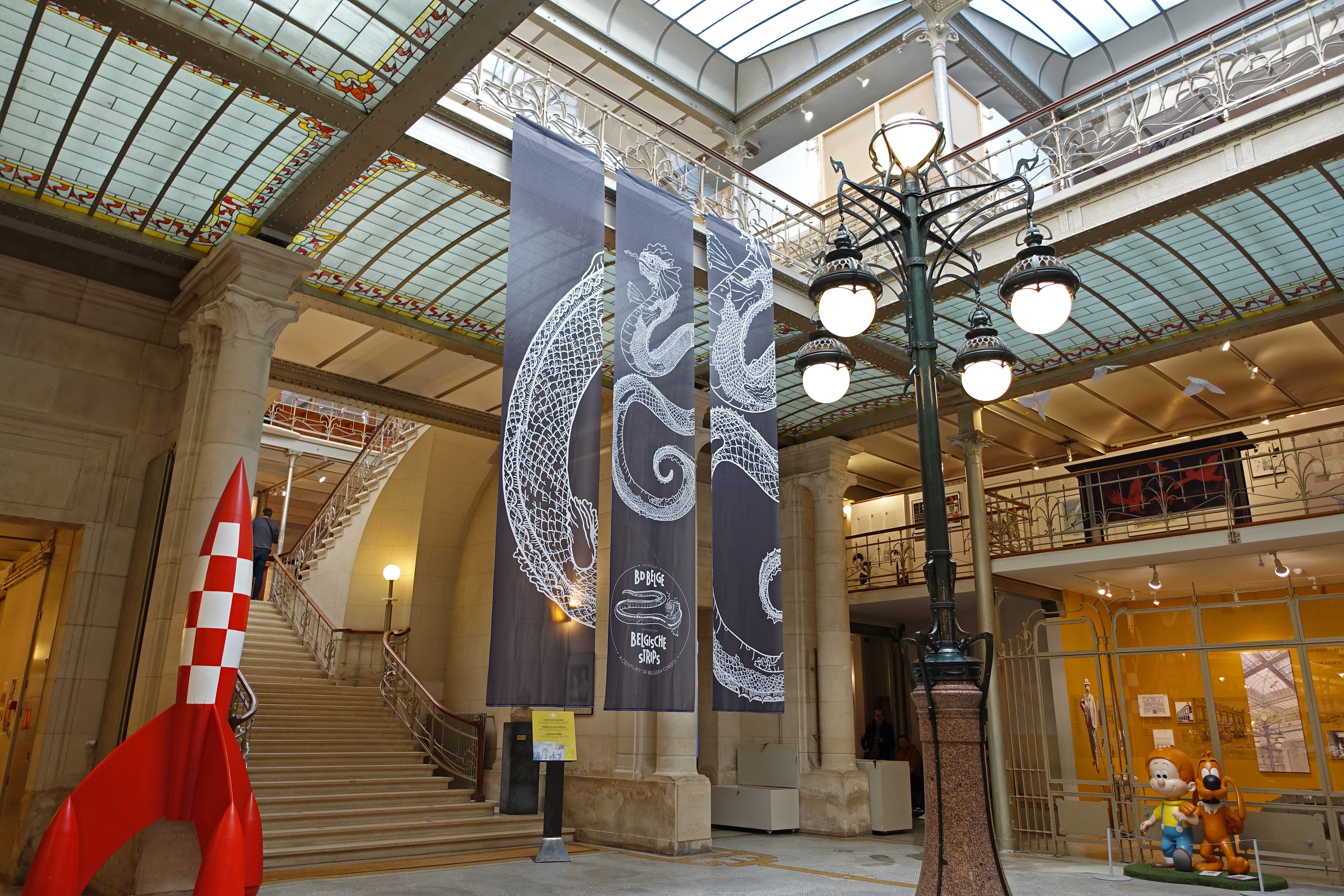
Credit: Comic Art Museum
Our visit began with the “Art of Comic Strip” permanent exhibit. This exhibit shows what goes into creation of a comic strip or page of comic art, from pencils to printing, and is an excellent introduction to the various steps to reaching a finished product. Below are a few examples that I found striking. [Please excuse the poor photography, and send tips for minimizing glare when photographing works behind glass if you have any!]
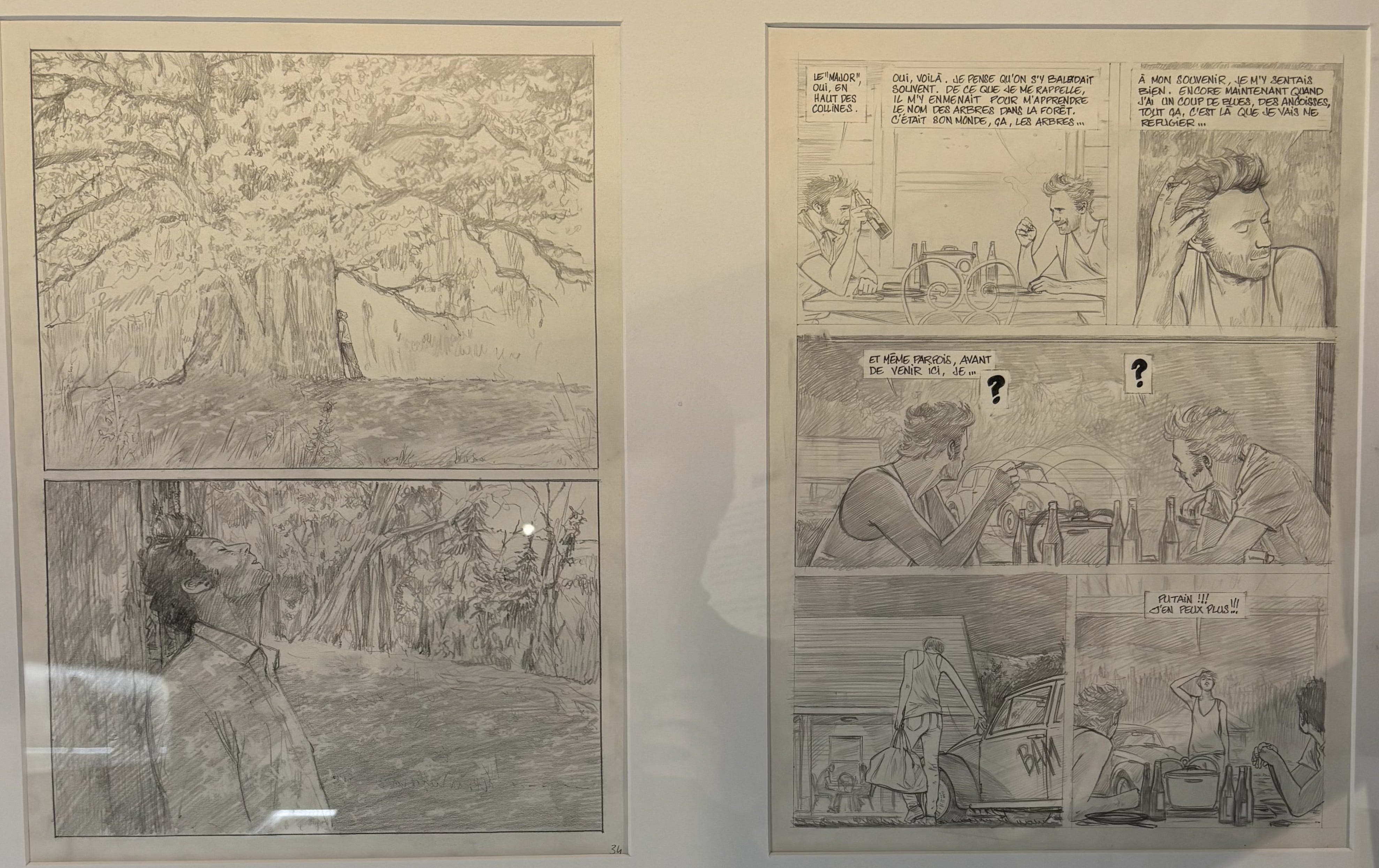
Pencils: Melville 1. L’Histoire de Samuel Beauclair, Romain Renard (2013).
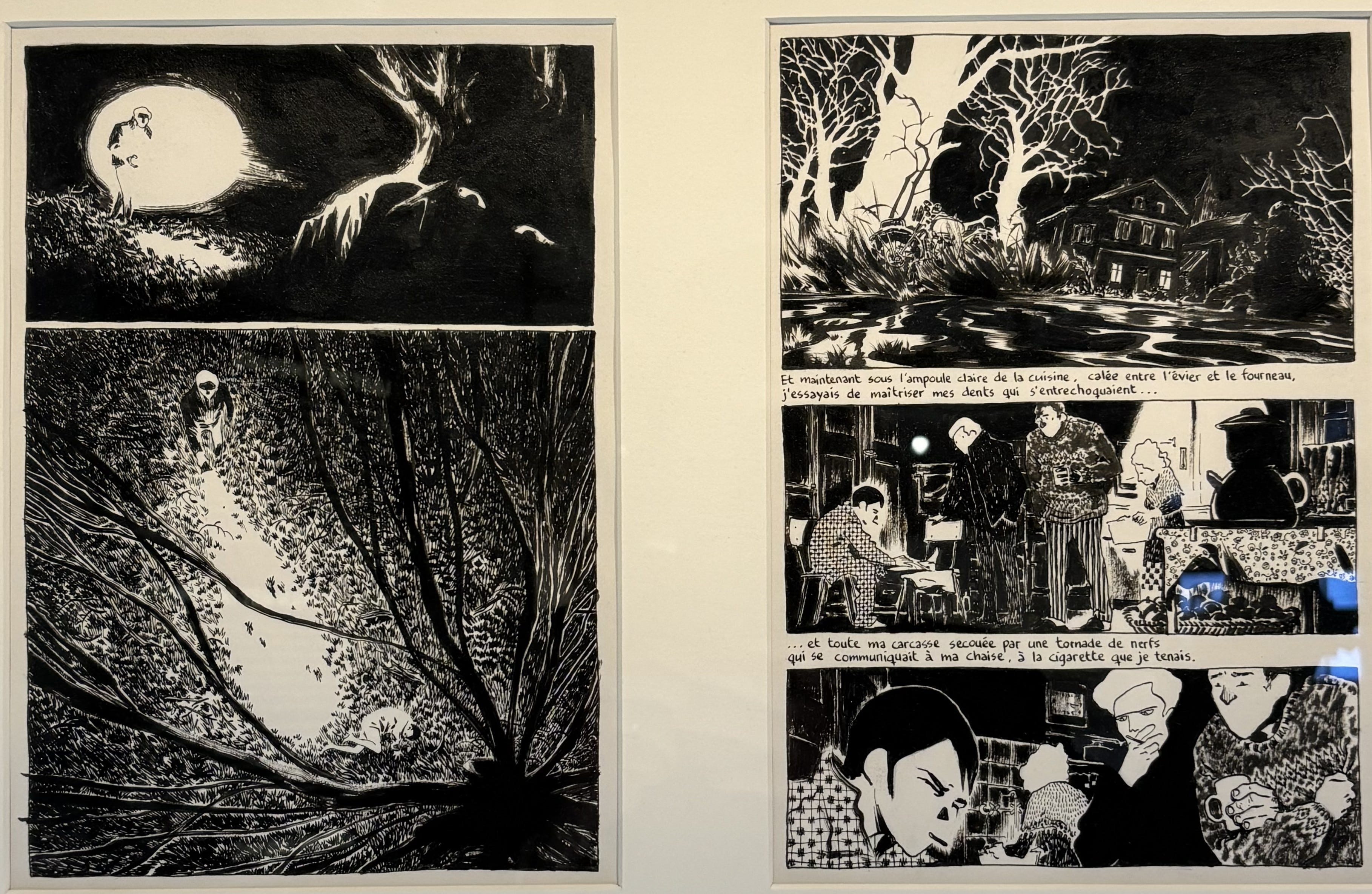
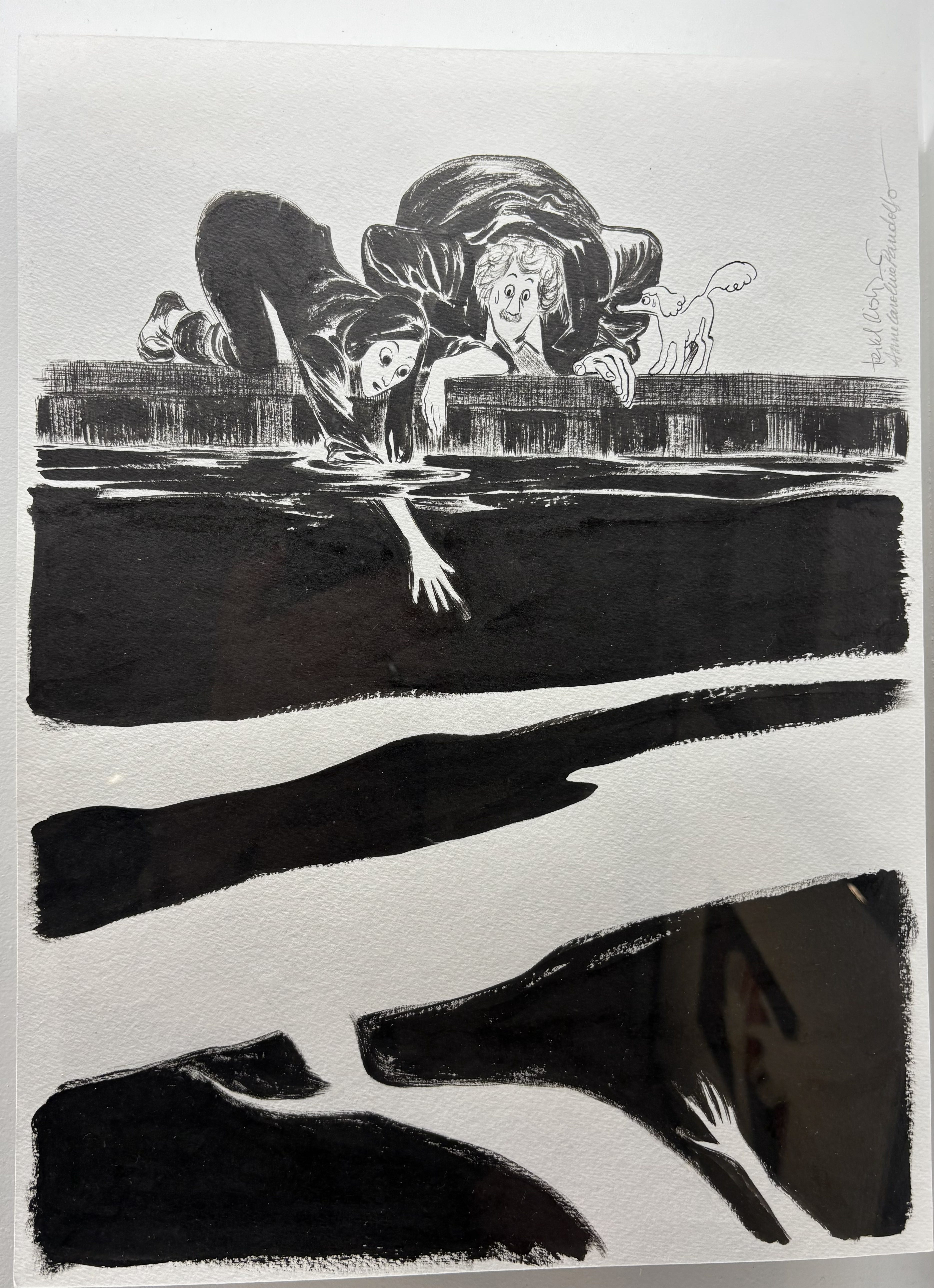
Inking: L’Astragale, Anne-Caroline Pandolfo and Terkel Risbjerg (2013)
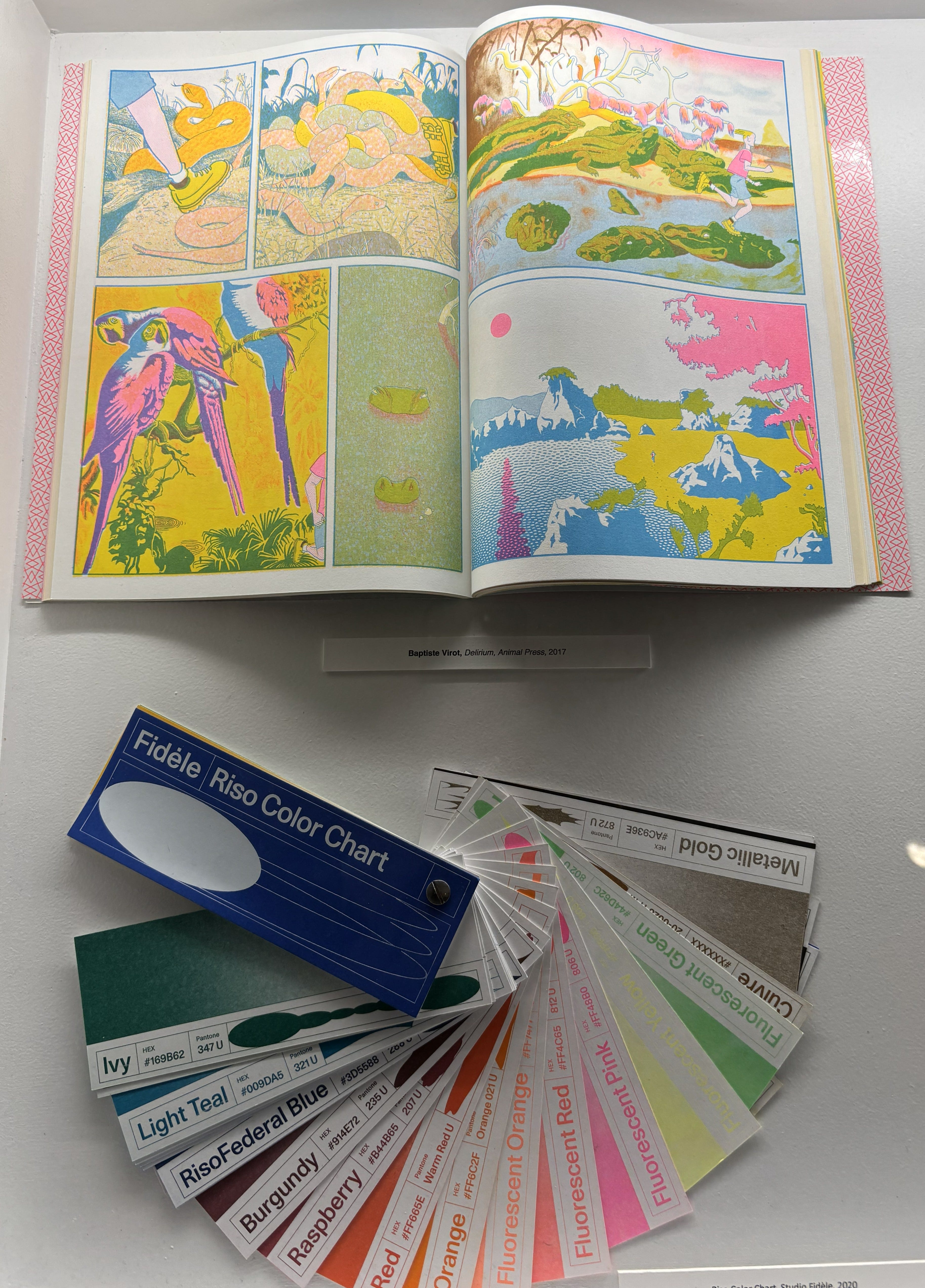
Colors: Discussion of the influence of risography on comics coloring.
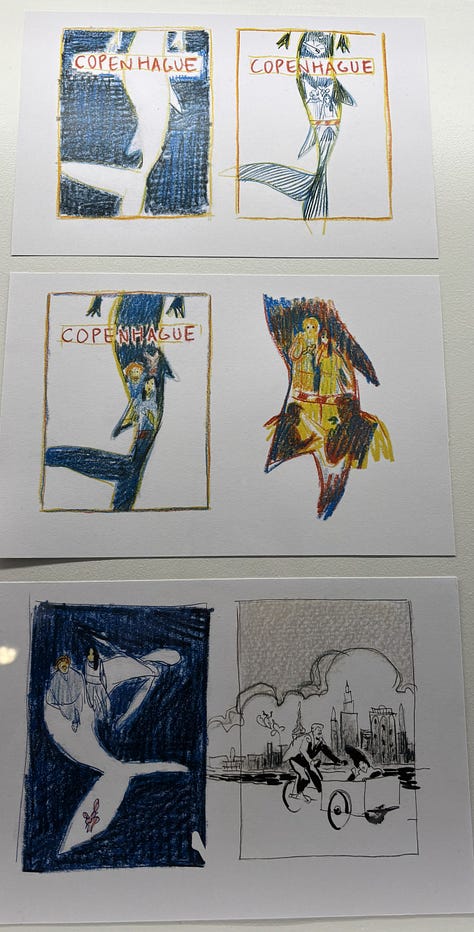
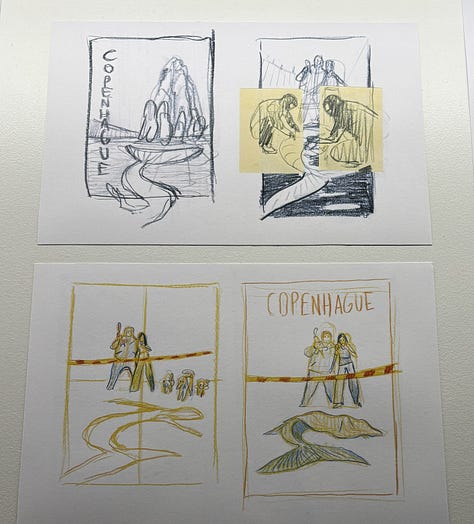
Covers: Copenhague, Anne-Caroline Pandolfo and Terkel Risbjerg (2024)

Also on display (until May 2026) is an exhibit celebrating 50 years of Metal Hurlant, the science fiction/fantasy anthology founded by Jean-Pierre Dionnet, Philippe Druillet, Jean Giraud (“Moebius”) and Bernard Farkas. The exhibit features an embarrassment of riches: some pieces from Metal Hurlant artists past and present that I particularly enjoyed are below.
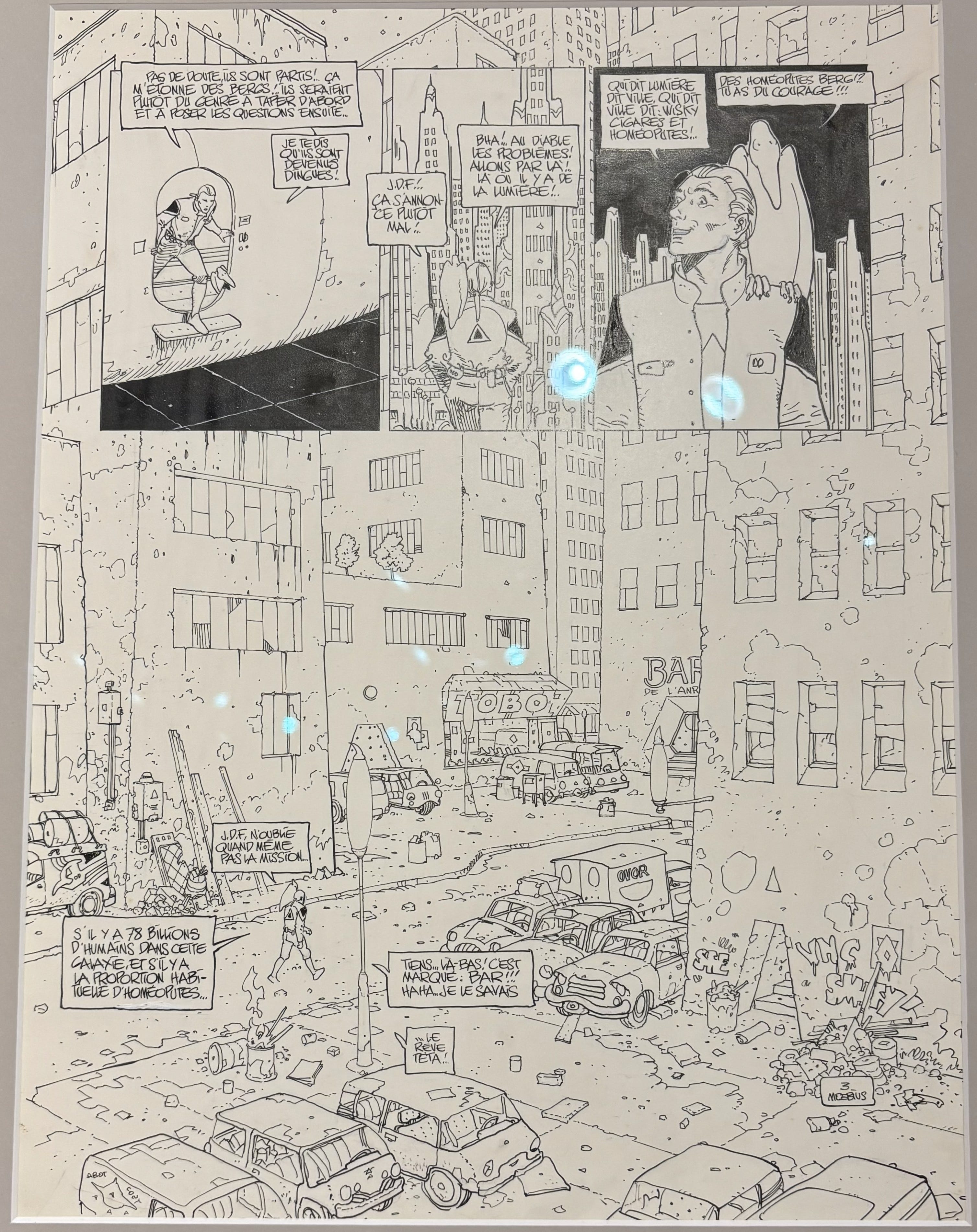
Une aventure de John Difool: L’Incal 6 La Cinquieme Essence - 2e partie - La planete Difool page 3, Moebius (1988). A page from The Incal, one of the best-known works of Moebius (written by Alejandro Jorodowsky).
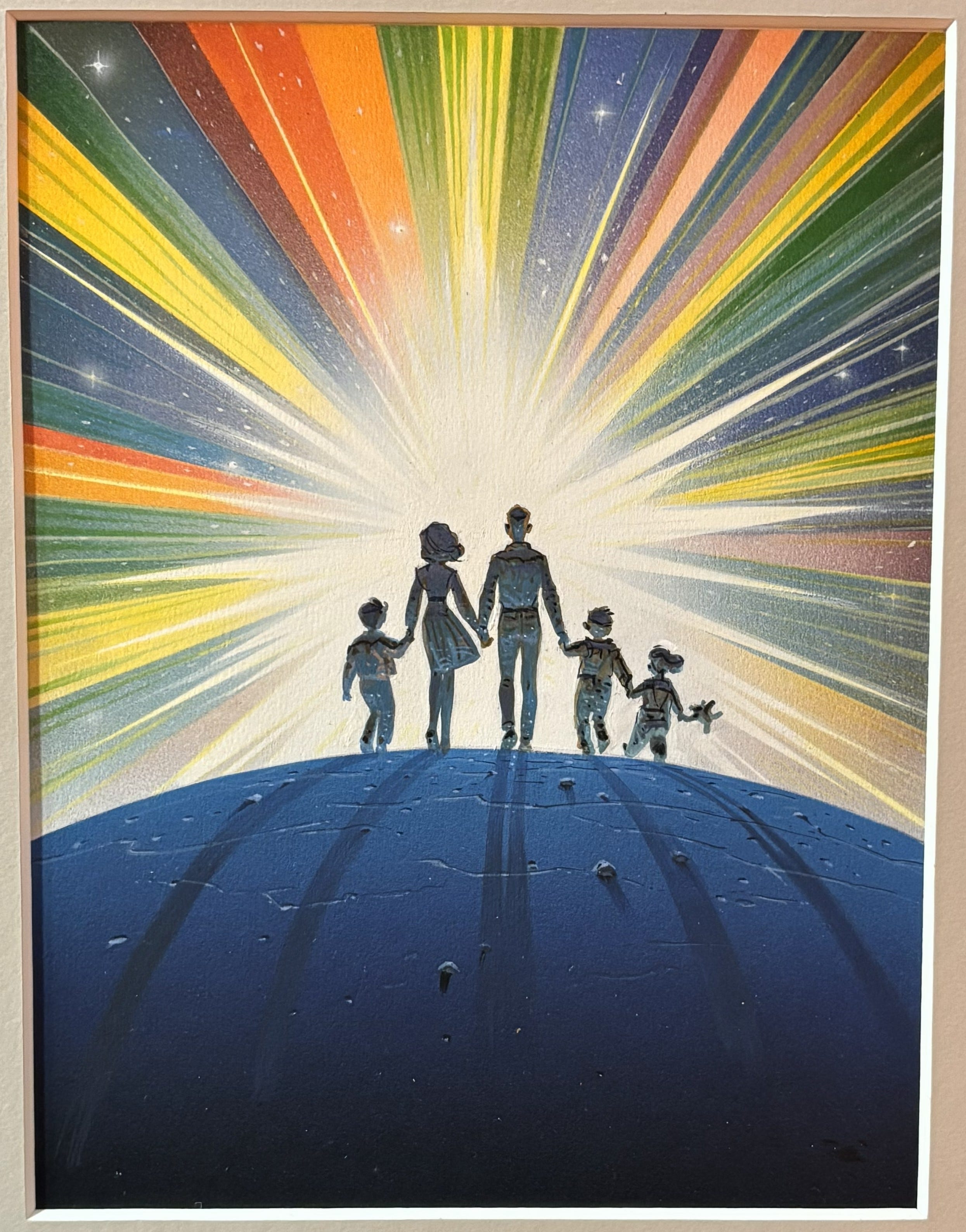
Illustratie Destin 3 pour Aedena, Moebius (no date given). If you speak French/can figure out which work this comes from, please let me know. I love the composition and colors.
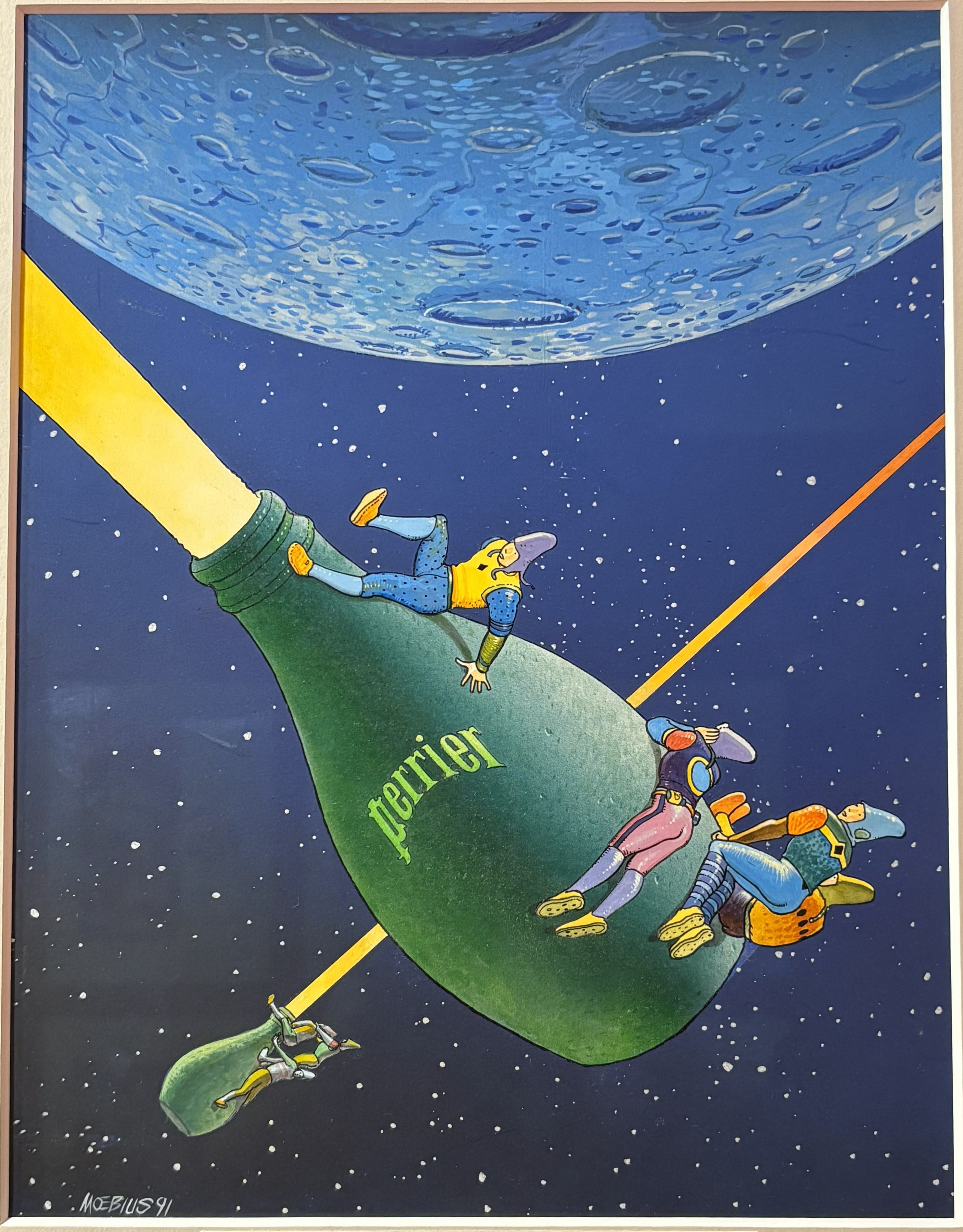
Perrier advertisement, Moebius (1991).
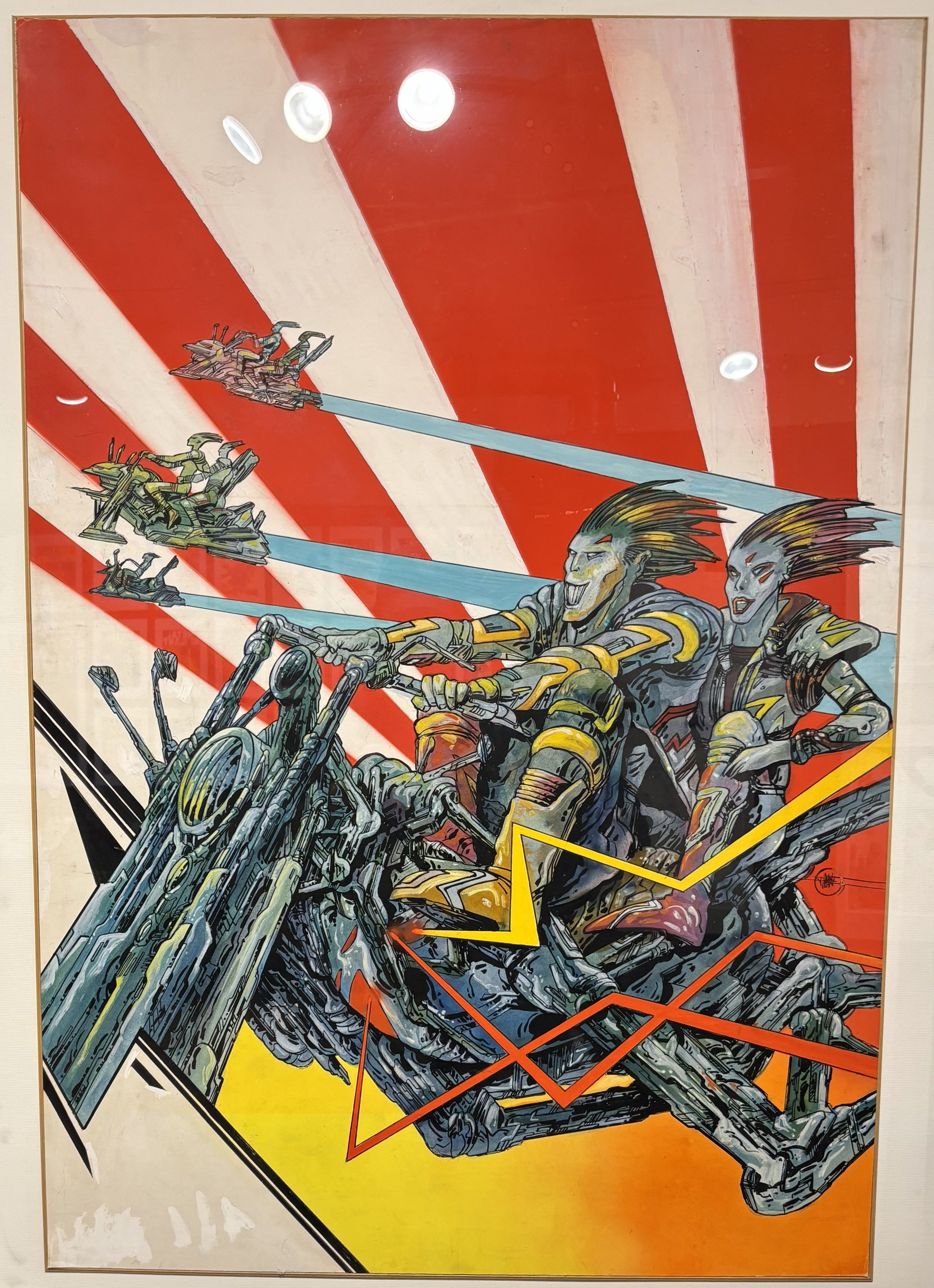
This piece, by Philippe Druillet, described as a “cover” by the museum label, but I have not been able to find the magazine that it covers.
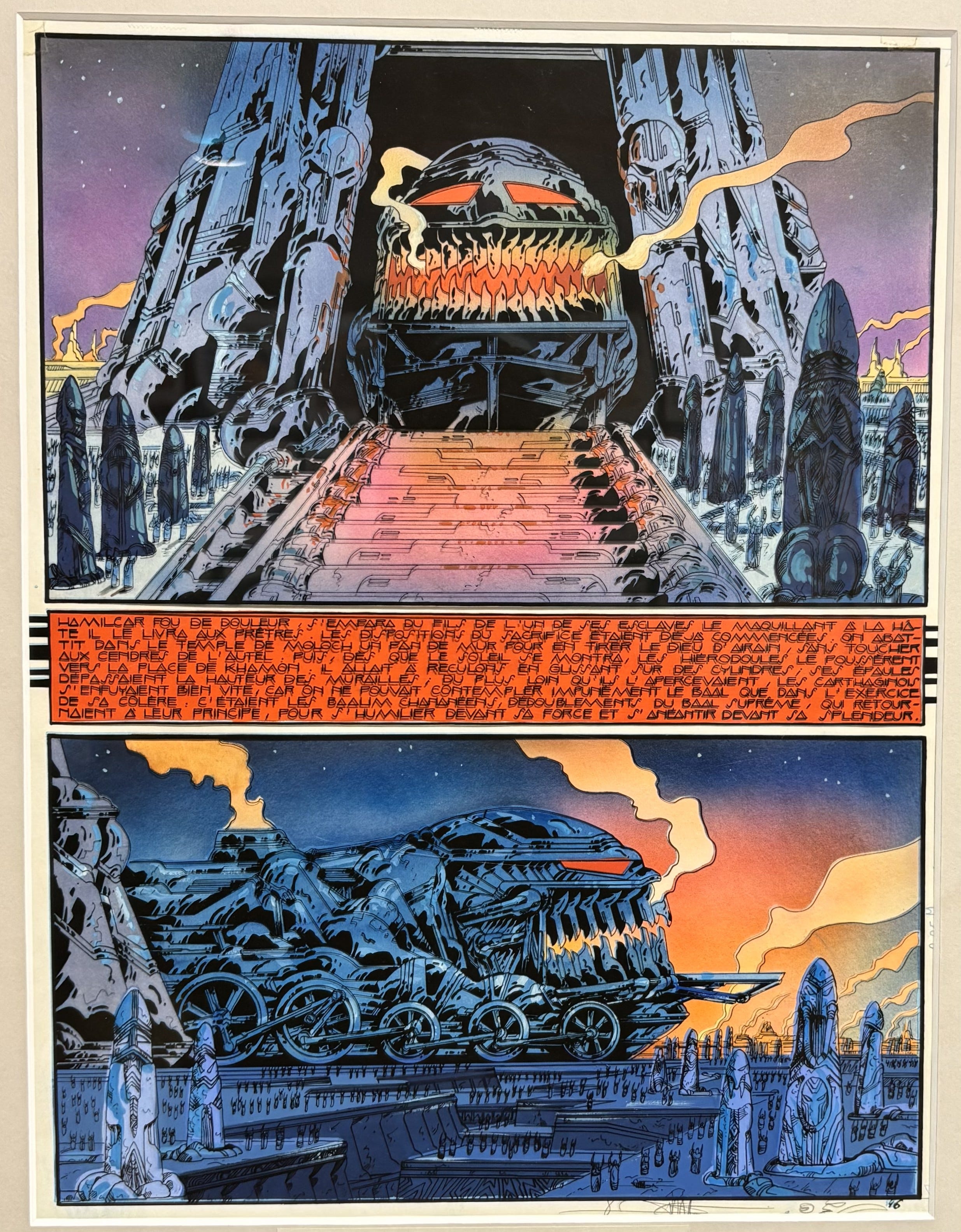
Salammbo: tome 3 Matho, Phillipe Druillet (1986). Chinese ink on rhodoid (black film), acrylic and gouache on paper, which may account for the “blurry” effect (that or my poor photography).
In addition to the old masters, there was also plenty of work by newer contributors to Metal Hurlant. Afif Khaled’s work caught my eye. I see clear influence from Moebius in his poster art below, while the cover to the U.S. edition of Metal Hurlant #2 recalls the EC science fiction covers of yore.
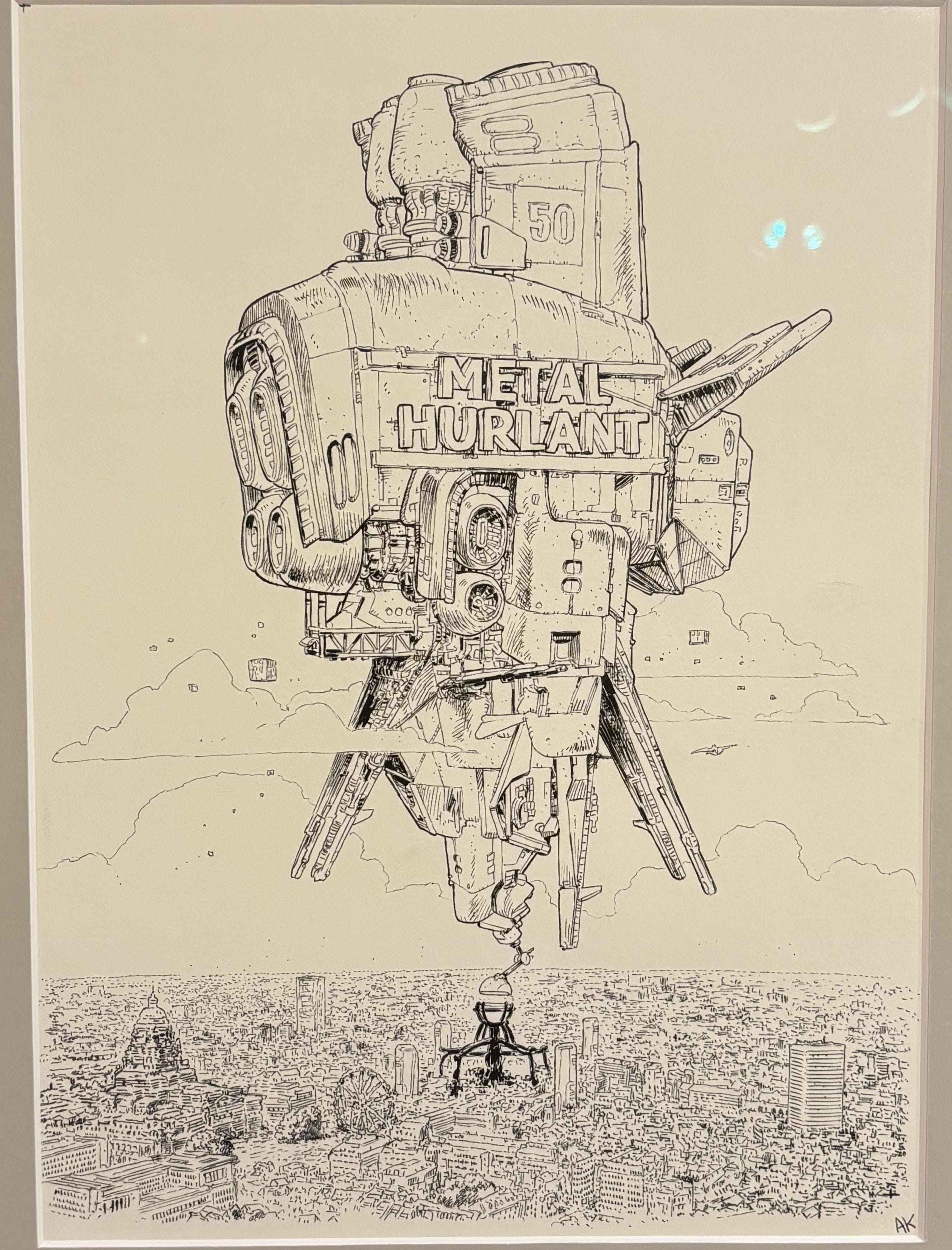
Original art for the exhibit poster, Afif Khaled (2025)
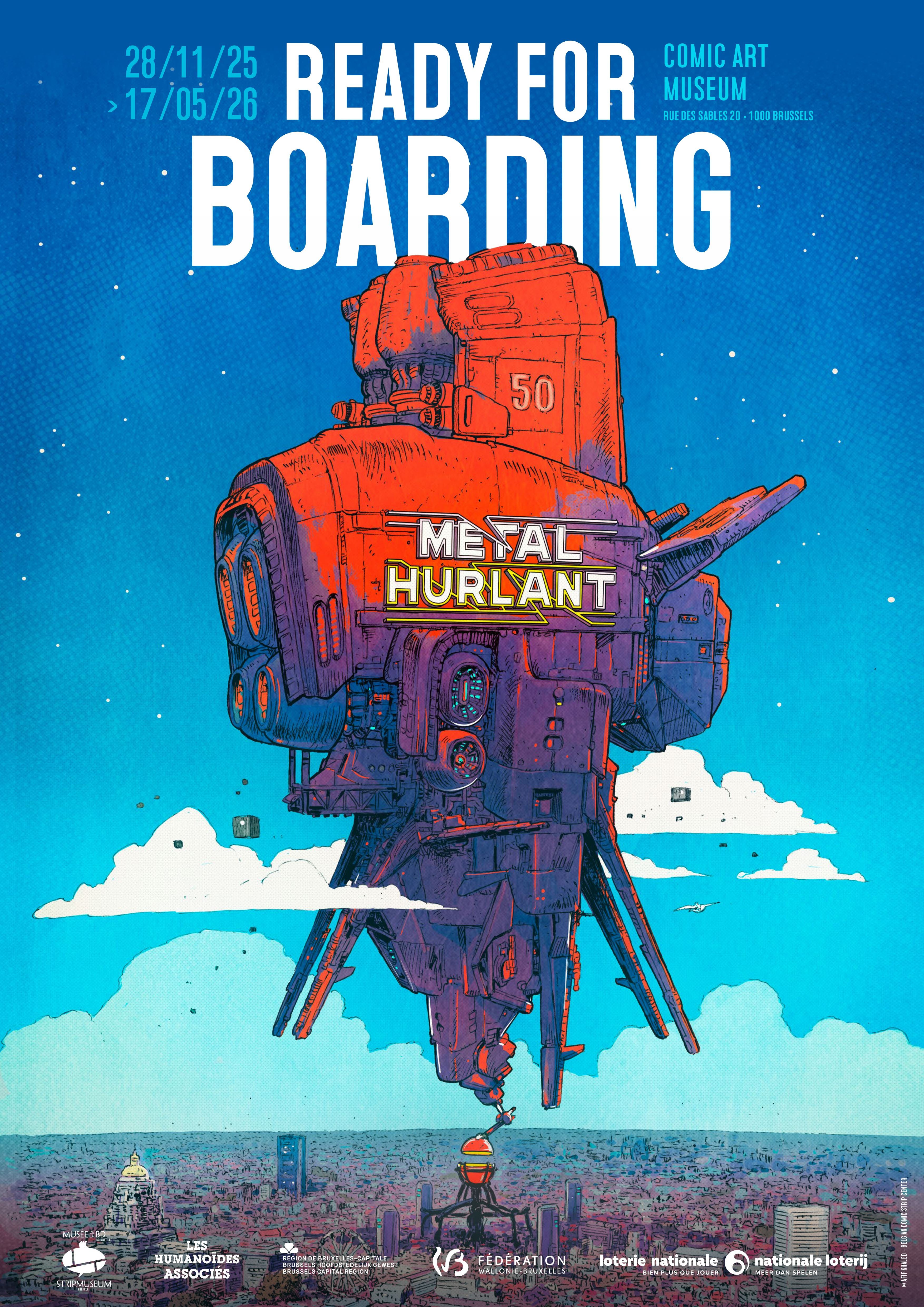
Final poster.
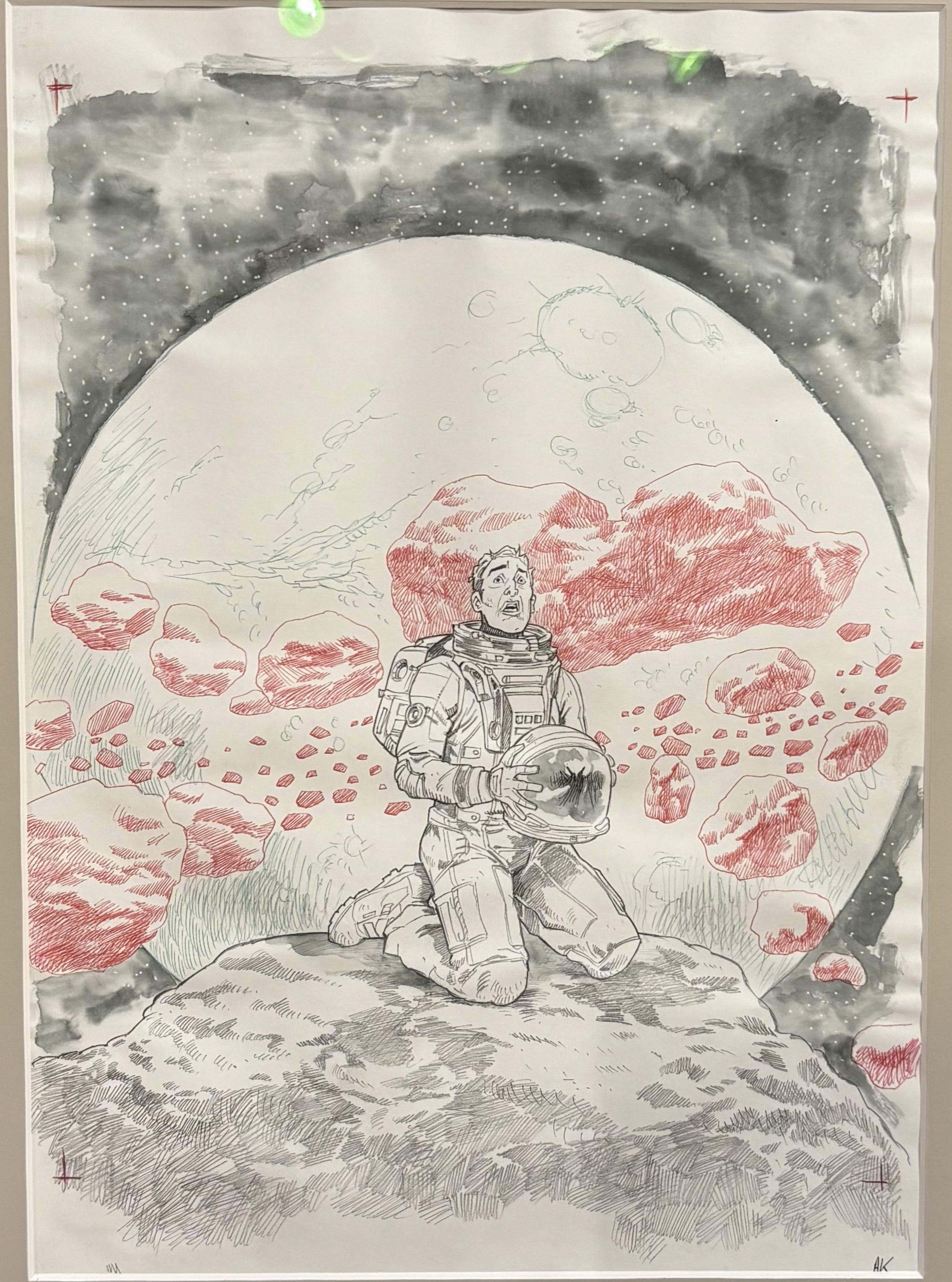
Cover of Metal Hurlant #2 (U.S. edition), Afif Khaled (2025)
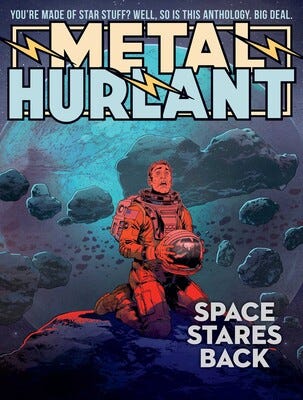
Same piece, but with color and trade dress.
Unfortunately the exhibit’s treatment of Metal Hurlant’s troubles over the years - it has started and stopped publication a few times since its inception - is cursory, at best. I would have appreciated more on the challenges of producing a regular anthology magazine, and whatever problems led to the various breaks in publishing. Of special note for U.S. visitors may be the relationship between Metal Hurlant and Heavy Metal. I don’t recall much on that topic at the exhibit (perhaps another data point on the (ir)relevance of the U.S. comics scene in Belgium), but Comics Beat has a lengthy rundown of the complicated relationship between the two here.
In addition to the exhibits described above, the Museum also features a temporary exhibit on the work of Wauter Mannaert, who illustrated a graphic novel on the life of Weegee, a crime scene photographer. Mannaert’s work on that project is a delightful rendering of art deco/1940s noir.
As one might expect, there is also an exhibit dedicated to 100 years of Belgian comics. We entered this exhibit near the museum’s closing time (after spending much of our allotted time admiring the Metal Hurlant exhibit). This was an effective introduction to the Franco-Belgian comics tradition, and primer on the titles and characters of greatest import. Perhaps most surprising was the relative absence of Herge, creator of Tintin (probably the most popular contribution of Belgian comics to the broader medium). The exhibit dedicates a small portion of text to this absence, noting that Herge has a museum of his own, and offers an explanation: “Today, the Tintinimaginatio company wants the Herge Museum in Louvain la Neuve to be the unique reference for the work of Tintin’s creator and has asked us to limit the presence of Herge’s characters in this exhibition. His name is so closely linked to the history of Belgian comics and to the genesis of our museum, that we could not ignore his pioneering influence and the attention he continues to bring to the 9th Art worldwide.”
There is a dearth of Herge’s art throughout the museum, although the Museum does acknowledge his historical role in the medium where appropriate. The absence of Herge originals seems a shame, although it’s possible the Museum could not acquire or display his art without cooperation from those managing his portfolio of original work and/or copyrights. Regardless, there’s no need to fear, for we also took a trip to the Herge museum, which will be the topic of a later post.
I am a lawyer, but I am not your lawyer. The views expressed here (“Views”) are not legal advice. Views are mine alone. Views should not be attributed to anybody else, including (but not limited to) my employer, employer’s clients, friends, family, or pets (current, former, or future).
No posts
Comments
Nothing yet. Say the first thing.
Sign in to join the conversation.