
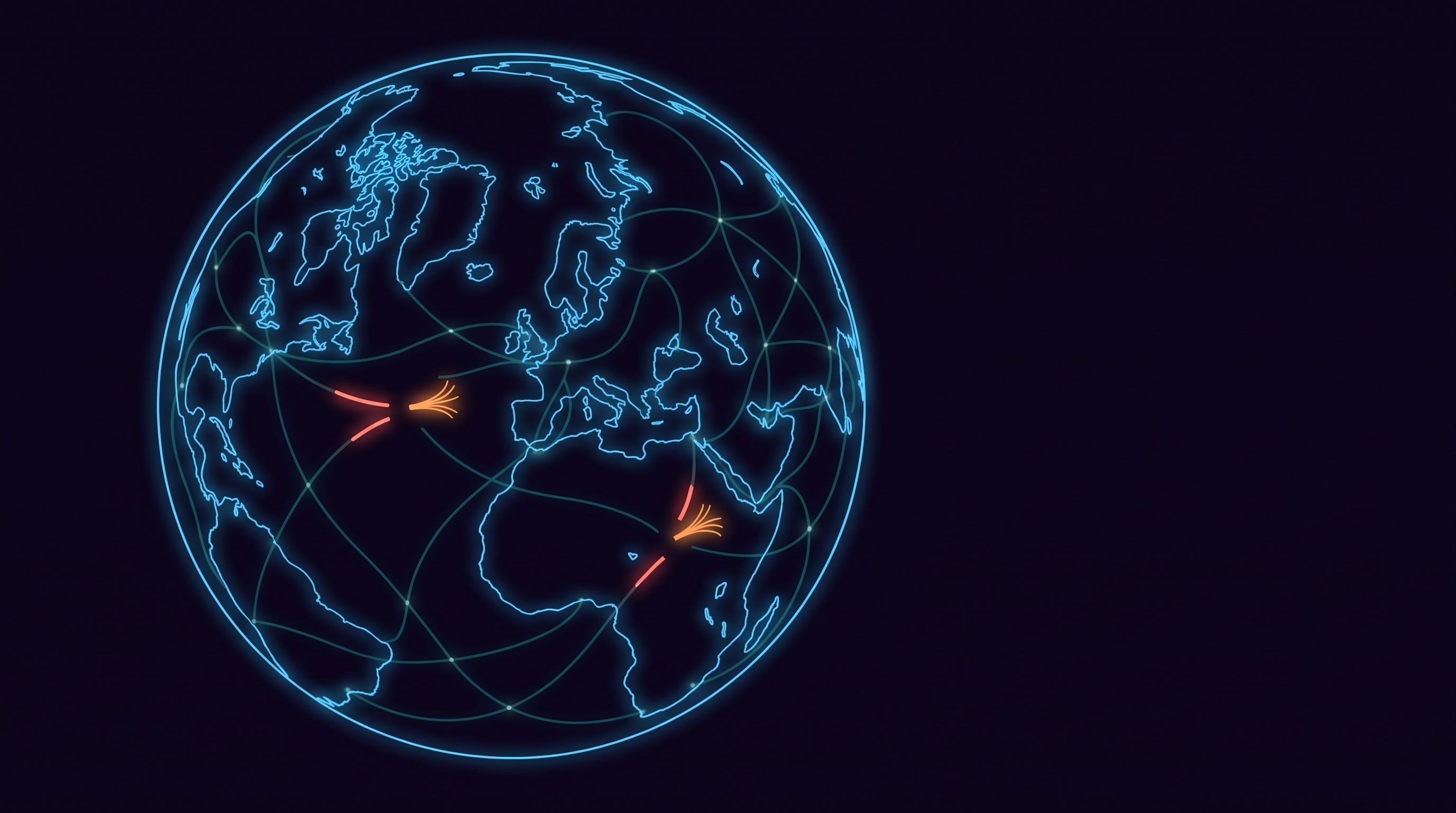
For three decades, most of Wall Street has treated energy and commodities as a rounding error, or as a small slice of the portfolio rather than the physical foundation everything else runs on. But in mid-2026, with the Strait of Hormuz disrupted, tankers burning in the Red and Black Seas, and nearly half of Russia’s refining capacity knocked offline, that complacency is being tested in real time. The noise around increasing crude oil prices is loud, but this week’s guest argues that the signal beneath it – the decline of refined products like diesel and jet fuel – is already sounding the alarm bells of a world in crisis.
In this episode, I’m joined by Jeff Currie for a wide-boundary look at what happens when the buffers that have suppressed energy price signals for fifty years finally run dry. Using his decades of experience as a former commodity strategist at Goldman Sachs and as a current senior advisor at The Carlyle Group, Jeff walks through why the “crack spread” between crude and refined products just hit its highest level in three decades. He also describes why draining strategic reserves is, in actuality, simply a bet that scarcity can be avoided rather than solved – in Currie’s eyes, the West’s refusal to admit scarcity since the 70s has left it structurally unprepared, particularly compared to China’s security-driven build-out of nuclear, solar, and battery capacity. He also lays out the “Grand Bargain” underlying the postwar dollar system, wherein the U.S. protects global sea lanes in exchange for global trade running through New York. Jeff explains why a failure to reopen the Strait of Hormuz could unravel this arrangement, bringing forward consequences that would land hardest on middle-class Americans’ access to credit and consumption.
Is the world entering a new commodity supercycle driven by scarcity and deglobalization, or is the market going to keep shrugging off these shocks? What might it mean for ordinary people if the credit and dollar system that has funded American consumption for eighty years starts to break down? And if, as Jeff argues, we are only in “the foothills of the Himalayas,” how much higher does this climb go before societies are forced to reckon with the physical limits behind the price signals?
Listen on your favorite podcast platform
Want to dive deeper into the concepts covered in this episode? Follow along with the Show Notes & Links to Learn More, which you can find at the bottom of the page for every episode of The Great Simplification, or you can download them here.
In last week’s Frankly, I reflected on a week spent with a group of friends and peers who share my understanding of the world’s converging crises, and what it revealed about the deeply human need to be fully seen, without having to explain yourself first. Though the group rarely discussed climate, AI, or energy depletion, the shared awareness of these issues created space for humor, joy, and the reemergence of a version of myself that had quietly faded into the background over the years. I observed that most rooms I find myself in either run either too hot – where people are overly fixated on systemic risk and its gory details – or too cold, where the state of the world goes unacknowledged entirely. This group served as the rare in-between: people who could hold both the beauty and the horror of our moment with both eyes open, and still show up each morning with presence, purpose, and laughter.
Listen on your favorite podcast platform
The Great Simplification podcast is produced by The Institute for the Study of Energy and Our Future (ISEOF), a 501(c)(3) organization. We want to keep all content completely free to view globally and without ads. If you’d like to support ISEOF and its content via a tax-deductible donation, please use the link below.
No posts
Comments
Nothing yet. Say the first thing.
Sign in to join the conversation.