
This essay is adapted from the Frankly episode posted on July 24th, 2026, titled “Watch With Both Eyes Open: The Beauty and the Horror of Our Moment.”
This summer, I spent a week of uninterrupted time with a friend. It ended up being a real chance to slow down and be present. I also got to see what unfolds when I actually make space for that presence.
That week has stayed with me, especially as I’ve come back to more news about Iran, more weeds in the garden, more podcast work, and all the other things I was able to step away from for a bit.
So today, I’ve decided to share a bit about this experience, because I suspect it touches on something many of us wrestle with.
My friend’s organization is working adjacent to the more-than-human predicament, and many on his team follow the podcast and Franklys, at least casually. As such, I felt completely at home. It’s rare that I don’t feel the need to navigate a long conversational onramp where I’m explaining what I do, why it matters, and how all the pieces fit together. All that was implied and understood, even though – surprisingly to me – we spoke about it very little, and certainly not at dinnertime.
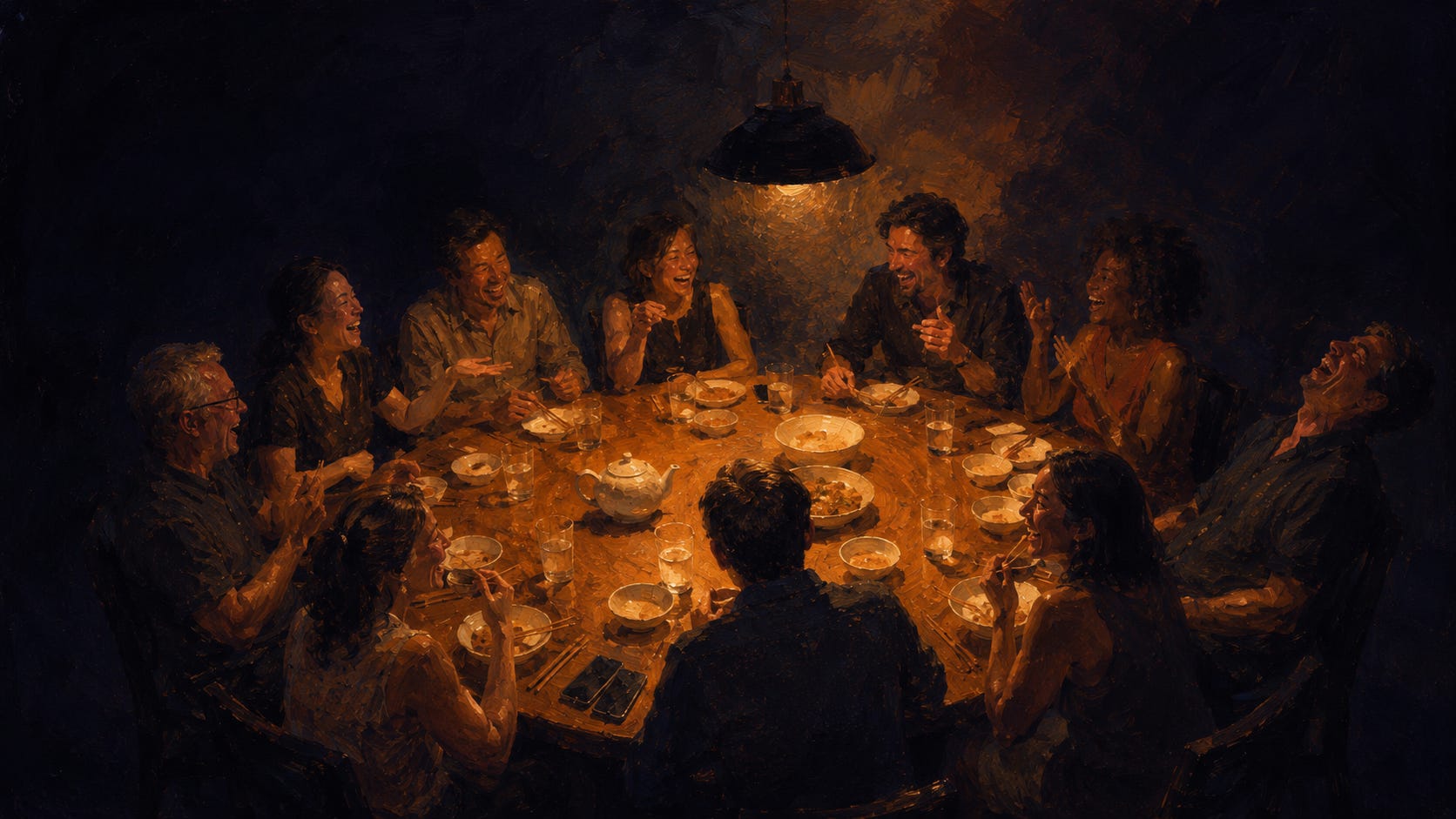
One night, we went out for Chinese food, and it ended up being one of the funniest dinners I’ve had in years. I kind of felt like a stand-up comic, and it seemed like I’d found some forgotten aspects of myself that hadn’t shown up in a long time. It wasn’t until later that night that I was able to reflect on what was different about this scenario.
I realized we didn’t talk about climate, AI, energy depletion, or the geopolitical cluster we’re currently hip deep in. Each of us knew about all these things, they just went unspoken. It took an experience like this for me to realize that the rooms I usually find myself in are either too hot – talking about systemic risks with all the gory details – or too cold – talking about football, fireworks, or some politician without any deep analysis, awareness, nuance, or recognition of the times we live in. It was striking to me that it took a group of humans who knew all these things but were being their best human selves regardless for me to feel like I could fully be myself. I found that I had missed the full version of Nate who showed up in this space.
I think we’re doing good work through the podcast, but the version of me that shows up in this context is but a mid-size sliver of the totality of Nate. But when I was with this group of ten or eleven people, it became clear to me that these were people who could see and sit with both the beauty and the horror of the world.
What’s more, they could still show up with joy, meaning, and presence. They could still get up in the morning and work on the things that matter. For me, being around them was like breathing pure oxygen, especially poignant after returning home to all the smoke blowing through from the wildfires in the Boundary Waters.
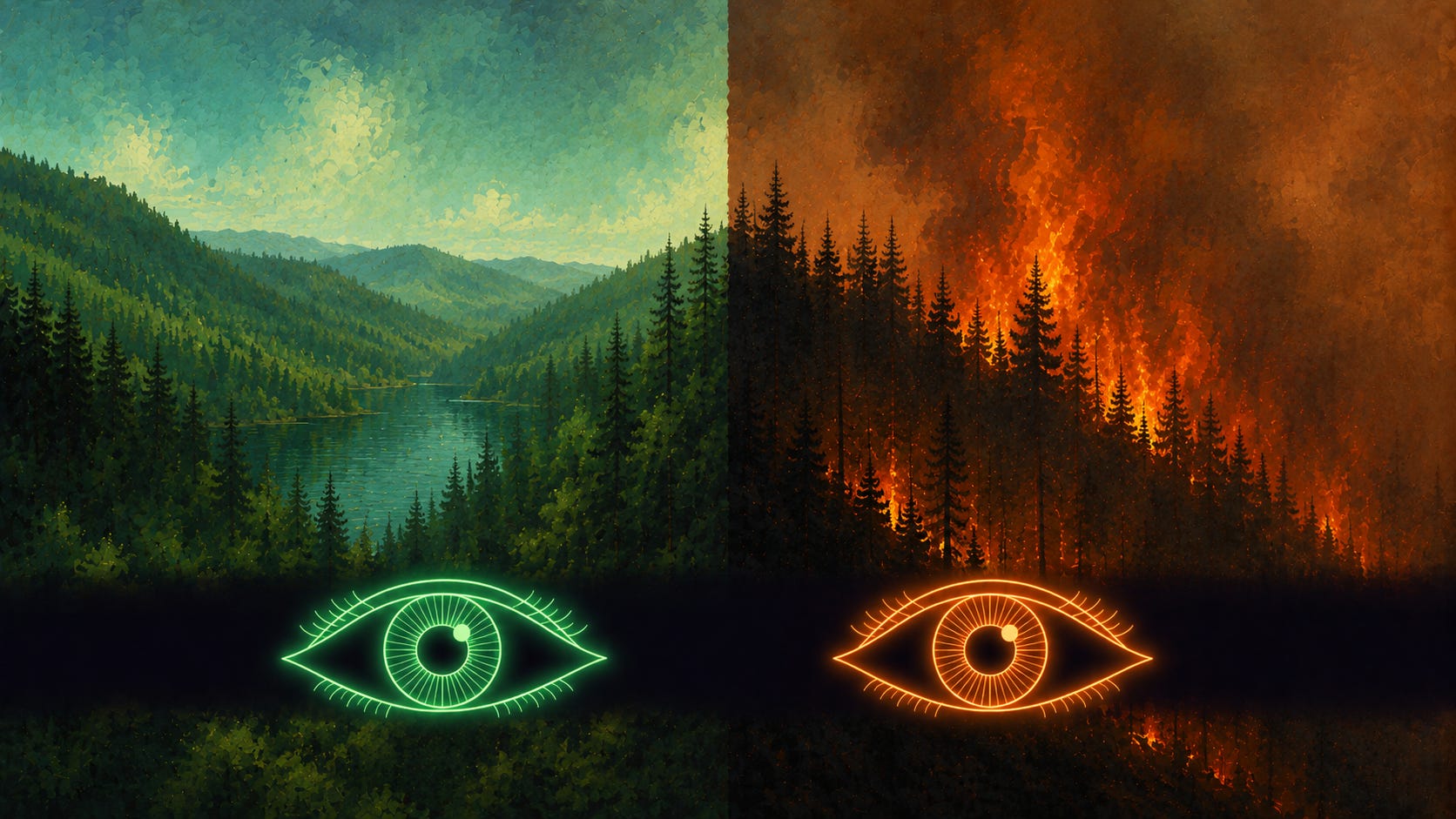
Seeing the whole depth of our reality requires both eyes to be open at the same time: the one that sees the beauty in our world, and the one that sees the horrors unfolding. I think some people have the horror eye closed, for good reasons, and some people have the beauty eye closed. In both of those cases, the world becomes two-dimensional and gray. After spending a week with ten people who had both eyes open, I felt like my social world had full 3D depth again.
So why did this hit me as hard as it did?
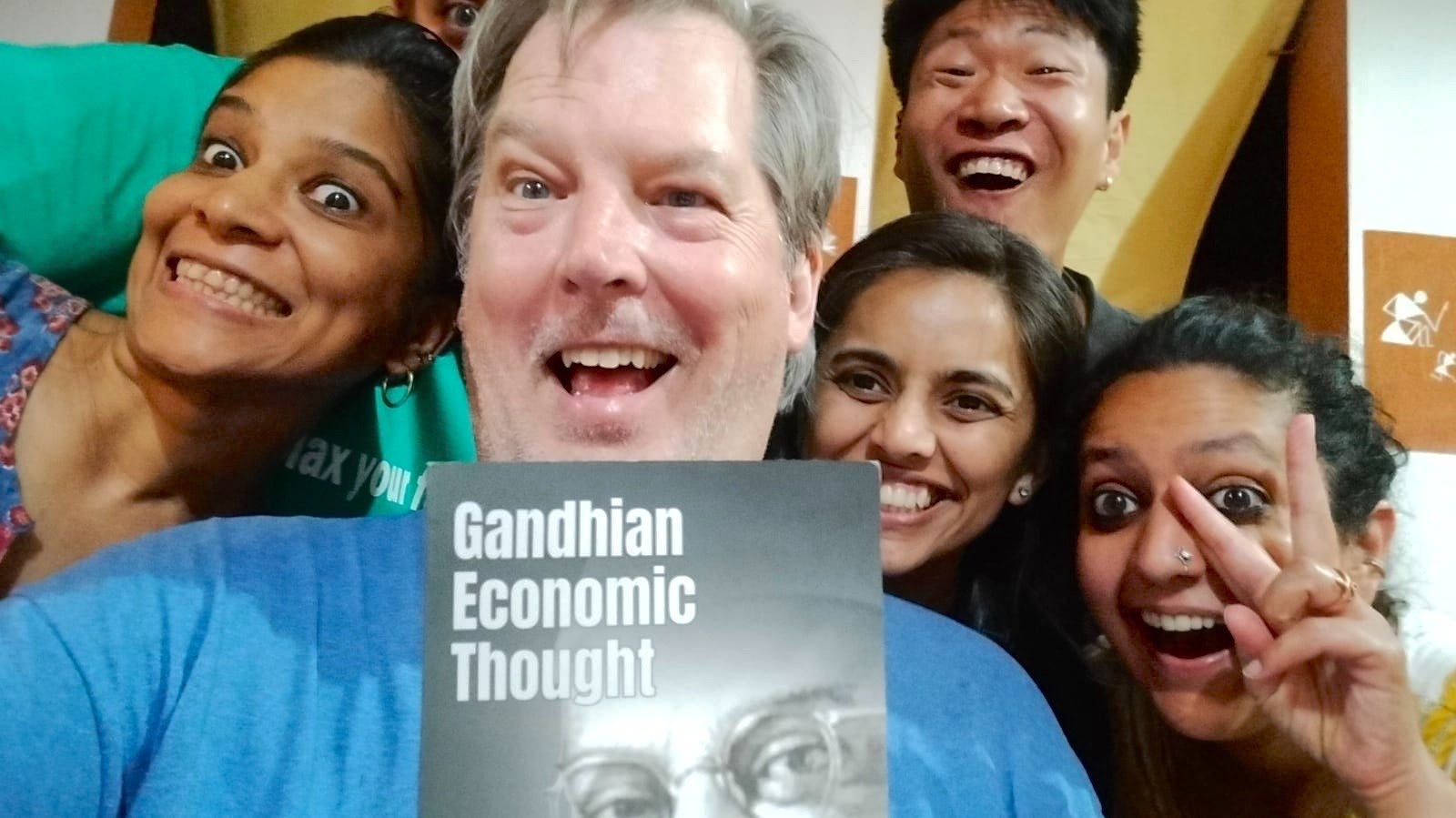
Two years ago, after spending six weeks in India with thirty people, I realized I had been naïve about community: I had thought it was about borrowing your neighbor’s lawnmower or trading garlic for potatoes. I had found that the real benefit showed up in my physiology: in the oxytocin and serotonin delivered by close, repetitive, daily interaction with other humans (and dogs, in India’s case).
Last week was a booster shot of that lesson, which I had gradually forgotten over the last two years. I got a shot of the oxytocin I didn’t even know I was low on, like discovering a deficiency at the exact moment someone hands you a vitamin to fill it.
In that week, my mammalian body did some accounting that my analyst brain would not … or could not. We are Homo sapiens. We evolved in small bands where everyone saw and reacted to the same world outside. For a couple of decades now, I’ve been seeing a different world than most of the people in whatever room I’ve happened to be in. I don’t think I fully internalized what that has cost me on a daily basis, at least until the cost went away for a week. Despite the connections and relationships I’ve formed with people from around the world through this work, I now realize I often, paradoxically, find myself quite lonely.
None of this is to complain about online communities and the connectivity they allow us. I have a big online community that I’m grateful for every single day: the systems ecology folks who I’ve been exchanging ideas with for almost 20 years, and the thousands of you who see what I see and write to me about the remarkable things you’re doing.
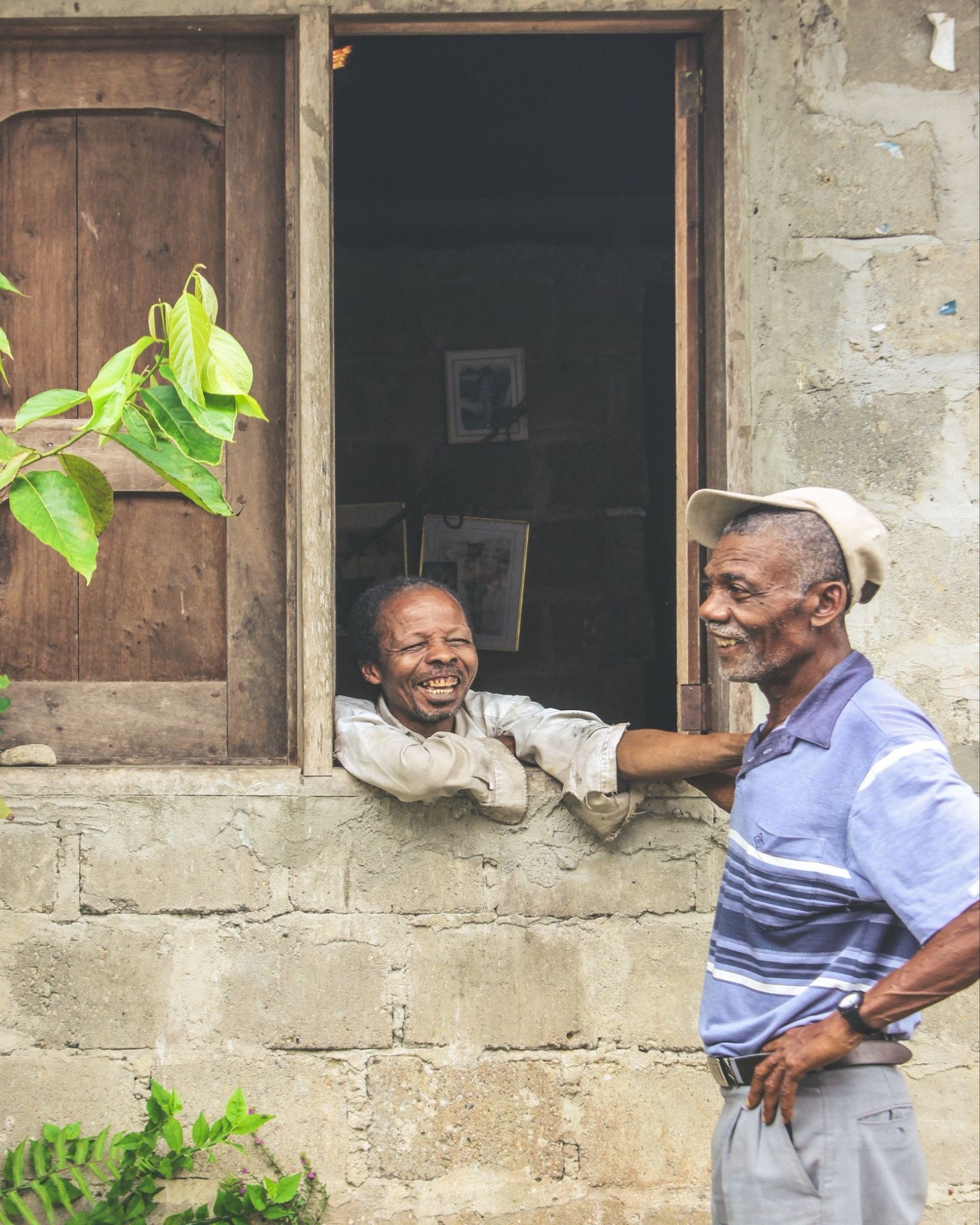
But oxytocin, at least in its truest sense, doesn’t necessarily travel through fiber-optic cable. The internet has nearly infinite bandwidth for information, but very little capacity for the felt presence that only happens by being physically in a space with other beings. For me, that felt presence is strongest when I’m around others who deeply understand all the risks that are now converging (and I suspect many of you feel the same).
I have family whom I love dearly. My brother, his wife, and their son were here the last three days visiting, and it was wonderful. I have local friends. I have farmers and neighbors who would help me in a crisis. What I don’t have, at least not yet, is ten people within driving distance of my home who are fluent in the more-than-human predicament and don’t need to talk about it all the time. I suspect a lot of you reading are in the same position: aware, engaged, and locally alone.
As we increasingly converge on reality, or as reality converges on this system synthesis, this is likely going to change, even if only out of necessity.
So, of the “no-regrets” strategies I can recommend here, I cannot recommend finding a local community strongly enough. This is foundational for the work ahead, even if the work is only on yourself. I do feel like this platform, The Great Simplification, has a role in that. Dare I say, we have a responsibility to assist in this, which we’re taking seriously and beginning to work on some things behind the scenes.
I hope you are well. Thanks for reading and being present with me today. More to come soon.
The Great Simplification podcast is produced by The Institute for the Study of Energy and Our Future (ISEOF), a 501(c)(3) organization. We want to keep all content completely free to view globally and without ads. If you’d like to support ISEOF and its content via a tax-deductible donation, please use the link below.
No posts
Comments
Nothing yet. Say the first thing.
Sign in to join the conversation.