
It’s good to be home, I say, as I sit in yet another airport about to fly to Sydney for one night to attend the Mother/Daughter dinner at my daughter’s college. But one night away doesn’t feel like anything in comparison to all the many nights away I’ve had lately. And I can’t miss the chance to see my babies (who are eighteen and twenty, but who will always be my babies).
The eldest always comes and shares my hotel room with me as her university residence is small and she has to cook for herself, rather than having meals served to her in a dining room, which is what the eighteen-year-old enjoys at college. So the eldest takes any chance she can get to enjoy a large room and meals done for her. And I take any chance I can get to see the two of them, even if it means a four hour flight. It’s so special spending time with your kids when they’re adults--when you can sit back and admire the fine human being they’ve become in such a short time.
Those early years drag by, but then suddenly they’re twenty years old and bringing you a large tea cup from their residence to your hotel room because they know the hotel only has small cups and that you like to drink from a large cup. It’s those spontaneous moments of kindness that are worth travelling across the country for.
In this momentary lull between tours—the Australian tour for THE CHATEAU ON SUNSET has all but ended, just one event to go in Busselton this week, and the US tour won’t start for two weeks—I’m doing some work on my next book. My publishers have sent me the edit notes for GIRL OF THE YEAR, so now it’s over to me to make this book the best it can be.
I thought I’d share a little of how that process works in this newsletter. But first I just wanted to say—it’s only two weeks until THE CHATEAU ON SUNSET publishes in North America! I hope you’re as excited about that as I am! I can’t wait to share this story with my readers on the other side of the world!
Now, onto the mysterious process of editing. Even after ten books, it’s still mysterious to me—I usually have huge, almost magical breakthroughs when I’m editing, but I don’t know why those breakthroughs don’t happen during my first couple of drafts!
I try to be very conscious, in this age where every spare minute of the day can easily be taken up with scrolling, to make time to just think. No phone in sight. No browser tabs open. Manuscripts are not made better by checking your Instagram feed!
After I receive the editorial notes, I read them and let them sit in my head for a couple of days. I don’t actively think about them yet. I just feed them into my subconscious, which I always say is much smarter than I am, and I let my subconscious do its work.
It’s job is to come up with a list of questions, as well as some gut feelings about what really makes sense to me from the editorial notes and what doesn’t.
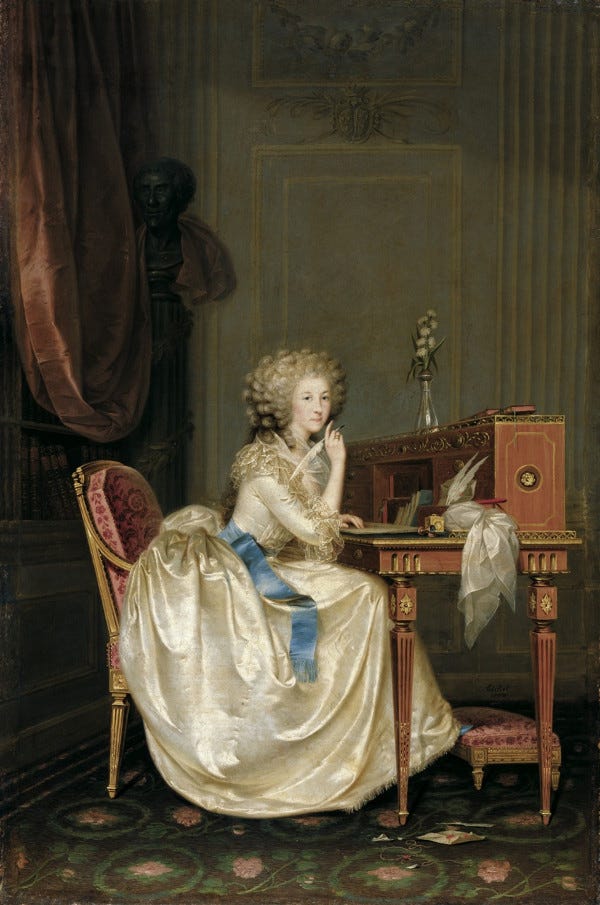
Then I pose my questions to my editors. My editors have undoubtedly made me a much better writer. They are smart, wise women with a great deal of insight about stories, plots, characters and novel structure. Mostly, their editorial notes consist of a series of questions or probing sentences, asking me to think more deeply about different parts of the book, and pointing out where things don’t quite make sense.
Sometimes they offer potential solutions to those problems. This is the one part of the editorial process that I appreciate, but don’t always take on board. As a writer, I always think you’re the best person to come up with the solutions as you know your characters better than anyone. But it’s worth paying attention to the problem the editor is seeing when they present those possible solutions.
My job as the writer is to think about lots of other potential solutions so I can come up with the very best one. And that means asking questions of my editors, such as: can you tell me a little more about why you think this is a good solution? In their answers often lies the crux of the real problem I actually need to address.
I used to be so afraid of asking questions, worried I’d been seen as difficult. But I now believe that if I don’t ask good questions, then I’m doing my manuscript a disservice. And this process was immensely helpful—it gave me a couple of solutions I might not have come up with if I hadn’t taken the time to think, to question, to listen to the answers from my editors and to then do some more thinking.
Never underestimate the power of thinking!
I love a list! I write two lists here, in fact. The first is a list of all the things that I now think aren’t working as well as they need to in the story. The second is a list of the things that are working well.
You need both. You don’t want to lose the good stuff while you’re editing because you forgot to take the time to identify those elements.
Notice that I haven’t actually started doing any writing yet. If I dive straight in to the manuscript and start trying to knock it into shape without any clear direction, I’ll ruin it. So all this preamble, while taking valuable days to do, is super important.
If you’ve heard me speak at an event, you’ll know I don’t do any planning or outlining before I write my first draft. I find it impossible to do that right at the start when I know so little about the characters. But now that I have the story, it’s time!
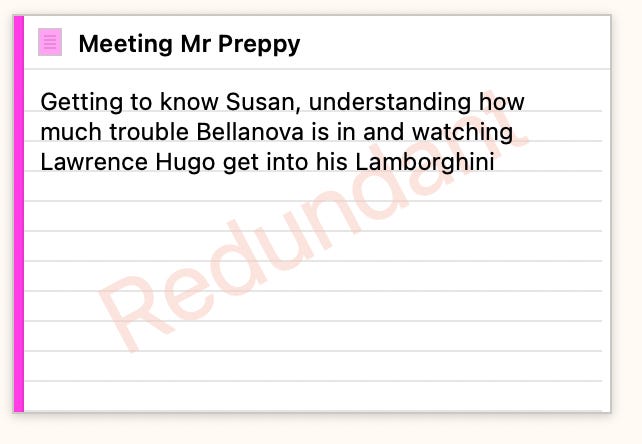
I use Srivener’s Corkboard function to help me do this. It lets me see each scene of my novel as an index card. Each index card contains a scene synopsis and a coloured border that tells me whose POV/timeline each scene is in.
I can:
drag each scene around and try them in different places
add new index cards if I need new scenes
rewrite each scene’s synopsis to suit the new direction for the book
create entirely new timelines and see where they might best fit into the story to increase the tension
stamp each scene to show what work I need to do on it: the stamps I use are Redundant (which means I think I don’t need that scene anymore), To Do (which indicates a brand new scene I have to write), and Rework (for scenes that need more work than just a polish)
Now that I have this visual outline of my book, I’m ready to start the actual writing!
The first couple of days of editing are always HARD! Usually, you’ve been away from the book for an extended period of time, so it takes a moment to recover the voice of the story, to sink back into the time periods, to re-inhabit each character’s skin.
I never meet my goal as to how many chapters I get through on the first couple of days and I have to constantly reassure myself that it’s always this way, and that I’ll catch up in a week or so. But slow writing days always make me feel unsettled and I like it a lot better when I move onto the next stage.
I try to always go to the beach house when I’m editing. I really need the solitude, the intense focus, the selfish routine of thinking only of myself, the gorgeous views and the immersion in the story to make proper headway. So that’s what I’ll be doing later this week!
I have an event in Busselton on Thursday night, then I’ll stay at the beach house until Monday evening to overcome the slow start and to really get back into the flow of the story.
I’m counting down! I hope you are too! Don’t forget there are lots of exciting things happening right now for American readers.
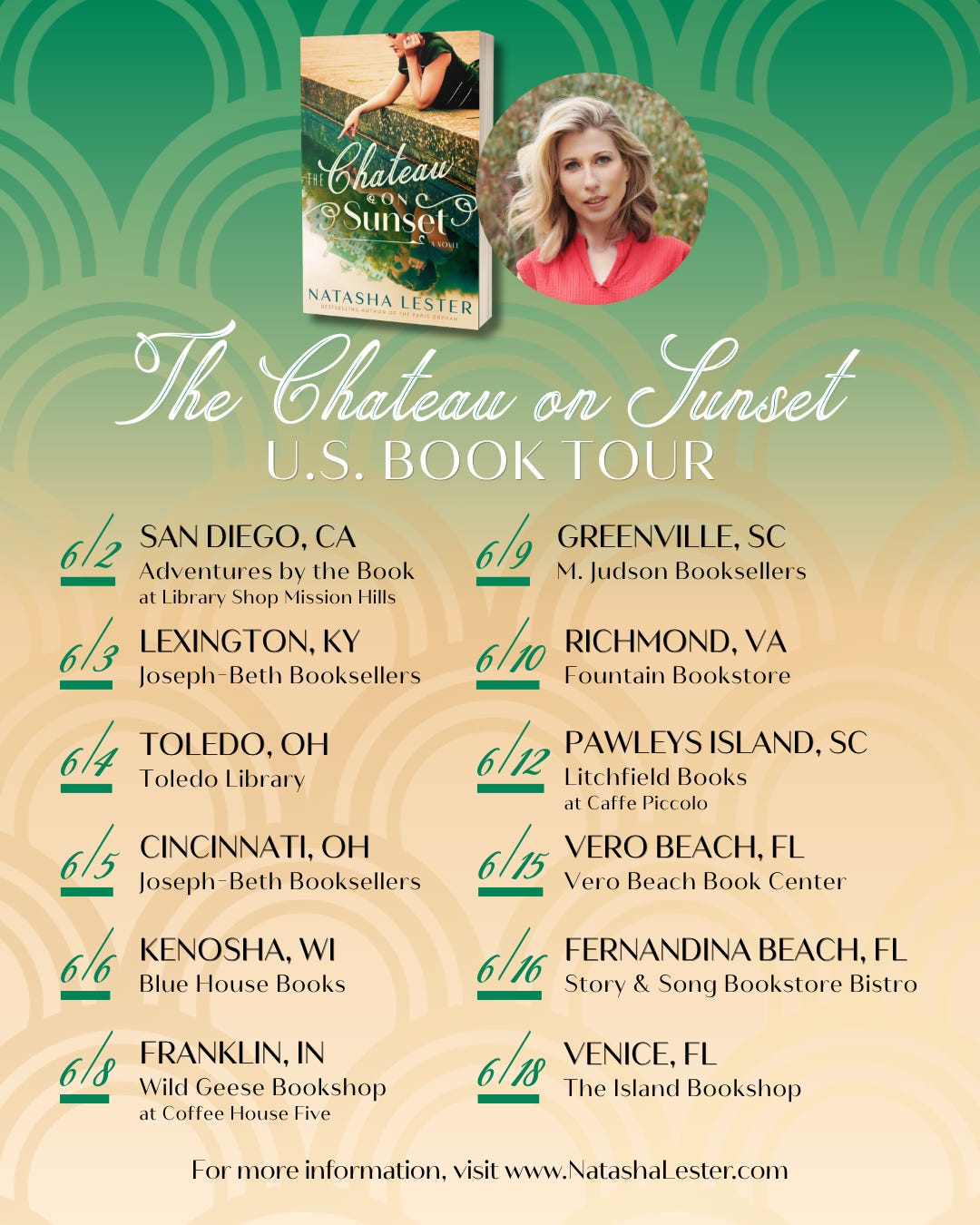
I’m finally coming to America on tour and I can’t wait! From the west coast to the east, I hope I’m doing an event at a city near you. Links for all events are now available on my website. You can find the full list of events and booking details here.
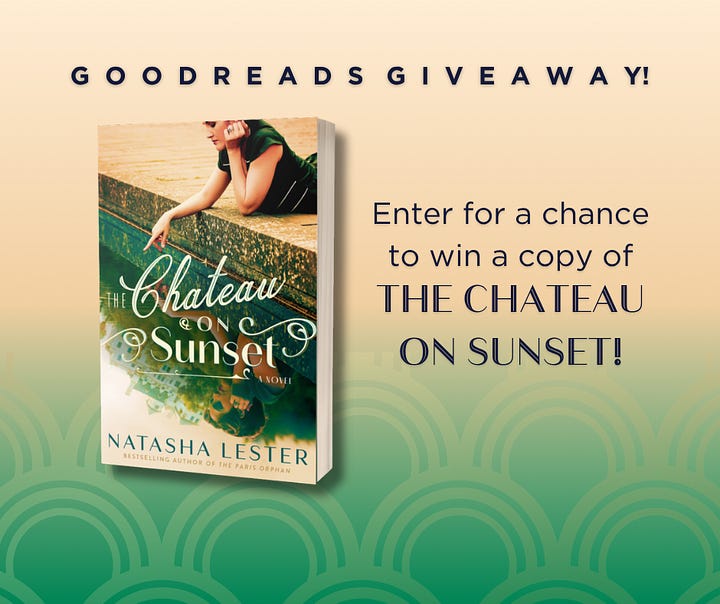
There are 50 copies of THE CHATEAU ON SUNSET up for grabs on Goodreads right now! Enter here, and good luck!
Thanks to our friends at Barnes & Noble, you could win a fabulous prize pack, including a Chateau Marmont gift voucher, if you preorder THE CHATEAU ON SUNSET at Barnes & Noble. Click here to preorder. You’re automatically entered into the draw once you preorder.

Apple Books has an incredible price on THE MADEMOISELLE ALLIANCE. For just a couple of days, you can buy the ebook for just 99 cents!
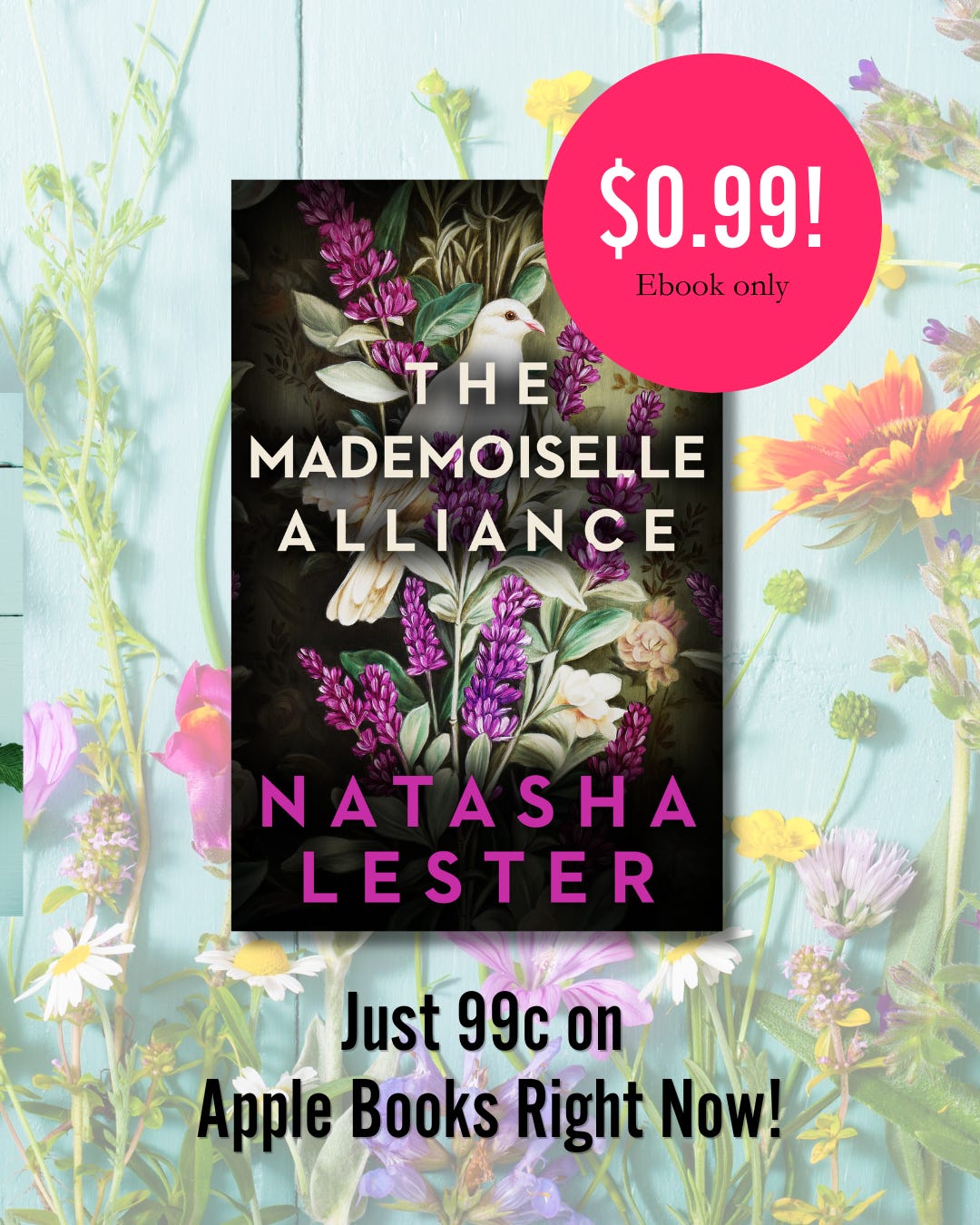
And a couple of my other ebooks are also on sale: THE THREE LIVES OF ALIX ST PIERRE, THE DISAPPEARANCE OF ASTRID BRICARD and THE RIVIERA HOUSE are all $4.99 right now. Perfect time to stock up on my backlist!
You can watch the interview I did for History Through Fiction with Colin Mustful, which was a great event—we traversed Malta, Paris, Oklahoma and LA in our discussion with three other terrific authors!
Huge thanks to PARADE magazine for an incredible feature, where they said “The Chateau on Sunset is shaping up to be one of 2026’s most anticipated historical fiction releases.” Hurray!
Terrifying article about exactly how things go “viral” these days. These articles always make me want to throw my phone out the window and never use social media again, which probably wouldn’t be a bad thing! It also makes me wonder if these tactics are ever used for book marketing, because it really does feel as if I’m seeing less and less of a range of books being promoted to me—as if there are only a handful of books that exist on social media, even as I know that more books are being published now than ever before. It’s why I like Substack—so many writers here are seeking out different books and reviewing them, and then I become aware of them and can seek them out too.
Speaking of, The Original by Priya Parmar is out now and it really does live up to its name. Plunge into Hollywood history through the life of screen icon Katharine Hepburn and her contemporaries. I haven’t read Priya’s books before this one, but she is a beautiful writer.
That’s it from me! Back to the editing trenches. Wish me luck!
PS - I’m working on another reader trip to Europe in late September to early October 2027! Stay tuned for details coming in the next couple of months.
Comments
Nothing yet. Say the first thing.
Sign in to join the conversation.