
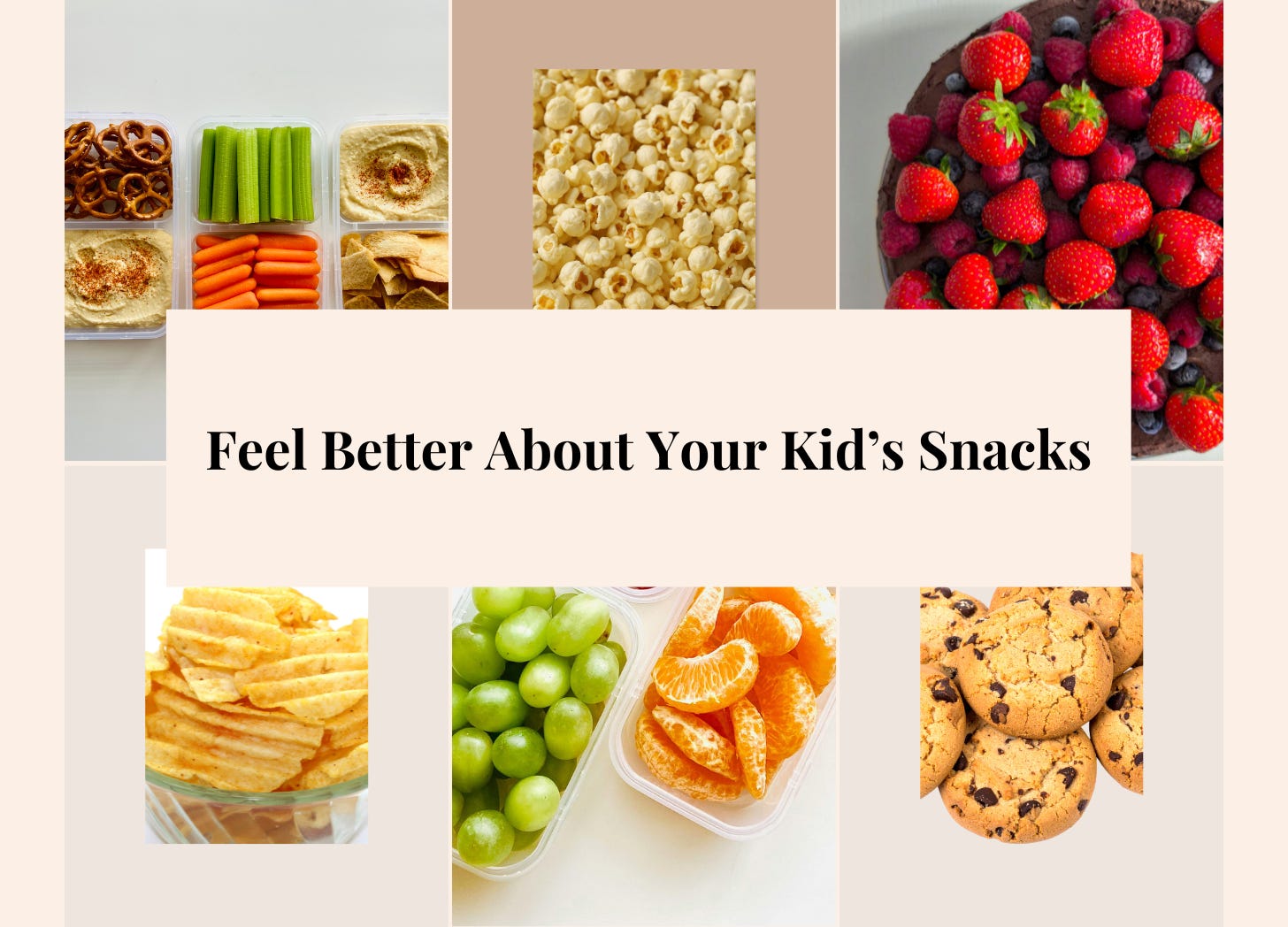
It’s 6pm. You’ve just put away dinner and finally sit down…when your youngest yells, “Mom, can I have a snack?”
Didn’t we just eat? How are you already hungry again?
The amount of time devoted to thinking about (and prepping) food is exhausting, and at some point it makes you feel like you are doing something wrong.
Is the constant snacking ruining my kids appetites?
A recent vacation almost had me convinced of this.
Over spring break we rented a house in San Diego, and didn’t stock up on snacks for our three kids. Not intentionally - we were just constantly on the go and eating meals out.
Half-way through the trip my husband and I noticed something surprising.
Our kids were eating full meals, and not really asking for much between them.
It made me pause. I started questioning if this should be our new normal.
But once we got home, I saw how quickly our usual snack patterns returned.
Looking back, it made sense. On vacation our days were filled with exciting, new activities. There wasn’t much downtime to think about food. Plus, we were all on the same schedule and our meals could be synchronized - something that rarely happens for us at home.
But it made me curious. What do we actually know about hunger and snacking in kids?
So I went back to the research, and what I found was surprisingly reassuring.
Frequent snacking is normal and expected for children and teens.
In fact, research shows that snacks play an important role in helping them meet their energy and nutrition needs.
Of course, it matters what those snacks look like, but not in a perfect or rigid way. Today I’ll show you the simple principles I use to make snacking feel supportive and easier.
One of the hardest parts about feeding kids is that their eating patterns don’t look like ours.
They’re not designed to eat three meals and be done. Between smaller stomachs, fast growth, and high activity levels, most kids naturally need to eat throughout the day.
Observational studies show that most kids are eating 5 to 8 times per day; snacks accounting for 20% to 30% of total calories consumed.
Knowing this is a game changer.
Instead of trying to eliminate snacks, you can focus entirely on how to make them feel good both physically and mentally.
My work as a dietitian has taught me what kids need for optimal growth and development. My work as a mom has taught me that kids aren’t particularly interested in nutrition (at least not at first) and would happily choose a bag of Cheetos every time.
Through trial and error, I’ve learned how to manage snacking in a way that feels balanced and sustainable at home. Most importantly, I’ve learned how to relax about it.
Instead of strict rules, I’ve landed on a set of guiding principles that help me make simple, consistent snack decisions with my kids:
This is the thread that pulls everything together. The main reason I’ve been able to relax around snacks is because I know that my kids are getting a nutrient-dense meal several times a day.
That steady rhythm of meals is what carries most of their nutrition.
This works well for me because I enjoy planning and cooking meals. But every family is different. If meals feel harder in your season right now, it may make more sense to place a higher nutritional focus on snacks.
There’s no one “right” structure, just the one that best supports your capacity and schedule right now.
Parents naturally ebb and flow with how much time and energy they have to plan and prepare food. The goal is to be intentional with whatever is most realistic for your life.
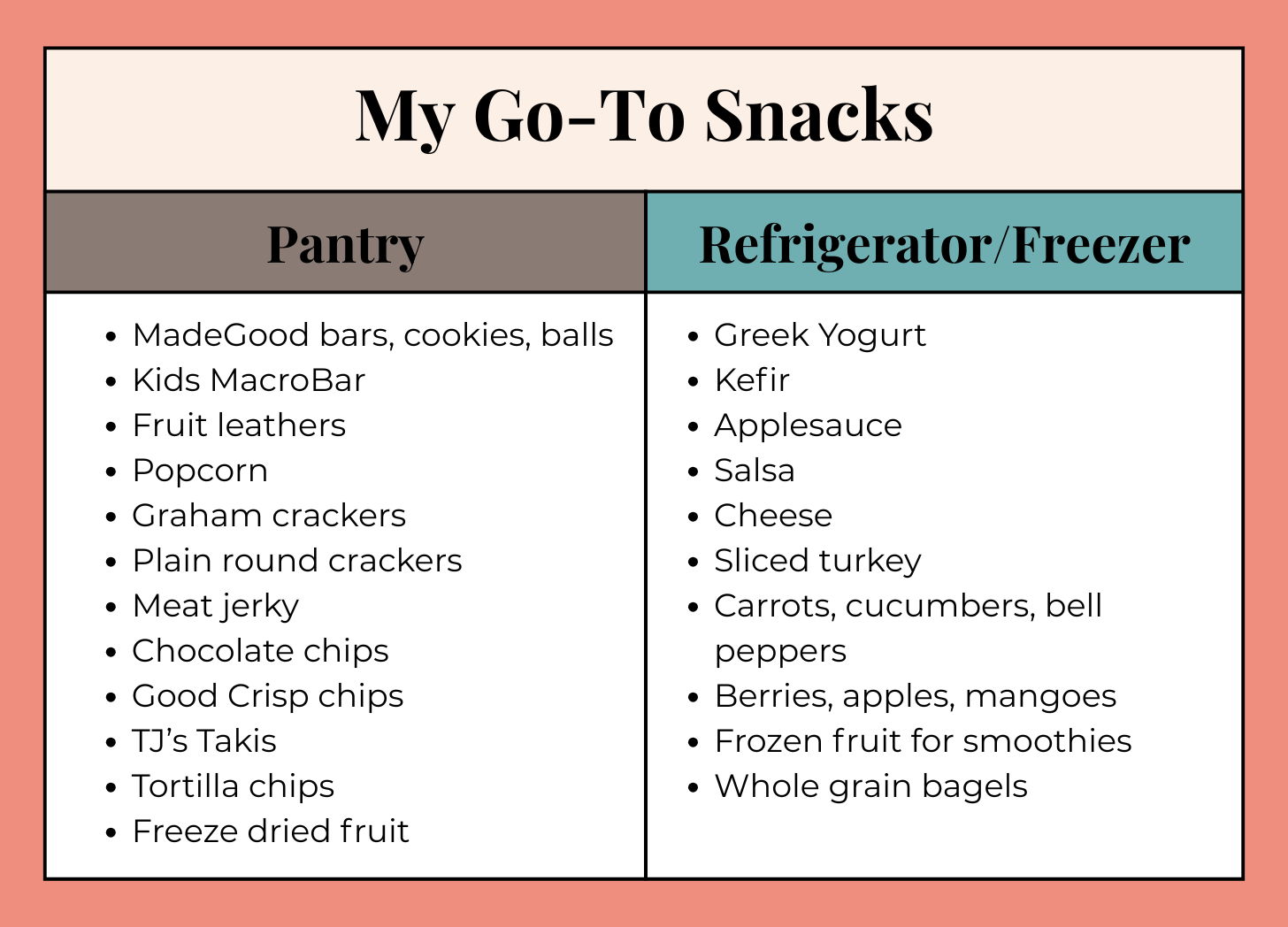
This will look different for every family depending on your kids’ ages, preferences, and what you’re trying to prioritize nutritionally. But if we accept that snacking is a normal, frequent part of childhood eating, it helps to keep foods on hand that you’re comfortable saying “yes” to.
Here’s what’s working for my kids right now:
Research consistently shows that while frequent eating is normal for kids, constant grazing throughout the day can kill their appetite for meals. Having a stopping point helps keep snacks and meals in a healthy rhythm.
For our family, that boundary is about 60 minutes before meals. If my kids ask for a snack during that window, I’ll remind them that their next meal is coming soon.
If they insist they are “starving” within that window, I allow cut up fruit or vegetables. Usually they decline and wait for the meal (surprise, surprise).
This principle only works well when there’s some level of consistency with meal timing. We usually aim for breakfast around 7, lunch around 11 or 12, and dinner between 5 and 6, though sports and activities definitely shift that.
The key is finding a rhythm that works best for your family and sticking with it the best you can.
I know one mom with a busy gymnastics schedule who shifted entirely. She serves a full dinner right after school so her kids are fueled before evening practices. It’s a great example of adapting a schedule to fit your life.
As your kids get older, they are going to demand more autonomy over their snacks, and ask for things you might not want to give.
I don’t aim for strict restriction at home, because that often backfires when kids have more independence outside the house. Instead, I focus on “meeting them in the middle.”
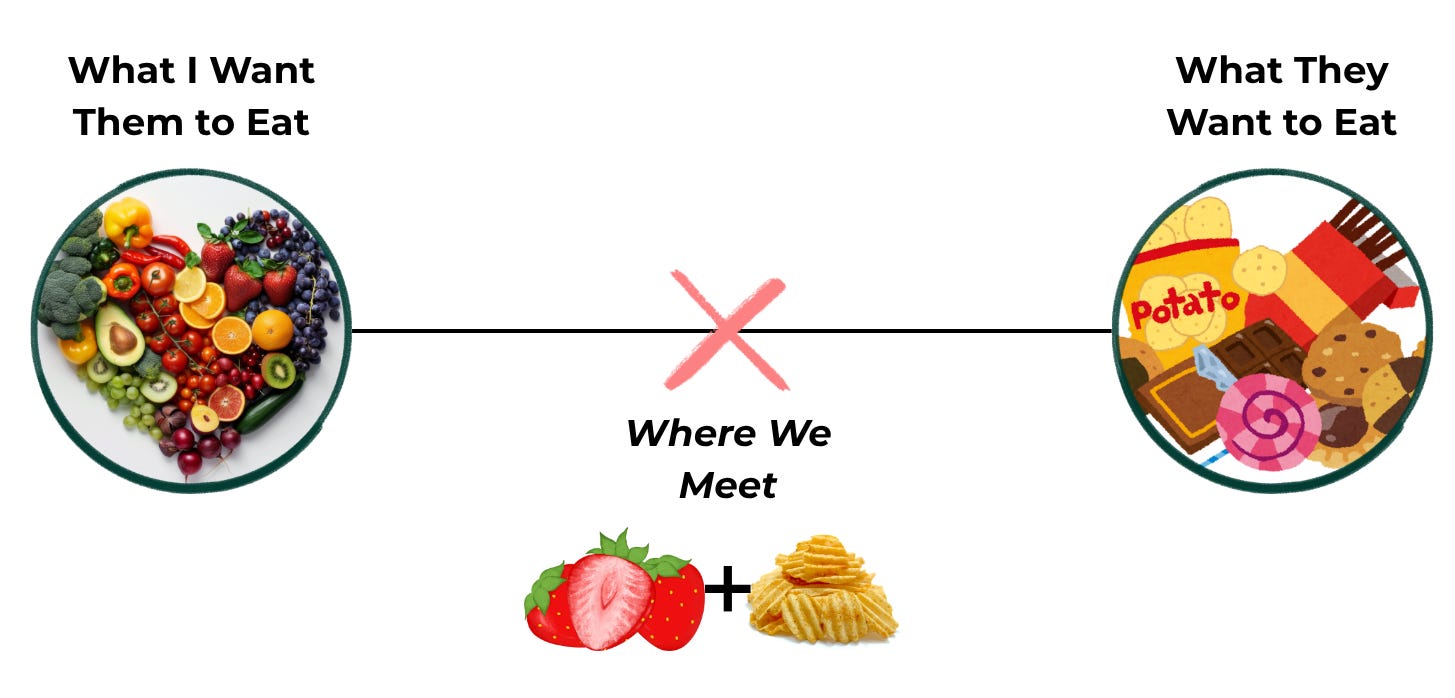
So when my daughter runs and grabs the Takis right after school, I let it happen. I’ll ask her to put them in a small bowl instead of eating straight from the bag, and then I encourage her to add something fresh alongside it. It works best when I offer two options, for example: carrot sticks or sliced kiwi.
If your kids are younger, you may not be at this stage yet. You can still use the same idea in a simpler way: pair something they enjoy with something you’d like them to have. For example, goldfish crackers with grapes, or a cookie with carrot sticks.
If your kids are older, you may already be past this phase. They might be starting to make more balanced choices on their own, which is a big win!
My 13-year-old has slowly figured out more balanced choices after a couple of stomach aches from eating an entire Crumbl Cookie with her friends. Between those natural “too much” moments and our consistent reminders to add in fresh foods and think about balance, she’s really started to find her way.
Kids snack a lot, so it’s wise to put in some effort and intention, but remember that there will never be a “perfect” day of eating.
If one day got out of balance, don’t stress. Your child’s nutrition is not defined by one snack, one meal, or even one day of eating.
It’s the overall pattern that matters most. My guess is that most of you are doing amazing with your feeding efforts. Your time spent there is well worth it. If you haven’t seen benefits yet, you will. I promise.
Now, I’d love to hear from you! How do you balance snacking in your home? What are your go-to snacks? Leave a comment:)
As always, thanks for being here 🧡
Natalie
Comments
Nothing yet. Say the first thing.
Sign in to join the conversation.