
Dear reader,
Welcome back to the part of this newsletter where I try out and share different comic making exercises in an attempt to get better at the craft of visual storytelling.
This time I wanted to revisit one of the exercises we tried in the Royal Academy Graphic Storytelling course I went on a few years ago led by the brilliant Emily Haworth-Booth.
Emily set us the following challenge:
Take 2 sequential images, ideally showing the same scene just moments apart
Create a full page grid, with at least 12 frames
Put your sequential images into your grid, with the first image in the very first frame and the second in the very last one so you’ve got lots of space in between
Fill in the story between your two images to stretch out the moment. You can only use the things already in the images you’ve started with (so no adding in characters or plane crashes!) and you can’t add in any speech
In class we were provided with our starter images with stick people in various scenarios. But here I had a choice and whenever I have a choice, I choose dogs.
So my starter frames involve a sneaky beagle stealing a sausage.
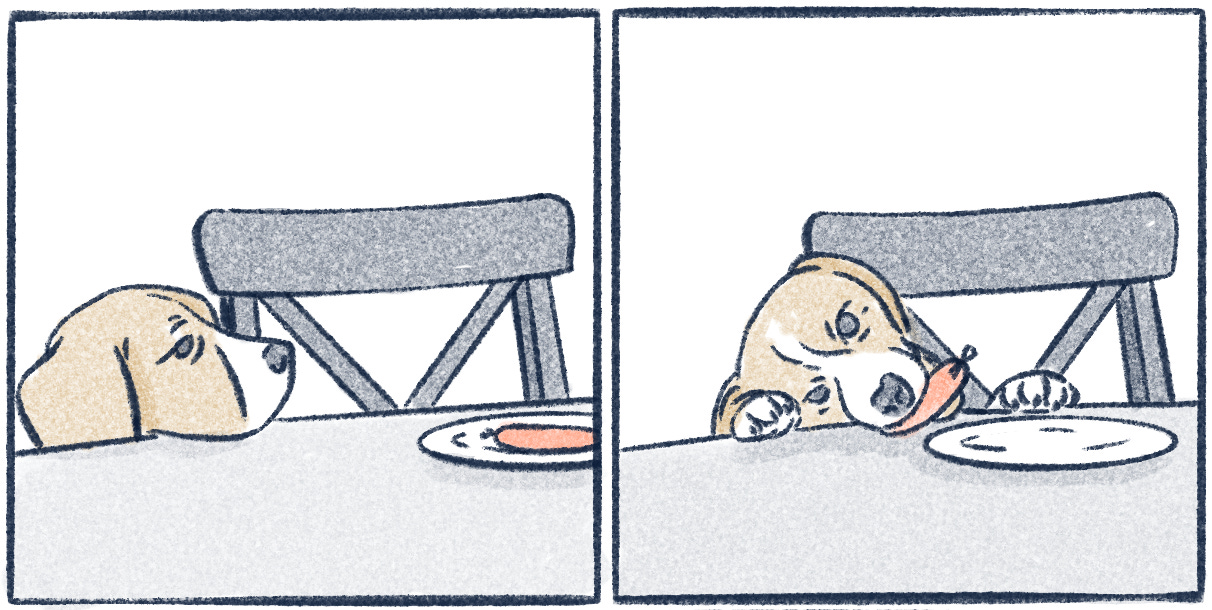
Then I wanted to try out two different ways to really draw the scene out. First, focusing on the struggle and ultimate success.
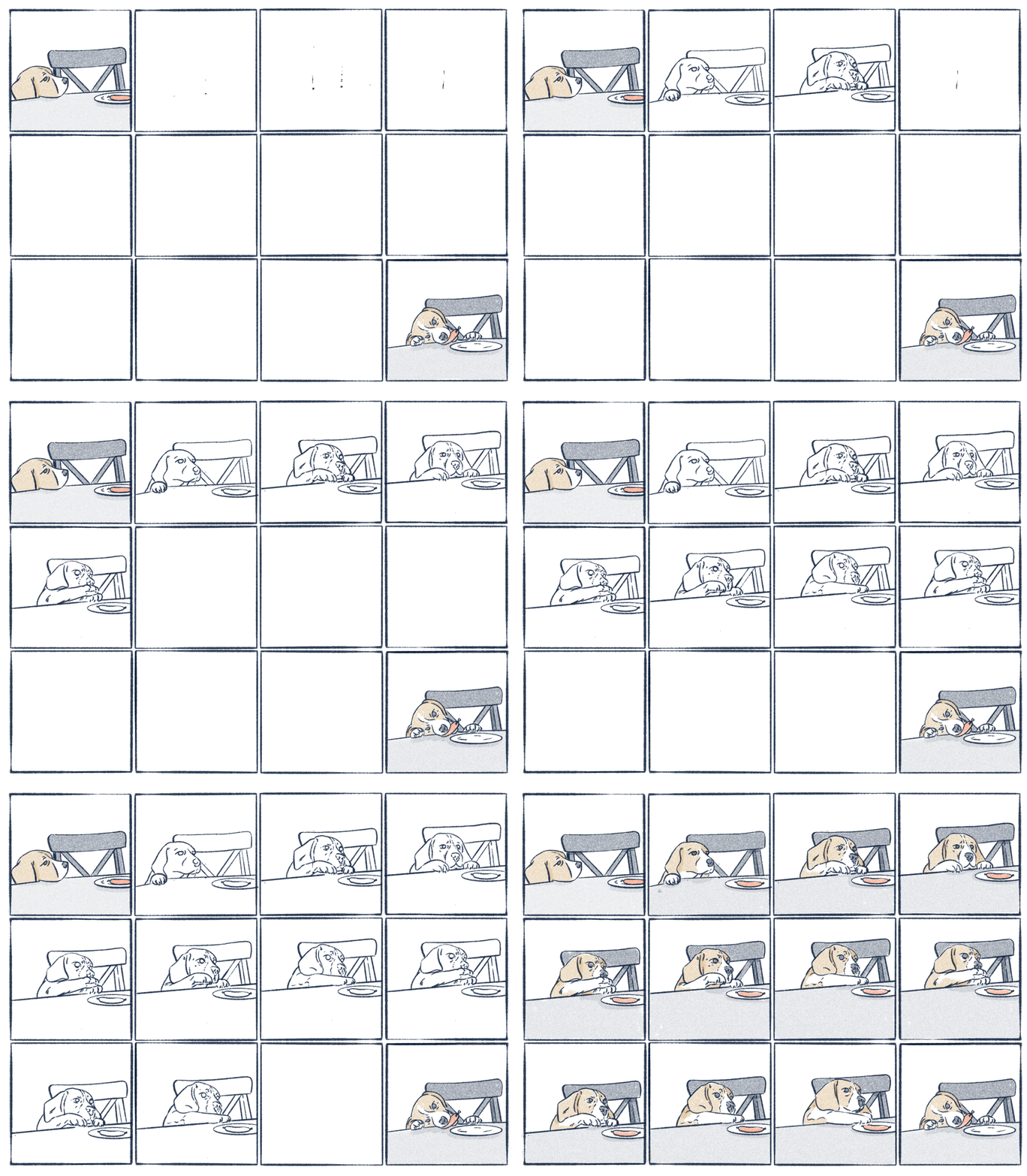
I liked how focusing on the small movements with lots of moment by moment frames slows the story down and builds tension, making getting the sausage all the sweeter.
Second, I wanted to try something a bit more character based.
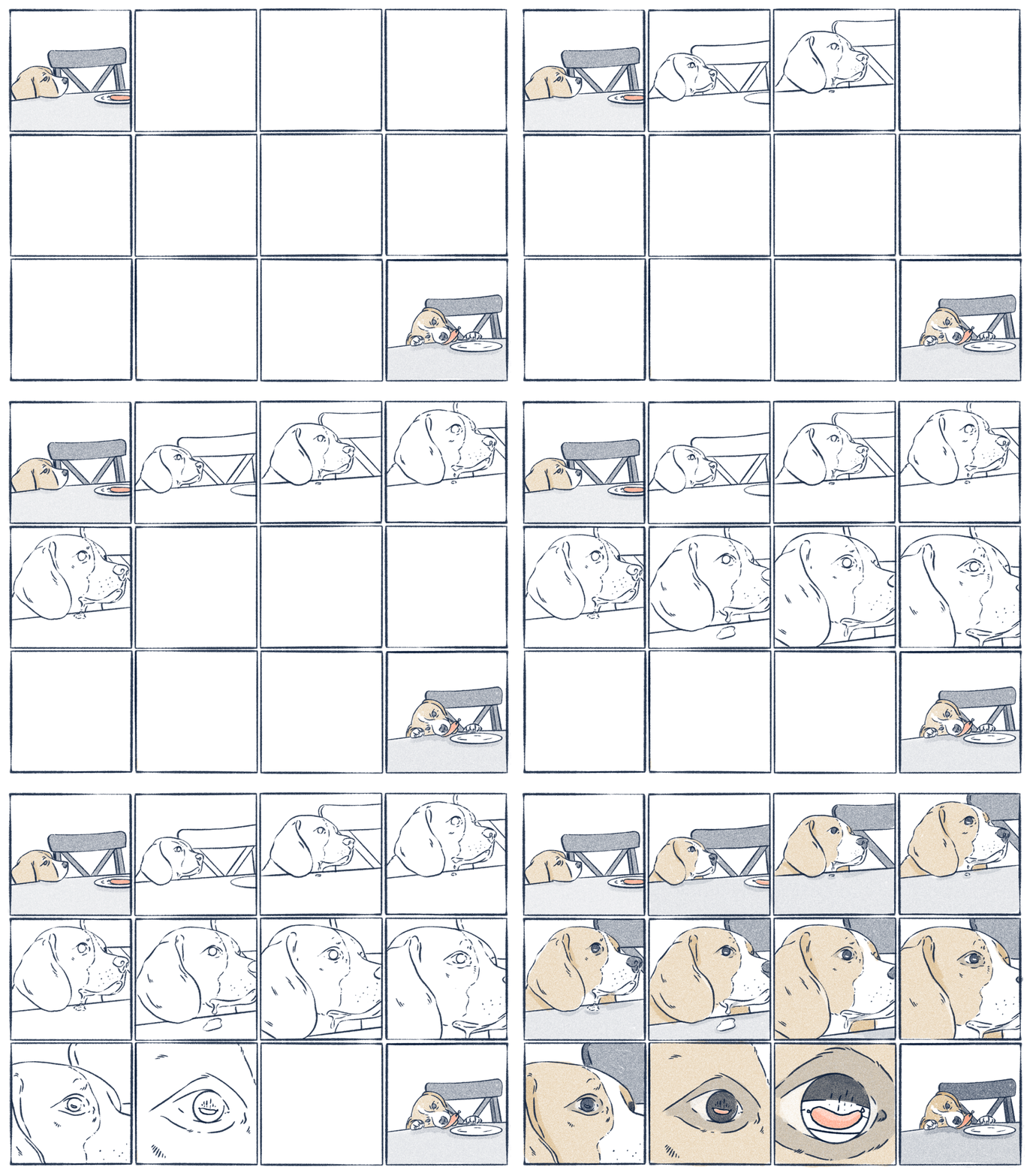
It was a lot of fun to draw the patch of drool growing as we zoom in to align with the one thing on the beagle’s mind. I think there’s something satisfying about the jump between the penultimate and final frames, like he’s processing and processing but the actual grabbing of the sausage happens in the blink of an eye.
Which do you prefer?
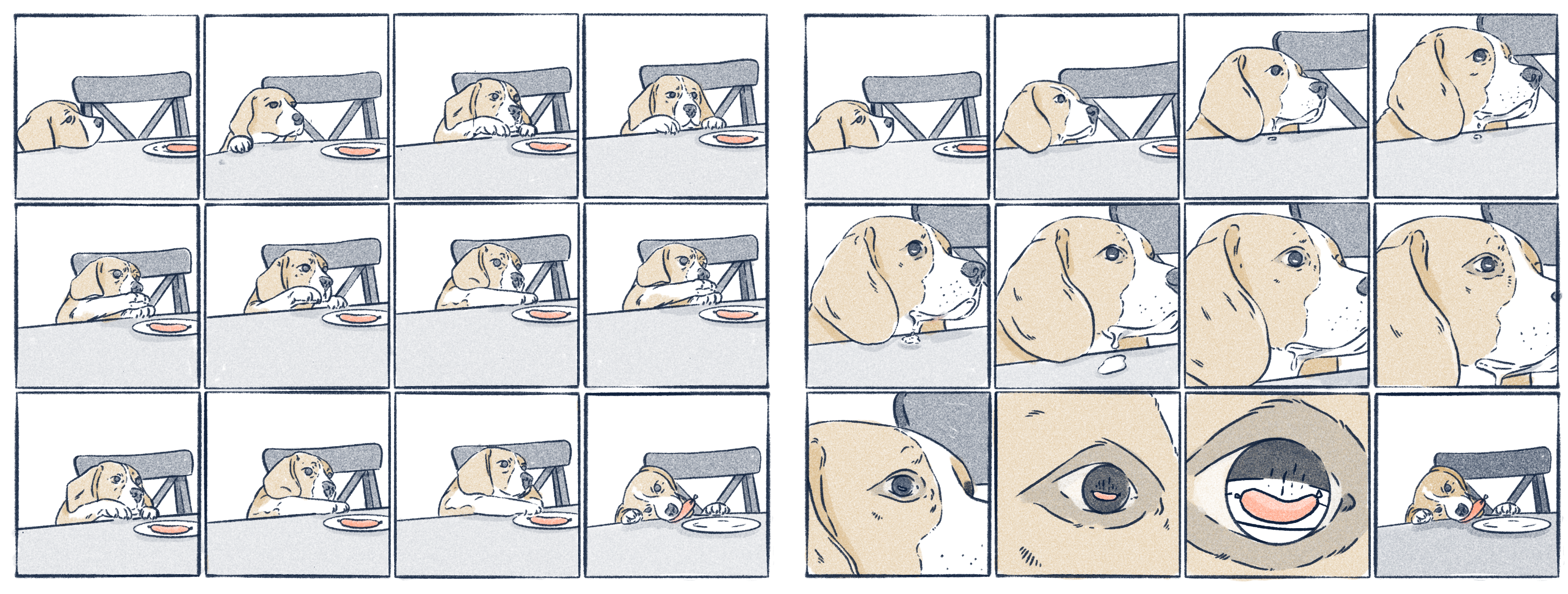
I love this as an exercise to get you to slow down and try to find more of a story. What you put between those two frames can completely change the tone and narrative that’s being told, and I remember from class that we all ended up with vastly different stories even where we had the same scenarios.
That’s all for now!
Write/draw again soon,
Natalie
No posts
Comments
Nothing yet. Say the first thing.
Sign in to join the conversation.