
The taxpayer-funded housing program sets aside millions for families “targeted” by federal immigration enforcement—and says immigration status does not have to be disclosed.
Even worse?
L.A. County diverted $5 million originally approved for wildfire victims to pay these illegal aliens.
Los Angeles County is offering up to $15,000 in taxpayer-funded housing relief to residents regardless of immigration status—including illegal immigrant households affected by ICE raids, detentions, and deportations.
The county’s own documents make the purpose unmistakable.
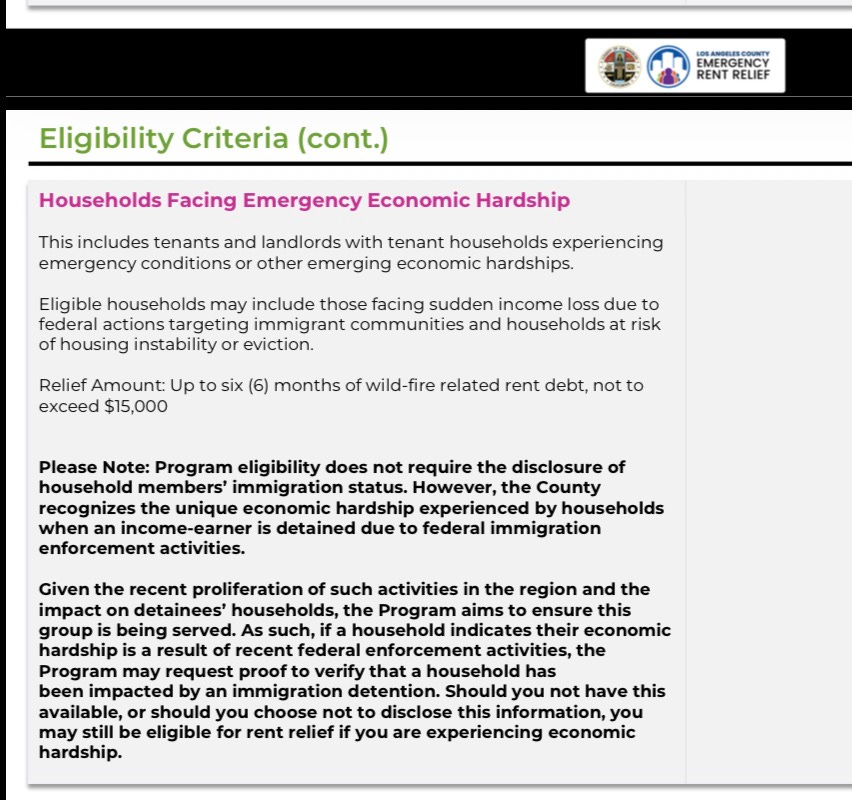
Officials created a special eligibility category for households suffering a “sudden loss of income due to federal actions targeting immigrant communities.” They then earmarked millions of dollars for that category and wrote the rules so applicants would not have to prove they are lawfully present in the United States.
The county’s February 2026 Program and Application Guide states:
“Program eligibility does not require the disclosure of household members’ immigration status.”
The program can erase up to six months of housing debt, generally capped at $15,000 per rental unit. It covers unpaid rent and, for certain applicants, mortgages and other housing expenses.
In plain English: Los Angeles taxpayers are financing housing relief that illegal immigrants can receive—and the county deliberately refuses to make lawful immigration status a condition of eligibility.
L.A. County Treats ICE Enforcement As An “Emergency”
This is not a neutral housing program containing an obscure loophole. Immigration enforcement was one of the stated reasons the benefit was created.
The September 2025 Board of Supervisors motion denounced “aggressive immigration enforcement” and claimed that “thousands of families have lost their primary breadwinners due to raids.”
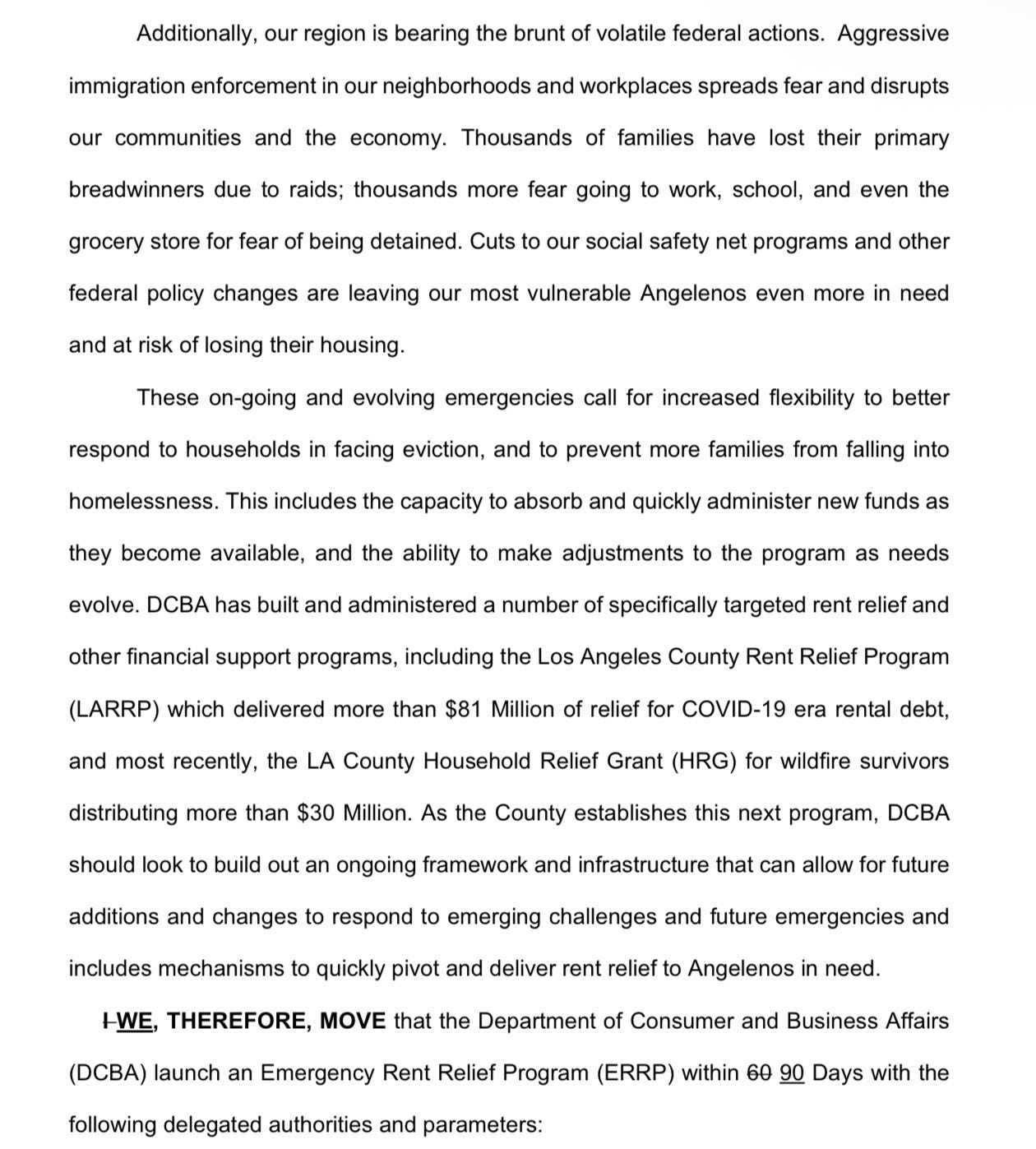
The Board responded by establishing “Priority Group Category 3” for households allegedly harmed by federal actions against immigrant communities.
County officials allocated $5 million in Care First and Community Investment funds specifically to Category 3. They also directed another $9.788 million in Affordable Housing Trust Fund and county money toward the category unless wildfire victims still had unmet needs.
The broader fund has since grown to at least $44.367 million, according to a February 2026 county presentation. The entire amount is not exclusively for illegal immigrants—it also covers wildfire victims—but immigration-enforcement hardship is an express component.
ICE ‘Victims’ Received Funds Meant For Fire Victims
L.A. County did not merely place wildfire victims and immigrant households inside the same newly created program. It took money already assembled specifically for wildfire rent relief—and redirected half of it to households claiming hardship from federal immigration enforcement.
Following the Eaton and Palisades fires, county officials identified $10 million to establish a fund for tenants and landlords unable to collect or pay rent because of the wildfires.
Officials divided the original wildfire allocation in half. The approved motion retained $5 million for wildfire-related categories while ordering that “$5 million in CFCI funding shall be allocated to Priority Group Category 3”—a newly created category for households suffering income loss because of federal actions targeting immigrant communities.
The county went even further, directing another $9.788 million from its Affordable Housing Trust Fund toward the ICE-related category unless wildfire victims still had unmet needs. The finished program subsequently offered as much as $15,000 per rental unit for up to six months of housing debt.
Applicants Can Decline To Provide Detention Records
The county’s verification rules are even more revealing.
If applicants say their hardship resulted from immigration enforcement, administrators may request evidence of a detention or deportation. But the guide says people who lack those records—or “choose not to disclose this information”—may still receive rent relief if they establish another eligible economic hardship.
The official program FAQ confirms both points: immigration status is not required, and households that decline to provide immigration-detention documentation may remain eligible under another hardship category.
Applicants must still document their identity, housing debt, tenancy, income, and eligible expenses. But proof of American citizenship or lawful presence is not required.
The County Designed The Program Not To Count Illegal Immigrant Recipients
Los Angeles County cannot tell the public how many illegal immigrants receive the benefit because its own rules prevent it from collecting the information necessary to produce that number.
The eligible universe includes illegal immigrants alongside lawful residents and mixed-status families. Because status is not required, the county cannot separate those populations in its published figures.
That creates a convenient political shield: officials can promote relief for families affected by ICE while later insisting they do not know how many beneficiaries are in the country illegally.
California’s largest county is not merely refusing to assist ICE. It is using taxpayer money to cushion the financial consequences when ICE detains or deports an immigrant breadwinner.
Demand has already overwhelmed the available money.
The county reported 4,587 Round One applications requesting $84,711,397—nearly twice the $44.367 million identified for the broader program.
Now you see why the county wrote the program so taxpayers may never know how many illegal immigrants received the benefit.
No posts
Comments
Nothing yet. Say the first thing.
Sign in to join the conversation.