
A Beijing-based propaganda and spy front whose charter pledges allegiance to the “overall leadership” of the Chinese Communist Party funded a private nuclear backchannel that brought some of America’s former highest-ranking national security officials face-to-face with researchers from the Chinese institution responsible for developing Beijing’s nuclear weapons.
That institution, the China Academy of Engineering Physics, has been blacklisted by the U.S. Commerce Department since 1997 for its role in researching, developing, and testing China’s nuclear weapons.
Chinese-language records reveal the meetings were not U.S. government diplomacy. Much of this information comes not from American disclosures, but from Chinese-language materials that have since been deleted or removed from public view.
The organization behind the operation, the China United States Exchange Foundation (CUSEF), has been identified by congressional investigators as an “instrument of the CCP’s approach to political warfare” and sits inside Beijing’s broader United Front influence ecosystem.
These were not American officials dispatched by Washington to negotiate with China.
They were former officials whose careers had given them extraordinary knowledge, relationships and credibility inside the American national security establishment being repeatedly brought into a privately financed Chinese influence channel.
The Americans drawn into that network included:
Adm. Mike Mullen — former Chairman of the Joint Chiefs of Staff
Adm. James O. Ellis Jr. — former Commander of U.S. Strategic Command
Ernest Moniz — former U.S. Secretary of Energy
Madelyn Creedon — former Principal Deputy Administrator of the National Nuclear Security Administration
Sam Nunn — former Chairman of the Senate Armed Services Committee
Stephen Biegun — former Deputy Secretary of State
Rose Gottemoeller — former Under Secretary of State for Arms Control and former NATO Deputy Secretary General
Steve Andreasen — former National Security Council Director for Defense Policy and Arms Control
Paul Dean — former Acting Assistant Secretary of State for Arms Control, Deterrence and Stability
Mark Melamed — former State Department nuclear affairs official
Joan Rohlfing — longtime senior Nuclear Threat Initiative official
Within roughly a year, the channel progressed from private strategic discussions to direct engagement with researchers from China’s blacklisted nuclear weapons complex, meetings with the Chinese Foreign Ministry and encounters with senior officials from the Communist Party itself.
SEPTEMBER 2024: BUILDING THE CHANNEL
The first publicly identified meeting in the series occurred in September 2024.
The Pacific International Exchange Foundation, or PIEF, CUSEF’s mainland Chinese affiliate, supported Grandview Institution’s inaugural China-U.S. Strategic Security and Stability Dialogue.
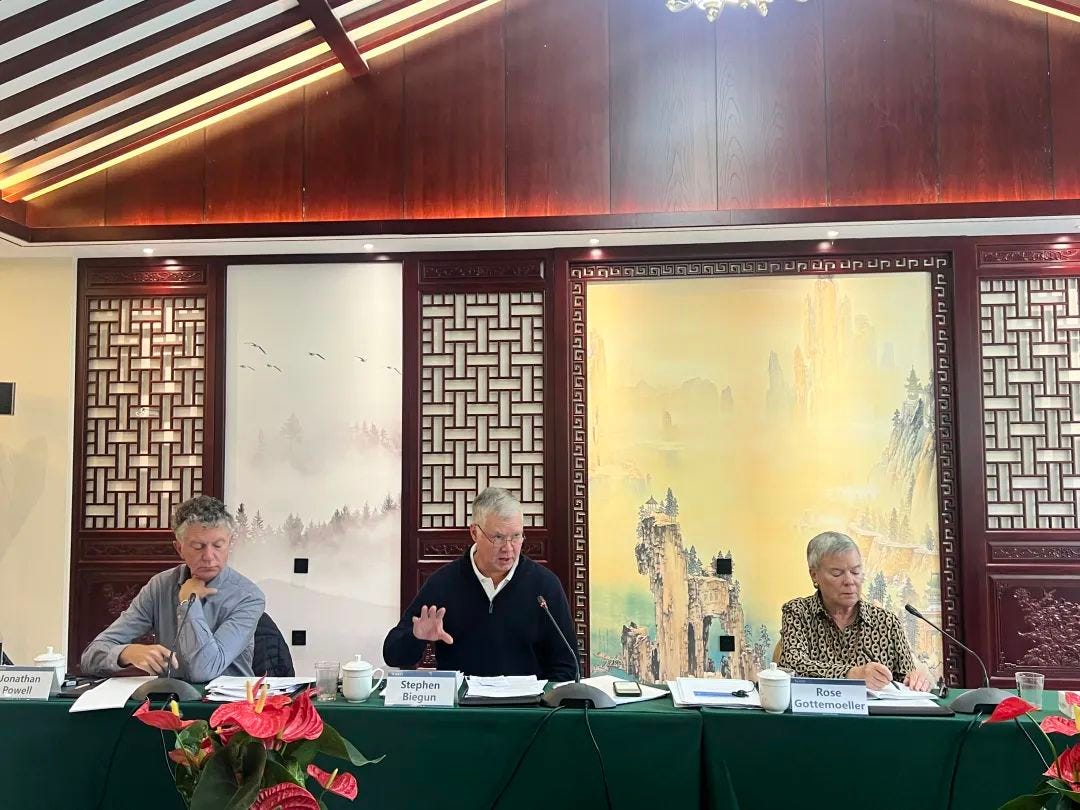
Former Deputy Secretary of State Stephen Biegun and former Under Secretary of State for Arms Control Rose Gottemoeller were among the Americans publicly identified by organizers.
The discussion already centered on highly sensitive national security issues, including nuclear policy and strategy, crisis management, regional flashpoints and the future of U.S.-China strategic stability.
Participants also discussed a “new definition of strategic stability between China and the United States.”
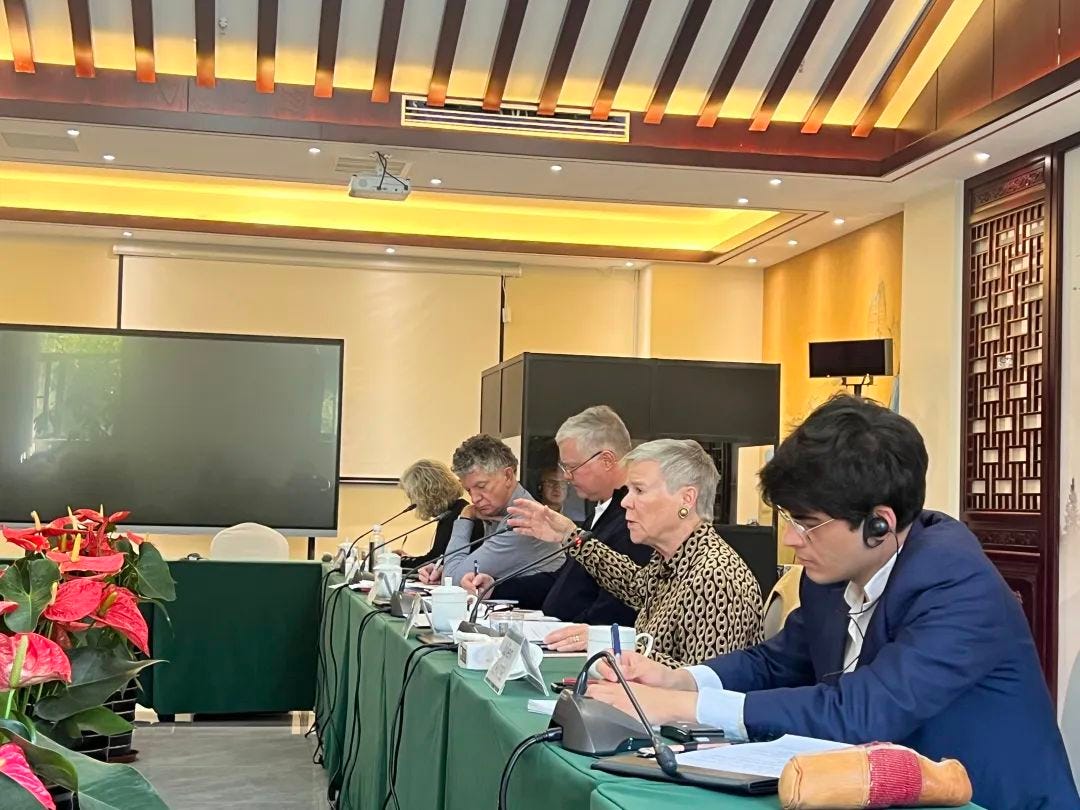
It was the beginning of a sustained private channel into the community of former American officials who had helped formulate U.S. nuclear and national security policy.
OCTOBER 2024: THE CHANNEL MOVES INTO NUCLEAR COMMAND AND CONTROL
One month later, the conversations became even more sensitive.
Grandview hosted the inaugural Nuclear Fail-Safe Dialogue in Beijing, bringing former officials and nuclear experts into discussions concerning nuclear policy, force posture and the systems governing nuclear weapons.
Participants examined nuclear command-and-control processes, nuclear force posture and even aspects of nuclear weapons and delivery-system design.
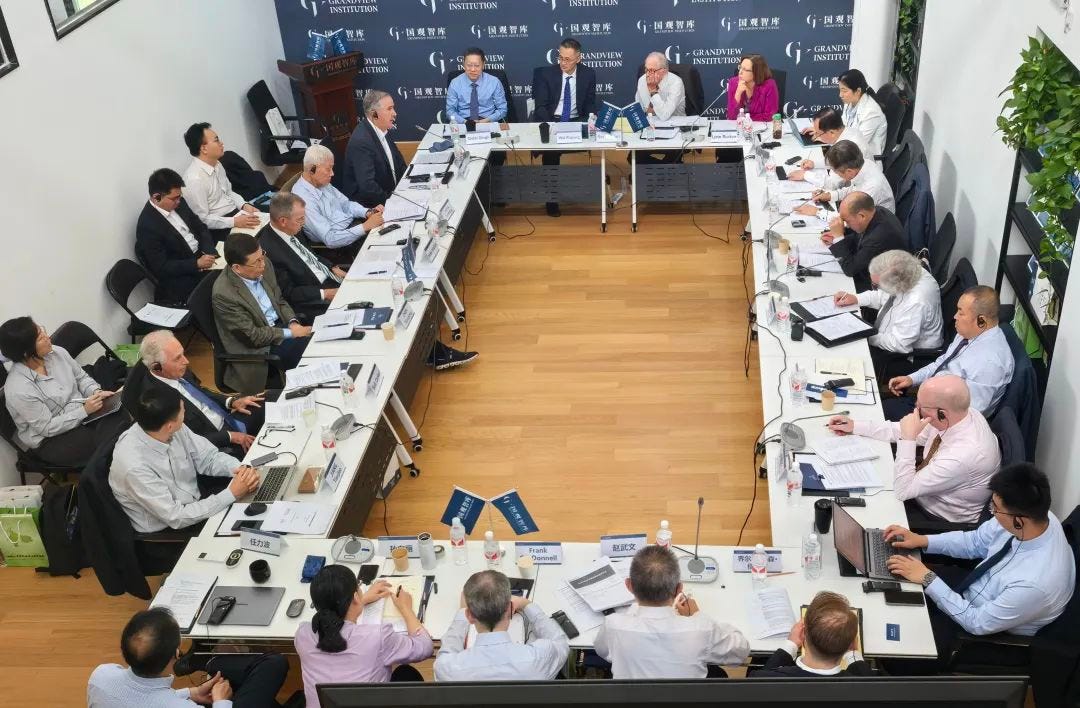
Subjects discussed included post-launch destruct mechanisms for ballistic missiles, personnel reliability programs, extending leaders’ nuclear decision time and potential sharing of ballistic-missile early-warning information.
The published account also describes discussions over how concepts should be framed so they would resonate with China’s political and military leadership:
“candid and in-depth discussions on the risks of “fail-safe” scenarios involving nuclear weapon systems, such as accidents, misjudgments, false alarms, terrorism, and intentional or deliberate actions. Specific topics included: (1) The Nuclear Era and Nuclear Fail-Safe Today, (2) Nuclear Fail-Safe Reviews, (3) The Value of Nuclear Fail-Safe in the Face of New and Evolving Risks, (4) Global Nuclear Fail-Safe, (5) Learning, Sharing, Reflecting, and Future Actions.”
APRIL 2025: THE FORMER JOINT CHIEFS CHAIRMAN JOINS
By April 2025, the caliber of American participant had risen dramatically.
PIEF funded the second China-U.S. Strategic Security and Stability Dialogue, with CUSEF also identifying itself as a co-organizer.
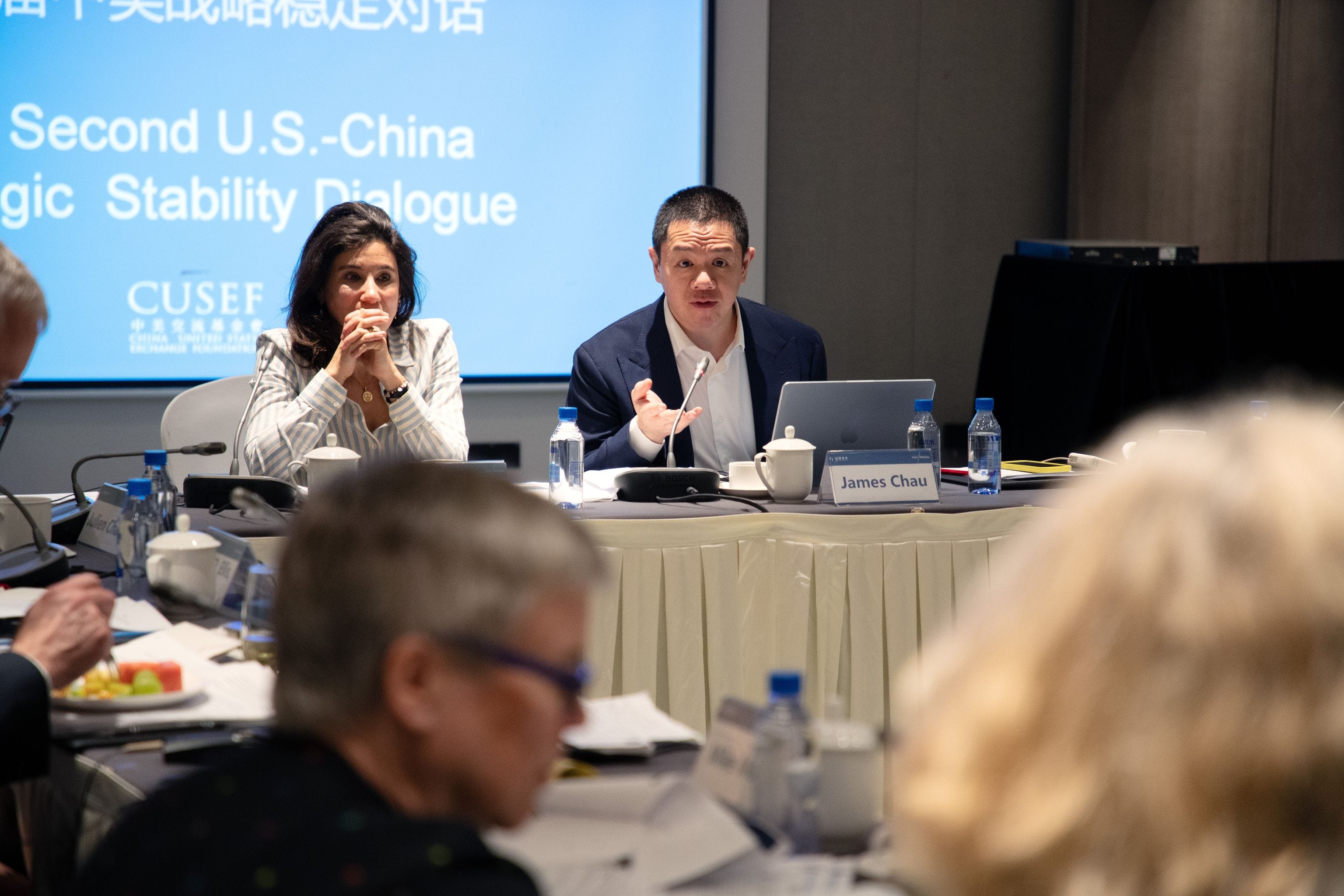
The American delegation included Stephen Biegun, Mike Mullen, Rose Gottemoeller and James Ellis, a group drawn from the highest levels of the U.S. diplomatic, military and nuclear-security establishment.
Mullen previously served as Chairman of the Joint Chiefs of Staff, while Ellis commanded U.S. Strategic Command, the military command responsible for America’s strategic nuclear forces.
The agenda included U.S. and Chinese nuclear strategy, nuclear policy, nuclear posture assessments, the global nuclear balance and potential U.S.-China crises and conflicts.
As a Chinese summary explained:
“The discussion topics of this dialogue include: (1) Sino-US relations under Trump’s new government, (2) Sino-US nuclear strategy, nuclear policy and nuclear posture assessment, (3) global nuclear posture assessment, (4) potential crises and conflicts between China and the United States, (5) how to prevent and control crises between China and the United States. Both sides believe that there are many differences between the two countries in areas related to strategic security and stability, but there is still an urgent need to strengthen exchanges and cooperation in some important areas.”
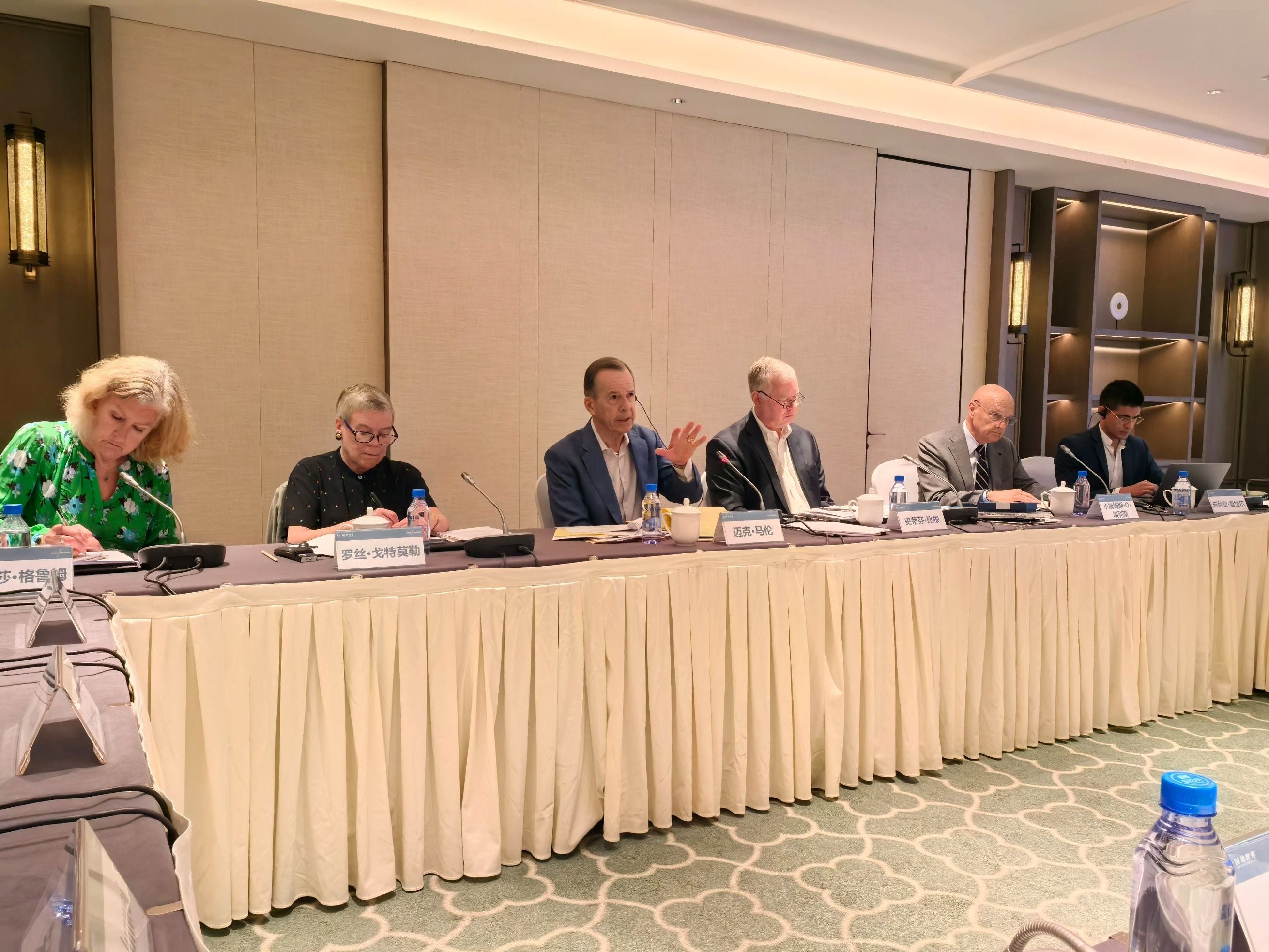
Immediately before the dialogue, Grandview escorted a U.S. delegation led by Biegun and Mullen into meetings with China’s Ministry of Foreign Affairs and the China Arms Control and Disarmament Association.
They also met Ma Hui, vice minister of the International Department of the Chinese Communist Party Central Committee.
The delegation then joined an International Department seminar titled:
“The Future of China-U.S. Relations in a Second Trump Administration.”
By this stage, the pattern looked less like academic exchange and more like classic influence cultivation: identify former officials with continuing prestige and access inside Washington, bring them repeatedly into controlled engagements, introduce them to increasingly senior Chinese political actors and maintain a private channel outside normal governmental scrutiny.
OCTOBER 2025: CHINA’S NUCLEAR WEAPONS COMPLEX ENTERS THE ROOM
Six months later came the most alarming meeting.
PIEF funded the second China-U.S. Nuclear Fail-Safe Dialogue in Beijing.
The American delegation included former Energy Secretary Ernest Moniz, former Senate Armed Services chairman Sam Nunn, former STRATCOM commander James Ellis and former senior NNSA official Madelyn Creedon.
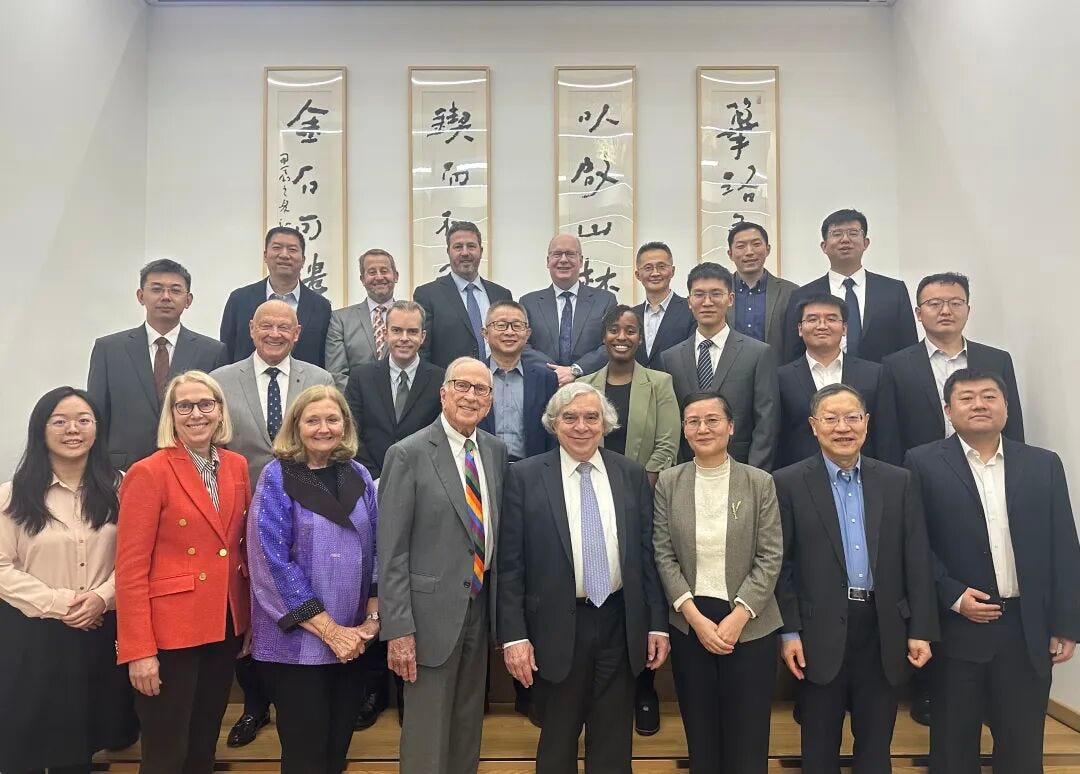
These were not simply people knowledgeable about nuclear policy. They were former custodians of America’s nuclear establishment.
Across the table were personnel from the China Academy of Engineering Physics, or CAEP:
Zhao Wuwen, director of CAEP’s Strategic Research Center.
Sun Xiangli, the center’s deputy director.
Zhang Qizheng, an associate researcher.
Additional observers came from CAEP, China’s National University of Defense Technology and a research institute belonging to China National Nuclear Corporation.
CAEP is the institution the U.S. government identifies as responsible for the research, development and testing of China’s nuclear weapons. It has been subject to U.S. export restrictions since 1997.
The talks covered the American nuclear failsafe review system, global nuclear posture, Chinese nuclear failsafe procedures, emerging technology and possible international cooperation.
PIEF said the process had already moved beyond conceptual discussion into “institutional design” and practical implementation.
Grandview says Moniz and its president discussed how to expand the dialogue, distribute its results and elevate the channel into Track 1.5 engagement, bringing it closer to official policymaking.
THE AMERICANS ARE THEN TAKEN TO CHINESE OFFICIALS
The day after the nuclear meeting, the private dialogue again turned into high-level Chinese government access.
Grandview escorted participants into meetings with Sun Xiaobo, director of the Chinese Foreign Ministry’s Arms Control Department, and Tang Zhiwen, a senior North American affairs official.
They again met Ma Hui, vice minister of the CCP Central Committee’s International Department.
DECEMBER 2025: THE PRIVATE CHANNEL IS DESIGNED TO FEED OFFICIAL POLICY
The network reconvened in December.
CUSEF itself supported the Third China-U.S. Strategic Security and Stability Dialogue, with CUSEF President James Chau participating in chairing the meeting. CUSEF previously posted a summary of the meeting but has since erased it from their website.
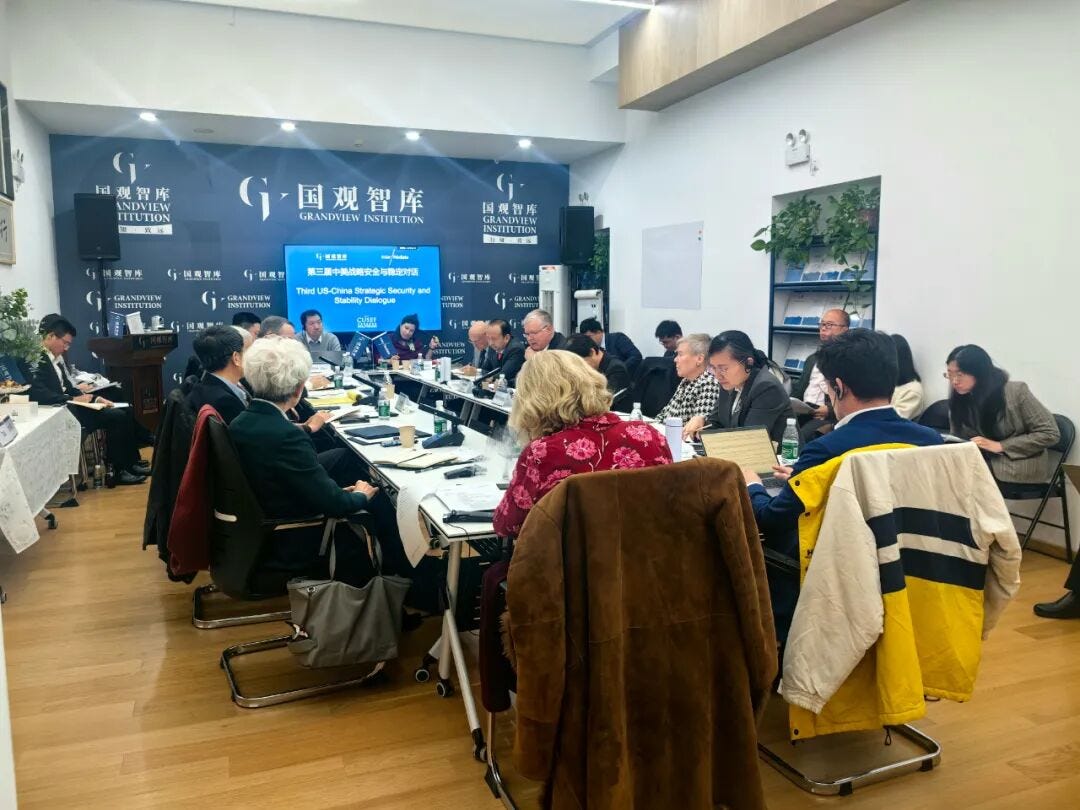
The Chinese side again included Sun Xiangli, deputy director of the Strategic Research Center inside China’s nuclear weapons complex.
Additional CAEP personnel attended as observers.
The group discussed traditional nuclear deterrence, emerging technologies, artificial intelligence’s impact on nuclear security and crisis management.
Then the organizers spelled out the purpose of the private channel.
Grandview’s Chinese-language account said the participants could begin with Track II dialogue to “create conditions” and “select content” for Track I and Track 1.5 dialogue.
Track II is unofficial.
Track 1.5 brings unofficial participants and government officials closer together.
Track I is government-to-government diplomacy.
In other words, Beijing-linked organizers were openly describing a process in which private access to former American officials could be used to help determine the substance and conditions of later official talks.
WHO BUILT THE PIPELINE?
Only after following the dialogue from beginning to end does the role of CUSEF become fully apparent.
PIEF is the mainland legal entity created by CUSEF. Its original 20 million yuan endowment came from CUSEF.
Its charter states that the foundation “upholds the overall leadership of the Chinese Communist Party.”
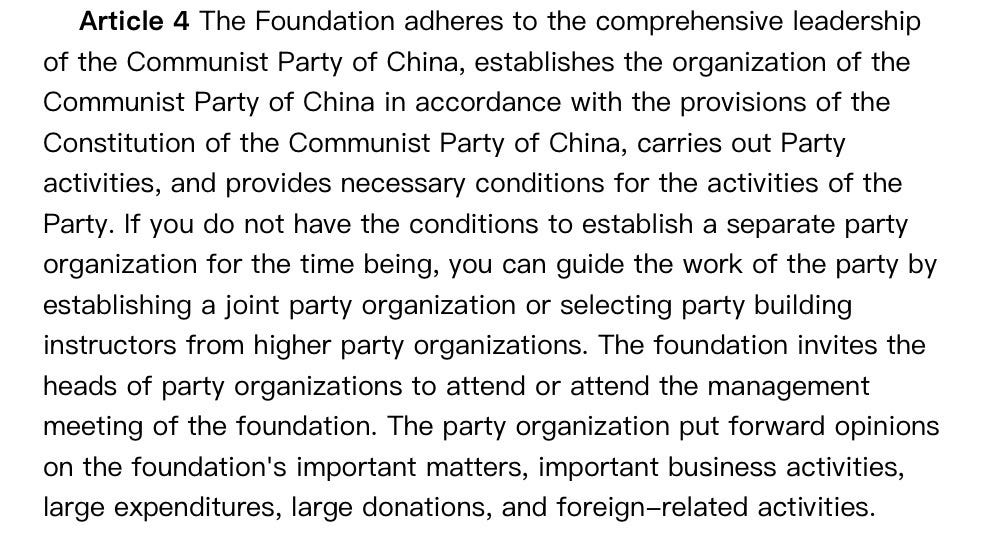
It requires the creation of a Communist Party organization and allows Party representatives to participate in management meetings.
Most significantly, the charter gives the Party organization a role in reviewing major decisions and “foreign-related activities.”
Organizing and financing high-level U.S.-China official and unofficial dialogues designed to establish “strategic mutual trust” is explicitly part of PIEF’s mission.
CUSEF’S POLITICAL WARFARE OPERATION
CUSEF’s methods have repeatedly drawn scrutiny from U.S. investigators because they mirror the broader strategy of China’s United Front system.
Congressional investigators have described CUSEF as an “instrument of the CCP’s approach to political warfare.”
The U.S.-China Economic and Security Review Commission describes United Front work as seeking to “co-opt and neutralize” sources of potential opposition to the Chinese Communist Party.
CUSEF’s own U.S. lobbying filings reveal precisely that kind of operation.
Its American representatives were paid to “expand third-party supporters,” generate media placements and arrange delegations to China.
FARA filings document private dinners involving journalists from some of America’s largest news organizations and subsidized trips sending American reporters to China.
Other CUSEF operations cultivated congressional staffers, academics, military figures and policy elites.
The nuclear dialogues represent the same model applied to a far more sensitive target set.
THE CHINA BUSINESS TIES BEHIND THE DIALOGUE
Several of the former American officials participating in the PIEF-backed dialogues did not enter the room with purely academic ties to China. Some had previously earned substantial compensation from multinational corporations whose businesses were deeply entangled with the Chinese market and Chinese joint-venture partners.
Former Joint Chiefs of Staff Chairman Mike Mullen is one of the clearest examples.
After retiring from the military, Mullen joined the board of General Motors, serving as a director beginning in 2013. GM’s own SEC filings show just how financially significant China was to the company during Mullen’s tenure. In 2017 alone, GM reported nearly $2 billion in equity income from its automotive China joint ventures and approximately $7.8 billion invested in those operations. Its partners included Chinese state-owned automotive giant SAIC, with GM holding stakes in SAIC-GM, SAIC-GM-Wuling, Shanghai OnStar and other China-based ventures.
Mullen was well compensated for his position. GM’s 2018 proxy statement shows that Mullen received $341,239 in total director compensation for 2017, including cash compensation and stock-based awards. The same filing notes that GM’s board had actually traveled to China the previous year to visit company operations.
Mullen’s financial exposure to a company heavily dependent on China is particularly notable given his long record of advocating closer relations with Beijing’s military.
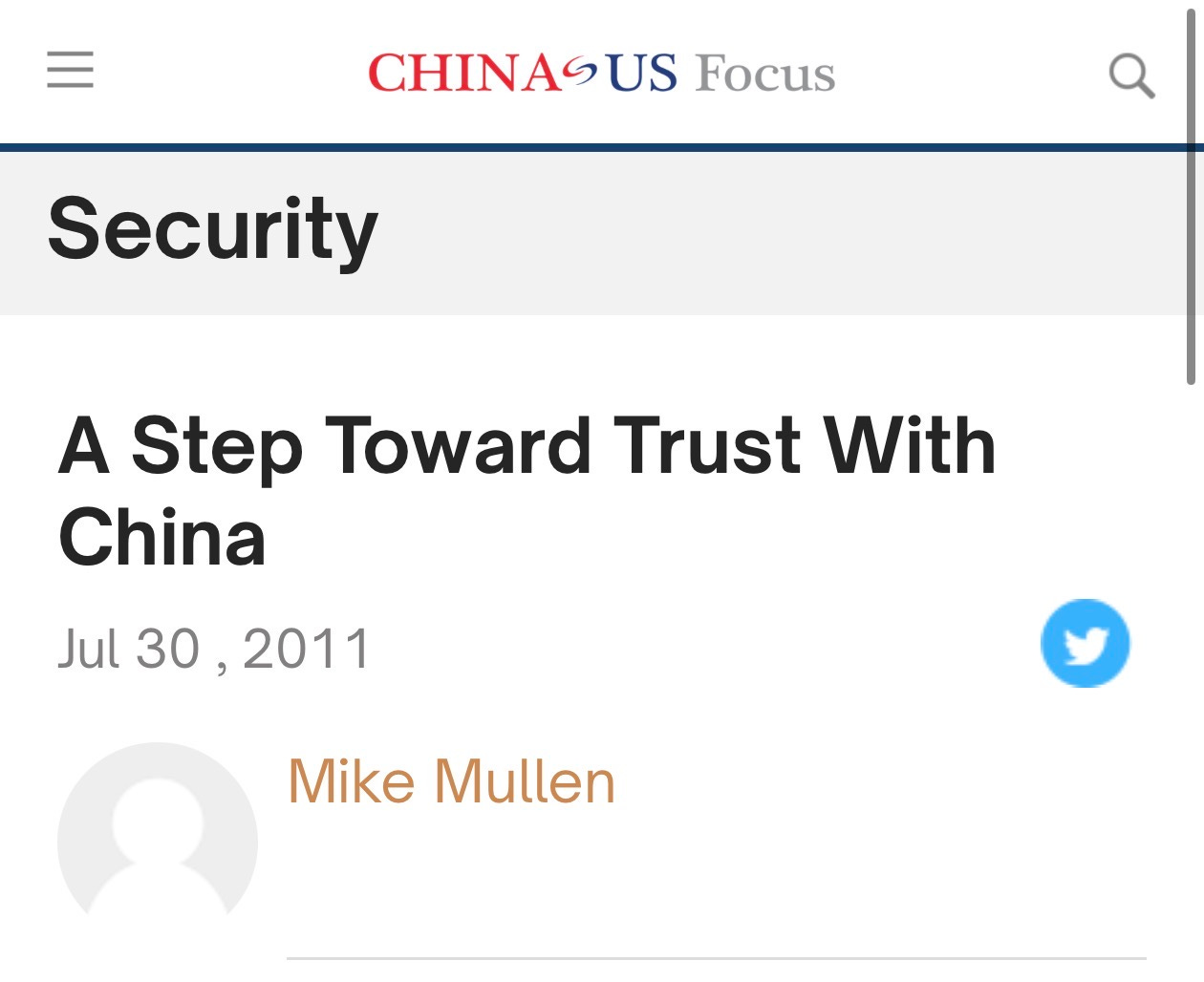
In a 2011 op-ed titled “A Step Toward Trust With China,” Mullen argued that Washington should pursue deeper cooperation with the People’s Liberation Army.
“We need to make the relationship better, by seeking strategic trust.”
Mullen called for more discussions, military exercises and personnel exchanges with the PLA and dismissed arguments that such cooperation disproportionately benefited Beijing, writing: “I just don’t agree.”
The article was originally published by The New York Times. But it was subsequently republished by China-US Focus, the media platform of the China-United States Exchange Foundation, or CUSEF, which has long promoted engagement-oriented narratives about Beijing. China-US Focus prominently carries the piece under Mullen’s name.
Mullen even disclosed that the Pentagon had shown visiting PLA chief Gen. Chen Bingde detailed Predator drone capabilities and a live-fire exercise as part of the effort to build trust in his article “A Step Toward Trust With China.”
Former U.S. Strategic Command chief Admiral James Ellis also had an overlooked corporate connection to China.
Ellis served for years as a paid director of satellite communications giant Inmarsat. While Ellis remained on the board, Inmarsat announced that it had opened a new satellite access station in Beijing with MCN and CTTIC, which its own annual report described as China’s Transport Ministry.
The company described the arrangement explicitly as a “joint investment programme” designed to position Inmarsat and its Chinese partners for “greater business opportunities in the future.”
Ellis was not simply lending his name to the company. Inmarsat’s remuneration records show that he received approximately £107,000 in total director compensation in 2013, the same year the company highlighted the Beijing investment project. Ellis retired from Inmarsat’s board in March 2014.
Stephen Biegun, another participant in the PIEF-backed dialogue, spent years in an even more explicitly China-sensitive corporate role.
Before returning to the State Department during the Trump administration, Biegun was Ford Motor Company’s Vice President for International Governmental Affairs, overseeing all of Ford’s international government relations, trade strategy and political-risk assessment.
During Biegun’s tenure, Ford maintained extensive operations in China through ventures including Changan Ford and Jiangling Motors, while announcing plans to deepen those partnerships and expand production in the country. Ford described its China strategy at the time as an “unprecedented commitment” to growing its business there.
Biegun has since publicly encouraged a larger role for Beijing on the world stage. During a 2024 appearance at China’s Grandview Institution, he reportedly said China “needs to play and is capable of playing a part” in international crisis mediation and argued that the international community would welcome greater Chinese involvement.
No posts
Comments
Nothing yet. Say the first thing.
Sign in to join the conversation.