
April 19, 2026 | Zurich, Switzerland
I’ve always loved abstract art. It moves me in ways that are not always easy to explain. It feels as if it bypasses my rational mind and the need to know, and speaks straight to something way deeper within me.
Yet, over the years, I’ve often heard the same dismissive comments: “It’s meaningless”; “My kid could do that”; “It’s not true art”; “And what’s this, anyway?”
I think we’ll never understand The Human Advantage (the ways in which humans outperform AI) if we don’t learn how art, and specifically abstract art, matters.
The ability to produce and appreciate art are both aspects of The Human Advantage. However, some types of art like abstract art and jazz convey more clearly the point I want to make. I wrote previously about jazz, and if you are new to my Substack, I invite you to read the article: An Intuitive Dance With The Unknown: Mastering the Art of Living Life The Way Top Jazz Musicians Jam.
Today, I will take you on a journey into abstract art, and I will start by addressing some of its criticisms.
Well, well, well… Whose reality, anyway?
Abstract art questions our perception of reality and suggests that what we call “reality” is a limited, filtered version of something far richer.
Let me try to prove that to you.
The photo below depicts reality: a close-up of tree bark. I’ve very slightly enhanced the colors to make it more visible, but I have not manipulated or altered anything. And yet, it looks pretty close to abstract art, doesn’t it?
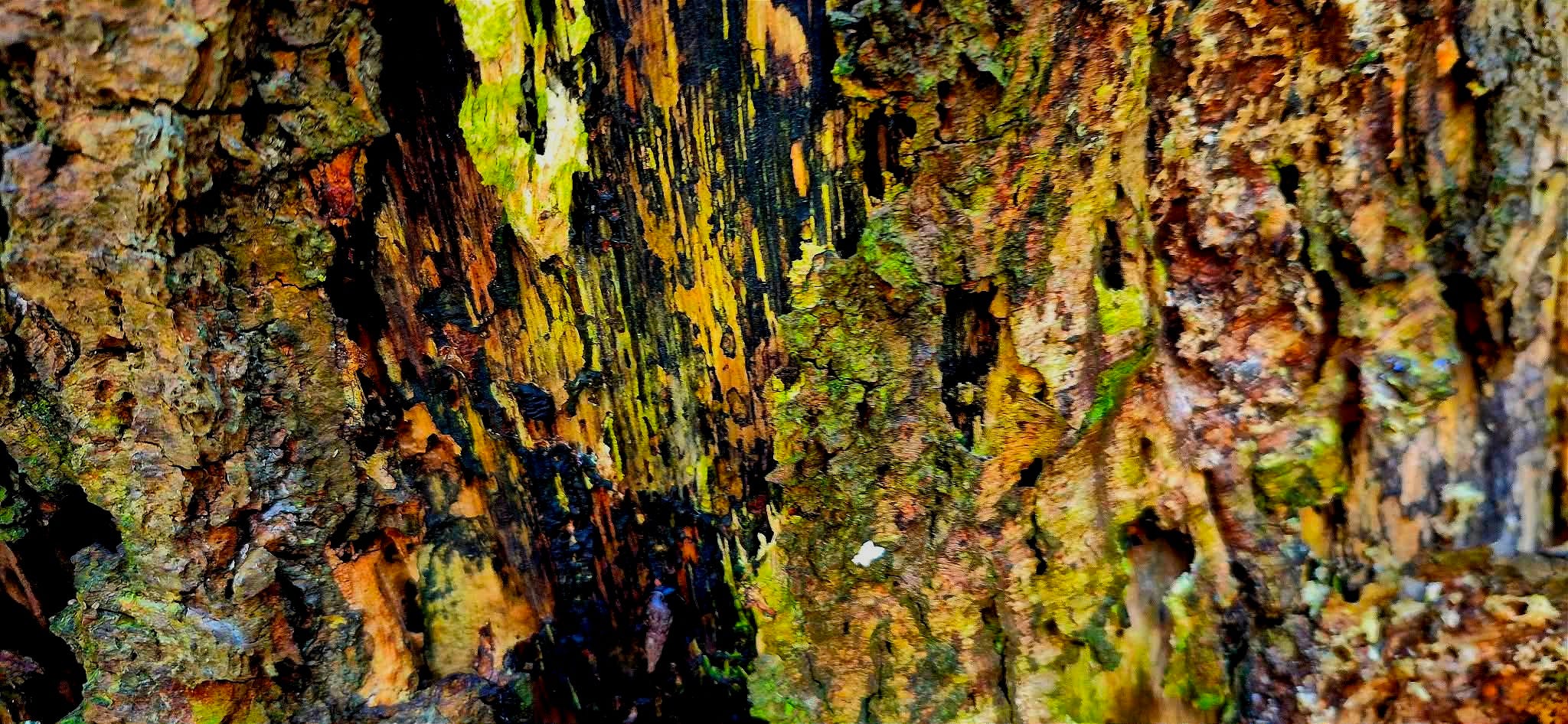
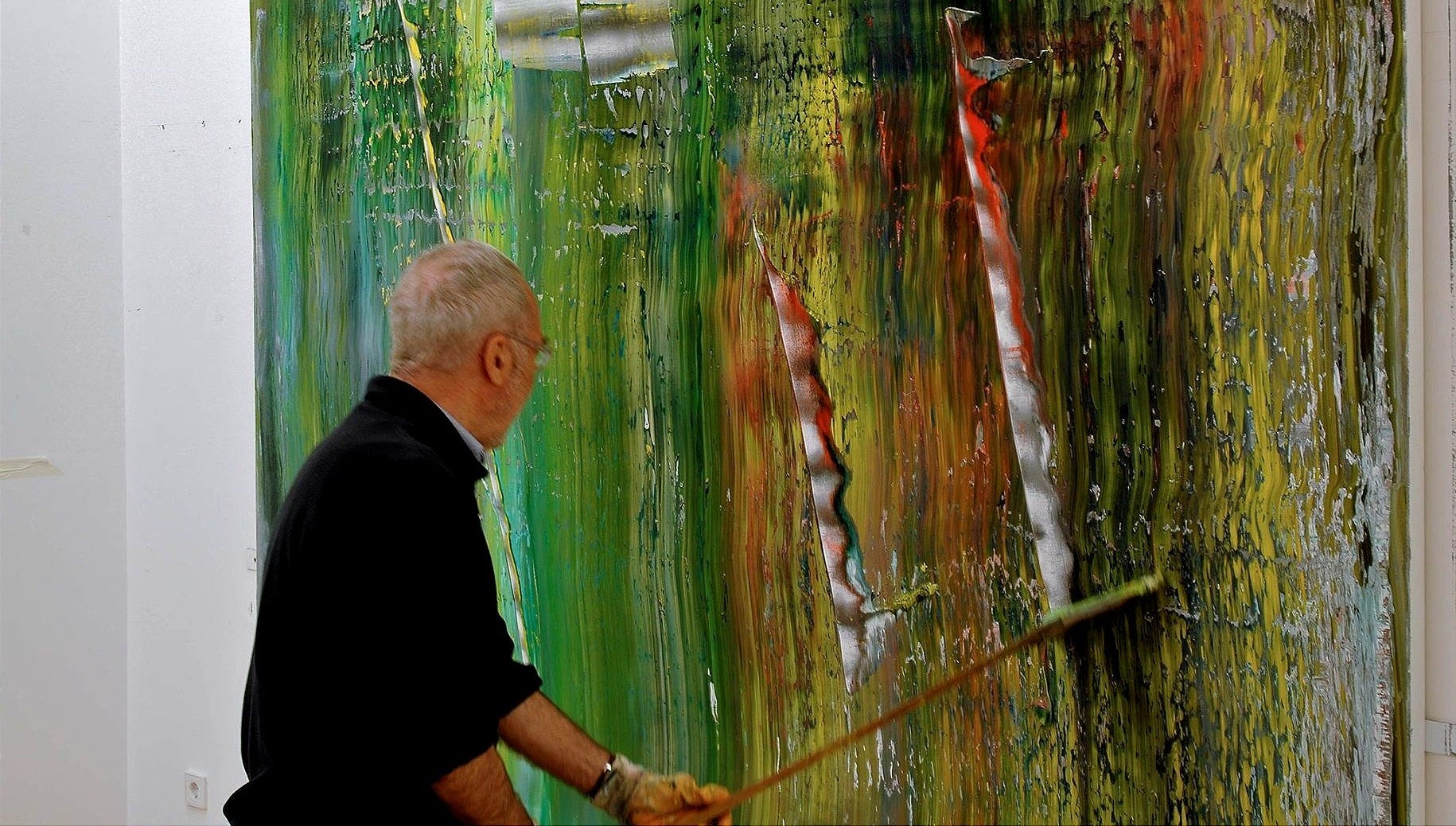
Tree bark is something we probably see every day, yet most of us do not notice the richness and depth of colors along the marks of time passing. Hence, when we see a picture like the one below (which is in the process of being made), we are quick to judge it as just a random mess of colors.
And here are three more photos of mine. One is a close-up of an old piece of ceramic I stumbled upon, and the other two are close-up shots of segments of an asphalted road I pass every day.
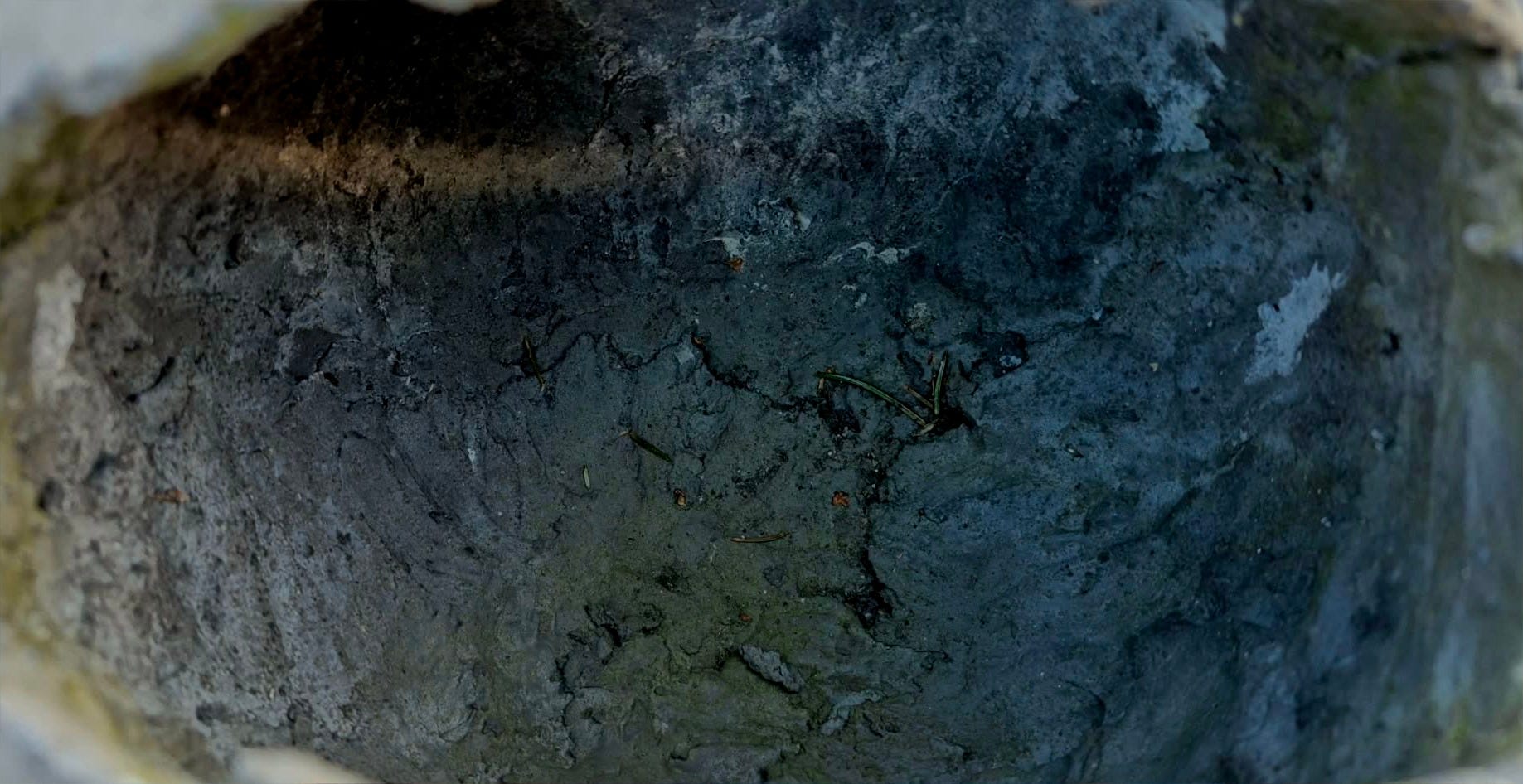
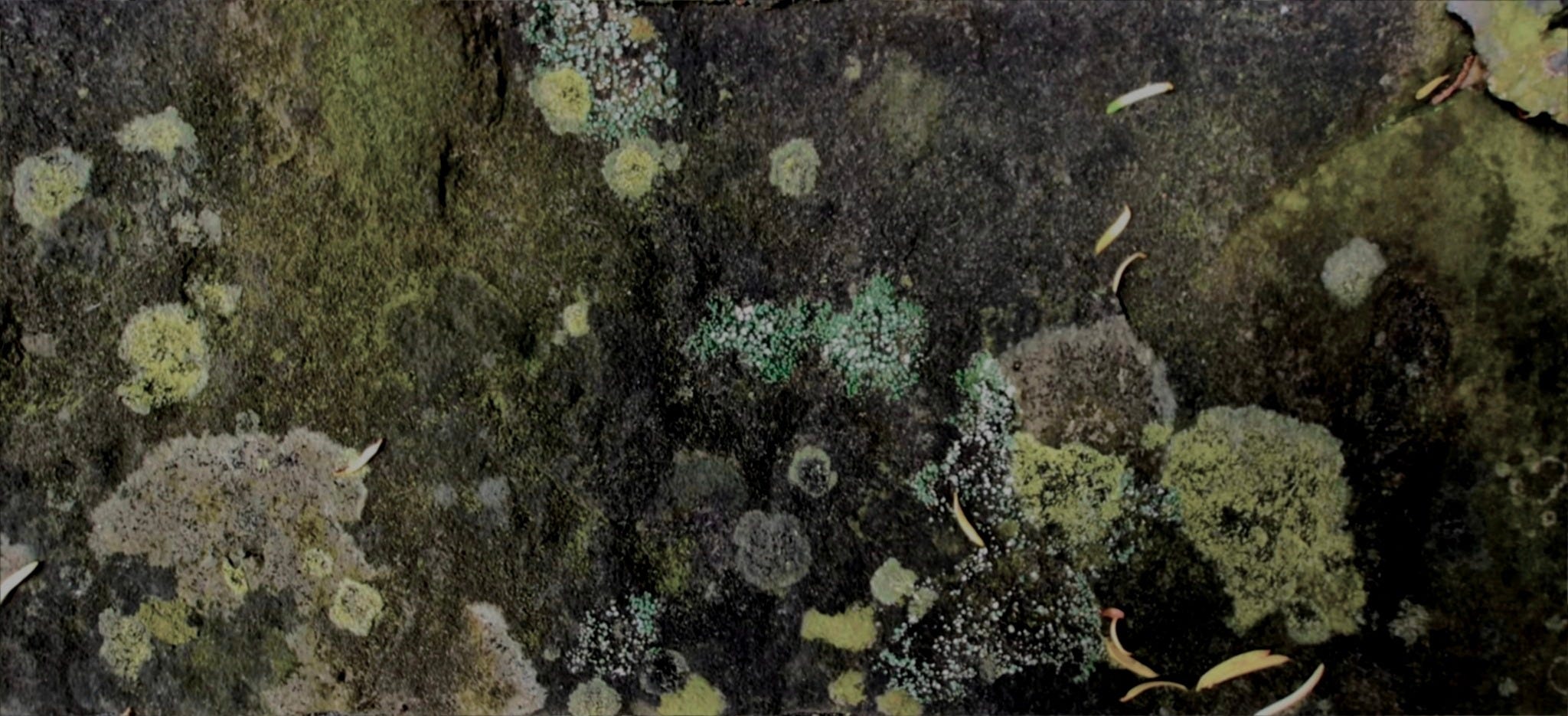
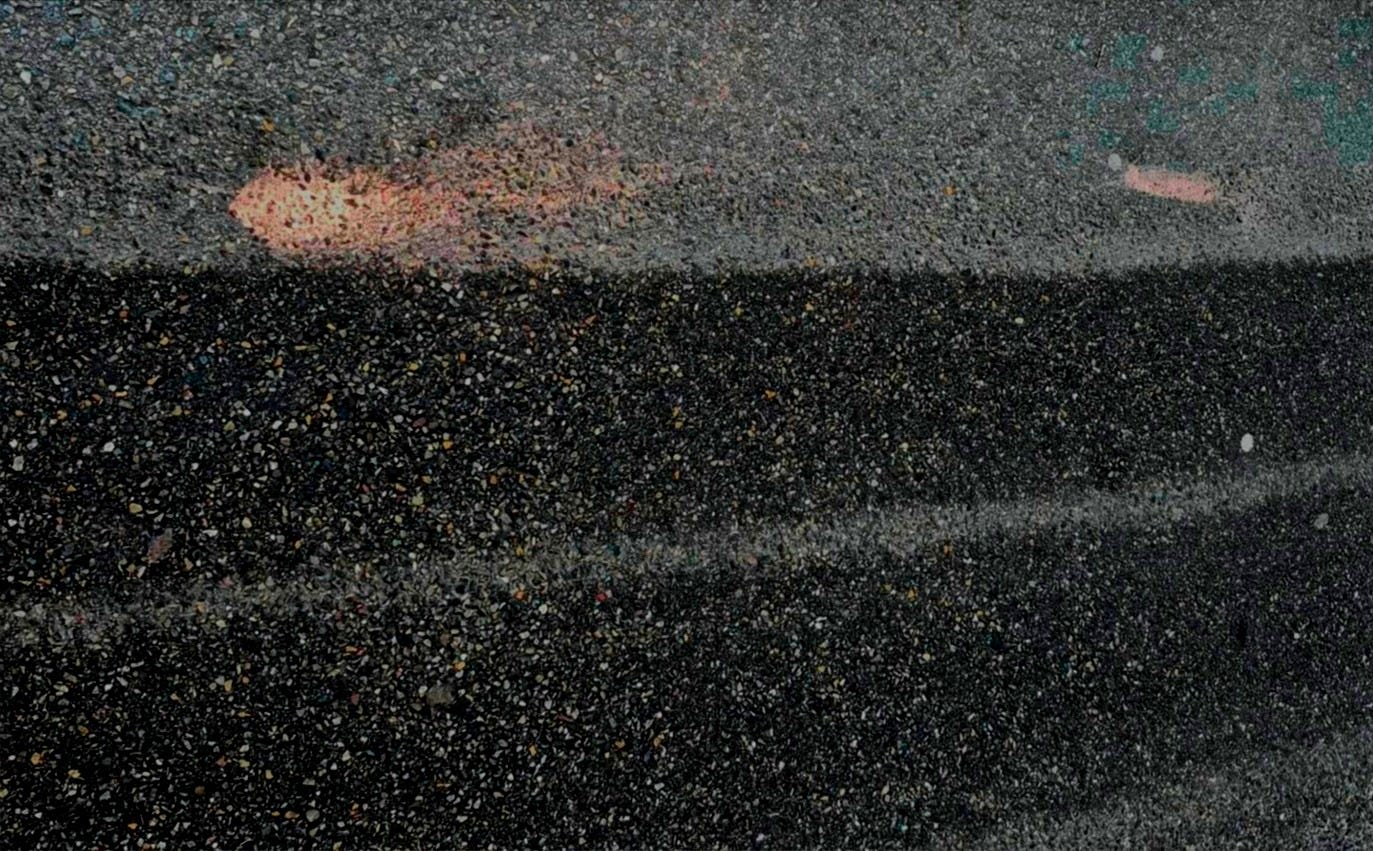
I don’t know about you, but to me, all of these photos look like abstract art, and yet they represent our everyday reality.
So would it then be fair to say that abstract art represents aspects of reality that we have not experienced yet?
And should we then be grateful to explore them through someone else’s lens? Someone who has the sensitivity to notice them and the ability to express them?
Here, you might be somewhat right because kids are able to express raw emotions and sensitivities in ways we lose over time. However, what people actually mean when they say “My kid could do it” is something else. They mean that it looks random and easy, and that it does not require mastery.
If you try it yourself, you will quickly see it’s not as easy as it looks. First, it is not easy to connect to what wants to be expressed, and then, it is also difficult to express what we see or feel using external media.
What looks like “messiness” or “simplicity” to a casual viewer of abstract art is the result of years of experimentation, profound emotional openness and vulnerability, and the conscious decision to strip away the obvious in order to reveal the essential.
Art means different things to different people, and paradoxically, that’s part of its meaning.
When we say that abstract art is “meaningless,” we are reacting to the fact that this type of art refuses to comfort us with familiar objects or scenes. It invites us to experience lines, colors, textures, light, shadows, rhythms, emotions in new ways. It provokes us to open toward aspects within us that we are not yet familiar with.
To understand the “meaning of art,” we need to first realize that true artists have the ability to externalize their inner experiences in a way that evokes responses in us and potentially opens us up to new levels of awareness. What may look like chaos or simplicity on the canvas is frequently the product of:
Deep intentionality and a passion to express something.
Emotional precision in depicting the intersection of inner emotions and experiences with the outer world, which may or may not be visible to others.
A profound understanding of how visual elements affect us.
Mastery in expressing all of that through the limitations of a given medium.
The openness to explore new mediums and experiment with them.
The courage and drive to push boundaries by breaking rules.
I don’t know about you, but this seems pretty meaningful to me. However, this is not to say that every piece of art does that, and I will talk about that a bit later.
So, let’s try to explore that together.
What is true art?
Let’s start with an experiment.
What is your experience with these three portraits?
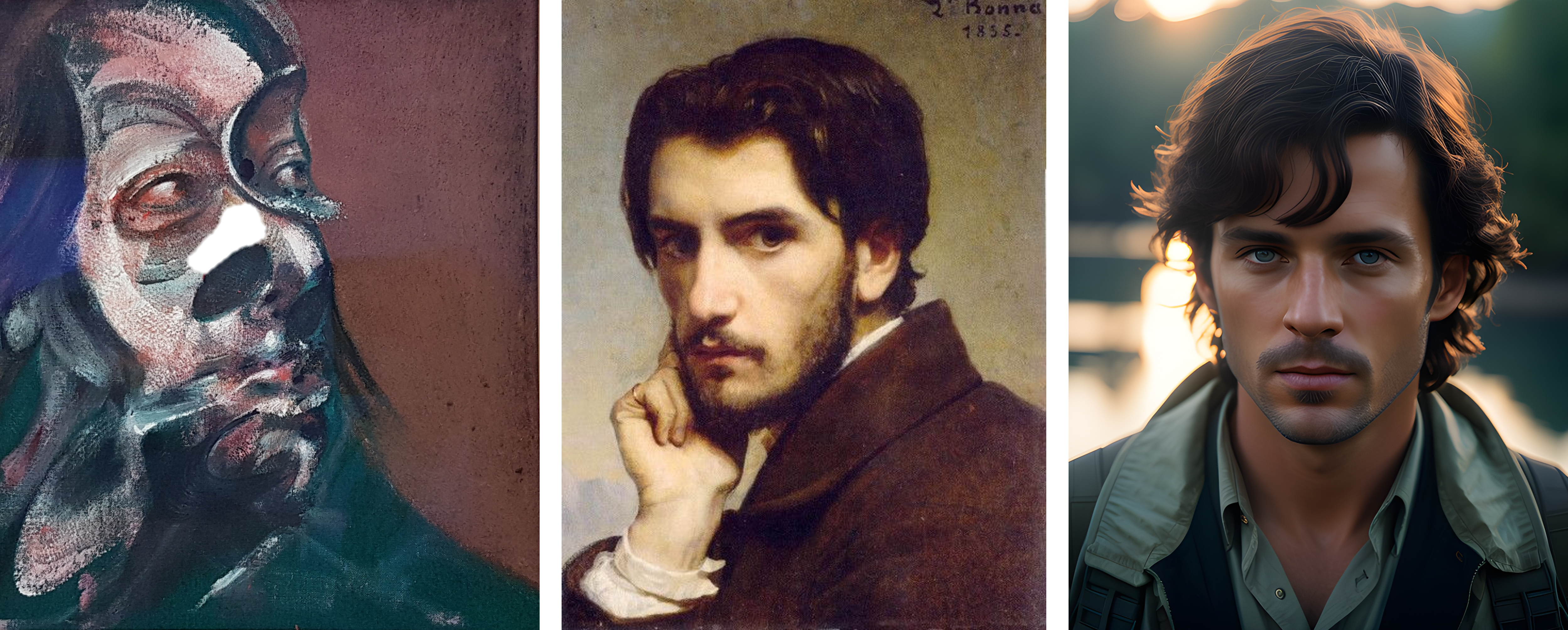
For me, the meaningfulness, uniqueness, and depth of my experience intensify substantially going from right to left. Actually, the one on the right also produces a pretty intense reaction, however of a different type. More on that later.
That experiment has probably brought more questions than answers, and how do we really define which one is true art and which isn’t when the experience of it is also so personal and so different?
So, let’s try to bring a bit more clarity by going down to the basics. According to the Oxford Dictionary:
Art is “the expression or application of human creative skill and imagination, typically in a visual form such as painting or sculpture, producing works to be appreciated primarily for their beauty or emotional power. It involves the conscious use of skill and creativity.”
Alright; I noticed a few words: human, as well as conscious, creativity, and imagination. So, let’s explore them. According to the same source:
Conscious is being “aware of something; noticing something, and also, able to use your senses and mental powers to understand what is happening.”
Creativity is “the use of skill and imagination to produce something new or to produce art.”
Imagination is “the ability to create pictures in your mind…” and “something that you have imagined rather than something that exists.”
Alright… I think we’ve gotten to something…
So, what do you think —
Out of the pictures above, which one shows better something that the artist has imagined rather than something that exists?
Which one shows the application of more human creative skill and imagination? And mind the wording. Human creative skill, and not just human skill.
Which ones demonstrate that the artist has noticed something different through the use of senses and mental power?
And all that brings us to the obvious question…
In an age where machines can generate strikingly convincing and realistic images in seconds, we need to find answers to questions like:
Is AI capable of creativity and imagination?
What truly separates the output created by a human from the output of an AI?
When can we define art made with AI as art, and when not?
If I am to go back to the definitions, there are a couple of things that give clarity to these questions. According to them, the act of creativity produces something new, and “new” means that it did not exist before. The output of AI is the result of algorithms that combine and analyze already existing human creations collected through centuries of artistic and creative expression.
Yes, at times, AI’s contribution resembles creativity because through the process of combination, AI creates different results in a new way. That’s true. However, the result is still human-driven:
First, AI uses the whole of human history as a library, and it does not create any of those inputs. They are all human creations.
Second, there are algorithms which are also created by humans, and even when the machine seems to act on its own, it is still acting based on the input and instructions of humans to optimize for aesthetic or emotional appeal, commercial outcome, or some other rational task. In doing that, it again counts on humans.
Third, AI produces completely different output based on the question we ask or the task we give. So that’s another human input which acts as the creative spark.
Fourth, AI has no emotional capacities, intuitive depths, or personal experiences to tap into or integrate. It can only lean on the incompleteness of previous human perceptions or the subjectivity of the objectives that created it in the first place.
Additionally, based on the definitions we used, art involves imagination. Human imagination is a mystic process deeply rooted in personal experience, emotion, lived struggle, intuition, and in general, interaction with the subconscious and the Universe in ways that are still not fully clear to us. However, I know enough and I have exprienced enough to say that these are not characteristics of AI or any other machine.
Hence, the only way we can consider something produced using AI to be art is when AI is used consciously by a human as a medium to express something that the human wants to express. In that case, AI is just the brush, the medium we use and nothing more. The art is created by a conscious human tapping into their conscious and unconscious sources of creativity and imagination.
However, in many cases I see, humans do not do that. They actually outsource the whole “creative process” to the AI. The real paradox is that even when a human outsources their human agency as a creator to a machine, they still act as the creative force that initiates things. However, the output then lacks the very ingredients that give it meaning.
Every day, we construct a practical, survival-oriented version of the world. We see objects, people, and experiences through a narrow lens. Abstract art disrupts that comfortable filter. It frees us from the dominance of the obvious and the rational, allowing us to form new associations and access emotions or insights that everyday perception keeps at bay.
In this sense, an abstract painting is a portal that mirrors back to us how incomplete our “ordinary seeing” really is. Abstract art doesn’t show us a tree or a face; it shows us the vibration of a feeling, the tension of existence, or the quiet vastness of consciousness. In doing so, it challenges us to expand our perceptual boundaries rather than retreat into the safe and familiar.
This is precisely why abstract art, and art in general, become even more vital in the era of generative AI. AI can analyze vast datasets of existing artworks and recombine them into new compositions that look abstract. It can mimic styles with impressive technical fluency. Yet what it fundamentally lacks is the lived, embodied spark: the human’s personal history, emotional vulnerability, spontaneous act-making in the moment, and the courage to create something that might fail or confuse.
I would then summarize that art, and more broadly, the act of creation, is a product of the interaction of a human’s experience with existence and consciousness. Hence, algorithmic producers of output that are not conscious and alive are not true creators.
True art serves as both provocation and mirror. It challenges lazy assumptions about what art “should” look like, and it challenges the poverty of our perception of what creativity and reality are. It also reminds us what remains uniquely human: the messy, intuitive, deeply personal, and mystic act of creating meaning from the inside out.
Art, and more broadly, the act of creation, is initiated by the inspiration and lived experiences of a human, which cannot be compared with the optimizing for appeal or success of commercial endeavors of both humans and non-humans mimicking the act of creation. I am referring here to AI, but also to commercial art, and any other activities that lack authenticity.
That is the reason why studies increasingly show that people intuitively sense this difference in any creative product. Even when AI-generated and human-created works appear similar at first glance, viewers tend to rate human art higher in creativity, depth, and emotional resonance without being able to rationally explain it.
A human who is in touch with their humanness can intuitively recognize and value the authentic human presence and creative expression of another human being.
But the impact goes even further.
The calling to humanity today is to move away from judging art, or any other acts of creation, in terms of their ability to represent reality the way we see it. It’s a calling to open up to the fact that any act of creation is a carrier of the lived, embodied spark and spontaneous act-making of an emotionally vulnerable and courageous human being who is able to express their depths.
It is the nature, magic, and mysticism of that humanness expressed in any acts of human creation that differentiates them from the output produced by an AI. It is exactly that humanness that I call The Human Advantage.
This is an important calling because if we do not understand that, we risk blurring the line between authentic human expression and AI’s sophisticated pattern-matching, and that would have consequences for us as a species.
So the next time someone says abstract art is meaningless or sloppy, consider this: perhaps the real limitation isn’t in the artwork, but in the narrow filter through which we’ve been taught to see reality as a whole, and our humanness in particular.
Look at this as an invitation to step outside the old boxes entirely and glimpse something richer, stranger, and more alive. It’s an invitation to tune into what it truly means to be human, and the good old rule seems pretty helpful here: what counts cannot be counted with 0s and 1s.
Comments
Nothing yet. Say the first thing.
Sign in to join the conversation.