
A new generation of Libyan artists has answered a broken inheritance with dye, thread and clay
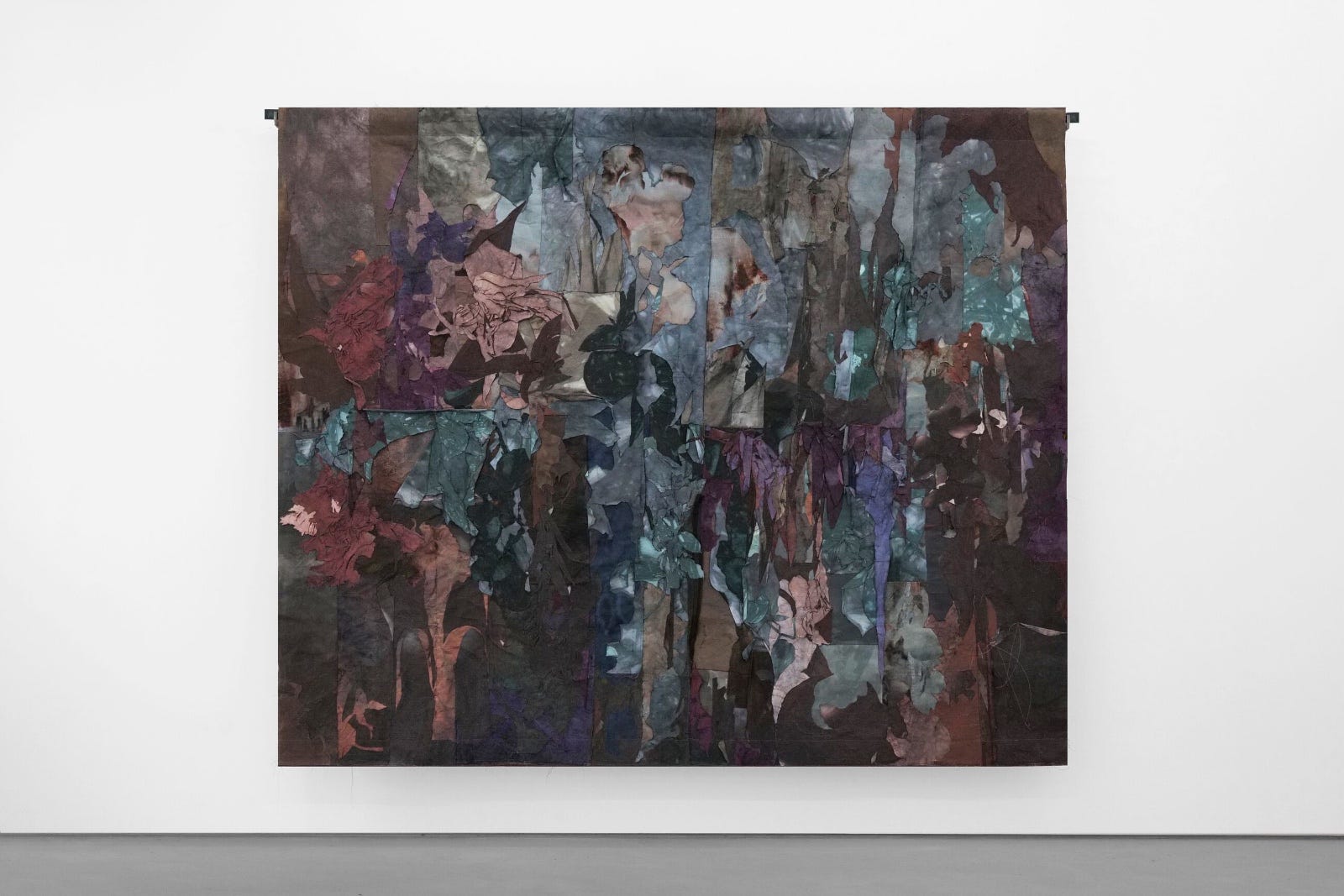
In a former tea factory in Bristol last year, Nour Jaouda hung twelve metres of hand-dyed appliqué as a tent. The reference was the khayamiya, the patterned cloth lining tents put up in Cairo’s streets for funerals and Eid: a room that appears for three days and folds away. Nothing about it is political, and that is the point.
Libya has no state museum of modern art. The first of any kind, Bayt Ali Gana in Tripoli, opened in 2024 in a converted family villa. Fine art degrees exist; the exhibitions, criticism and collecting that turn one into a lineage do not. Shefa Salem studied architecture at Benghazi because it was the closest thing available, and taught herself to paint.
The canon, then, is not inheritable in the usual way. What is inheritable is technique — a dye, a stitch, a script, a way of firing clay. Craft transmits where institutions don’t. Seen that way, this generation’s materiality stops looking like a fashionable turn to textile and starts looking like a solution.
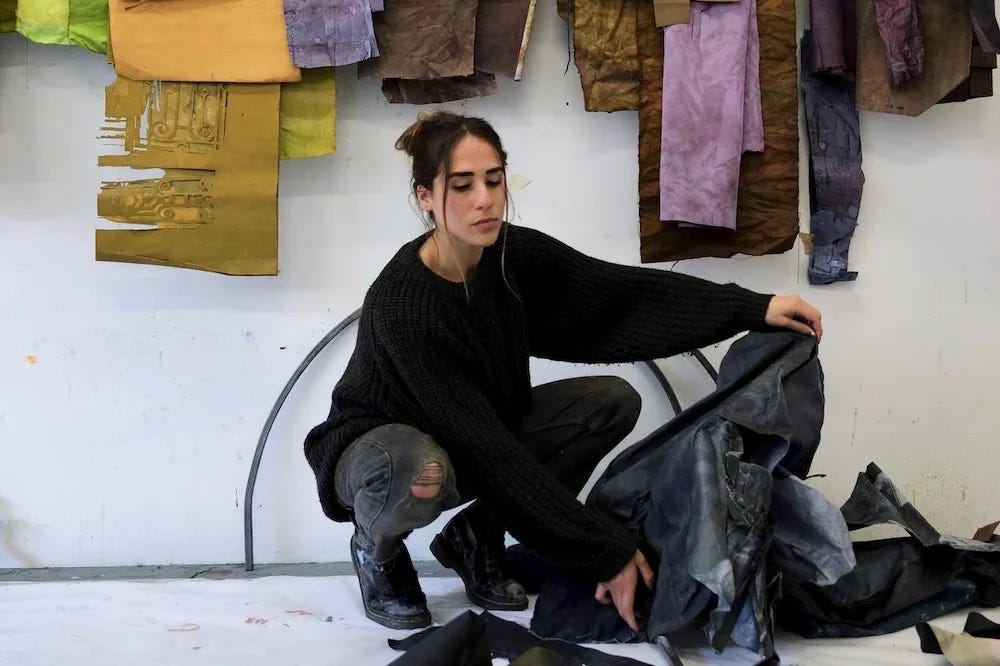
Jaouda (b. 1997; the Ruskin, then the RCA) hand-dyes cotton in saturated earth pigments, cuts it, layers it, hangs it on steel she fabricates or scavenges. Earlier works traced mashrabiya lattice and mosque arches; several are scaled to the prayer mats around her Cairo studio.
Two things matter formally. Dyeing cannot be undone — colour enters the fibre rather than sitting on it, and the variation belongs to the medium, not the hand. And the Bristol commission marked a shift from citation to collaboration: the appliqué was stitched by craftsmen from Cairo’s tent-makers’ street, to her drawings. That puts a living craft economy inside the work rather than a memory of one, and disposes of the lone-artist-recovering-her-heritage script critics keep reaching for.
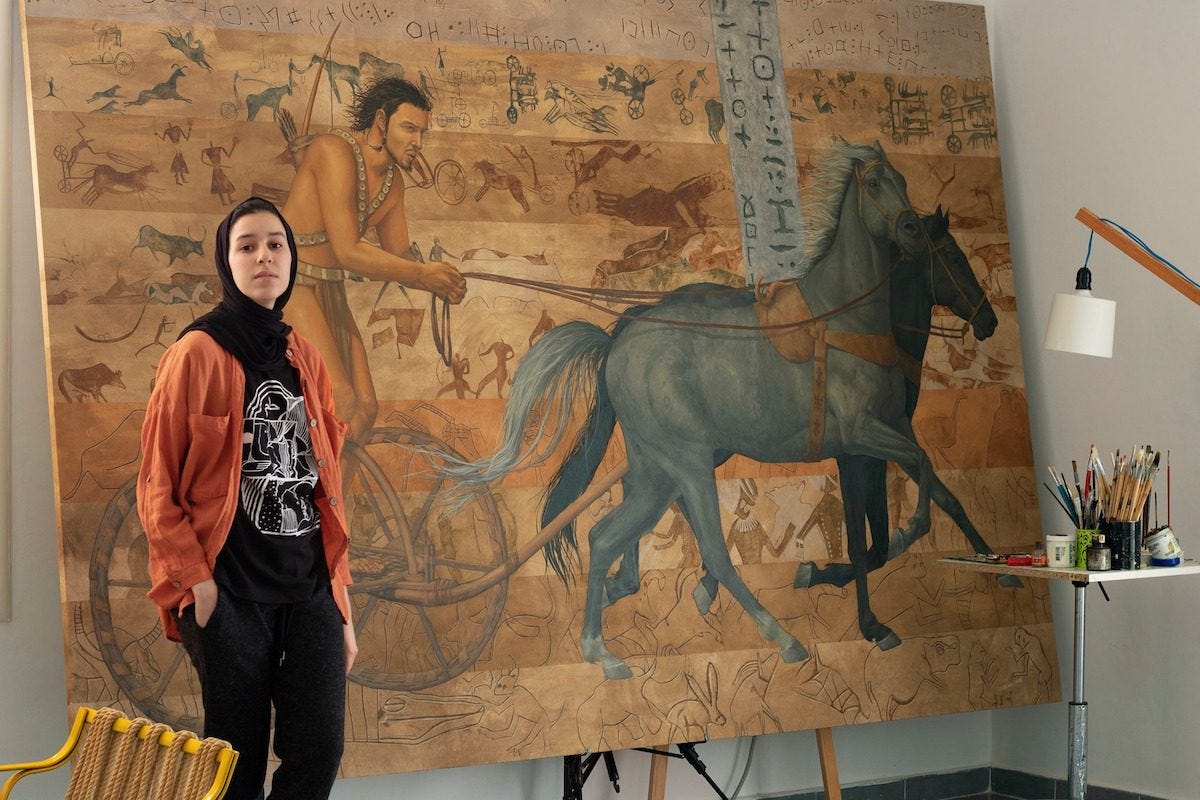
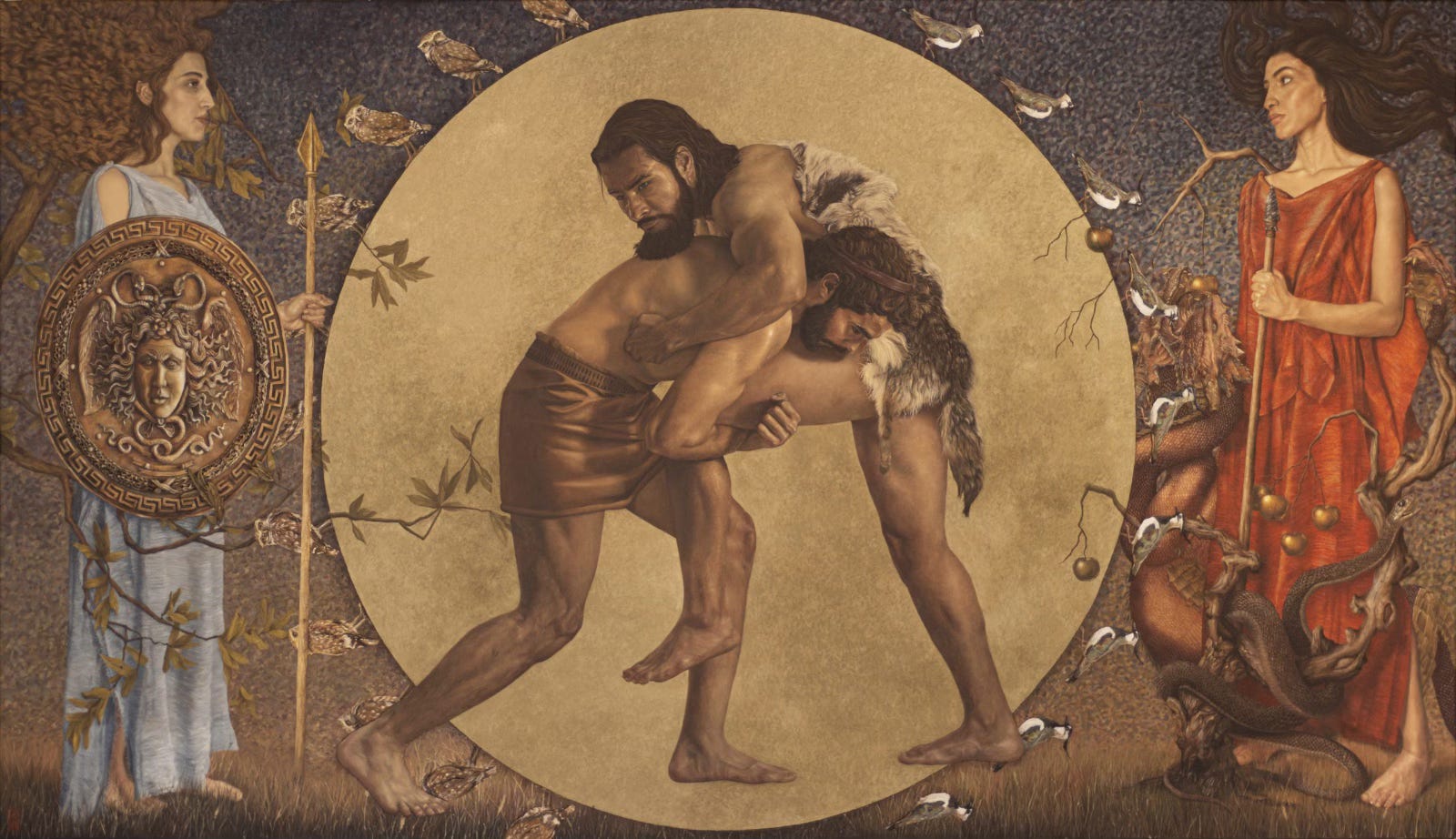
Shefa Salem (b. 1996, Benghazi) paints large figurative oils in unapologetic realism, chosen, she says, because it is close to people. The reason is a genuine gap: Libya’s deep past — Cyrene, the Amazigh south, Saharan rock art — reaches Libyans as text and oral narrative rather than as pictures. So she supplies the missing ones: the nymph Cyrene as the land itself, a lion at her side; Amazon archers reclaimed from Greek myth.
The genre has an awkward pedigree — nineteenth-century national-romantic history painting, the mode that furnished every European state with an imaginary ancestry. Salem is running it knowingly, and late, in a country whose museums never did.
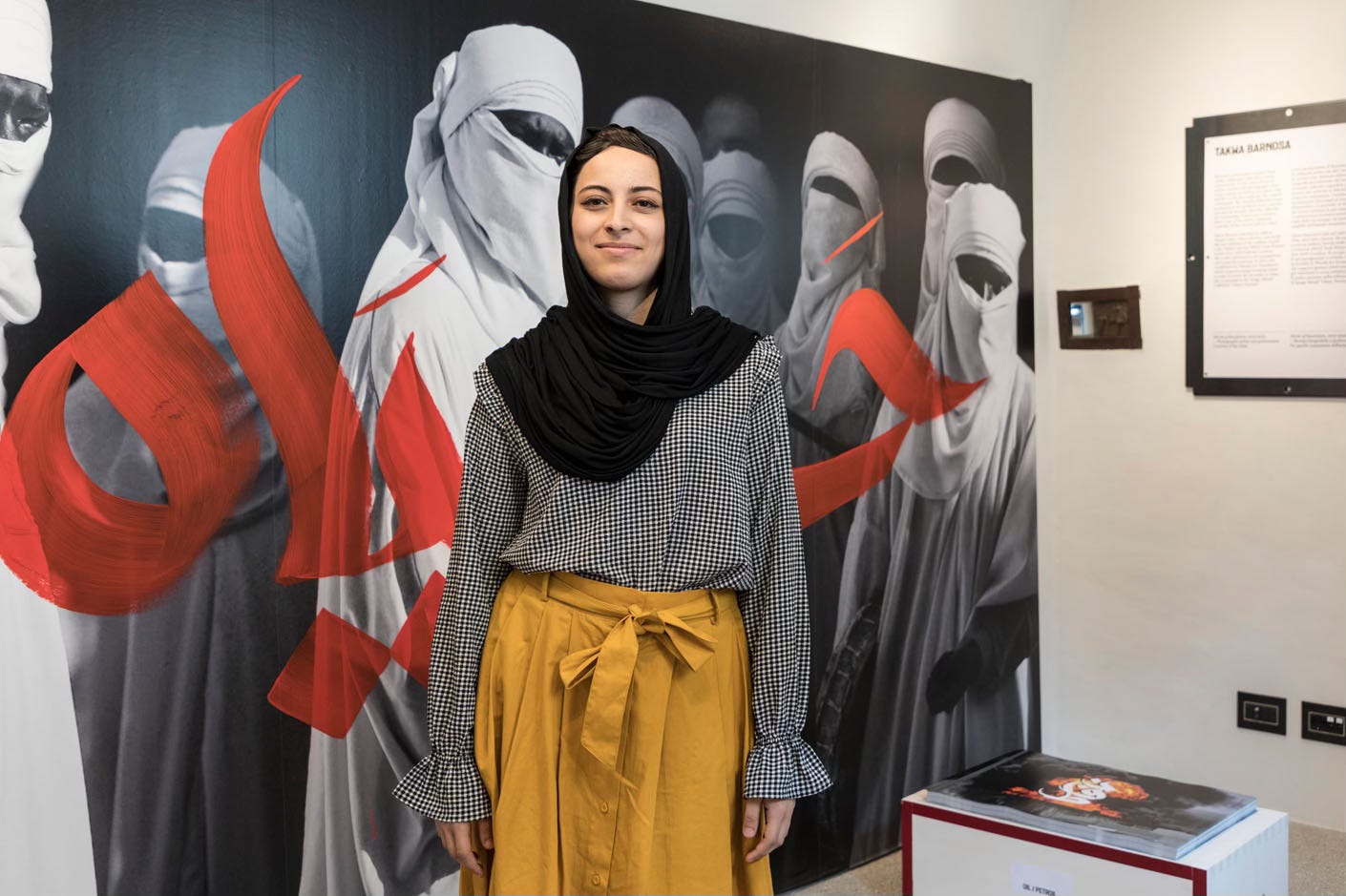
Takwa Barnosa (b. 1998) founded WaraQ in Tripoli at seventeen; she works now from Berlin in paper, installation and sound. Her subject is script — Tifinagh above all. Silent Protests sets calligraphy onto fifty bricks. A letter is a shape before it is a message, and Barnosa keeps working that gap: Tifinagh is geometrically extraordinary and unreadable to most viewers, including most Libyans. On a brick it becomes ornament, architecture and text at once.
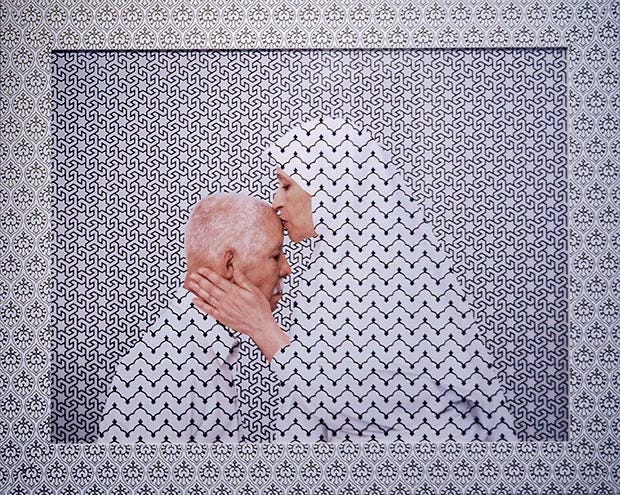
Arwa Abouon (1982–2020), Tripoli-born, raised in Montreal, built photographic diptychs from symmetry, repetition and rhythm applied to her own family, and refused the marginalisation the art world wanted from her. Every young Libyan artist now showing internationally works in a space she opened. The writing on this generation has not said so.
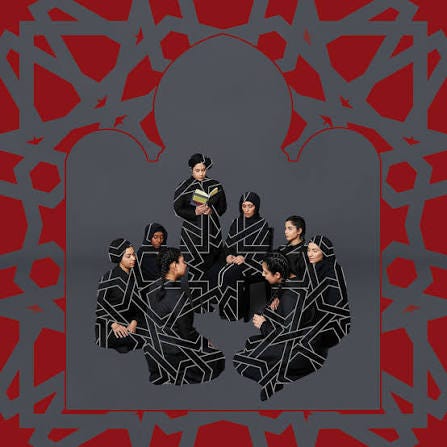
There is no Libyan scene in the geographic sense — only an apparatus, largely private and largely built by women: Noon Arts in London, WaraQ between Tripoli and Berlin, Bayt Ali Gana, Tanarout in Benghazi.
The results: dyed cloth that rolls, paper, bricks, appliqué that folds, ceramic. Objects that pack, ship, install in rooms the artist has never seen. The prayer mat and the tent are both portable architecture. Catalogue essays will call this a metaphor for exile. It reads better as a working method — materials chosen because they behave correctly when the studio is temporary and the audience is elsewhere. That they also carry four thousand years of regional craft is this generation’s luck, and it has been unusually intelligent about spending it.
Words copyright of Naso Art Journal
No posts
Comments
Nothing yet. Say the first thing.
Sign in to join the conversation.