
Introduction
The AstroNav instrument represents a generational leap forward in deep-space exploration, transforming spacecraft from remote-controlled vehicles, dependent on Earth for commands, into self-reliant explorers that can immediately react to their environment.
By enabling real-time navigation updates directly on board, AstroNav is designed to make independent space missions possible. AstroNav will validate its capabilities as a tech demo on NASA’s CAPSTONE 02 mission to lunar orbit, which is targeted for launch in late-2027.
How AstroNav Works
-
Eyes
AstroNav collects optical imagery of various planetary objects, such as asteroids, planets, and stars. This data provides the bearing and range to these objects.
-
Ears
AstroNav measures precise Doppler and a range signals from Earth when paired with an atomic clock.
-
Brain
Using the onboard sensors, AstroNav determines the spacecraft’s trajectory in the solar system autonomously, continuously refining accuracy through probabilistic estimation.
CAPSTONE 02 AND OTHER NAVIGATION TECH DEMOS
CAPSTONE 02
CAPSTONE 02 mission will demonstrate rendezvous and proximity operations, autonomous navigation, and cislunar communication capabilities while continuing to characterize the radiation environment at the Moon.
autoNGC
Autonomous Navigation, Guidance & Control is an onboard software suite that integrates spacecraft guidance, navigation, and control functions that are currently split between onboard and ground systems.
TRON
The Target & Range-adaptive Optical Navigation (TRON) system is a dual-camera opnav tool that supports a variety of techniques to extract navigation information from images of multiple targets depending on range.
Featured Story
NASA Announces New Spacecraft Technology Demonstration Mission at Moon
NASA is working with industry to advance the next phase of cislunar infrastructure for the agency’s Artemis program and Moon…
Read the Story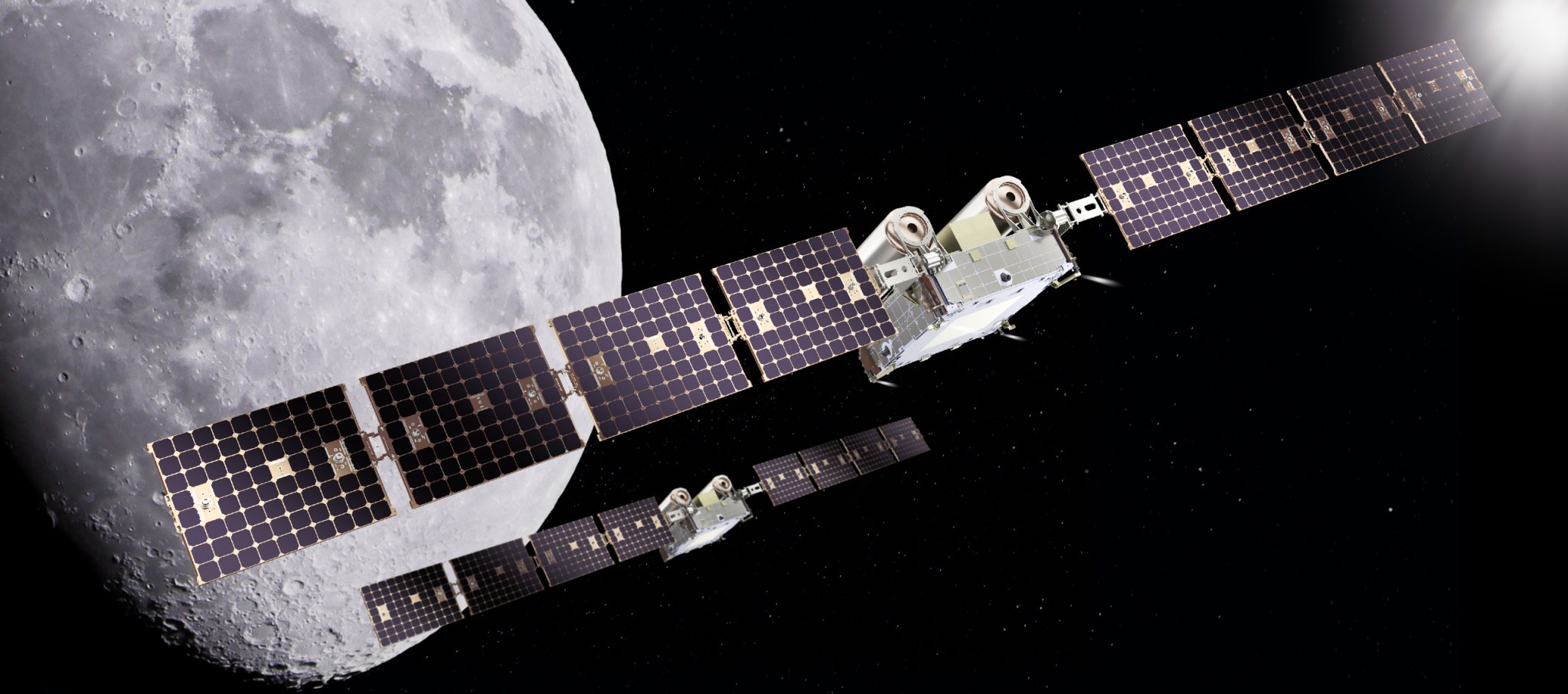
Keep Exploring
Comments
Nothing yet. Say the first thing.
Sign in to join the conversation.