
This month, Narcare chapters across the country continued showing up (training communities, packaging kits, and building the relationships that make harm reduction work). Here is a look at what we have been up to!
The USF chapter wrapped up a spring workshop that introduced attendees to Narcare’s mission and provided accessible education on addiction medicine and harm reduction. The event drew a strong turnout and gave members a chance to connect with students who were encountering these topics for the first time.
The chapter also co-hosted a Narcan certification training in partnership with the Public Health Society, offering participants a structured, guided experience through overdose response. After completing the training, participants received a certificate and a box of Narcan by mail.
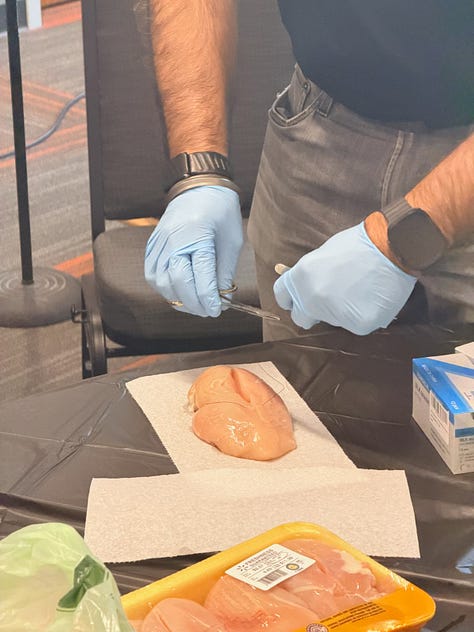
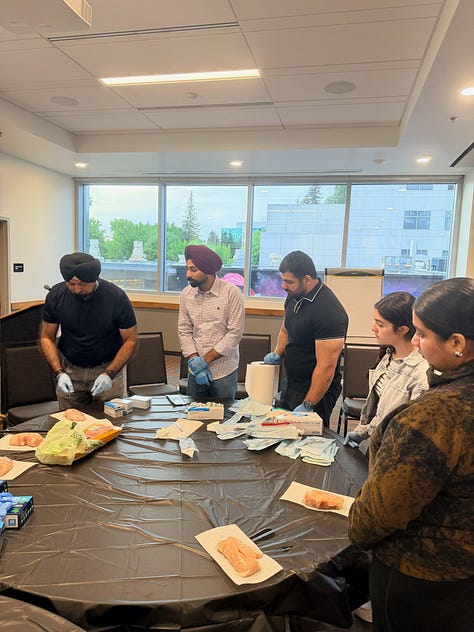
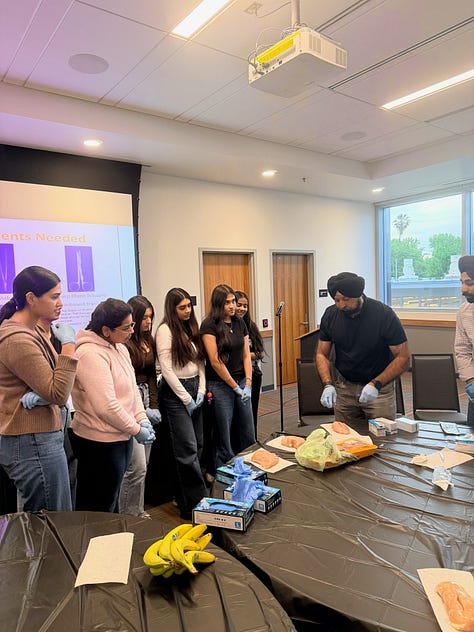
The Sacramento State chapter hosted a suturing workshop that brought together pre-health students and practicing clinicians. CNU medical students joined as guest speakers to share their journey to medical school, offering advice and perspective to undergraduates considering the path.
The hands-on portion was led by a special guest oral surgeon who walked participants through basic suturing technique. Events like this reflect Narcare’s broader commitment to clinical education and preparing the next generation of healthcare providers to engage with their communities.
On April 10th, the UO chapter partnered with CORE Eugene for another kit packaging day, bringing together volunteers to assemble overdose response kits for community distribution.
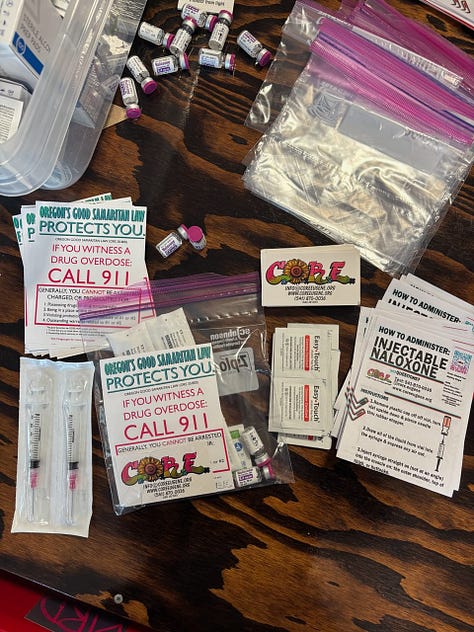
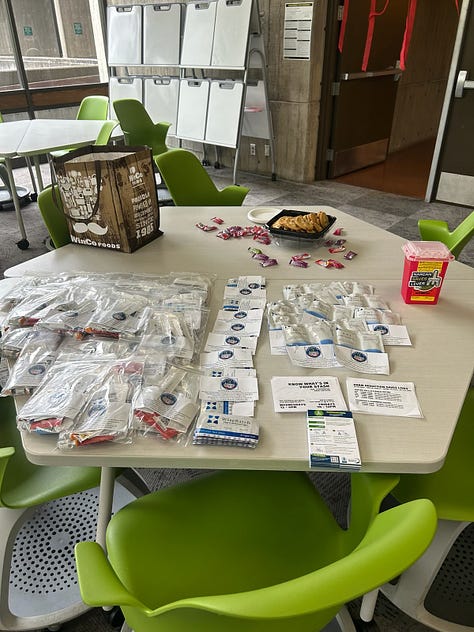
The hands-on format has continued to be one of the most effective ways to engage students who are new to harm reduction.
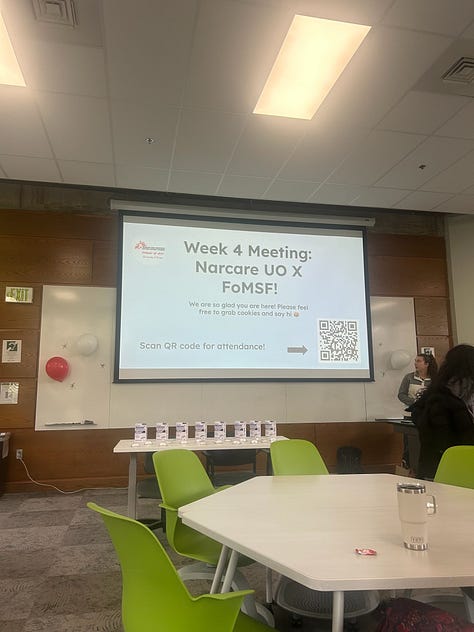
The chapter also partnered with Friends of MSF at UO, a Doctors Without Borders student organization, to co-host a Narcan training covering both nasal and intramuscular administration. The session included a presentation on the opioid epidemic and overdose crisis in the Pacific Northwest, and attendees left with free resources. The rest of the chapter’s events are scheduled for May, so stay tuned.
On April 16th, the UNLV chapter held a Narcan training event, continuing the chapter’s track record of consistent, community-facing programming. Participants received hands-on instruction in recognizing and responding to an opioid overdose.
Many of our chapters are currently holding leadership elections as the academic year winds down. We encourage all members to get involved. Visit your chapter’s individual Instagram page for updates on timelines and how to apply.
Students at Sarah Lawrence College in New York State have been making meaningful progress on two fronts: working toward establishing an official Narcare chapter on campus and, perhaps more significantly, advocating for Narcan training to be incorporated into mandatory campus safety programming for all students. They successfully came to an understanding with campus administrators and group this month. This kind of institutional change is exactly the work that makes lasting impact!
A landmark study published in The BMJ and covered by Nature analyzed health records from more than 600,000 U.S. veterans with type 2 diabetes and found that those prescribed GLP-1 receptor agonists (the class of drugs that includes drugs like Ozempic) were significantly less likely to develop substance use disorders compared to those on other diabetes medications.
Among people with no prior history of addiction, GLP-1 users showed an 18% lower risk of developing an alcohol use disorder, a 20% lower risk for cocaine, and a 25% lower risk for opioids over the three-year study period. For those who already had a substance use disorder, the drugs were associated with reduced rates of hospitalization, overdose, and death.
Researchers believe the drugs may reduce what lead author Dr. Ziyad Al-Aly described as the persistent craving that drives substance use across multiple substances. Over a dozen randomized clinical trials are now underway to further test these findings.
This research opens a new frontier! If GLP-1 medications can meaningfully reduce the risk of addiction, they could become an important part of a broader public health toolkit: one that complements naloxone distribution, supervised consumption, and medication-assisted treatment.
Lenharo, M. "Do obesity drugs treat addiction? Huge study hints at their promise." Nature, March 5, 2026. doi:10.1038/d41586-026-00734-2 • Cai, M., Choi, T., Xie, Y. & Al-Aly, Z. BMJ 392, e086886 (2026).
If you would like to stay up to date with our activities, consider filling out this interest form to receive information about our events via email.
No posts
Comments
Nothing yet. Say the first thing.
Sign in to join the conversation.