
First, the obvious: Something is shifting in how consumers reach brands. Consumers ask ChatGPT which running shoe to buy. They let an agent compare insurance quotes and book the cheaper one. Brands spent two decades optimising the discovery layer: search ranking, paid social, the perfectly tuned landing page. A model that speaks to the customer on the brand’s behalf diminishes all of it to irrelevance.
As AI agents increasingly mediate how consumers discover and interact with brands, every first-party data point in a brand’s CRM is exploding in strategic value. With customer acquisition costs rising relentlessly, consumer businesses can no longer afford to underuse the data they collect from direct customer interactions.
Furthermore, today’s CRM systems still rely on manual segmentation, predefined journeys, and rules a marketer set up months (in the best case) or even a year ago. Teams decide who gets which message, on which channel, and when. These systems scale volume well, but they struggle to scale relevance: brands push the same message to thousands of customers simply because they share a box in someone's CRM, optimising yesterday's assumptions exactly as customer acquisition becomes more expensive and attention shifts to retention and lifetime value.

And yes, this problem is neither new nor ignored. Plenty has been tried: there are beautiful dashboards that make this antique style of marketing feel modern and comfortable. But it has never been truly solved - it couldn’t be, because the technical foundations simply weren’t there.

Most consumer businesses already collect everything they need to understand their customers: behavioural, transactional, and engagement data from every touchpoint. The challenge is using that information to make better communication decisions and act on them in real time, for every single customer.
But simply slapping “AI” onto those existing dashboards doesn’t fix the core issue; it just turns bad campaigns into expensive token bills. It takes more than sprinkling AI on top, because doing the wrong thing individually for everyone is still the wrong thing, just with a much higher invoice.
Zelara is building a system that continuously learns from customer interactions and adapts communication accordingly.
Zelara runs on top of existing CRM infrastructure such as Braze, Klaviyo, Iterable, and Bird. Rather than replacing those systems, it acts as an orchestration layer between customer data and customer communication. It generates personalised content, decides which message should reach which customer through which channel, delivers it through the tools brands already use, and learns from the outcome of every send.
That closed loop is the difference. Most “AI-powered” marketing tools stop at augmentation: better templates, predictive scores, content suggestions that still wait for a human to configure the campaign. Zelara combines generative AI, which produces thousands of on-brand variants, with reinforcement learning, which decides what goes to whom and when, and improves with every interaction.

The approach is only possible now because large language models and reinforcement learning have matured to the point where real-time, one-to-one messaging works at scale. The early results bear this out. At their first customer, one of Europe’s leading neobanks, Zelara runs live customer communications and lifted customer reactivation by 66%, and have since moved to scale the system across its marketing. The longer Zelara runs inside a brand, the more it learns, and the better its decisions get.
Reactivation, in the one segment everyone says is dead. Stonks.

We are drawn to founders who have spent years inside the markets they now want to change. Nikolas Schriefer and Björn Heckel have built customer engagement and personalisation systems at scale,and repeatedly ran into the limits of existing CRM tooling.
What struck us in our first conversations was how specific their understanding of the problem was. They had spent years working with these systems and knew where the existing approaches fell short. And they weren’t building a better campaign tool, they were thinking about what customer communication looks like once systems, not marketers, make the decisions.
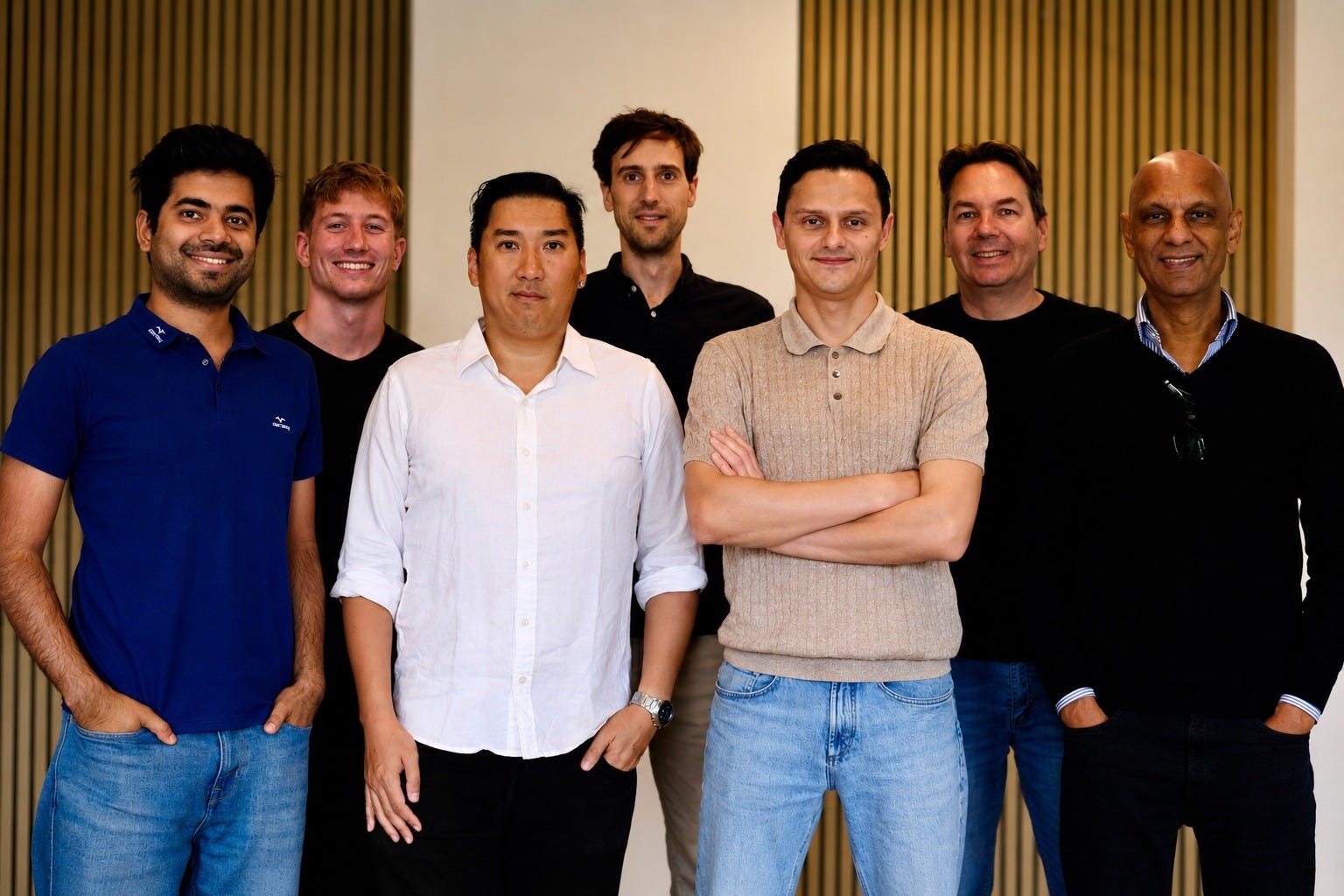
Their strengths are unusually complementary. Nikolas founded Stagelink, where he was already building reinforcement learning systems for marketing a decade ago, and later led Global AI Product at HelloFresh; he brings product intuition and a feel for where AI is heading. Björn pairs that with more than twenty years in large-scale engineering - a PhD in Computer Science and senior roles at Uber, Salesforce, Taxfix, and HelloFresh. Zelara is their own answer to a problem both had hit from the inside, built from the ground up.
At NAP, we back expert founders, people with deep technical know-how and domain expertise who see problems others miss and can’t rest until they’ve solved them. That has always been at the core of our investing thesis in the AI era, and something we keep returning to on our Substack, NAP Log.
One theme we spend a lot of time thinking about is what happens when software moves beyond helping people make decisions and starts making those decisions itself. Customer communication is a good example. That’s exactly the shift Nikolas and Björn are building towards with Zelara. Instead of marketers deciding which message should go to which customer, the system learns from outcomes and makes those decisions itself.
We are proud to have led Zelara’s pre-seed round alongside Heartfelt and Angelinvest, and to back them early and for the long run.
👾👾👾
No posts
Comments
Nothing yet. Say the first thing.
Sign in to join the conversation.