
Some of the best ideas come from borrowing solutions across completely different fields. Two quick examples.
A PhD student once watched biologists study how ants find the shortest path to food. They don’t think. They don’t plan. They just leave little chemical trails, and somehow, as a group, they always find the best route. The student wondered: what if you could make virtual ants do the same thing on a computer? That simple question turned into an algorithm which has since been used to route everything from UPS fleets to data packets across the web, with a citation count north of 160,000.
If you’ve read Steven Johnson’s Emergence, this might sound familiar to you. So here’s another one.
Two paediatric heart surgeons in London were watching a Formula 1 race when they noticed something strange. The way a pit crew hands off a car, looked somewhat like what they were trying to do after surgery, when a patient gets handed over from the operating team to the ICU. Their handovers were messy. Ferrari’s weren’t. So the surgeons flew to Maranello, studied the pit crew, and rebuilt their own process around what they learned - and cut serious handover errors by nearly 70%
For us, the book that started all of this was Range by David Epstein. That’s where we first noticed the specific feeling these stories give you. It’s hard to describe, but it sits somewhere between the thrill of hearing a great adventure story around a campfire and the small surprise of catching a piece of trivia from a world that isn’t yours.
We figured, a lot of people seem to get the same spark from stories like these. You too, right?
Be honest.

Hold onto that feeling. We’ll need it in a second.
Here’s a story about a close friend of ours, now one of the biggest music artist managers in Germany.
His cousin once sent him a SoundCloud link. 400 followers. Two tracks, both not that great. But the third one had something. He drove four hours to meet the guy at a döner spot in Duisburg and signed him that same weekend. He moved him into a shared flat in Neukölln, put him on a small monthly allowance so he could quit his delivery job, and then spent over a year slowly convincing him of something he didn’t want to hear: the songs he thought were his big hits were actually his weakest, and the real hits were buried in the rest. The label’s scouts thought he had lost his mind. The first release flopped. The second one sold hundreds of thousands of copies.
If you’ve spent any time in venture capital, that should feel familiar - right? Here’s one more.
In the art world, the identity of the gallery that represents an artist changes the price of that artist’s work. Not the work itself. Just the name above the door. The trajectory goes like this.
An artist starts out with a small gallery in Berlin, some tiny backyard space run by a young curator with good taste and not much money. Paintings sell for a few thousand euros. A few sell. A mid-tier gallery in New York picks her up - suddenly the same paintings are $50k, because the logo above the door is different. If everything goes right, one of the top global galleries, Zwirner, Hauser & Wirth, calls. A few months later, one of her paintings sells at Christie’s for a number that would have been unthinkable a year before. Same artist. Same paint. Same canvas. Different door, different price. As one collector put precisely: “$20,000 at Zwirner doesn’t feel the same as $20,000 at a young gallery.”
Soo, if you are part of the startup ecosystem and that didn’t trigger some kind of déjà-vu, we can’t help you, pal.
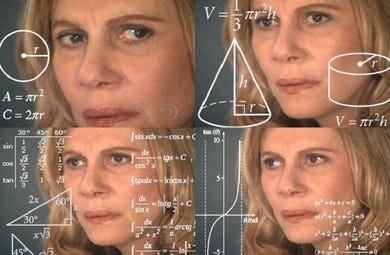
Alright. Put that déjà-vu feeling right next to the adventure-exploration one from before. Hold both. One last ingredient, and we start cooking.
Early stage venture capital is not fundamentally broken. But we’re definitely not the pioneers in experimenting with the core principals of it - the way we structure economics (money for equity, 2and20), the hierarchy and promotion system (so how many deals did your source this week?), the way of enabling founders (hell not another PLATFORM, please), the horizon of scope of differentiating from each other (#peoplecentric investing auf die 1).
We’re not taking NAP out of the equation - the opposite. Since our rebranding we have fundamentally restructured the way we operate: Equal partnership, daily ICs, no internal politics - let’s just make the best deals, whoever sourced them, RIP platform.. The list goes on. And with this particular podcast initiative, we’re taking it just one step further: Looking for learnings and ways to innovate beyond our own industry, while open-sourcing our thinking to you.
And hell, we’re frustrated by yet another “Please welcome the CEO of xyz.AI who just raised {amount} € millions” podcast.
____
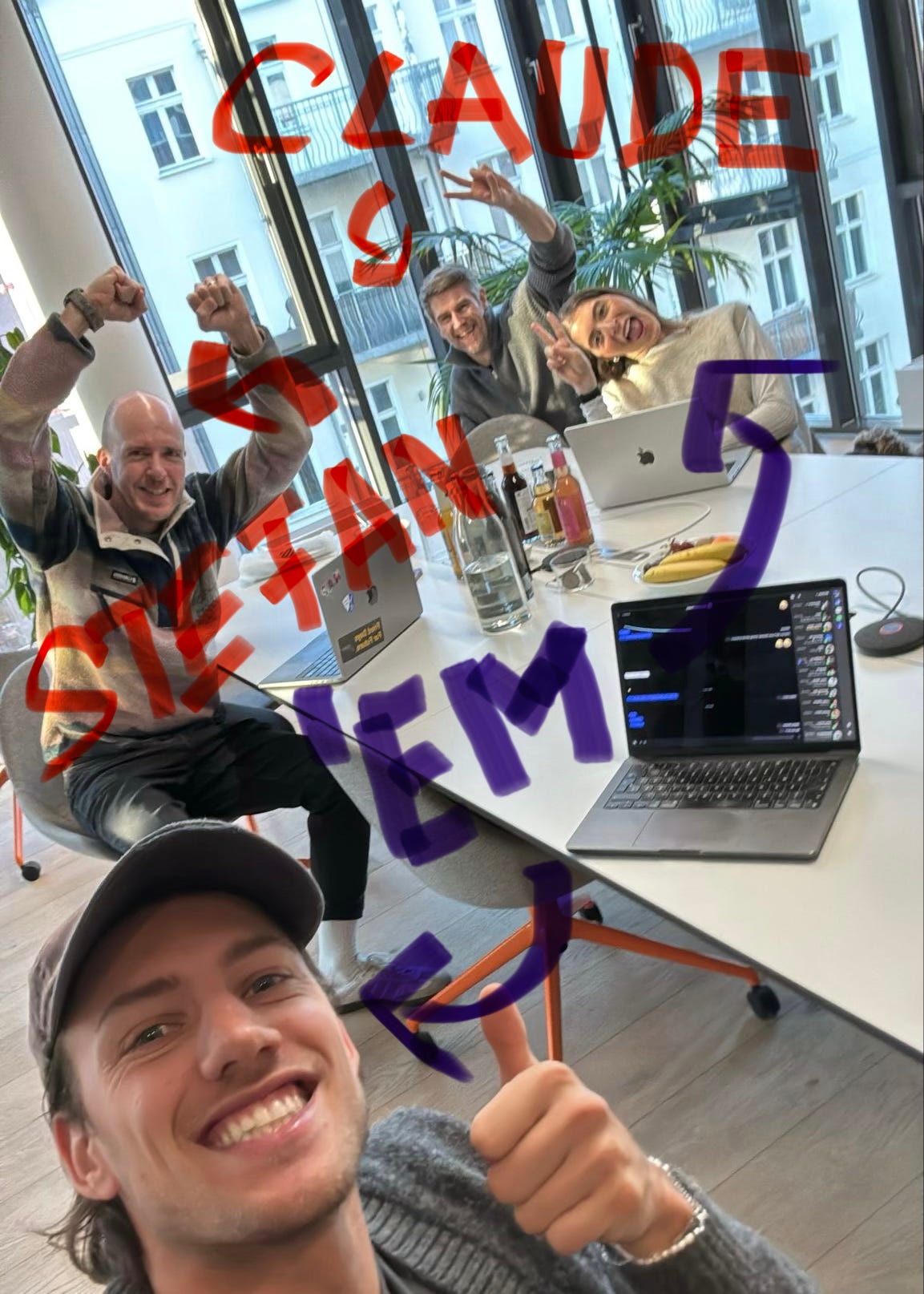
Welcome to Big Bets on Cheap Chairs. The podcast where we talk to dealmakers from art, sport, music, and science who find outliers early. How do they spot the next big thing? How does it compare to early stage investing? We’re NAP VC, and this is where we draw the parallels.
____
So here’s what to expect from listening to our podcast.
Supporting founders to win their market: We hope to surface new dimensions of what makes a great founder-investor relationship and what benchmarks each side can hold itself to. In music, artists are protected like long-range creative capital: managers absorb the life admin, the logistics, the label politics, so the artist can focus on the work. In gaming, creative autonomy is non-negotiable - even when the build looks like a car crash two months before release, the publisher’s job is to hold the line, not panic.
Deal economics and structuring: Are we too narrow in how we structure deals? Cash for equity, valuation, liquidation preference - that’s the VC panel. Gaming publishers work with ten: recoupable advances, splits that flip at recoupment, milestone escalators, separate lines for merch and sequels. Music has the 360 deal. What if the way to win isn’t a higher number, but a better-shaped deal?
Sourcing & Picking: What can we learn about gut versus data from pickers in other industries? Football has more data than anyone - 90,000 players tracked, 3,000 events per match, xG on every shot - and clubs still blow €40M on transfers that flop. The miss is almost always the same: great stats, wrong system. The data captures the player, not the context. Which part of the VC equation are we still pretending to quantify?
Domain Expertise: NAP is built around the thesis that domain expertise is the only moat in the AI era - which is why we back expert founders. But expertise stuck inside a single domain is only half the unlock. The other half is drawing the parallels. Big Bets on Cheap Chairs is our attempt, for our own work as investors, at a public knowledge base on how big bets get made, and what we can learn from experts in other industries.
First episode dropping soon.
Mey & Fabi

No posts
Comments
Nothing yet. Say the first thing.
Sign in to join the conversation.