
Correction: An earlier version of this article misidentified the larvae and pupa shown in the photograph at left. They are California pipevine swallowtails (Battus philenor hirsuta), not monarchs. Pipevine swallowtail larvae feed only on California pipevine (Aristolochia californica) and do not eat milkweed. The caption has been corrected.
—
Summary: Monarch sightings in Napa Valley offer cautious signs of movement through the region as the butterflies travel toward summer breeding grounds. Gardeners can support monarchs by planting native milkweed, avoiding tropical milkweed and reducing exposure to parasites that threaten developing butterflies. Research continues to clarify monarch biology, from their antenna-based navigation system to the defensive compounds they absorb from milkweed. Despite steep population declines and a proposed threatened-species listing, monarchs remain without federal protection.
“Each and every monarch sighting is important. We need hopeful signs that this valuable creature is making a comeback.” — Penny Pawl, UC Master Gardener of Napa County

Monarchs in Motion: A Gardener’s View and the Science Behind the Journey
Monarchs in Motion: A Gardener’s View and the Science Behind the Journey / Tim Carl
NAPA VALLEY, Calif. — Every morning when I venture into my garden for my daily walk-through, I hope I will see the golden wings of a monarch butterfly. Occasionally I am lucky, but at this time of year they are not laying eggs on my milkweed. They are just passing through on their journey to their summer breeding grounds. When they return to the coast in September, I am more likely to find eggs and babies.
I did recently see a pair of breeding gulf fritillary butterflies. They are also golden but only about half the size of the monarchs. Plantings of passionflower (Passiflora incarnata) have lured gulf fritillaries from the southern United States to California.
This morning I finally saw a monarch visiting my butterfly garden. I could not get close enough to see if it was male or female. I also heard that a fellow Master Gardener has 100 monarch caterpillars in her garden. She lives in Carneros, so it sounds like the monarchs are working their way up valley.
Each and every monarch sighting is important. We need hopeful signs that this valuable creature is making a comeback.
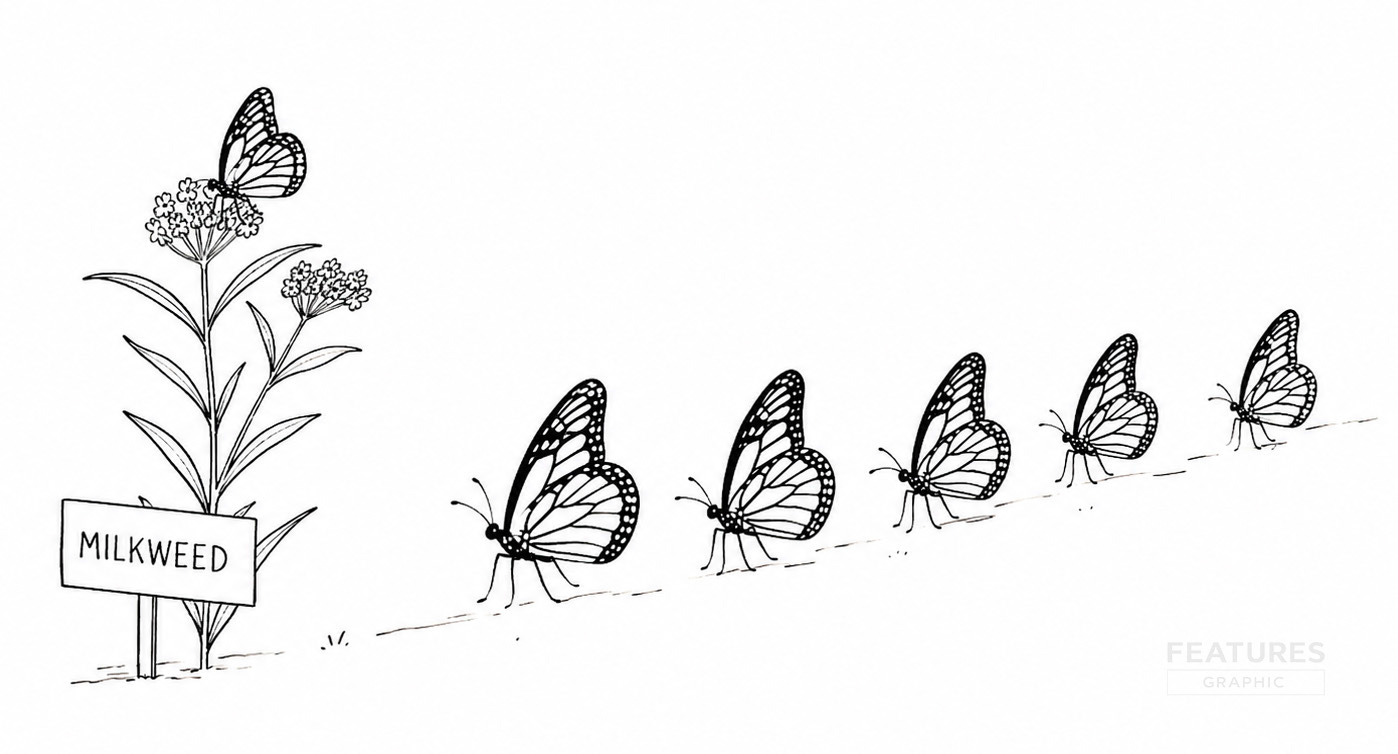
Female monarchs lay their eggs only on milkweed. Fortunately, some milkweed species are native to northern California. Narrow-leaf milkweed (Asclepias fascicularis) and Asclepias speciosa are the two main types. For egg-laying, monarchs prefer the narrow-leaf plant. The larvae are willing to eat any milkweed.
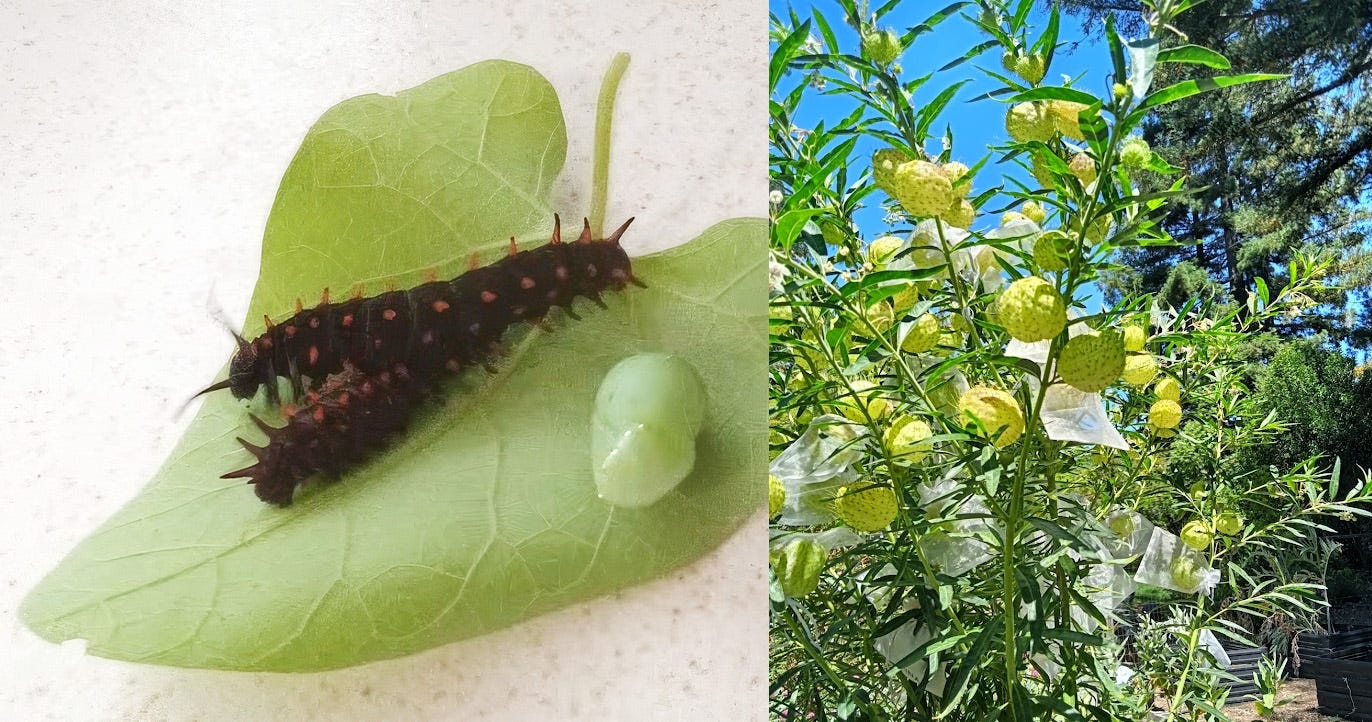
If you want to lure monarchs to your garden, avoid planting Asclepias curassavica. It is a tropical plant with orange and yellow flowers, and it does not die down in the winter. If you have Ophryocystis elektroscirrha, a parasite, in your garden and your milkweed does not die down over winter, the parasite can survive to infect the next generation. OE deforms and kills monarchs. Cutting the milkweed back to the ground in the winter controls the parasite somewhat.
I have read that a female monarch lays about 500 eggs during her six to seven weeks of life. Only about five of those eggs successfully make the transformation from egg to larva to pupa to butterfly. So we need to help them on the journey.
And this brings me to California state law. It is illegal to hand-raise monarch butterflies in our state. To do so, you need to apply for a permit with the state Department of Fish and Game. The reason for the law is that it apparently confuses the butterfly to hand-raise them. Some people put large nets over their milkweed when the larvae are feeding to protect them from birds and insects. At the end of the larva stage, the larvae go in search of the perfect spot to make their pupae.
Sometimes you find pupae in the oddest places. I found two this year on pipevine leaves near my milkweed. I never saw these two in the larval stage.
Growing butterfly-friendly plants such as milkweed will ensure you have plenty of butterfly visitors over the spring and summer. My butterfly garden is busy all day long with anise swallowtails, pipevine swallowtails, honeybees, carpenter bees, wild bees and hummingbirds. You can find a lot of information about gardening for butterflies online, or learn more about butterfly gardens and attracting monarchs to your garden from the comfort of your home by registering for the Aug. 6 library talk mentioned below.
Library talk: Join UC Master Gardeners of Napa County and Napa County Library for a free talk on “Be a Butterfly Angel” on Thursday, Aug.t 6, from 7 to 8 p.m. via Zoom. Learn how to help support our declining population of western monarch butterflies. Register to receive the Zoom link.
Tree walk: Join UC Master Gardeners of Napa County for a docent-led tree walk through historic Fuller Park in Napa on Friday, Aug. 7, from 10 to 11:30 a.m. Discover some of the many exotic and native trees in this 120-year-old arboretum. Meet at the corner of Oak and Jefferson streets. Space is limited and registration is required for each participant.
A monarch’s migration depends on a biological clock in an unexpected location. Choose carefully, then find the answer at the bottom of the page.
By Tim Carl
Telling Males From Females
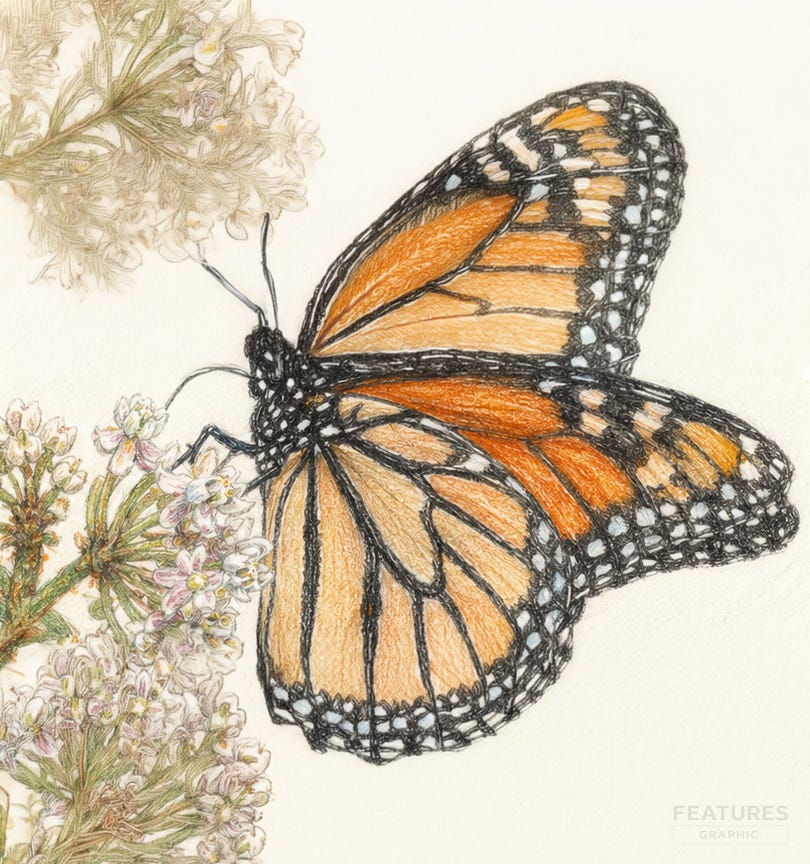
Male monarchs carry a small black spot on a vein of each hind wing — part of a scent gland used in courtship — and have thin black wing veins. Females lack the spots and have thicker, more prominent veins. The difference shows clearly in a photograph, which makes a camera more useful than a close approach.
Milkweed Makes the Monarch Toxic
Milkweed contains cardenolides, and caterpillars sequester those compounds and retain them as adults, which is why the orange-and-black pattern works as a warning signal rather than camouflage — a strategy called aposematism. Caterpillars also sever leaf veins before feeding, draining the sticky latex. A 2024 study in Proceedings of the Royal Society B revised the textbook explanation: young larvae cut veins to avoid latex, but late-stage larvae actively drink the exuding latex, apparently to load up on cardenolides for defense.
The Generation That Lives Six Times Longer
Spring and summer adults live two to five weeks and spend that time mating and nectaring. The final fall generation migrates to overwintering sites and lives six to nine months, remaining in reproductive diapause through the winter before breeding at the overwintering site in late winter or early spring.
Where Western Monarchs Spend the Winter
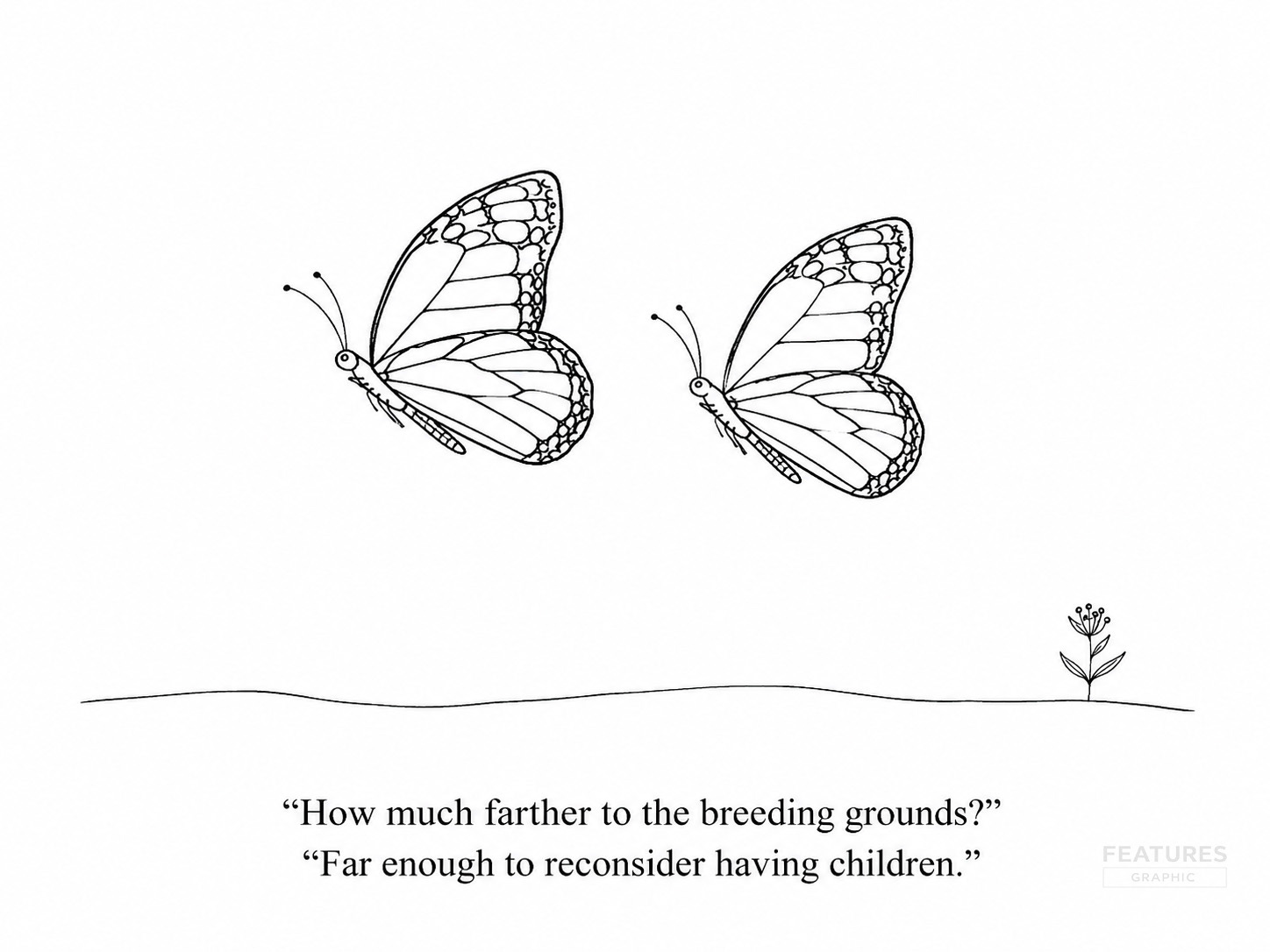
Western monarchs cluster in groves along roughly 620 miles of Pacific coast, from Mendocino County to Baja California, with most sites within 1.5 miles of the ocean or San Francisco Bay. The trees used most often are nonnative blue gum eucalyptus, Monterey pine and Monterey cypress. Fall- and winter-blooming flowers at those sites supply nectar that may be needed to maintain the fat reserves required for spring migration.
The Compass Sits in the Antennae
Migrating monarchs navigate by a time-compensated sun compass, and a 2009 study in Science found that the circadian clocks providing that time compensation are located in the antennae rather than the brain. Researchers have also proposed a light-dependent magnetic sense, since monarchs carry two cryptochromes capable of magnetoreception. The work was done on eastern migratory monarchs.
Metamorphosis by the Numbers
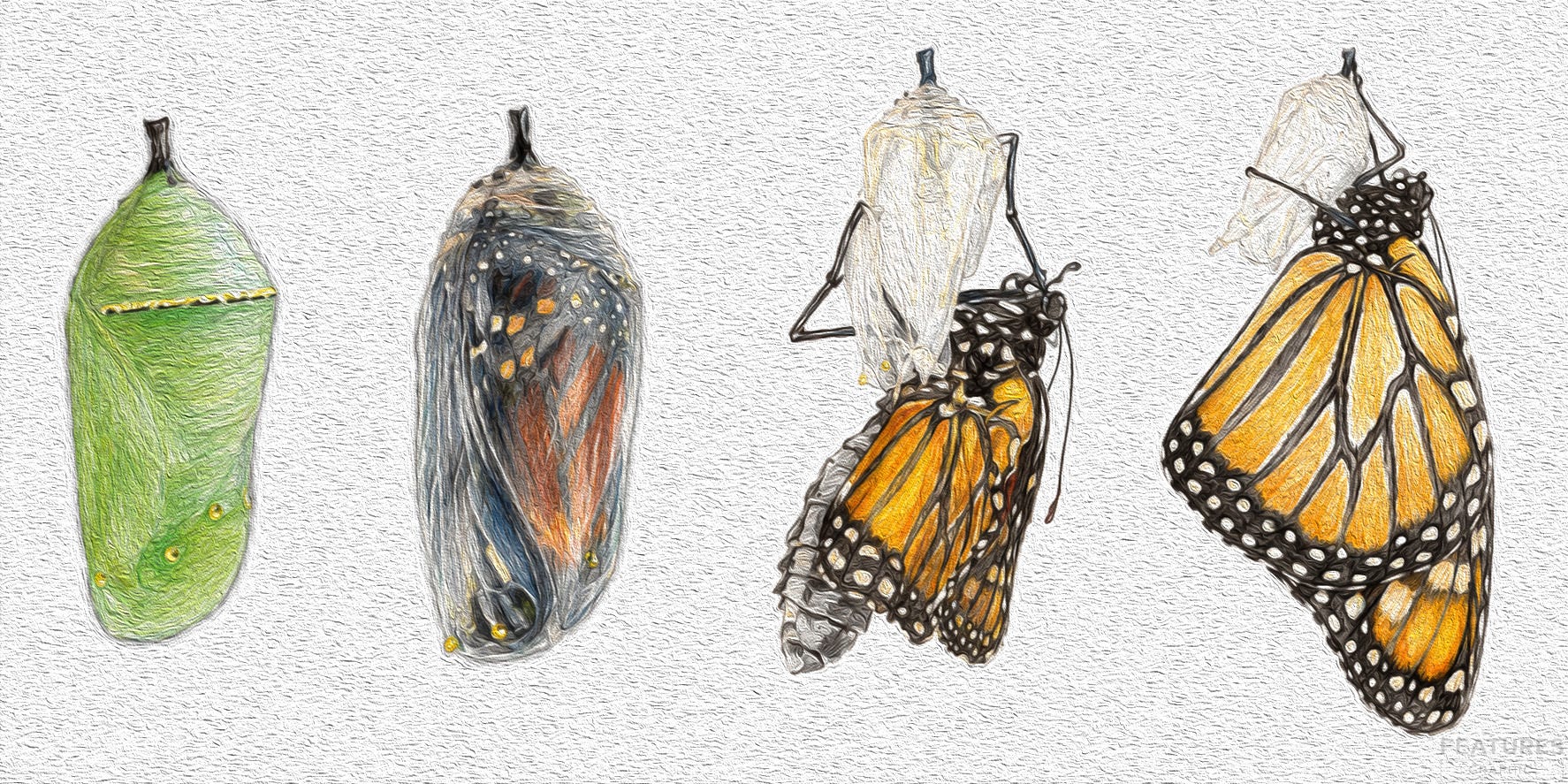
Eggs are about 1.2 millimeters tall and hatch in roughly four days. Larvae pass through five instars over about nine to 16 days, growing up to 2,000 times their original mass. The pupal stage lasts about eight to 15 days, and the full cycle from egg to adult runs 20 to 35 days depending on temperature. The wing pattern becomes visible near the end of the chrysalis stage not because the case turns clear but because scale pigment develops only at that point.
Fifty-Five Degrees to Fly
Monarchs cannot fly until their flight muscles reach 55 degrees. Basking in sun can warm the thorax above air temperature, so a monarch may fly on a sunny 50-degree morning, while on an overcast day it generally will not fly below 60 degrees. Below 41 degrees they cannot crawl.
East and West Are Not Separate Species
Genetic studies have found that eastern and western monarchs are not genetically distinct, and tagged butterflies have crossed the Continental Divide in both directions — monarchs tagged in Arizona have turned up in central and western Mexico as well as coastal California. Counts at California overwintering sites are an index of the western population, not a full census of it.
What the Count Shows
The Xerces Society’s Western Monarch Count relies on volunteers surveying overwintering groves each winter. The 29th mid-season count, taken from late November through early December 2025, recorded about 12,260 monarchs across 249 sites. The late-season survey that closed Jan. 11, 2026, recorded 6,464 butterflies at 193 sites. The population once numbered in the low millions in the 1980s and 1990s, and a single-year low of fewer than 2,000 was recorded in 2020.
Still Waiting on Federal Protection
The U.S. Fish and Wildlife Service proposed listing the monarch as threatened under the Endangered Species Act in December 2024, with a 4(d) rule and critical habitat designation. The proposal would designate about 4,395 acres of critical habitat across seven coastal California counties. In December 2025 the Interior Department moved the rulemaking to “long-term action” status, pushing a final decision to fall 2026 at the earliest. Monarchs remain without federal protection.
By Christina Rossetti
Text within this block will maintain its original spacing when published
Brown and furry
Caterpillar in a hurry,
Take your walk
To the shady leaf, or stalk,
Or what not,
Which may be the chosen spot.
No toad spy you,
Hovering bird of prey pass by you;
Spin and die,
To live again a butterfly.
About the author: Christina Rossetti (1830-1894) was an English poet born in London to an Anglo-Italian family of writers and artists. Her brother Dante Gabriel Rossetti helped found the Pre-Raphaelite Brotherhood, and her poetry developed alongside the movement’s interest in vivid natural imagery, medieval traditions and symbolic detail. Her contemporaries included Elizabeth Barrett Browning, Alfred Tennyson and Gerard Manley Hopkins, though Rossetti’s devotional intensity and compressed lyric voice remained distinct.
Rossetti wrote religious verse, love poetry, children’s rhymes and the narrative poem “Goblin Market.” Her work later attracted the attention of Virginia Woolf and feminist critics, while composers including Gustav Holst, Samuel Coleridge-Taylor and John Ireland set her poems to music. “Caterpillar,” first published in “Sing-Song: A Nursery Rhyme Book” in 1872, uses short lines, direct address and simple, musical rhyme to compress the insect’s vulnerable passage toward metamorphosis. Its final couplet presents transformation through an image of apparent death and renewed life, linking the poem to Rossetti’s broader interest in mortality, spiritual change and renewal.
Are you a poet, or do you have a favorite piece of verse you’d like to share? Napa Valley Features invites you to submit your poems for consideration in this series. Email your submissions to napavalleyfeatures@gmail.com with the subject line: “Poem of the Day Submission.” Selected poets will receive a one-year paid subscription to Napa Valley Features (a $60 value). We can’t wait to hear from you.
Pick your favorite caption or add your own in the comments below.
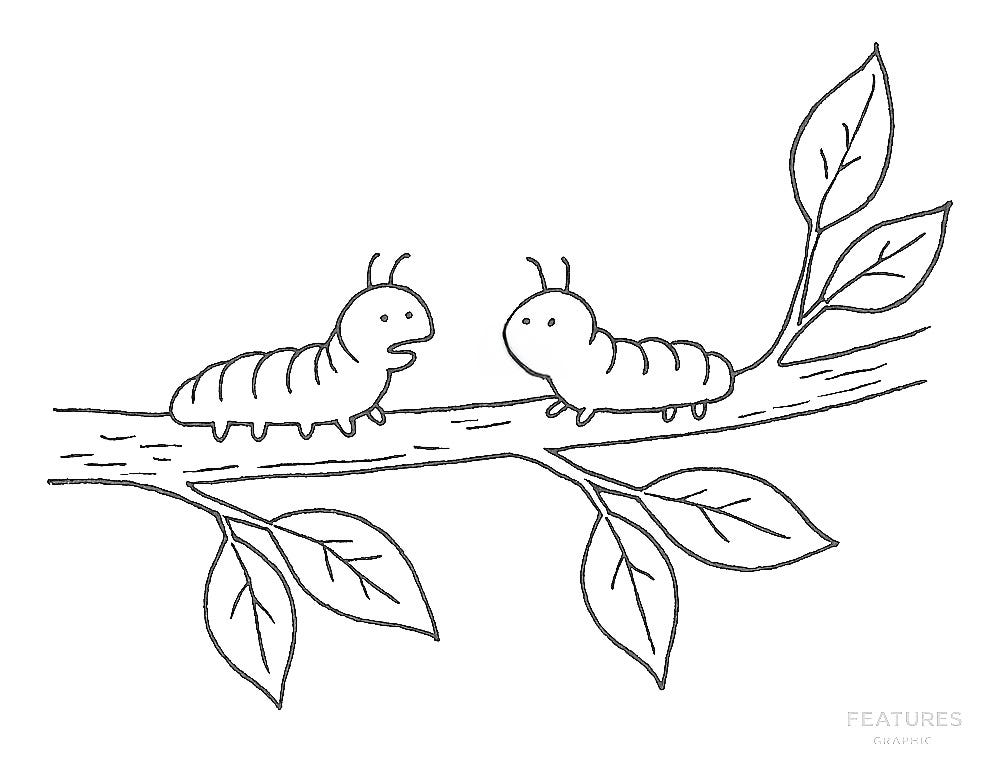
"I'm not saying I've changed. I'm saying I'm going to."
"Whatever you do, don't Google what happens next."
"Sure, wings. But have you priced a chrysalis lately?"
"At some point one of us has to admit we're just two tubes with opinions."
"I'm at the age where I'm mostly thinking about hanging upside down somewhere quiet."
In “A French Table, Rooted in Northern California,” the winning caption was “This must be a bear market,” with 40% of the votes.
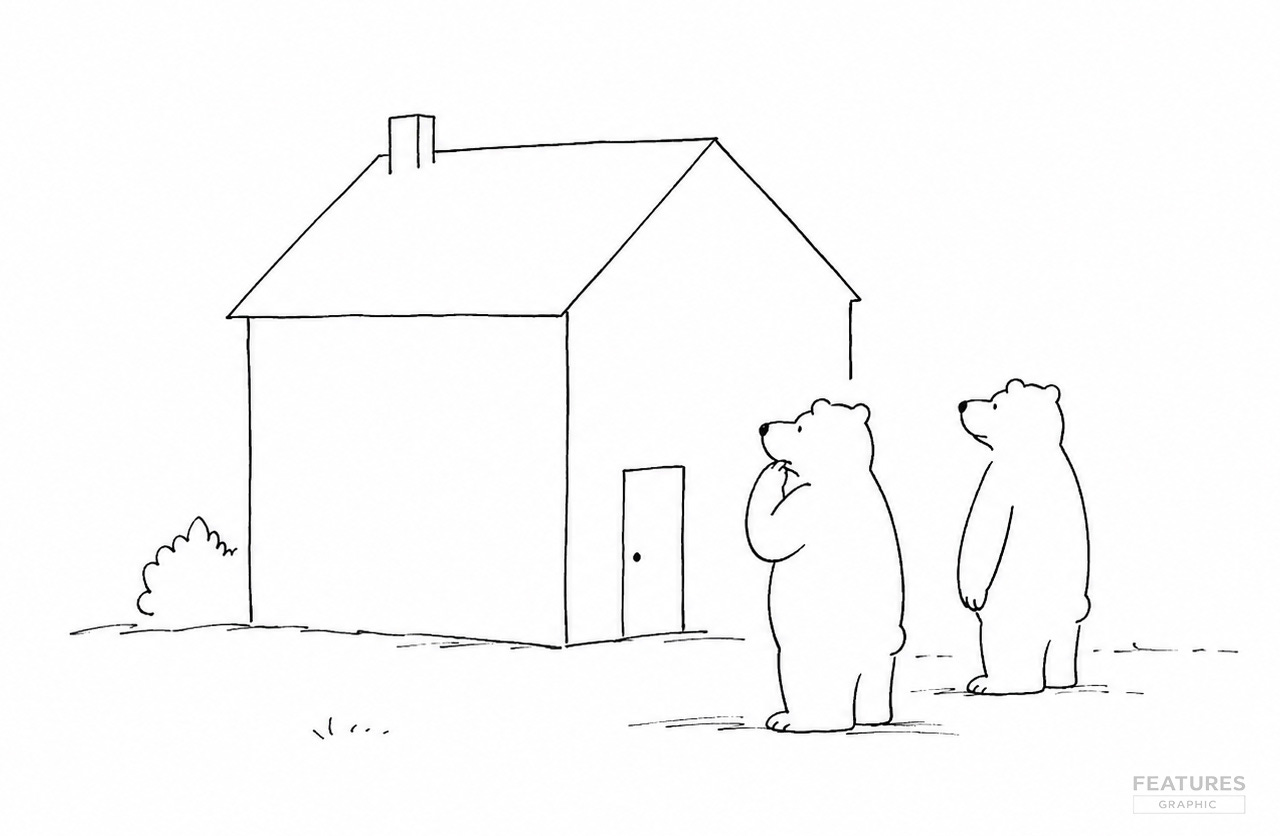
“This must be a bear market.”
“The agent described it as ‘just right.’”
“Apparently, ‘sleeps two’ is species-dependent.”
“The hibernation room is mostly theoretical.”
“It comes furnished, but only with porridge.”
Answer: B. Antennae
Migrating monarchs use a time-compensated sun compass. Their compound eyes detect celestial cues, including the sun’s position, while the brain processes directional information. But the primary circadian timing signals used to correct for the sun’s movement come from clocks in the antennae.
In laboratory flight tests, monarchs without antennae could not maintain normal time-compensated orientation. Reattaching the antennae restored proper navigation, provided the antennae could receive light and synchronize their clocks. Researchers later found that a single properly synchronized antenna can be sufficient.
Why not E? Johnston’s organs are mechanosensory structures located inside the antennal pedicels. They detect movement and vibration, but they are not the antennal circadian clocks responsible for sun-compass timing.
—
—
The views, opinions and data presented in this article are those of the author and do not necessarily reflect the official policy, position or perspective of Napa Valley Features or its editorial team. Any content provided by our authors is their own and is not intended to malign any group, organization, company or individual.
Our illustrations are produced through a multistep process of generative tools, digital sketching and photo editing, often starting from our own images or sketches.

No posts
Comments
Nothing yet. Say the first thing.
Sign in to join the conversation.