
If you’re a founder, you’re going to need to prioritize time alone.
A few weeks ago, I was chatting with a founder about introverts and extroverts. In theory, I understand the difference, but she framed it differently. Those labels aren’t really about personality, but how you recharge, what restores your focus, your clarity, your sense of self.
I genuinely love being around people. I love brainstorming with my team, meeting other founders, speaking at events, and collaborating on big ideas. But if I stay in that mode for too long, I start to feel depleted. I don’t need time alone because I want to avoid people. I need time alone because I need somewhere for everything I’ve absorbed to settle.
As founders, we’re taking in information. Think retail meetings, team discussions, product reviews, creative sessions, investor conversations, customer feedback. Every hour seems to require us to switch gears, solve a different problem, or make another decision. I’ve realized that the real value of solitude isn’t necessarily rest; it’s processing. That’s actually where creativity begins.
One of the biggest business decisions I ever made happened during one of those quieter periods. When I was building Briogeo, I reached a point where I had to decide whether it was time to bring on an investor. There were a lot of opinions, a lot. Some people believed we should continue bootstrapping; others thought we should raise capital immediately. There were spreadsheets, financial models, conversations with experienced founders, and every perspective you could imagine. But no amount of outside advice was ever going to make that decision for me. I needed enough quiet to figure out what I actually believed.
As I sat with it, it became clear that the business had reached a point where capital wasn’t just about accelerating growth. We also needed experienced partners who could help us professionalize the company and navigate increasingly complex strategic decisions. Looking back, I didn’t become confident because I gathered more opinions. I became confident because I finally gave myself enough space to process the opinions I’d already heard. And I’ve found that’s true more often than not.
But what does solitude actually look like? It’s rarely sitting in silence. For me, it’s usually what I’ve started thinking of as physical acts of solitude: Cooking dinner, going for a bike ride, taking a shower. My body is occupied, but my mind is free to wander.

Bike rides are really where my best ideas have appeared. It could be a product concept, creative direction, a formulation, or something completely unrelated to work. There’s something about movement, combined with the absence of constant stimulation, that allows ideas to find you instead of the other way around.
One of the most recent examples happened in the shower. Our team had been trying to solve what felt like an impossible timeline. Every solution seemed to create another problem, and we kept going in circles. Then, somewhere between shampoo and conditioner, the answer simply appeared. I remember thinking, Where did that come from? As cliché as it sounds, that moment reminded me of something people often say: the answers are already within us. There’s some truth to that. When I slow down enough to quiet the noise, I can hear myself think. And sometimes that’s all that’s needed for the solution to reveal itself.
As I’ve gotten older, I’ve noticed when I make time for solitude, I become less impulsive. I listen more than I talk and I stop confusing urgency with importance. That’s a coincidence.
I stand by that solitude is wisdom. It’s a form of meditation, where I connect dots I couldn’t connect before. It’s where ideas mature instead of being rushed. And I genuinely believe those moments have made me a better founder because they help me become more thoughtful.
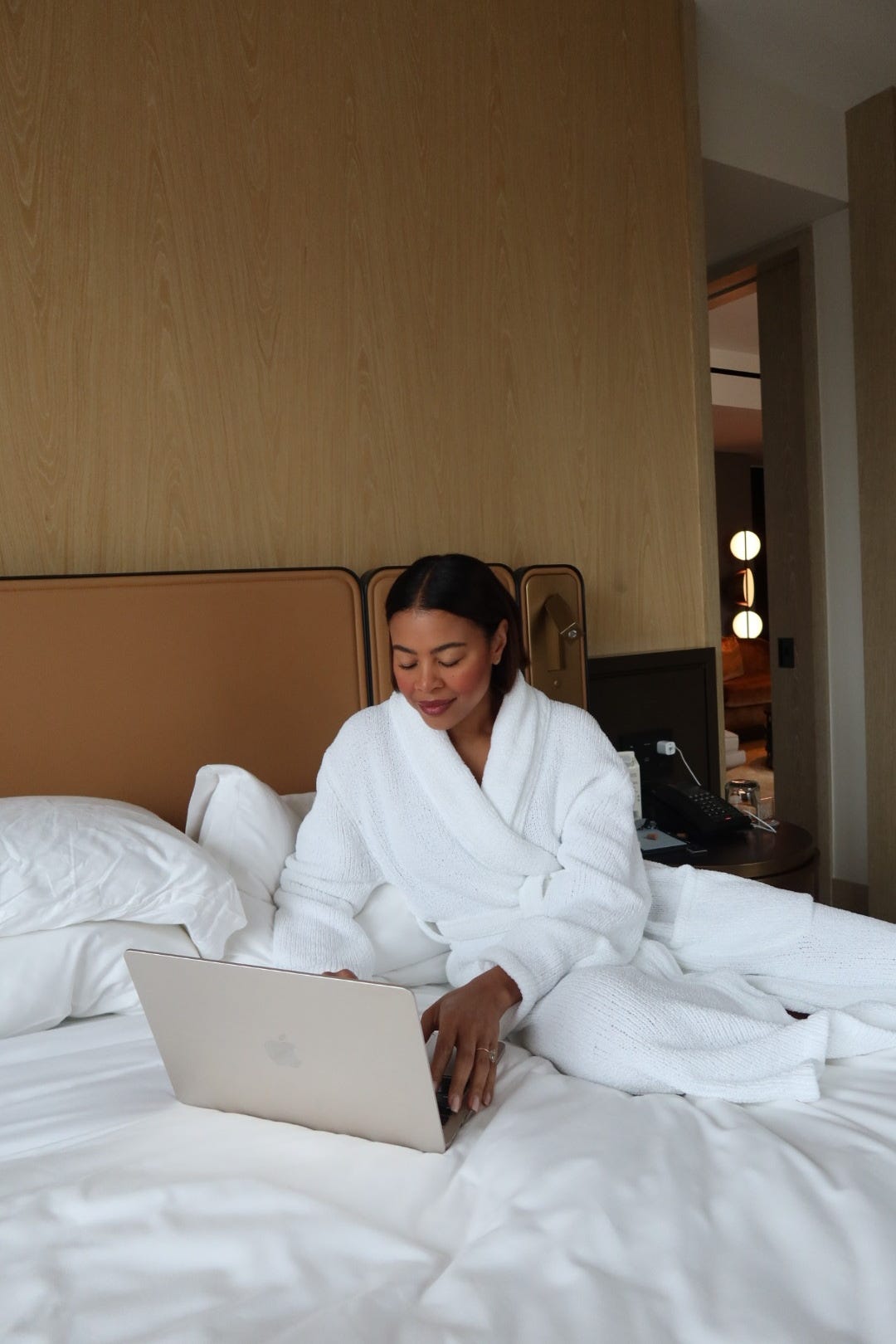
Of course, that’s the ideal scenario. Leadership doesn’t always give you the luxury of stepping away. But whenever I do have the choice, I’ve learned to protect those moments alone. Not because every walk, bike ride, or shower leads to some brilliant breakthrough. But over the years, enough of my biggest decisions, clearest ideas, and moments of clarity have happened there.
I’ve stopped thinking of solitude as downtime. I’ve come to think of it as part of my responsibility as a founder. Because the job isn’t just making decisions. It’s making good ones.
Schedule It
Don’t wait for free time. Your to-do list will always have something to do. Block time on your calendar specifically for being alone (even 20–30 minutes). Treat it as non-negotiable, the same way you would a team meeting or investor call.
Utilize Active Solitude
Stillness is not always the answer. You don’t need to sit and meditate. Choose repeatable, low-effort activities like walking, showering, cooking, or physical activity like biking.
Separate input from processing
If you’re always in meetings, give or receiving feedback, making decisions, or having conversations, you can process anything. Build a rhythm: consume, step away, think.
Otherwise you’re reacting, not deciding.
Delay big decisions until after spending time alone
If it’s a high-stakes decision, don’t finalize it in the same environment you received the input.
Protect your best thinking environments
Pay attention to where your clarity actually shows up and don’t fill them with outside noise or distractions
Thank you for reading Mindful Discovery and thank you for being. If it resonated, like, comment, and/or share this post.
No posts
Comments
Nothing yet. Say the first thing.
Sign in to join the conversation.