
Three years ago, I walked away from academia, not quite sure what else I was going to do, but 100% certain that leaving a position as a tenured full professor was the best decision for my family and for me. A few people told me I was crazy. I occasionally wondered if they may be right. But I also knew that I could no longer keep working in a secular state university. Plus, I knew that my kids would not stay little for long, and I wanted to be more present for them as we continued to homeschool (something we did all along).
God has shown his grace in such abundance to my family over these three years! I’ve enjoyed homeschooling my children and living a joyful and full life with my family, church, and friends. The career change has exceeded my wildest expectations as well. Three of my books have been published over these three years and a fourth is coming in February 2027. Also, I love editing and writing for Mere Orthodoxy, hosting the Christians Reading Classics podcast there, and writing essays for a whole lot of different places. This is the abundant life! Right here, right now, not just somewhere beyond the bend, just out of sight!
Yet academia keeps drawing me back. Ironically, since leaving academia, I’ve become much more marketable for academic jobs, mostly because of my books and other writing. But we’re not interested in moving anywhere else—Dan loves his job, and we love our town of Ashland. So I’ve repeatedly declined pursuing invitations that would have entailed a move. But I was open to the right local opportunity. Last August, I accepted a half-time position as Interim Director of the MFA in Creative Writing at Ashland University. It allowed me to keep doing everything I’ve been doing since the move. But also, I got to dip a toe into something academic-adjacent again.
I wasn’t sure I wanted to come back to a full-time academic position, but I just got an offer I couldn’t refuse—and one that will put me back in the classroom again, after three years away (or, really, six years, considering that the last regular on-campus class I had taught was in spring 2020!). For this next academic year, I will be a Senior Fellow in the Ashbrook Center! I will continue writing, and I will also teach two courses per semester. And I will continue managing the MFA—talk to me if you’re thinking about an MFA degree that is grounded in the Great Books.
This position would allow me to contribute in a small way to the key civilizational work that some universities (like Ashland!) are doing right now. I am truly honored and delighted to get to do this work, and you can read more about it—and about what universities have long been about and still should be about—in my latest for Providence Magazine this week.
In a nutshell, I argue that universities matter very much, and higher education done well is of key civilizational significance for America right now. A taste:
I will be requiring my students to use only a slightly adapted version of the same technology that Plato and Aristotle once used in their teaching: words to read, words to discuss, words to write.
The significance of this learning, Greek history reminds us, is civilizational. The Athenians emphasized the importance of developing the moral and intellectual character of their citizens through such programs as performances of tragedies and comedies. And the American Founding Fathers firmly believed the same applied to this country. Indeed, the need for educated citizens was the motivation Thomas Jefferson voiced in founding my undergraduate alma mater, the University of Virginia.
Too many institutions of higher learning have abandoned their mission to form intellectually responsible citizens, offering AI slop in lieu of education. But alternatives to AI University are available, and they are what America needs to flourish in the next 250 years. I am grateful for institutions that continue to do their part in this quest.
I will also continue doing everything else I’m doing right now (editing and podcasting for Mere Orthodoxy and homeschooling my children). I have more book projects under contract, so I will continue writing as well. One area where I will scale back, though, is writing shorter essays—I will probably continue to accept most invitations I receive, but I will scale back on pitching essays. After all, there are only 24 hours in a day, and one must spend some of them on sleep.
Lots more things to figure out, and we’ll see if this experiment proves too extreme once we get into the laboratory of life this fall! Stay tuned!
Now on to other things elsewhere this week.
In my latest for The Dispatch, I got to review historian Francis Young’s delightful new book, Fairies: A History.
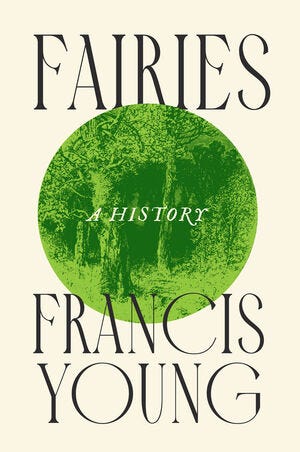
A taste from my review:
If the early aughts were the heyday of New Atheism, the 2020s so far have been decisively a time of reenchantment and new works of apologetics for religious belief. From Ross Douthat’s exhortation for all to Believe, to Rod Dreher’s encouragement for us to live in wonder and recover a delight in mystery, to Christopher Beha’s decades-long intellectual pursuit of faith through philosophy and Charles Murray’s no-less-intellectual arrival at theism after decades of atheism, the New Enchantment (if we may call it that) is profoundly respectable and intellectual, grounded in analysis of real evidence by people who are highly regarded as rational leaders in their academic or professional spheres.
And then the fairies arrived.
Francis Young’s new and magisterial Fairies: A History almost seems like a joke compared to the other recent books on the spiritual realm. It is, however, an earnest and deeply researched history of ideas about one particular aspect of the supernatural realm, an aspect that perhaps fewer people than ever believe in today: fairies. Young defines fairies as follows: “a generic term that covers any supernatural, human-like non-human beings—from the fays of medieval French romance literature and the aos sí of Ireland to elves, dwarfs, trolls, gnomes, nereids, vilas, leprechauns, pixies, brownies, and so on.”
You can read the full piece here.
I absolutely adored James Fenimore Cooper’s Leatherstocking novels as a child. And so, in planning which American classics I wanted to discuss on the podcast this year in honor of America250, I knew Cooper had to be a part of this. So, I was delighted that Wayne Franklin, probably the foremost expert on Cooper in the world right now, agreed to come talk on the podcast! You can listen here or wherever you get your podcasts.
Comments
Nothing yet. Say the first thing.
Sign in to join the conversation.