
We keep asking why is investment so low? Why is the economy not growing? Why is the informal economy so large? I will argue that one answer is hiding in plain sight. Pakistan has not built financial markets. It has built a banking corridor.
Almost every serious financial transaction must pass through banks. Government paper is heavily bank-intermediated. Foreign exchange is routed through authorized dealer banks. Mutual funds depend heavily on bank distribution. Retail access to treasury bills and Pakistan Investment Bonds remains cumbersome and bank-centered. Entry into banking is difficult.
Non-bank financial institutions have been deliberately weakened by the SBP over the years. Capital markets remain peripheral as they are encumbered by regulations , controlled by brokers and too small and thin to matter to individual investors.
A modern financial system is not a banking monopoly with a few decorative capital-market institutions around it. It is an ecosystem. Banks compete with money markets, non bank financial institutions, mutual funds, pension funds, insurance companies, securities dealers, custodians, fintech platforms, exchanges and independent advisers. Savers have choices. Borrowers have choices. The government borrows in a deep and competitive market. Exporters and importers see transparent foreign-exchange prices. Investors can move easily between deposits, money-market funds, bonds, equities, pensions and other instruments.
Pakistan has done the opposite. It has made banks the gatekeepers of finance. This is a failure of market-making by the State Bank of Pakistan.
The central bank’s job is not merely to regulate banks. Nor is it simply to announce interest rates, manage reserves, supervise payments and lecture the public on inflation. A modern central bank must help create liquid, transparent and competitive markets. Monetary policy works through markets. Debt management requires markets. Foreign-exchange stability requires markets. Savings become investment through markets.
In Pakistan, this competing financial markets are absent in fact they are narrow, clubby and bank-dominated. The result is a financial system that is comfortable for incumbents but costly for growth.
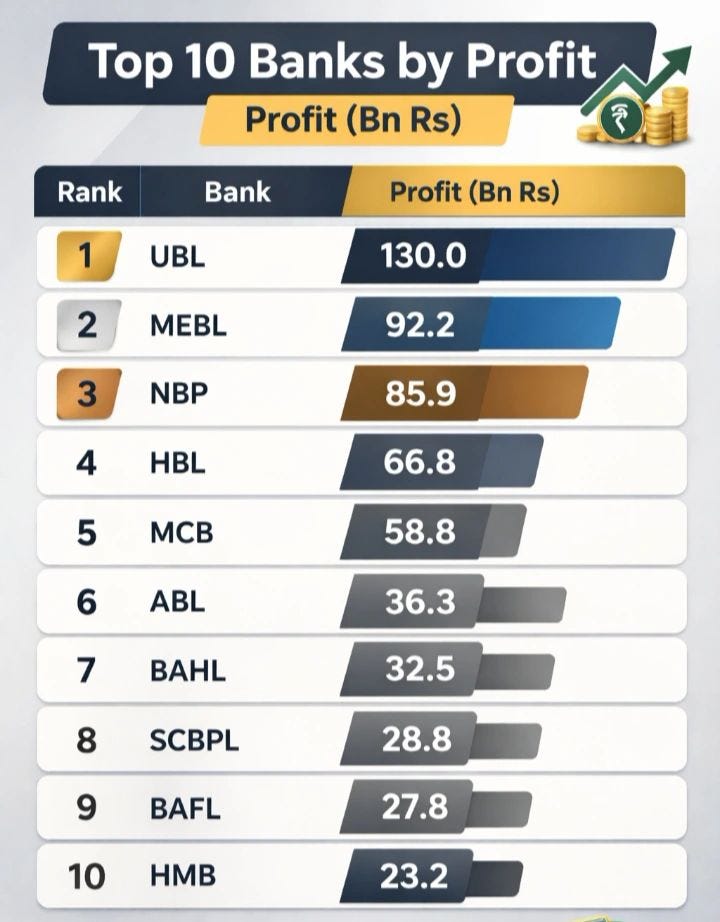
Banks an government both love this arrangement. The former control most financial transactions without competition earing super profits without any financial innovation, while paying their senior management huge fees and giving them huge stature. A captive banking system makes government borrowing easier. It also allows government to influence interest rate and exchange rate policy in a state of macro policy in a state of fiscal dominance.
But the economy pays the price. When banks dominate finance, private credit suffers. Banks prefer large, familiar, collateral-rich borrowers. They prefer government paper. SBP finds it easier to control foreign exchange through banks than through an open market. Bank run money market does not put pressure on interest rates as there is no external challenge.
Growth requires risk capital. Here we have a system for risk avoidance. Growth requires price discovery. We have built negotiated corridors. Growth requires deep markets. Here we have banks competing in money markets, banking, exchange markets mutual funds and government and private debt. Growth requires savers to become investors. Pakistan keeps them as depositors.
This is why Pakistan’s financial sector remains small relative to the needs of the economy. Institutions and markets that allocate and price sick capital efficiently and dynamically are missing. It finances government, large corporates and politically familiar sectors. It does not create the competitive financial ecosystem required for productivity growth.
Take government securities. In a serious market economy, treasury bills, PIBs and sukuk should be widely and easily accessible. A household should be able to buy them directly. A pension fund should be able to trade them easily. A mutual fund should be able to compete openly with deposits. A broker should be able to make a market. Prices should be visible. Secondary-market trading should be active. Yield curves should be meaningful. Repo markets should provide liquidity. Government debt should become the benchmark for pricing private debt.
Foreign exchange shows the same institutional failure. FX cannot be a free-for-all. No serious country allows unregulated foreign-currency trading. But there is a difference between regulation and cartelization through bank control. A transparent electronic FX market with many regulated participants is very different from a closed authorised-dealer system where price discovery remains limited and the market repeatedly becomes hostage to administrative management.
Pakistan’s exchange-rate crises are not caused only by deficits. They are worsened by weak markets. When markets are thin, rumours move prices. When access is restricted, shortages become panic. When the exchange rate is managed administratively for too long, adjustment becomes abrupt. When hedging markets are underdeveloped, firms cannot manage risk. When forward markets are shallow, exporters, importers and investors are forced to speculate rather than hedge.
Mutual funds tell a similar story. Pakistan should have a large, competitive asset-management industry offering savers serious alternatives to bank deposits. Money-market funds, income funds, pension funds, equity funds and ETFs should be competing for household savings. Instead, distribution remains heavily dependent on banks and affiliated networks. The customer goes to a bank and is sold what the bank wants to sell.
The result is a low-growth equilibrium. Banks remain profitable. Government keeps borrowing. Savers remain passive. Capital markets remain shallow. Mutual funds remain underdeveloped. Bond markets remain illiquid. Private credit remains rationed. SMEs remain excluded. Long-term investment remains scarce. Innovation remains unfunded. The same complaints return every year: low investment, low exports, low productivity and low growth.
What should Policy do?
First, build a debt market by consolidating national savings and the debt office into one agency on par with the SECP to manage, develop and regulate the debt market. This agency can then develop a debt market to compete with other instruments by opening government securities to direct, simple, digital access. Every citizen should be able to buy treasury bills, PIBs and sukuk through a secure national platform linked to custody and settlement systems. Banks may provide settlement accounts, but they should not control the doorway.
Second, develop non-bank dealers. Well-capitalised brokers, securities firms, pension funds, insurance companies and asset managers should be able to participate meaningfully in government securities markets, repo markets and secondary trading. Primary dealership should not remain a protected banking privilege.
Third, build a transparent repo and secondary bond market. Without a liquid repo market, there is no serious money market. Without secondary trading, government debt remains an accounting instrument rather than a market benchmark. SBP should publish volumes, spreads, turnover and liquidity indicators regularly.
Fourth, require open architecture in fund distribution. Banks should not be allowed to privilege affiliated products without full disclosure and comparison. Pakistan needs independent fund supermarkets, digital investment platforms and licensed financial advisers.
Fifth, deepen FX markets instead of merely policing them. Regulated non-bank participants should be gradually allowed into transparent electronic FX platforms. Exporters and importers need hedging instruments. Forward markets should be developed. Price discovery should be improved. Administrative management should give way to market depth.
Sixth, make banking contestable. Pakistan does not need reckless bank licensing, but it does need competition. Digital banks, narrow banks, custodians, payment banks, fintech distributors and specialised lenders should be encouraged. Entry should be risk-based, not club-based.
Seventh, separate regulation from market protection. SBP should not behave as guardian of the banking club. It should regulate systemic risk while encouraging competition. SECP should build capital markets. The Ministry of Finance should want a broader investor base for government debt. The Competition Commission should examine whether financial-sector structure is suppressing competition.
The principle is simple: banks should be participants, not gatekeepers.
Pakistan cannot grow on a financial system designed mainly to finance the state and protect incumbents. Growth requires capital mobility, risk pricing, market access, investor choice and institutional diversity. A bank-centred system may look stable, but it is stable in the wrong way. It stabilises low growth. It stabilises elite access. It stabilises government borrowing. It stabilises financial exclusion.
The real test of financial reform is not whether banks remain profitable. They will. The test is whether a young firm can raise capital, whether a saver can invest outside deposits, whether government debt trades in a real market, whether exporters can hedge, whether pension savings finance productive assets, whether mutual funds compete openly, whether prices are visible, and whether finance serves growth rather than merely recycling deposits into public debt.
Pakistan’s tragedy is that it has confused banking depth with financial development. They are not the same. A country can have powerful banks and still have weak finance. That is Pakistan today.
SBP must move from bank supervision to market creation. Until it does, Pakistan will remain trapped in a financial system that is comfortable for banks, convenient for government, and costly for growth.
Comments
Nothing yet. Say the first thing.
Sign in to join the conversation.