
0:00
-14:56
Hi, how are you doing?
In parts of Suffolk the wheat harvest is underway and the barley, peas and rapeseed are likely to follow soon after. Harvest began earlier this year than last, but at about the same time as in 2022, and not as early as in 2018. If you remember singing ‘We Plough the Fields and Scatter’ at school or church Harvest Festival in autumn, you’ll know that harvest time once came much later in the year, in August and September. It isn’t primarily climate change, this time, that’s brought it forward – although that’s certainly adding to the effect: for centuries, fields were rested over winter when the land was too wet or frozen to work, and crops weren’t drilled again until spring. But new cereal varieties and farm machinery, plus artificial fertilisers, means that many crops can now be sown in autumn, not long after harvest, which means they ripen sooner. Incidentally, modern wheat and barley is also much shorter than it was a hundred years ago, something which helps it better withstand wind and rain.
Welcome to the July edition of Witness Marks. If you’re new here and would like a quick tour of the village (and the newsletter), start by reading this post here. Witness Marks goes out on or around the 15th of each month; in between times you can find me chatting away in Substack Notes. The first part is free, while the second part, the Village News, sits below a paywall. A subscription to that costs £3.50 a month if you pay via Substack Desktop (Apple and Google add a bit on top if you pay via the app). Subscribers can also access all the back issues of Witness Marks, AND they can listen to me read out and discuss my first novel, Clay.
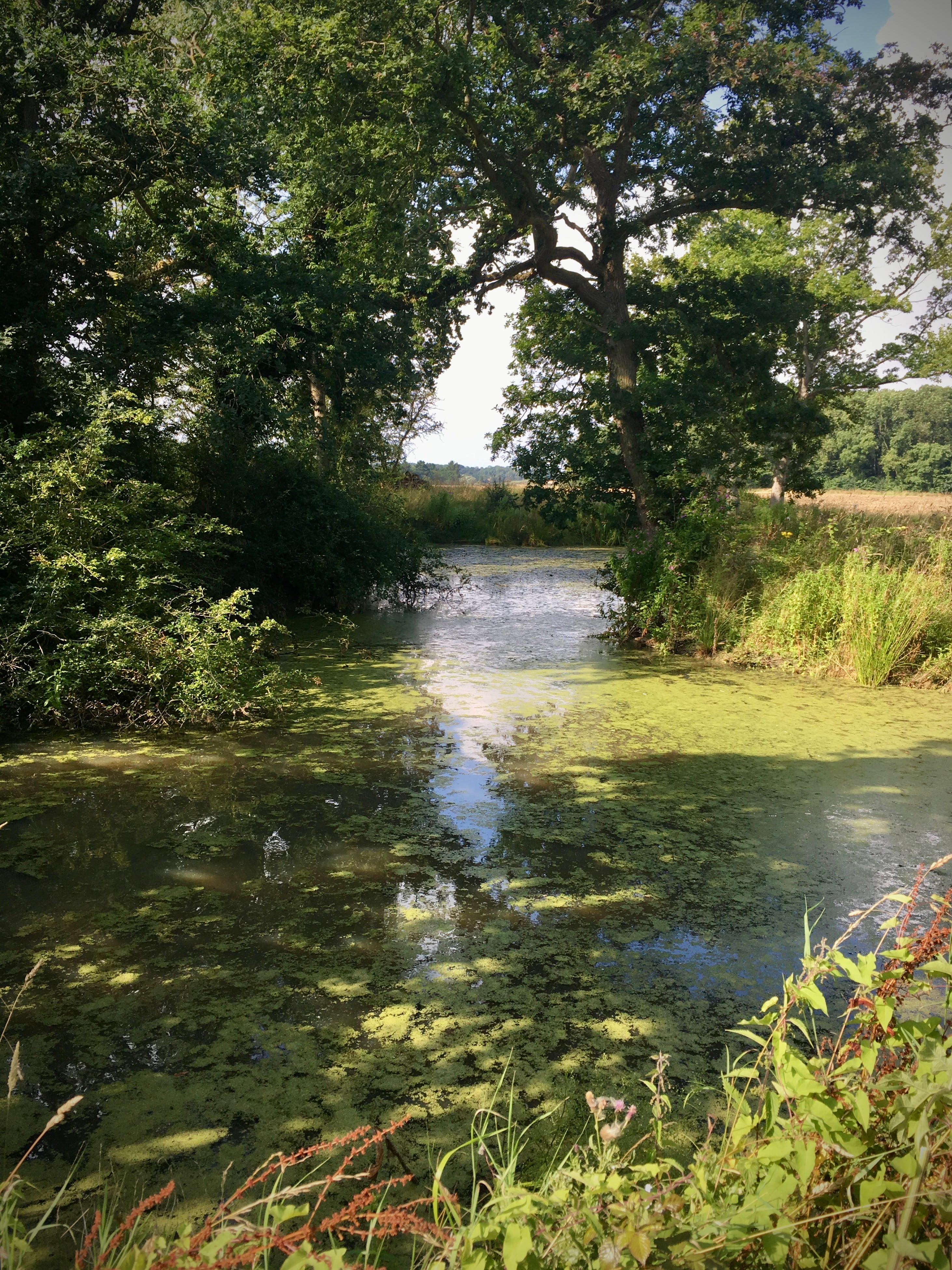
Last night my neighbour Charlotte and I took a few cans of premixed G&Ts and a big bag of crisps and went to sit by the slow-moving river as the sun sank in the West; due to the current manifestation of the climate emergency it’s the only time of day when it’s felt comfortable to spend time outside. As I am irresistible to insects, and it is not only mosquito but deer fly season, I covered myself in Smidge with added rings of roll-on DEET around my wrists, neck and ankles; I also had leggings and socks on for the occasion, which felt frankly unpleasant. Charlotte was wearing a tee, cutoffs and flip-flops, and no repellant. The world is not built on a principle of fairness, as I have often had cause to reflect. Still, neither of us were bitten, which is the main thing.
Damselflies and demoiselles hawked the shady water, and one came to rest on an overhanging twig at eye height where it curled and extended its abdomen several times as though enjoying a stretch before bed. Distantly a young kestrel chittered, begging its parents for food. Rooks gathered in the willows and poplars above us, their chatter reaching a crescendo and then suddenly, as the sun dipped below the horizon, falling quiet. We gossiped and exchanged news, much like the rooks, and we talked too of bereavement and loss, the failing light lending itself to intimacies, the water gently carrying our words away.
As we walked home at gone ten o’clock the moon hadn’t risen and the sky to the West was still light. Moths glimmered above the meadows and from a couple of the houses in the village shone friendly yellow lights. Alert for glow-worms, I checked the water stations I’ve set up here and there for wildlife before a fit of giggles seized us in the churchyard, briefly doubling us over. Reaching the road we dropped our voices to a murmur as we passed our neighbours’ open windows, and then we parted and left the village to the thirsty, heat-struck creatures, and the night.
On July 17th an album of music inspired by The Given World will be released. It’s been created by Peter Rogers and Laura Cannell, and it is utterly, utterly extraordinary. From ‘A Strange Revel’ to ‘Mates for Life’ and ‘Fides Datis Mundi’, these nine haunting tracks really are the world of the book made music, and they give me the absolute shivers.
The album will be available to stream from all the usual places, and to buy as a download and an extremely limited-edition CD via Bandcamp, which (as I’m sure you know) pays musicians more fairly than Apple Music or Spotify. Readers of Witness Marks have the chance to nab one of only 100 CDs, or buy the download, two days before the album’s official release, by going here.
Collaborating with artists and musicians to make things connected to the books I write is an absolutely enormous privilege and an unalloyed pleasure. I am so lucky.
by Anne Stevenson
Orchard-lipped, loose-jointed, purplish, indolent flowers,
with a ripe smell of peaches, like a girl’s breath through lipstick,
delicate and coarse in the weedlap of late summer rivers,
dishevelled, weak-stemmed, common as brambles, as love which
subtracts us from seasons, their courtships and murders,
(Meta segmentata in her web, and the male waiting,
between blossom and violent blossom, meticulous spiders
repeated in gossamer, and the slim males waiting).
Fragrance too rich for keeping, too light to remember,
like grief for the cat’s sparrow and the wild gull’s
beach-hatched embryo. (She ran from the reaching water
with the broken egg in her hand, but the clamped bill
refused brandy and grubs, a shred too naked and perilous for
life, offered freely in cardboard boxes, little windowsill
coffins for bird death, kitten death, squirrel death, summer
repeated and ended in heartbreak, in sad small funerals.)
Sometimes, shaping bread or scraping potatoes for supper,
I have stood in the kitchen, transfixed by what I’d call love,
if love were a whiff, a wanting for no particular lover,
no child, or baby, or creature. ‘Love, dear love,’
I could cry to these scent-spilling ragged flowers,
and mean nothing but ‘no,’ in that word’s breath,
to their evident going, their important descent through red towering
stalks to the riverbed. It’s not, as I thought, that death
creates love. More that love knows death. Therefore
tears, therefore poems, therefore long stone sobs of cathedrals
that speak to no ferret or fox, that prevent no massacre.
(I am combing abundant leaves from these icy shallows.)
Love, it was you who said, ‘Murder the killer
we have to call life and we’d be a bare planet under a dead sun.’
Then I loved you with the usual soft lust of October
that says ‘yes’ to the coming winter and a summoning odour of balsam.
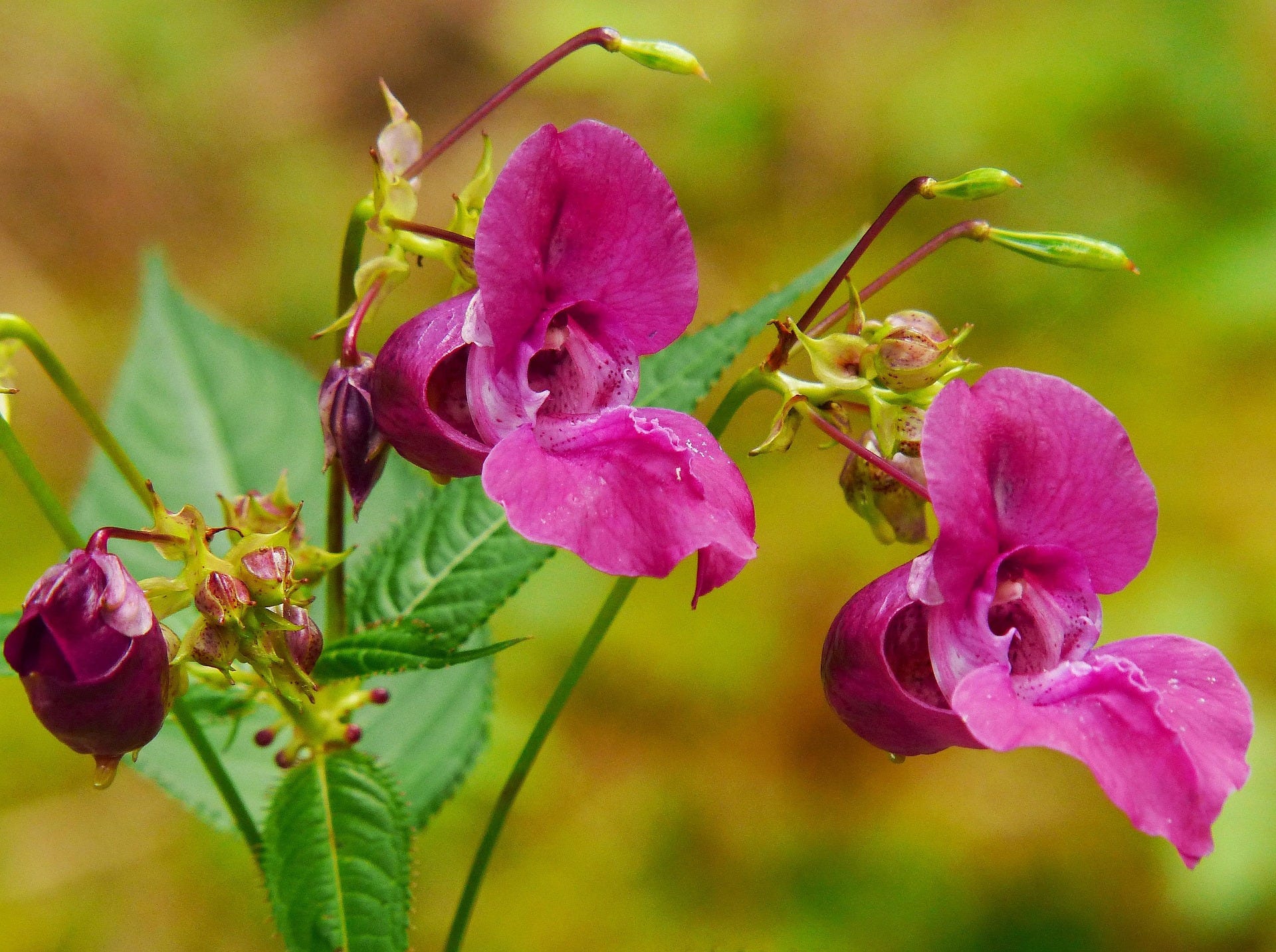
I love this poem by Anne Stevenson, partly for its delicate exploration of death and mortality, but also for the way it makes me look again at a plant I have never before thought of as fragrant (‘a girl’s breath through lipstick’ – what a line), far less as beautiful, knowing it only as a bully and a danger to riverbanks and something to be taken on and defeated wherever possible. Himalayan balsam usually flowers around now, and I remain very proud of the fact that I’ve eradicated two stands of it, both in ditches that drain into our little river – one just fifty yards or so from where I sat with my friend Charlotte at sunset – but this poem makes me see it in a different light.
It’s easier (and lazier) to think of something as unpleasant and worthless if you’re trying to control or get rid of it – like the farmworker who told me, some years ago (in the first wave of Covid, which was probably significant), that starlings were not just ‘vermin’ but ‘worse than ISIS’. But there are, of course, some very dark sides to that kind of thinking, especially when it comes to other human beings. This poem reminds me that it is a privilege to be challenged, to be asked to expand, to practice stretching to contain differing truths without committing to one and eclipsing the others.
Starlings are glorious and funny and magical; they can also be a dangerous agricultural pest and disease vector, particularly on dairy farms. Himalayan balsam wrecks riverbanks while also being beautiful, attractive to bees and sweet-scented. It is necessary sometimes to hold two contradictory ideas at the same time.
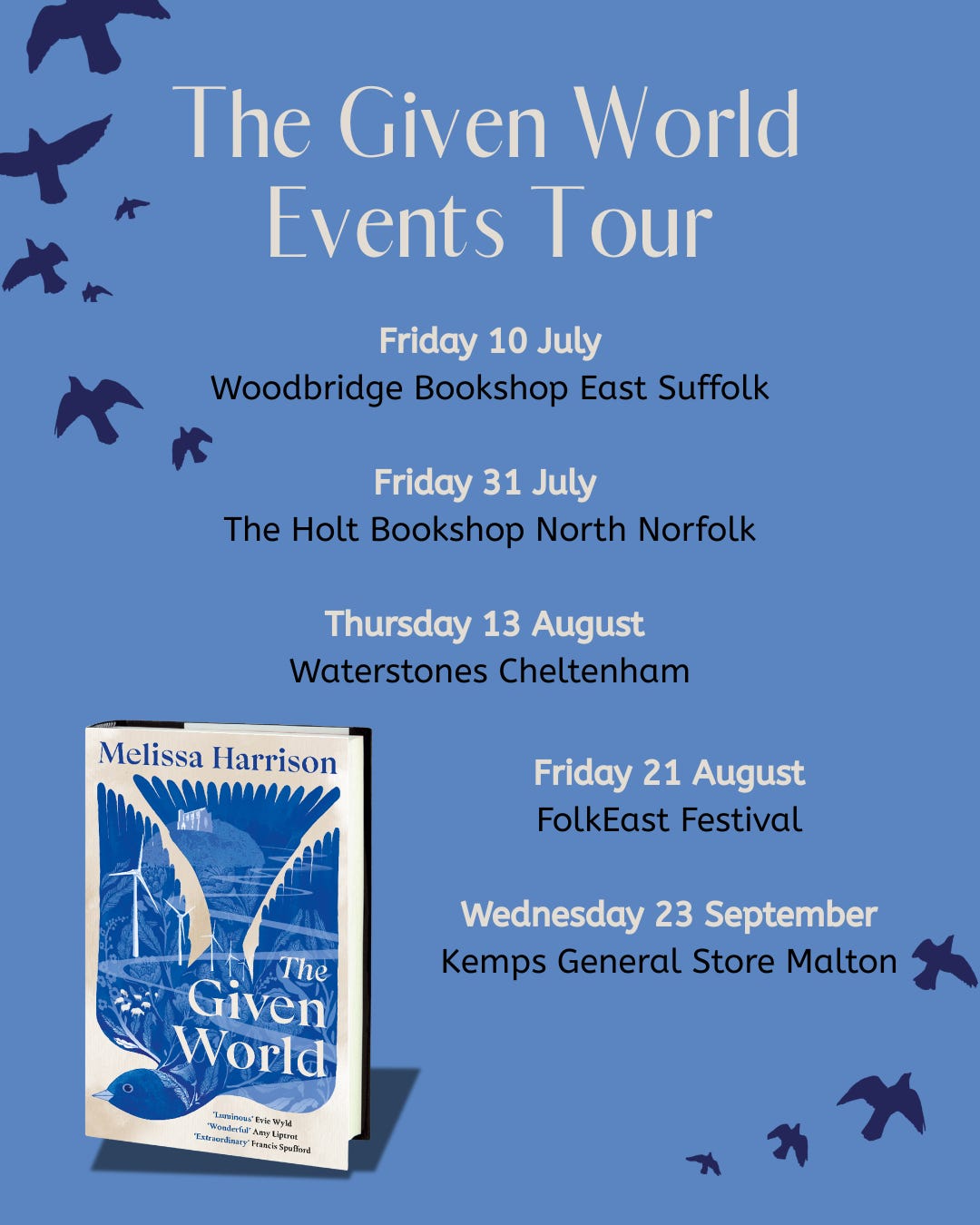
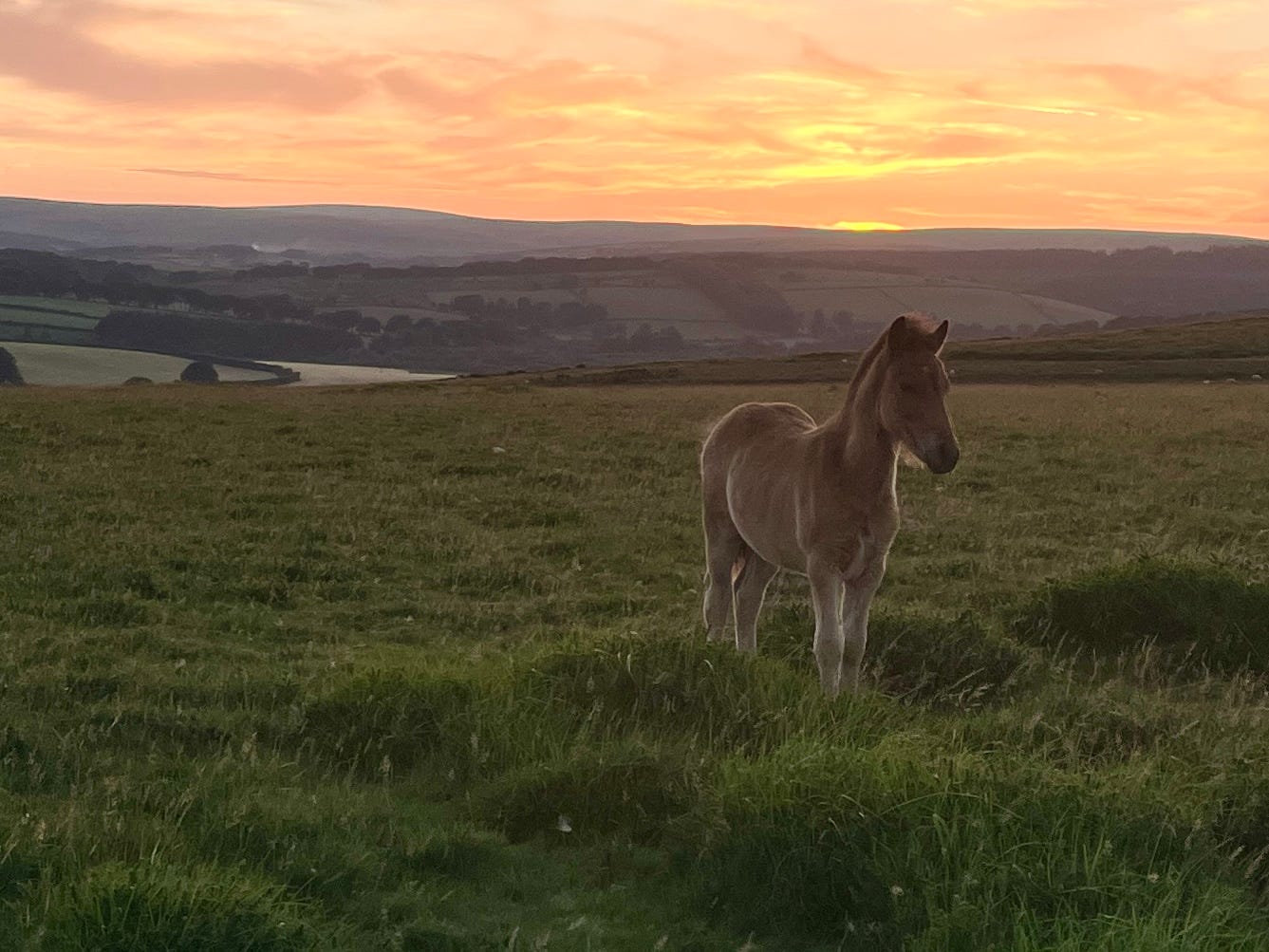
Some more dates have been added to my book tour, so if you haven’t come and said hello yet, please do. I had an excellent trip to Dorset and Devon, despite having to travel on trains with no aircon when it was 37 degrees (why you lot down there aren’t rioting outside the South Western’s head office I have no idea). Folde in Shaftesbury is a magical bookshop right at the top of Gold Hill (of Hovis fame) with a loyal and super-engaged book club; The Bookery in Crediton is a community-owned not-for-profit that does some amazing outreach to schools and residential homes. I tacked on a couple of days on Dartmoor, my favourite place in the whole world, where I yomped across moorland, swam in the warm waters of a flooded quarry full of newts and tadpoles and sat on a tor to watch the sunset, all of which was worth the tick bite on my bum, because of course – but only just.
After that came Lancashire and the glorious Storytellers, Inc in St Anne’s on the Sea, where I met Substack’s very own Katie Clapham and Business Mum Carolyn Clapham who were EXACTLY as funny and warm and brilliant as you’d hope. It was another book club event, which I do so love for the fact that everyone has already read the novel, and that makes talking about it much more fun.
In August I’ll be in Cheltenham and in September I’ll be at Kemps in Malton, where I expect to see EVERY SINGLE ONE OF YOU who contacted me earlier in the year saying, ‘Why aren’t you coming North?’.
Each month I collect together three things that have interested me, for good or ill, and which can be found in the world beyond your phone or laptop:
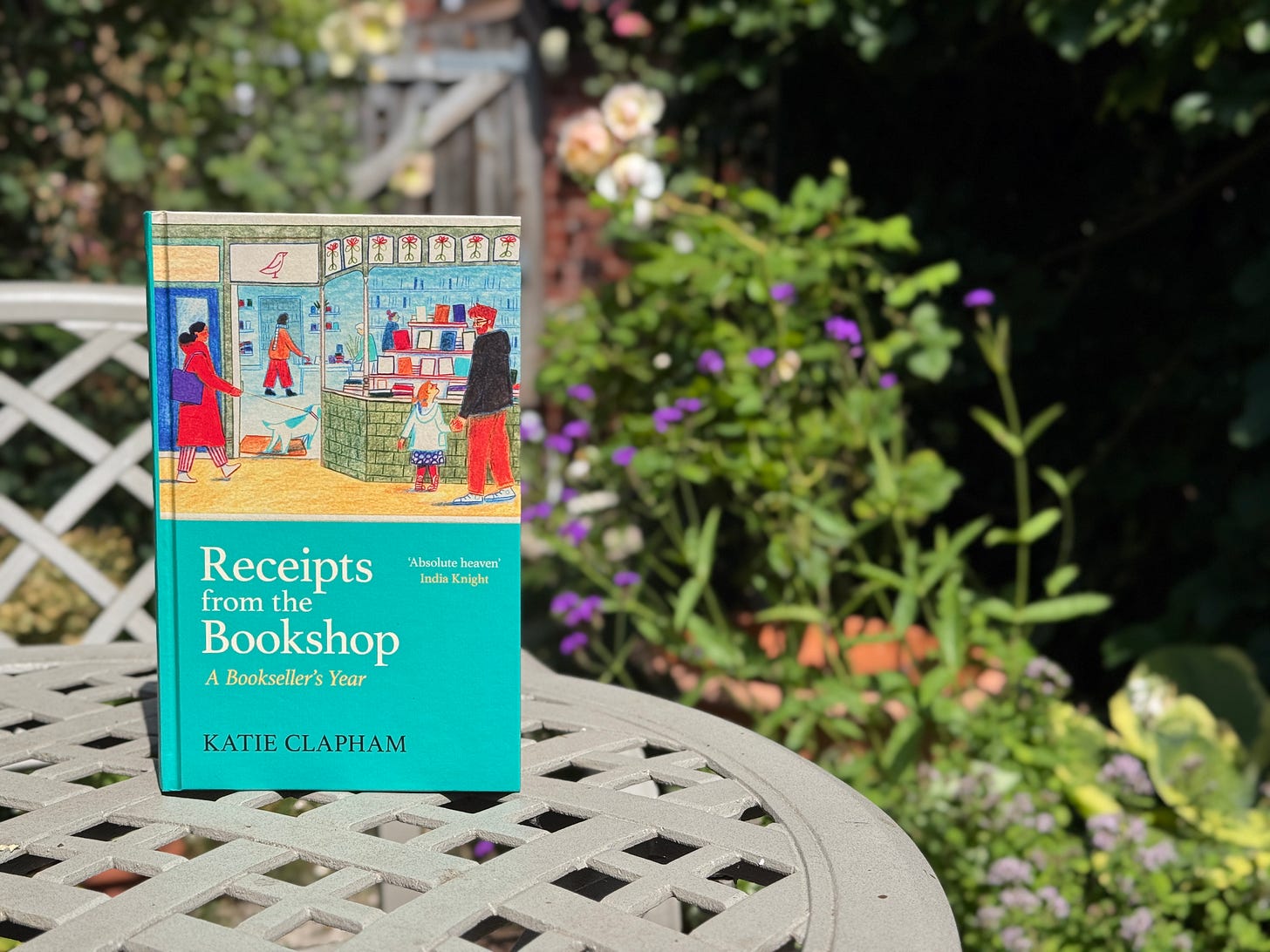
👉🏼 A nice thing: When I got the train up to Storytellers I deliberately didn’t take a book as I knew I was going to come back with a couple – the most important being Receipts From The Bookshop, by bookseller Katie Clapham herself. I absolutely DEVOURED it on the way home: it is exactly the right mixture of funny and wry, like the sweet and salt popcorn I also ate on the train. For those who haven’t yet come across Katie’s Substack of the same name, she is co-owner (with Business Mum) of a bookshop in the seaside town where she grew up, and Receipts takes you through a year in the life of a bookseller via glinting little vignettes of books, customers, regulars, events, milestones and incidents big and small. It’s one of those books with a light surface but a lot to say about English society running underneath, and if you liked 84 Charing Cross Road you will absolutely love it.
👉🏼 An interesting thing: If you are anywhere within striking distance of Bristol I urge you in the strongest possible terms to get yourself to Spike Island’s print fair on July 25th–26th. You can buy prints directly from artists, tour the studios, watch live demos and even have a go at printmaking yourself – and it’s all free! My friend the artist and printmaker Lucie Murtagh has been a driving force behind the fair and will be running an extremely cool interactive exhibition called ‘Flood, Pull, Repeat’ in which you can view a wall of screenprints, choose one, complete it yourself and take the finished piece home with you. Find out more about the fair here.
👉🏼 A thing that made me go ‘hmm’: Natural England this month granted a license to a business in Ipswich to cull lesser black-backed and herring gulls, despite it being nesting season and despite the latter being on the Red List of Birds of Conservation Concern. I do accept that gulls can cause problems occasionally but it doesn’t seem as though any effort was made to relocate them first (or just wait for the chicks to fledge, for god’s sake), which cannot be right. I think this is a classic case of anti-gull sentiment: their intelligence, adaptability, messiness and loudness reflect ourselves back to us, making them an easy target for our own internalised anger and disgust.

That’s it for the first, free part of this issue of Witness Marks; below the paywall you’ll find the Village News, including RIVAL FÊTE REPORT, an ANONYMOUS NOTE, HOT EGG CRISIS and LOST DUCK APPEAL. If you’d like to subscribe but £3.50 feels like a stretch, reply to this email (if you’re reading this in your inbox) or send me a private message on the Substack website. No questions asked.
If you don’t want to subscribe but you’d still like to support my various endeavours, you can leave me a tip by going here; or you can donate to support the free Encounter app by going here. Thank you so much!
Comments
Nothing yet. Say the first thing.
Sign in to join the conversation.