
Following a very sociable reimagining of the story of Arachne with storytellers from the younger cohorts at Waldegrave school in Twickenham, West London back in winter, it was the turn of a small and wonderfully energetic and inquisitive group of 17-year-old 6th Formers to engage with Myth and Voice one sunny afternoon in July 2025.
We worked with the Aeneid, the ancient Roman poem which recounts the dangerous and exhausting journey of Aeneas away from Troy (his home, destroyed by the Greeks), his arrival in Italy and the conflict that erupted when the resident peoples did not accept the newcomers in their land. Armed with the experiences from prior workshops on the topic about which you can read here and here, I knew the difference it would make if the youngsters involved could have ample time during which to develop their modes of conflict resolution in the tale. But I also knew that we needed ‘bonding’ and trust-building, which takes time, before we could even arrive at the point of starting meaningful negotiations. Quite a challenge for one short afternoon session, in the end of a full school day…
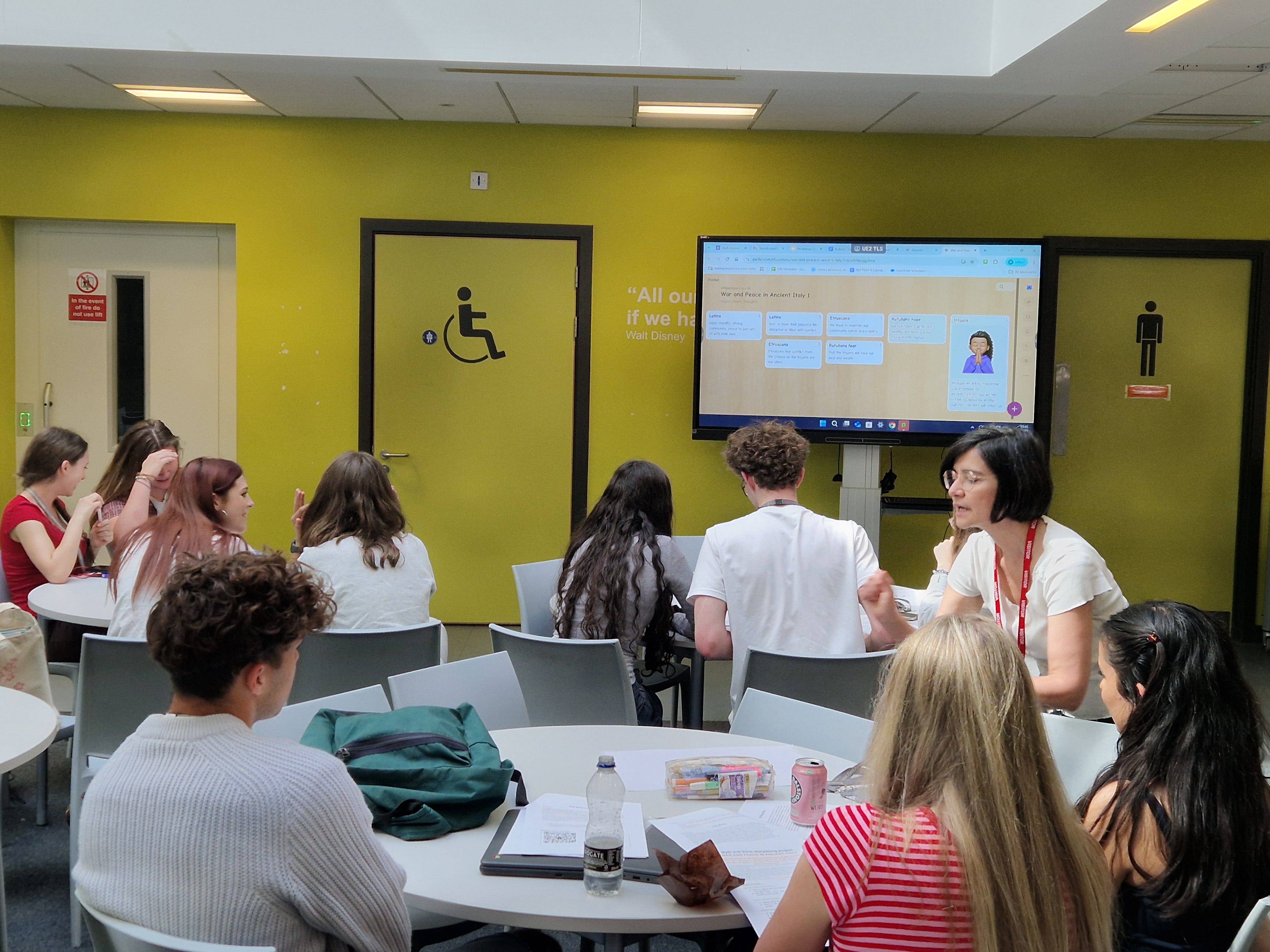
We started with an attempt to ‘get into the shoes’ of the various peoples and individual characters – some of whom we created on the spot. We imagined and shared the hopes, fears and thoughts that we believed they would be harbouring. We thought of how they would explain themselves and make an effort to be listened to and be more understood. Word play and a Venn diagram showed how much the ‘opposite’ sides had in common and gave life to some moving alternatives of the story, based on these common words, which appeared on our group Padlet.
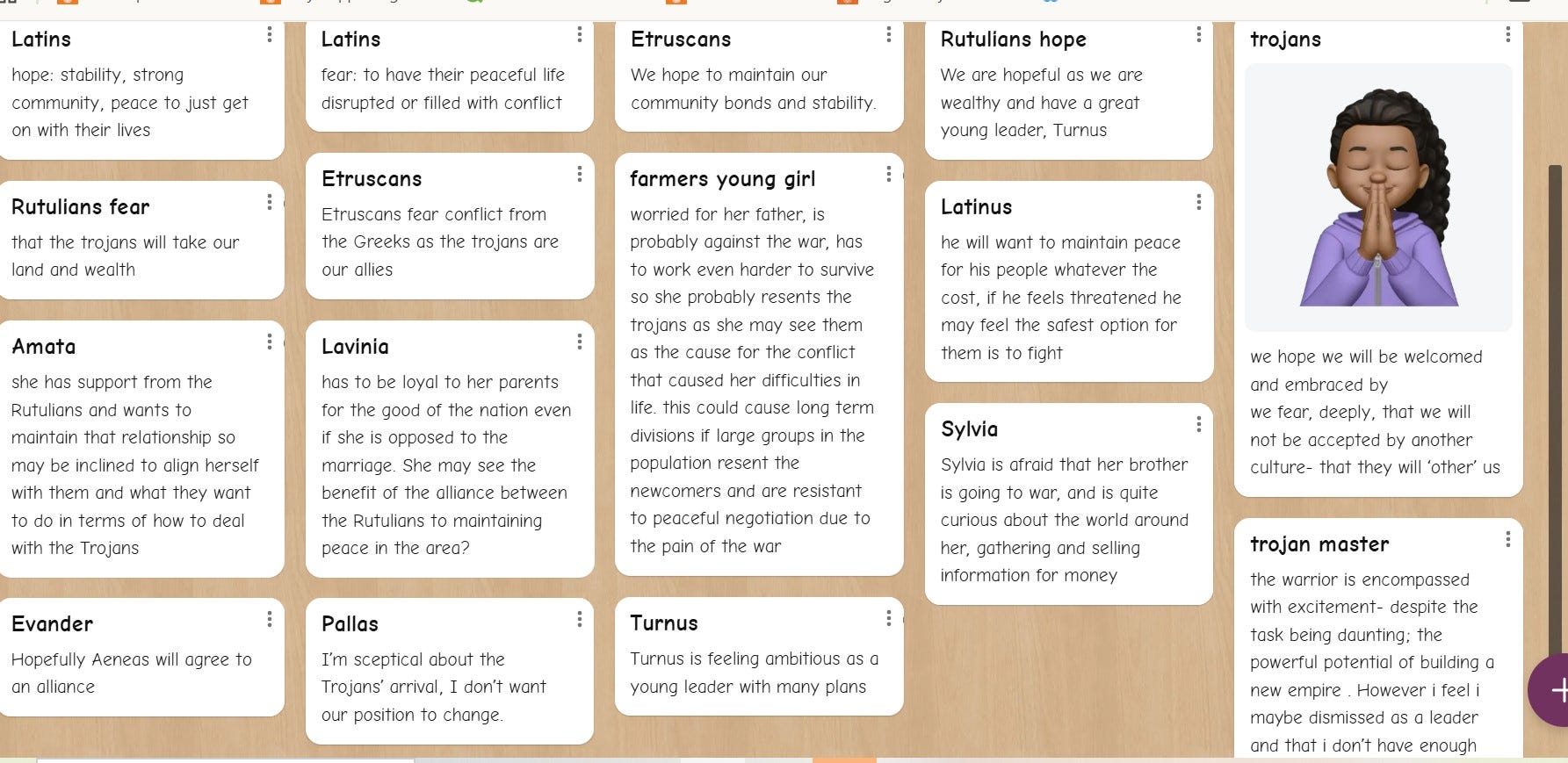
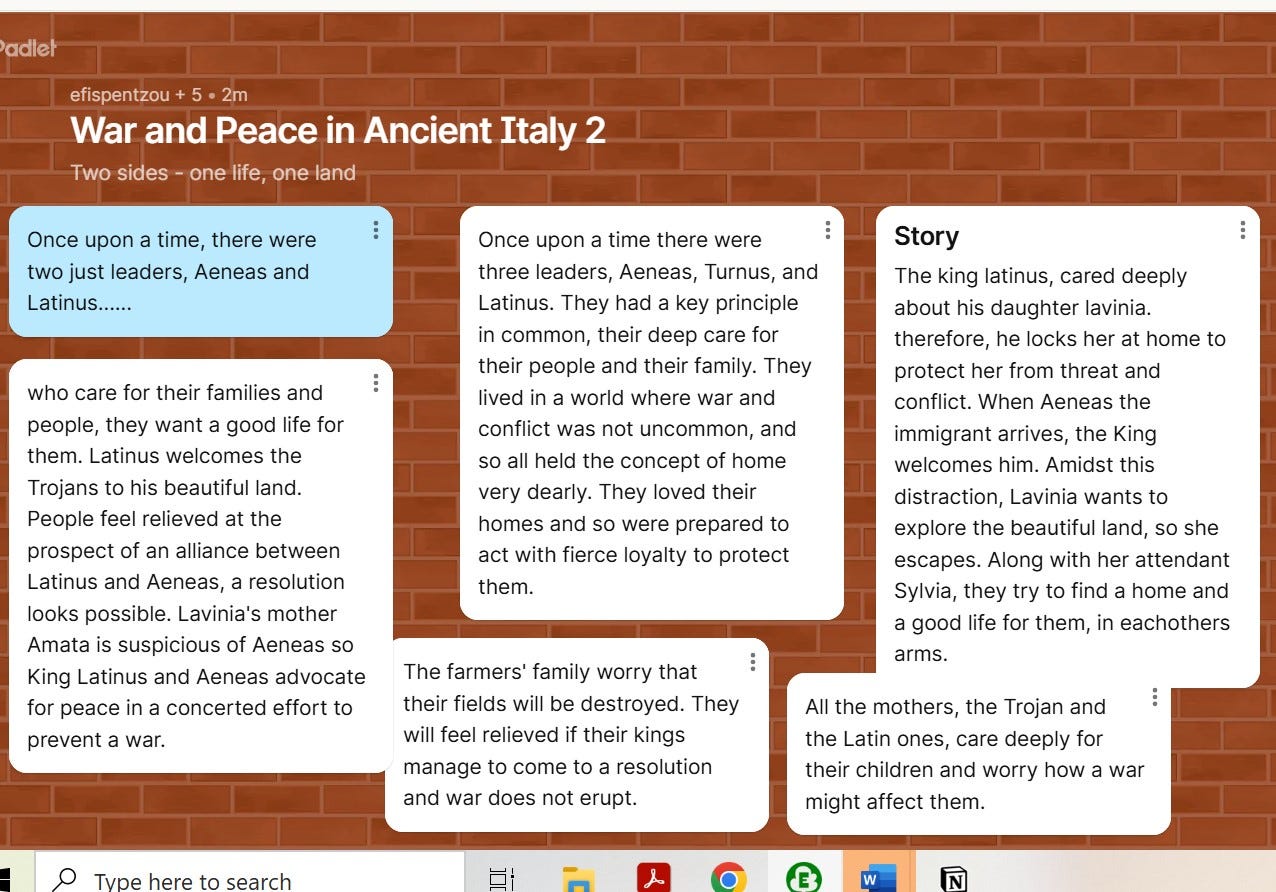
The young participants felt increasingly drawn to the characters and the peoples they were acting out and speaking for. It was wonderful to see them growing increasingly curious for these distant strangers’ stories, backgrounds, challenges, and prospects. The loss of stability for the resident tribes was more readily spotted. It took a little longer and further sensitive thinking to appreciate the dramatic extent of the peril the refugee Trojans faced. The different perspectives of other Italian tribes, some of them immigrants themselves, were discussed. After more chatting and more scribbling on our ‘tribes sheets’ in the various groups, we were ready for the set piece of the session: formal peace negotiations and our own novel way to re-imagine the ancient epic conflict and to escape from its savage, sad ending.
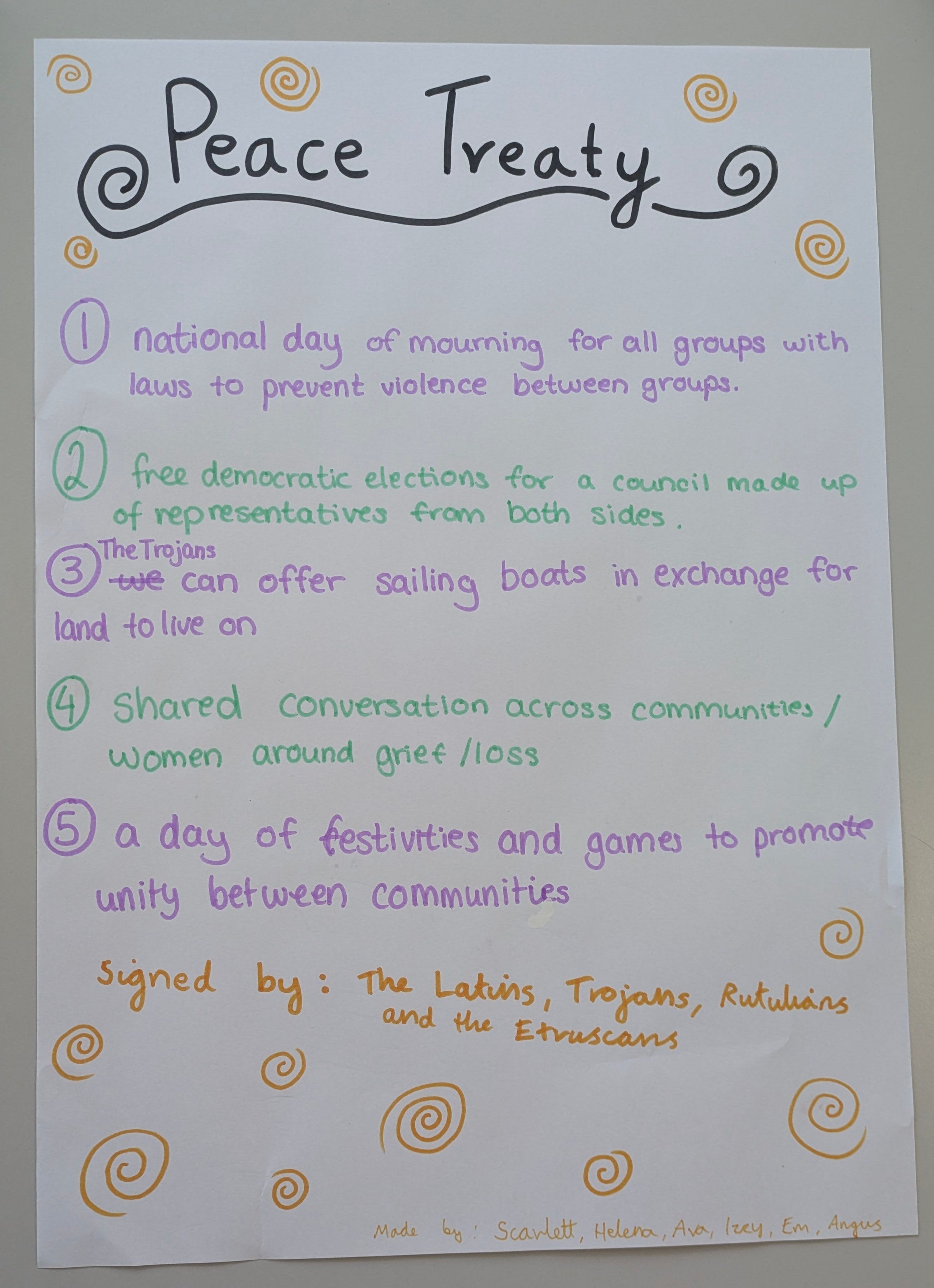
The task was tricky, given the multiple grievances that every side had identified and aired. But the voicing of grievances was an essential first step to reconciliation. Could the two sides come up with a peace treaty that could work for everyone – the royals, the leaders, the farmers, the file and rank soldiers, the young girls in the villages and the towns, and all the characters that we had devised? Now, everyone was in the right frame of mind for compromise. A common council, a joint honouring of the dead, trauma counselling, land in exchange for services and new skills sharing, new common financial endeavours for the veterans, were some of the ways the committee identified as having the potential to move the two ‘camps’ into one in their shared land.
I am proud of everyone in the group for their curiosity, imaginative power, open-mindedness and the respect for each other’s opinions with which they approached this immersive experience. They have now become part of the wider Myth and Voice storytelling family! This was the fourth Myth and Voice engagement with Waldegrave School – and I very much look forward to strengthening the relationship further in years to come.
Comments
Nothing yet. Say the first thing.
Sign in to join the conversation.