
While I was buried under a pile of paperwork, Pope Leo has finally published the first major document of his pontificate, entitled Magnifica Humanitas. I wonder how many Christians are aware of the double meaning in the title. Latin magnifica can mean both ‘eminent’, ‘noble’, ‘distinguished’ but also ‘boastful’, ‘proud’, ‘pompous’. The ambiguity captures the problem that we are facing on so many levels, especially the AI revolution: what does it mean to be human?
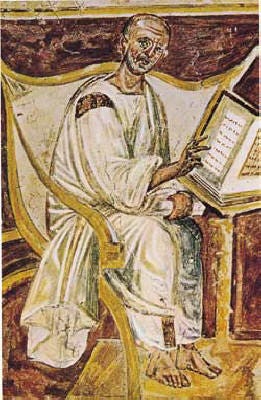
Although I wince at the very idea of Church moral authority (my parents put me in Catholic school and I am still recovering…twenty years later), I decided to start the post this way because Leo is an Augustinian, which means he knows and reads Latin, unlike his predecessor. This order is based on the teachings of Saint Augustine, a bishop from Hippo, in Roman North Africa, one of the most influential thinkers in European philosophy.1 Among his many writings the most famous are the Confessions, in which he wrote:
Men go abroad to wonder at the heights of mountains, at the huge waves of the sea, at the long courses of the rivers, at the vast compass of the ocean, at the circular motions of the stars, and they pass by themselves without wondering.
WHAT DOES IT MEAN TO BE HUMAN?
To wonder at the curious being that is human in all one’s aspects is the task of the humanities. People used to think that the humanities can offer meaningful contributions to this debate but the number of advocates for history, literature, philosophy and the arts seems to be falling in these troubled times. Those of us working in the humanities are constantly pressed to justify our existence, not by teaching and research but by filling forms and Excel sheets, building mountains of paperwork and conducting pointless reforms, evaluations, and impact exercises. The humanities have been singled out for cuts in higher education for at least a decade now with whole departments shut down and tenured faculty fired.
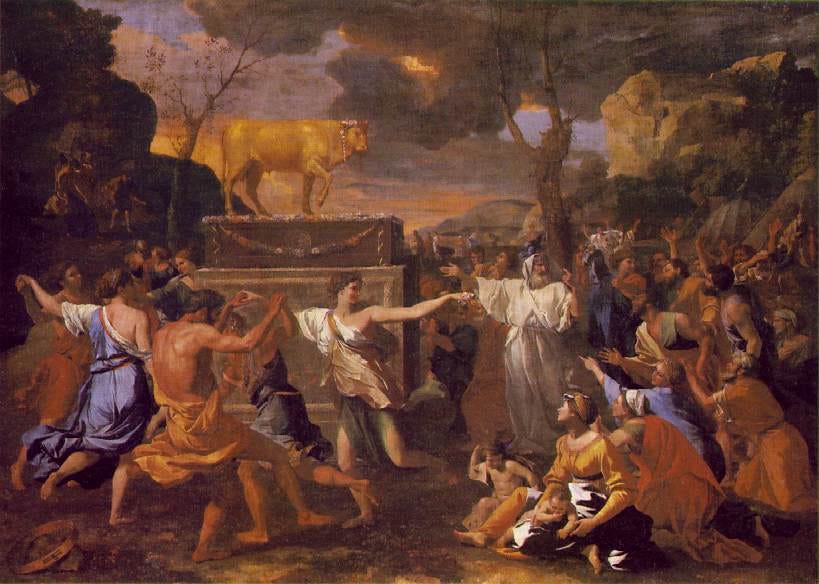
Of course, no one is asking these questions about the study of economics, law or business. Money is the golden idol that decides who gets funded and which studies are profitable, as though universities were training schools or factories required to produce degrees that always lead to jobs. But is it true that a degree in the humanities won’t get you a job?
There is a widespread belief that humanities graduates are less likely to be employed than graduates with other degrees and that all humanities programmes are a burden on the university budget. Both falsehoods have been recently debunked by my friend Lauren Donovan Ginsberg in her excellent post on Pasts Imperfect. For example, recent data from the Federal Reserve Bank of New York show that those who major in philosophy, art history, or languages are less likely to face unemployment than majors in, for example, computer engineering, physics, chemistry, or computer science.
I taught classics, literature, history and mythology in six different countries and I can say with confidence that interest in these subjects is not waning. There are thousands of young and old people, from Japan to the USA, who really want to know about the ancient world and study literature and history. The problem is not a lack of interest but a lack of understanding on the part of the administration, politicians and bureaucracies running universities as though they were machines.
Once the golden calf of Money is established as the only criterion of value, humanities become a target and are dismissed as ‘useless’, ‘outdated’, ‘posh’, ‘impractical’ and whichever label you can imagine. If one applies the criterion of utility qua profitability then humanities are not making as much cash as business. But is money all that we have to offer one another as human beings?
If you look at ideas unfolding on a large scale, i.e. the big picture, you see that it is the humanities that shaped societies long before the modern sciences emerged on the scene. The founding fathers of the United States of America wrote the Constitution looking to classical models. The very idea of the Republic is a Roman one and the checks and balances that are currently being strained to breaking point were designed based on their reading of ancient historians, Thucydides, Livy and Tacitus.
One can say the same for democracy, nationalism, the individual, freedom and the soul and other concepts that can be traced to their ancient roots and developed by generations of thinkers, concepts that we take for granted, as though born with them by nature. For better or for worse, all of these were created in antiquity and meant different things to different people over the ages.2
Why does the study of humanity need to justify itself? In an age of AI what can be more important than preserving, studying, even cherishing what it means to be human? Are the humanities totally useless?
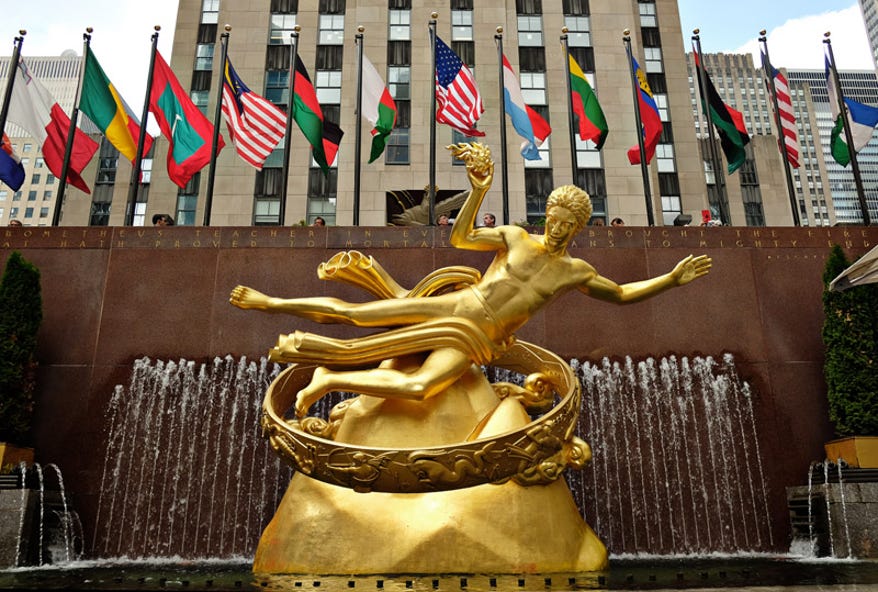
Well, it depends on what one considers to be useful in the first place. The ancient Greeks explained the origins of civilisation through the myth of Prometheus, who gave humanity fire and the technical arts. Yet they also understood that technological power alone cannot tell us how that power should be used. The tragedy of Prometheus is that technical power raises questions that only critical thinking can answer. Questions of meaning, justice and the good life belong to a different domain. In this sense, the humanities are not an alternative to science and technology but their necessary companion.
Perhaps the best answer to the question of why study the past was given to me by accident by a GP several years ago when I lived in Italy. When I first came into his office to register, he asked me what I did. His response to my occupation surprised me: “That is truly very important.” As I rarely hear this from people I just met I had to ask why. He replied: “You know why? Because you know this world could be completely different.”
This may seem banal but studying different time periods and societies does reveal that the world we take for granted can and will be changed. We do not need to simply take the script given by the elites and follow it blindly into submission. We do not need to all fit the same model that worships at the altar of profit and demands everyone work themselves to extinction and have fun at the same time. We do not need to follow the latest trend and have an Instagram account with all our perfect photos. There is no god demanding these things but our desire to be a part of the flock. And yes, our animality is also an indissoluble part of our humanity.
ROOTS AND BRANCHES: THE LOTUS-EATERS
One of my favourite ways to express the necessity of exploration in literature, history, philosophy, etc. is the model of the tree. One can observe the tree, eat its fruit, and even cut its branches without realizing how it works. The key to the tree is in the roots. The humanities seek to understand the entirety of the human tree, including the roots. The poet T.S. Eliot expressed this wonderfully in his The Waste Land:
What are the roots that clutch, what branches grow
Out of this stony rubbish? Son of man,
You cannot say, or guess, for you know only
A heap of broken images, where the sun beats,
And the dead tree gives no shelter, the cricket no relief,
And the dry stone no sound of water.
Without literature, history, philosophy and the arts there is nothing but “a heap of broken images”, the sheer veneer of glitz, the fake lives created on Fakebook (sic!) and the belief that things are exactly as they should be, drifting on the shallow waters of complacency and delusion.
The danger is not unlike that faced by Odysseus and his crew in the land of the Lotus-Eaters. Those who tasted the mythic lotus with its narcotic properties forgot their homes, their past and even their purpose. A society that abandons history, literature and philosophy risks a similar amnesia. The humanities preserve centuries of learning and remind us of values and truths that run deeper than flickering lights and passing trends.
Perhaps this is the true reason for endless attacks on the humanities from so many directions. The humanities reveal unsettling truths about the human condition, things that we would rather not ponder on such as our animality or the fluid nature of our very existence.
As Peter ciccariello writes in a recent post:
In this light, AI and transhumanist systems function less as mirrors of our anxieties than as forced reckonings with them. The “other” unsettles us not because it is truly alien, but because it makes visible what we have long preferred to leave implicit: that the definition of human has always been negotiated, contested, and subject to revision. The anxiety is real. But its object is not the machine. It is the discovery that there was never a stable human to protect in the first place.
OTIUM AND THE UNIVERSITY
The study of humanities sits awkwardly in a world centered on the pursuit of capital. Many of the attacks on the humanities stem from a belief that universities should be prep schools, training people how to do things, not centers of learning for the dissemination of ideas and development of critical thinking.
In ancient Rome, otium, the concept of leisure, denoted freedom from practical and political obligations and the opportunity to devote oneself to intellectual, philosophical, or creative pursuits. Rooted in the Greek notion of scholē, from which the word “school” derives, it referred not to idleness but to a state of contemplative reflection regarded by ancient philosophers as essential for the cultivation of wisdom and the pursuit of truth. In contrast to negotium (public and business affairs), otium provided the conditions for intellectual inquiry and the contemplative life (theōria), which Aristotle considered the highest fulfillment of human potential.
According to Aristotle, scholē is a necessary precondition for the development of theoretical knowledge. He notes that mathematics first flourished in Egypt because the priestly class possessed the leisure required for intellectual inquiry. The same holds for the development of modern sciences. Scientific progress is not simply a product of individual genius. Figures such as Galileo Galilei and Isaac Newton depended on institutions and sources of support that provided the leisure necessary for sustained intellectual work. Universities, churches, wealthy patrons, and later academies created environments in which specialists could devote years to theoretical problems.
The whole point of the university is to provide social conditions in which certain individuals can devote themselves full-time to investigating questions that have no immediate practical utility. For example, Albert Einstein came up with his most important discoveries because he had the time to ponder on the nature of time, space, light, etc. But his theories had no practical application for a long time.
General relativity, developed between 1907 and 1915, was motivated by the desire to understand gravity and the structure of the universe rather than to solve a concrete technological problem. Yet a century later it underpins technologies such as GPS navigation. This illustrates a point that Aristotle himself repeatedly makes: the highest forms of knowledge are often pursued not because they are useful but because they are true. Practical applications may follow, but they are not the original motivation.
What I find most interesting as an aberrant academic is Einstein’s own reflection on his discoveries. When he developed special relativity he was working at the Swiss Patent Office in Bern rather than at a university. He later remarked that the job gave him the opportunity to think about physics without the distractions of academic politics. And he hit the nail on the head! Academia has developed a series of processes that serve as distractions from its original aim, which is the pursuit of truth for its own sake, primarily through research and teaching. Turning academics into apparatchiks and universities into prep schools betrays the original mission completely and makes it the stuff of bureaucratic nightmare described in Kafka’s Trial (German original: Der Prozess).
Perhaps the ultimate value of the humanities lies in their refusal to accept that the world must be exactly as it is. History reveals that societies change, literature invites us to inhabit other lives, philosophy questions assumptions that appear self-evident, and the arts uncover dimensions of experience that resist quantification. In an age increasingly fascinated by artificial intelligence, automation and efficiency, the humanities remind us that being human is not simply a matter of processing information or solving problems. To study humanity is to cultivate the capacity for wonder, reflection and self-understanding. The question is therefore not whether the humanities are useful, but whether a society that abandons them can still understand what it means to be human.
I was surprised to see how few people know about this when teaching my course on Roman religions last year. For example, Augustine’s writings were fundamental in the development of the concept of the individual in Europe.
And this is not to say that the ancients did it all better. Greek and Roman slavery practices are not models to follow. Idealizing the past is not the point.
No posts
Comments
Nothing yet. Say the first thing.
Sign in to join the conversation.