
In Christianity, mysticism appears in many different shapes. Some forms of mysticism draw from emotions such as devotion and human love, while other forms may be inspired by hatred and terror. One could be tempted to think only of mysticism connected to positive emotions as authentic. Here we question the range of legitimate forms of mysticism, and whether the source of Christian mysticism itself, the Holy Trinity, has been changed by violence and warfare.
In order to understand human emotion, from the Christian perspective we may begin with the emotions of God. There are no set emotional relationships of the soul and God in Christianity, though we do have some discussion of major religious emotions. The most frequently mentioned emotion is agape, divine love shown between God and mankind. It is described as God’s love of mankind (John 3:16; Romans 8:38-39), as human love towards God (John 13:34-35), and between human beings (1 John 3:16). It is the most mystical form of love, dealing directly with the soul and God. As Jesus instructs his disciples: “A new commandment I give to you, that you love one another: just as I have loved you, you also are to love one another. By this all people will know that you are my disciples, if you have love for one another” (John 13:34-35).
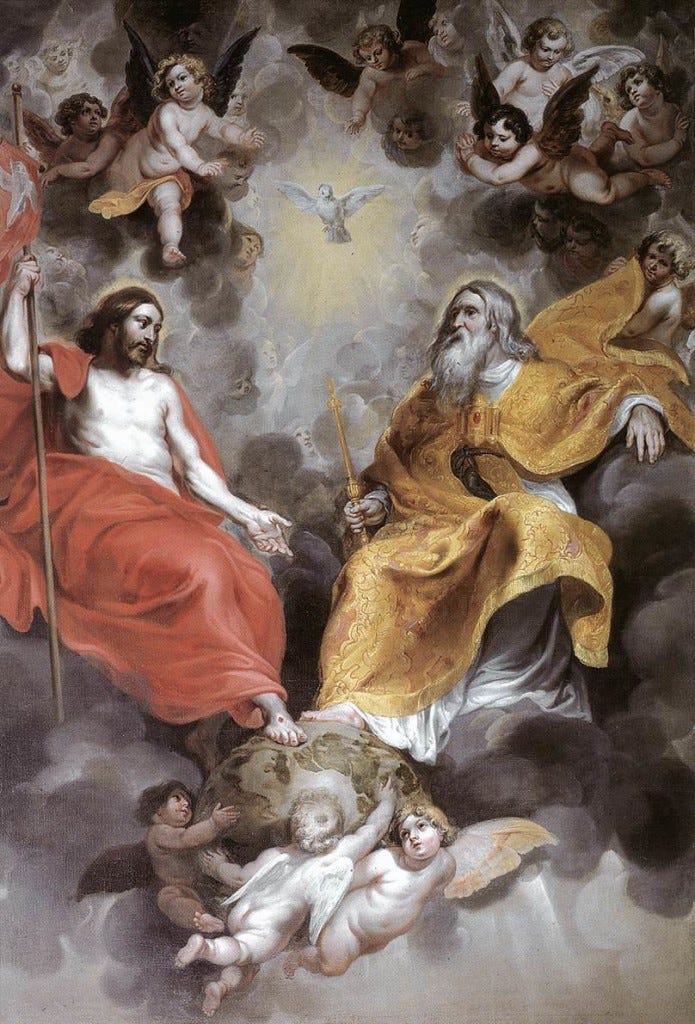
C.S. Lewis describes three other types of love found in the Bible: storge (family love), philia or phileo (friendship), and eros (erotic love, as between man and wife in Proverbs, and the king and his bride in the Song of Solomon). All of these can be understood as religious emotions, though agape would be the most directly mystical.
However, in many strands of modern Pentecostal and charismatic Christianity, mystical love is understood in a different way. It is being filled by the presence of the Holy Spirit, but in this case the Holy Spirit is not the comforter, the spirit of love and peace. It is the spirit of war and violence.
In the New Testament, before his arrest Jesus comforted his disciples with the promise of the Holy Spirit. He said, “I will ask the Father, and he will give you another Counselor to be with you forever—the Spirit of truth” (John 14:16-17, NIV). “Counselor” was translated from parakletos, a Greek word meaning advocate, helper, or comforter. The Spirit would come to baptize people, and bring a set of spiritual gifts, according to Corinthians 12:8-10: Wisdom, Knowledge, Faith, Healing, Miracles, Prophecy, Discerning spirits, Tongues, and Interpreting Tongues. The Holy Spirit is considered to be a person (one of three in the Trinity) and his fruit is love and peace, joy, kindness, goodness, gentleness, and self-control (Galatians 5:22-23).
However, in many modern groups, the understanding of the Holy Spirit has changed, and the understanding of a mystical relationship with it has also changed. In groups following the Prosperity Gospel, spread through televangelism and many megachurches, the blessings of the Holy Spirit are shown through wealth. Thus, rich people are mystically united with God through the blessings of the Holy Spirit. Material and especially financial success is seen as evidence of divine grace or favor. This belief suggests that Christians should exercise dominion over the material objects around them, with Biblical lines about ‘abundant life’ and ‘blessings’ having a directly materialist interpretation. Poverty and illness are curses, while vanity is reasonable. Greed becomes a religious emotion, for it is desire for God’s blessings, increased by ‘miracle oil’ and ‘positive confession’ which let God know exactly what the Christian needs. After all, Jesus is believed to have died on the cross to save people from poverty.
A ritual associated with the Holy Spirit is the process of anointing, usually with oil. The issue of anointing becomes problematic in the more militant strains of charismatic thought. The concept of anointing comes from the Hebrew Bible, in which prophets, priests, and kings were blessed by the ruach Elohim, later interpreted by Christian theologians as the Greek pneuma, the Christian Holy Spirit. But the ritual has been appropriated in many modern groups for blessing violent thoughts and actions. Such anointings may be corporate or individual, with many subtypes. For instance, the Mimshach anointing will cause everything one touches to increase, and the anointed one will experience greater levels of success, material gain, health, and power. But the most important anointing is about those who fight demonic evil.
From this perspective, the Holy Spirit is not primarily about love and salvation, it is about conflict and war. In early Christianity, we saw Inquisitions and Crusades, but these were not mystical events. They were about obedience to authorities, both religious and secular. But in many charismatic groups, members are mystically transformed into the ‘Sword of God,’ and the Holy Spirit fills them not with love but rather hatred of enemies understood as demonic. Such ‘warriors for Christ’ are filled with holy hatred and the desire to destroy, wearing supernatural armor and using Biblical lines as paranormal weapons in the Army of God.
This spiritual warfare is particularly visible in the Deliverance Ministries, in which members identify with Jesus casting out demons and become empowered by the Holy Spirit, which allows them to see and hear demons and identify them, as well as cast them out of people and objects. Demons may infest or oppress the person, as well as possess him or her, and it is through supernatural warfare that they are removed. The modern ‘third-wave charismatic movement’ advocates for a militarized style of spiritual warfare to be enacted by “anointed prayer warriors,” and has given rise to spiritual warfare boot camps in which recruits are trained as soldiers to do battle against demonic influence. For soldiers, compassion towards enemies is a bad thing, and condemnation of ‘toxic empathy’ makes sense in such situations. Kindness is believed to make people weak.
This militarization becomes important because demons are believed to be hiding everywhere- in houses, cars, games, books, and films, among other places. Exorcisms chase these demons away, but the exorcist must be filled with the Holy Spirit for the process to work. Anointing is a ritual way to become possessed by the Holy Spirit, to transform the ordinary person into a Soldier of God, a warrior chasing demons out of unlikely places. Violence is not limited to a battlefield, as the whole earth is a battlefield. (Note: during field research, an exorcist volunteered to cure my backache by chasing my backache demon out of every finger and toe. By the end, the demon was supposed to be gone, but the backache sadly remained).
Thus, we have an alternative understanding of mystical possession by the Holy Spirit, not as the spirit of peace, but rather as the spirit of war. In these forms of modern Christianity, mystical theology is a problem. In the Prosperity Gospel, the soul desires the blessings of God, specifically those of wealth, and desiring such blessings is a good thing. Thus, mystical greed is good. Wealthy people are a later version of the Calvinist Elect, though while Calvin emphasized modesty and humility for the Elect, this gospel is about conspicuous consumption. As wealth is a sign of God’s blessing and agreement, pastors can preach obedience to wealthy but corrupt politicians, for God is on their side. Immorality does not count for those who are Chosen.
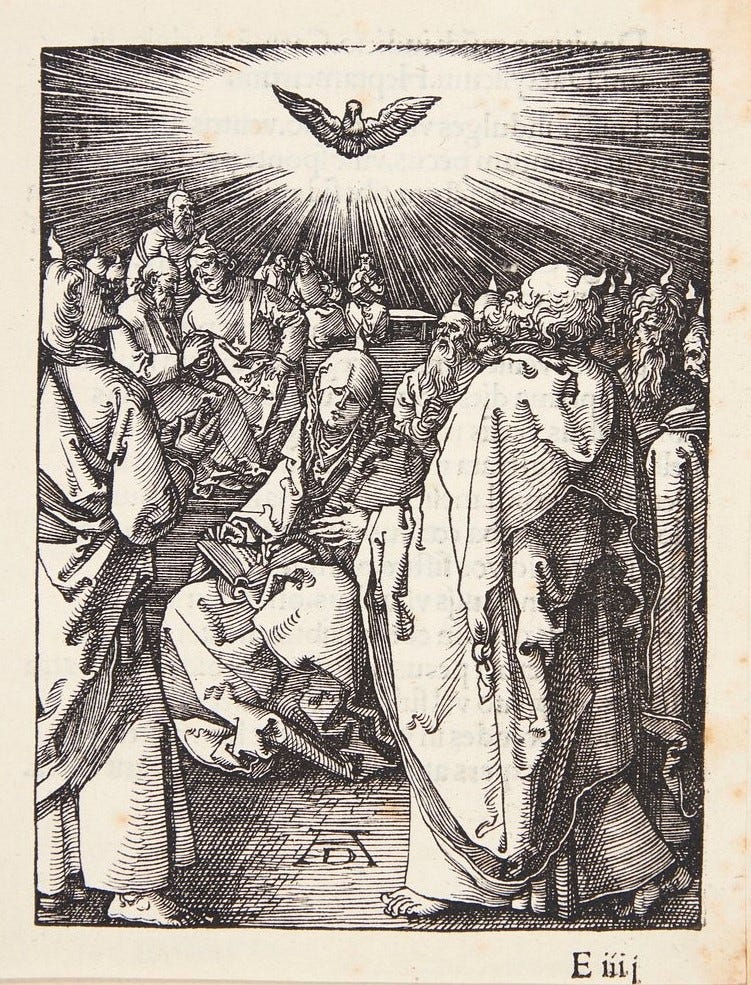
In the Deliverance groups, mystical love mixes with mystical hatred. It shows a return to some early dualistic models of Zoroastrianism and Gnosticism, where God created the world, but the world was not good- for matter was full of demons. Being filled with the Holy Spirit prepared the person for war, and the Holy Spirit reveals itself through righteous anger and hatred of the demonic and unsaved; the person is ‘infilled’ by the Holy Spirit baptism. From this perspective, the major energies within the processions of the Holy Trinity (which reflect the Holy Spirit as the relational love between the three Persons of the Trinity, united by grace) are neither creative nor loving, but rather destructive.
Both of these are challenges for Christian mystical theology, when the Trinitarian energies become both materialist and harmful. Do we now have a Trinity marked by a shadow side of violence and warfare? Or even a separate shadow Trinity, with its processions of darkness rather than light? In this situation, God the Father is more concerned with killing Egyptians and Babylonians than creating the world, while God the Son has his words ignored in favor of his overturning tables at the Jerusalem Temple, and God the Holy Spirit inspires souls to conflict and strife.
Very little work on the nature of the Trinity has been done in the modern field of Christian mystical theology. But if charismatic Christians today see themselves as channeling the energy of God, they need to have some understanding of what it is that they are channeling. Is mystical union with the Holy Spirit an experience of love or hatred? Should its presence be shown through compassion or spiritual warfare? Should we have an Army of God that follows the wealthy and powerful rather than the kind and merciful? When we see modern Christian possession by hatred and war rather than peace, perhaps we need to look back to medieval ideas of demonic possession and the ways that people learn to distinguish between good and evil. When people spend too long thinking of an enemy, they may start to resemble him or her.
Is empathy a bad thing? As a recent site notes: “Compassion warms Satan’s heart.” But compassion cannot be separated from the New Testament, from the stories of the Good Samaritan, the rich man Lazarus, and the Sermon on the Mount. Perhaps if we focused less on the demons in others, we might see their better angels.
Prof. June McDaniel is Professor Emerita in the History of Religions at the Department of Religious Studies, College of Charleston. She holds an Master of Theological Studies from Emory University and a PhD in History of Religions from the University of Chicago Divinity School. Her research areas are mysticism, religions of India, psychology of religion, women and religion, and ritual studies. She obtained grants from the American Institute of Indian Studies and was a Fulbright Senior Research Scholar. She served as chair of the Mysticism Group of the American Academy of Religion for twenty years and co-founded the AAR Anthropology of Religion Group. She is the author of three books on India, a co-edited volume on mysticism, and numerous articles.
No posts
Comments
Nothing yet. Say the first thing.
Sign in to join the conversation.