
A note before we start. This one is free, for everyone. I think some stories just need to be shared, without a gate, and this one is one of them.
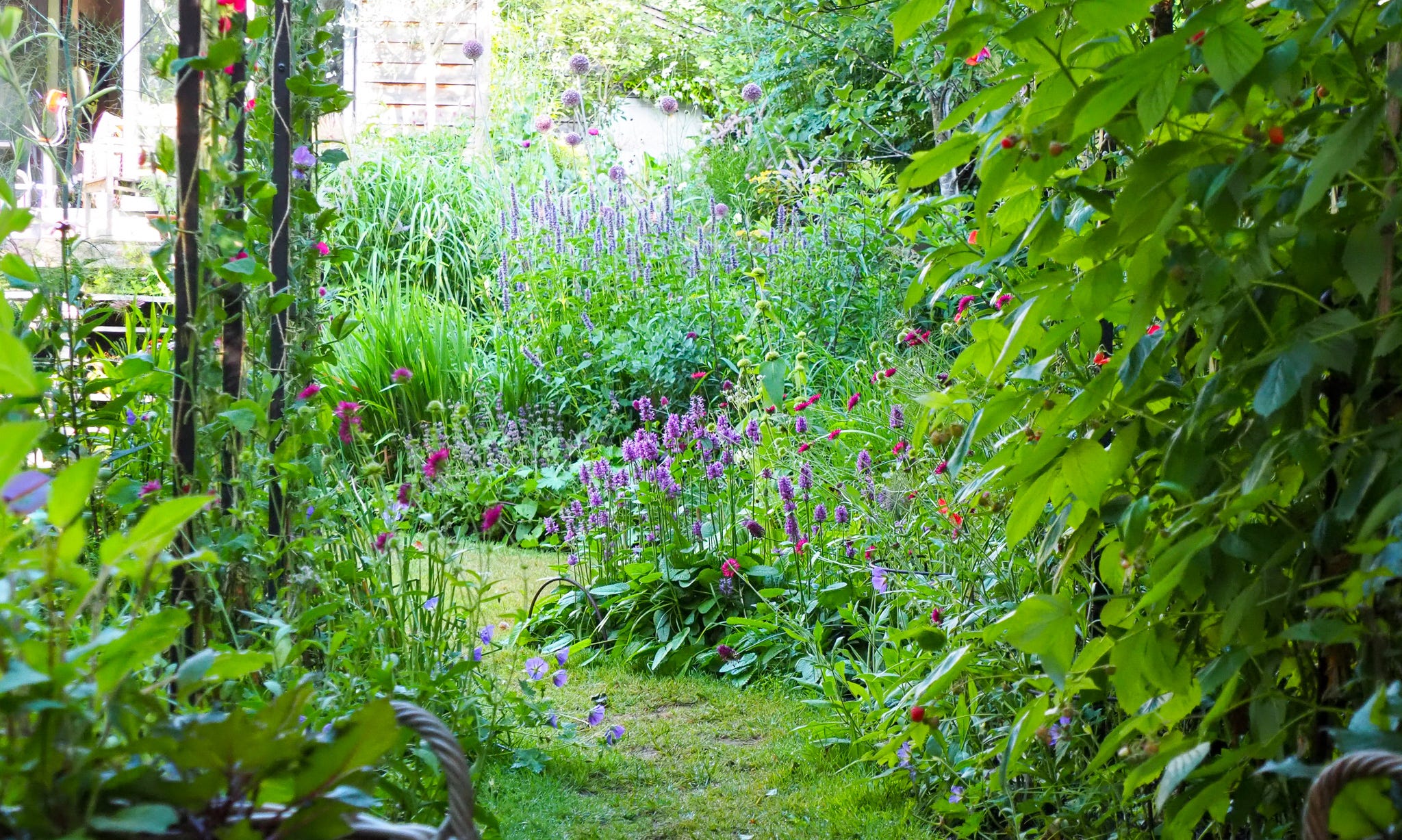
I was not supposed to end up here.
I don’t mean that in a dark or regretful way. Just, growing up there was no particular reason to think this is where I was headed. Girls from working class backgrounds don’t often end up where I have. I’ll explain.
My dad was in the army, so we moved every couple of years, Windsor to Germany and back again, the sort of childhood where you get very good at making friends quickly and very bad at putting down roots.
My mum was just eighteen when I was born. They were YOUNG, my parents. Busy. Money was short, they both worked hard. So, we were slightly feral, my sister and I, which looking back I think was completely wonderful.
The only gardening I experienced as a child was my grandfather’s. Jack. He was a miner in Leeds, a quiet man, with not many words, six children on a small income and a postage stamp front garden he cut with kitchen scissors. Kitchen scissors! There was an allotment too, propping up the food for the table. He didn’t chat much about the garden, or anything much if I’m honest. He just did it.
And I can see now that it was his thing. His quiet world. The place he went to be himself. He spent his days underground, in the dark, and the garden offered him time in the light and a very particular kind of freedom.
I didn’t understand any of that at the time. I just knew that visiting him felt, well, just different.
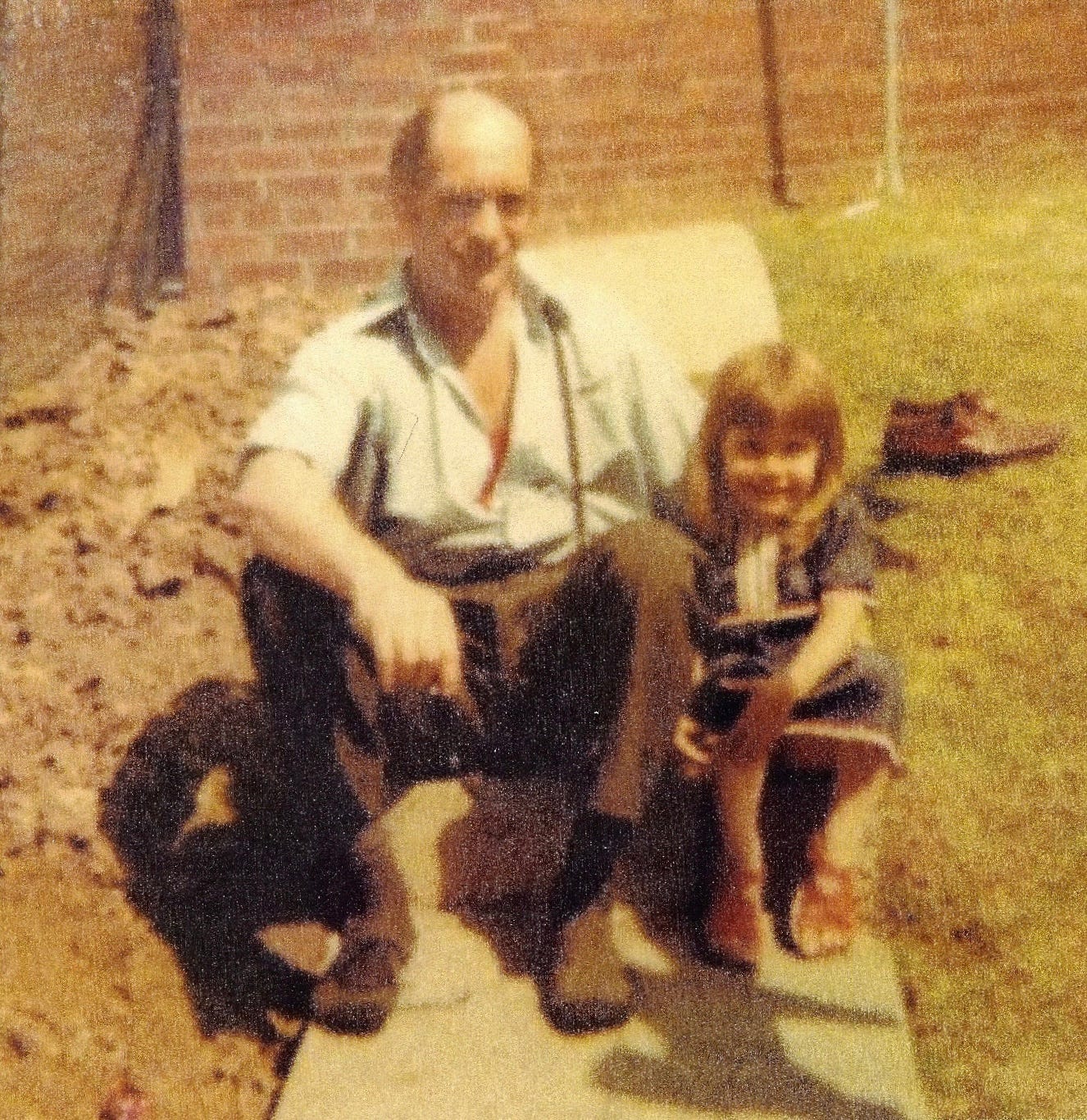
I’d sneak downstairs while he was making a gigantic pot of tea for the marauding family upstairs. He had a tray he used to carry both tea and toast up together - and there’d always be a great pile of thick white Hovis toast stacked next to the teapot, more butter than bread. I’d snaffle a piece before it made it up the stairs. We were all squished into he and my grandma Rita’s tall tiny back-to-back terrace, one room on each floor, the whole lot of us.
I think he actually liked the company. I know I liked the calm escape. And whilst we chatted, I asked him about his job, he’d say, Rie (that’s what my family call me) do a job you love and you’ll never work a day in your life.
Slightly overshadowed by us Powells, all loud and trying to be heard amongst the noise of a big family, my Grandad was telling me something important. That I had choices. That no matter where I came from, I could have a life that was different, colourful, plentiful. He was right.
There was no garden to speak of at home. My dad had avoided the pit by joining the army at just sixteen. The Life Guards. (His brothers who joined the REME thought he chose the ‘posh’ option. He was ribbed a lot about that. He didn’t though. He just wanted the option with the most opportunity.)
Behind the married quarters on army estates were identical lawns, edge to edge, separated by chain-link fences, their occupants ephemeral and constantly on the move.
That’s not to say that some form of actual gardening never happened. One day Dad decided he wanted to sow some seed. I was about eight. His one excursion into growing things ended abruptly when he stood on a rake and it bounced up, comedy style, and lamped him one right on the nose. He threw it across the lawn in a cloud of unrepeatable language. And that was the end of that.
So, our garden became just ‘outside’. We played in the open green spaces beyond the estate’s streets instead: fields, lanes, paths, trees. Screaming through hazes of black flying ants (there were clouds of them, they were definitely a regular occurrence back then). It suited me perfectly.
At night I read voraciously. Enid Blyton, then Malory Towers. Immersed in the bucolic lives of other children where money wasn’t scarce and there were dogs, cats, and fishing. I asked if I could go to boarding school. I wanted to learn. I wanted to be Darrell, Sally or Alicia, to share pranks and adventures and most of all a sense of belonging.
Somehow, my parents negotiated the army subsidies and off I went. Five years in Derbyshire at Ockbrook, a Moravian school that has lately closed its doors for good. But my god, did it open a lot of doors for me.
York stone flagged floors, bubbling radiators, so cold in the corridors in winter you could see your own breath. I learned to forge my mum’s signature so I could sign up for trip after trip after trip. Ballet on Monday, opera on Tuesday, a play on Wednesday, the cinema on Thursday. I played tennis, netball, hockey, threw myself around in athletics and gymnastics, joined the choir and the madrigal group, took up the trumpet AND the piano. To say I soaked everything up was probably obvious in my parents’ end of term bills. My parents, needless to say, were not best pleased.
Weekends were Duke of Edinburgh, walking the Derbyshire peaks, Mam Tor, Dovedale’s limestone ravines, the well dressings at Bakewell. There were overgrown school grounds to explore, rhododendrons to set up camp in (and later to smoke contraband cigarettes in), and a kitchen garden where the ancient gardener grew vegetables for the table, just like my grandad had. I adored art, music and English literature.
Then, after A levels, off I went to Trent Polytechnic to study textile design. Where I was, if I’m honest, considerably more interested in the social life than the course. This was the late eighties, early nineties. Rave culture. Without the discipline of the school routine, I was still looking for something, some kind of ENERGY, some kind of outside-myself feeling, and I found it. Gawd love me, did I find it! I was having the time of my life in stone quarries, hillsides and in squats. And also, truth be told, I was coming apart a little at the seams.
I left. Which felt incredibly easy at the time. The course was more theory than the artistic excitement I’d imagined after years of studying the more serious A Levels of English Literatire, History, Geography and General Studies/ I was considerably more interested in the party than the studying. I immersed myself further in counter-culture instead. Which, with the benefit of decades of hindsight, was absolutely the right thing to do. Even if the months that followed weren’t exactly my finest - and perhaps explains why, one Saturday night, my friend Pete drove up from London unannounced, knocked on the door, looked at me and said: you’re coming with me. I didn’t argue. Sometimes someone sees you more clearly than you can see yourself, and the only sensible thing to do is get in the car.
Some three years later we were travelling the world. India first, then Nepal, then the slow drift through Southeast Asia. By the time we got to New Zealand I’d been living out of a rucksack long enough that I’d stopped thinking very hard about what came next. We hired a camper van. We drove. We laughed a lot. I had absolutely no plan.
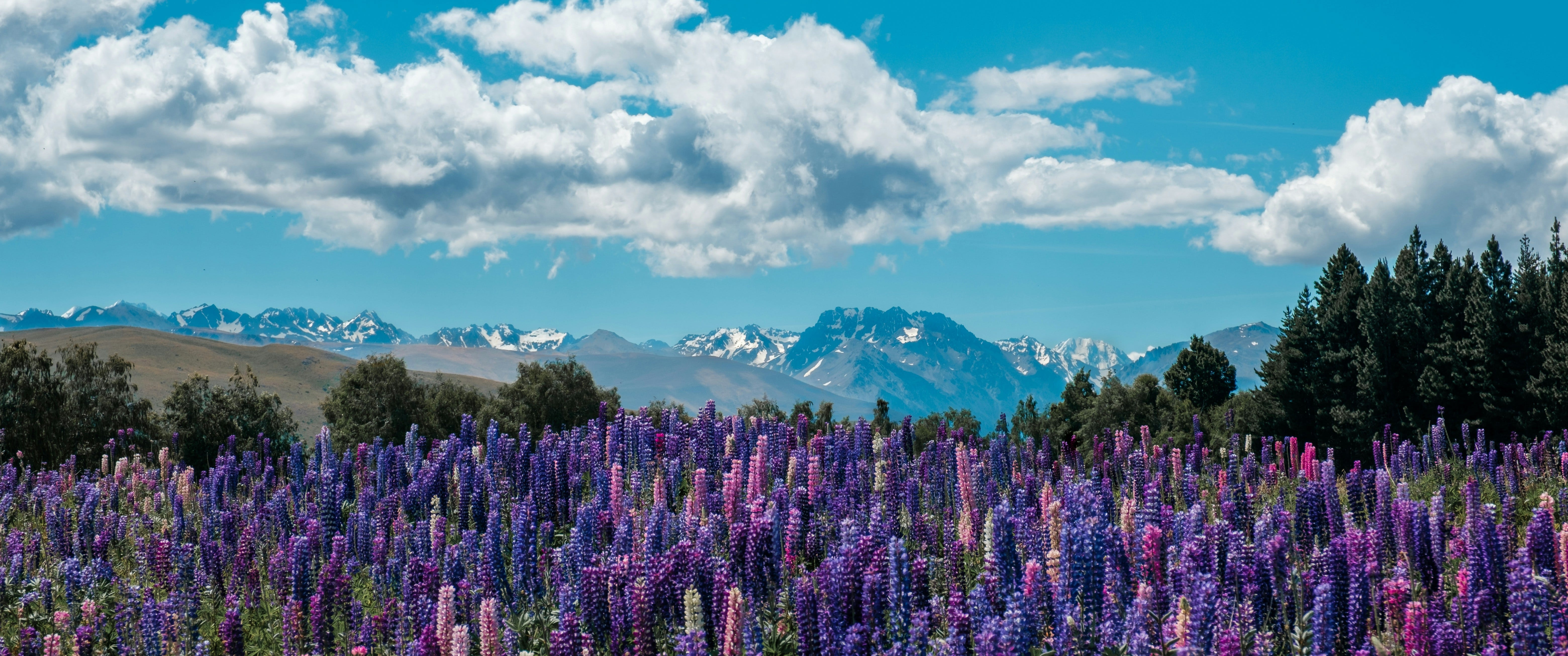
Then somewhere on a hillside in New Zealand, among what felt like an entire ocean of lupins, I had an epiphany.
I know that might sound overly dramatic. But I can’t describe it any other way. One minute I was laughing, taking my surroundings completely for granted. The next I was standing in front of this explosion of colour, impossible purples and pinks and creams, completely uncontrolled, absolutely alive, stretching as far as the eye could see, and I was completely, intoxicatingly smitten. The feeling became a drug.
I thought: THIS. I want to be a part of it. Not the lupins specifically. But THIS. Being involved with plants. Hanging out with Mother Nature, learning her secrets, being part of something three-dimensional and ever-changing and slightly out of your control. I wanted to soak it all up through every single pore.
Back in the UK, a forward-thinking careers adviser suggested landscape. Gardens. Design. I enrolled at Capel Manor College in Enfield, North London.
Here’s the rub: garden design was NOT the known industry it is today. Not remotely. People looked at me a bit blankly, slightly puzzled, perhaps a bit sceptical. There was definitely a sense of: you’re going to design GARDENS? As a JOB? My dad told people I was going back to college to study something to do with farming. Yes. Really. It just wasn’t well known as a profession. I don’t think anyone was being unkind about it. They just didn’t quite understand what I was embarking on. The honest truth is, I barely did myself. I just knew I was more excited about this than I’d been about studying for years.
But before Capel Manor, there was Janet. Pete’s mum. The woman who, alongside her son, genuinely believed in me. Janet Morgan had a proper garden, and when I moved in with Pete, suddenly I had a garden too. For an army kid who’d moved every two years, to have a piece of ground that was MINE, that I could plant things in and watch them come back the following year, that was HUGE. I hadn’t quite realised how much I’d needed it.
Janet gave me plants from her garden. She just gave them, quietly, the way good gardeners do. Divisions and cuttings and bits of this and that. She built on something that had been there, hidden and waiting to be cultivated since Jack’s kitchen scissors and his Leeds allotment, something I’d never quite been able to name before. My own love of nurturing living things. She saw I needed direction and she just, quietly, watered my growing into myself.
I think I understand now why it mattered so much. I’d spent my whole childhood never quite landing anywhere. Moving every two years, boarding school, dropping out, travelling. I was, rather like seeds, just looking for somewhere to take root. That garden in a London suburb was the first place I found where it actually felt like I could
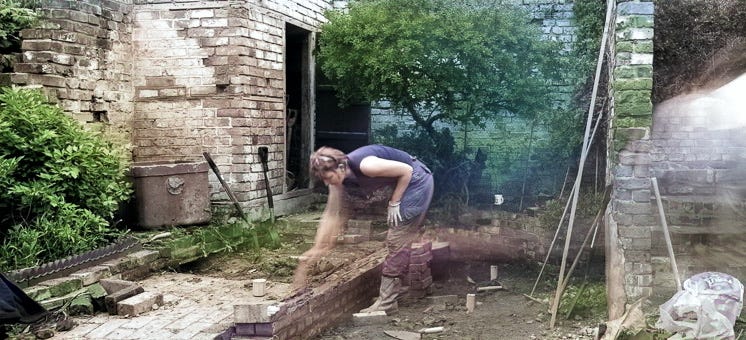
When I went to Capel Manor and fell head over heels in love. Properly, from day one. I remember standing in the grounds on that first morning, slightly pinching myself, looking at a border and thinking WOW. I understand this.
Not the Latin names, not yet, not the design theory or the soil science or the hard landscaping. But the intention of it. The feeling it was trying to create. I thought, I speak this language. I just need someone to teach me the words.
I graduated with distinction, did a stint at Tendercare Nurseries in Uxbridge under the watchful eye of Angela and Andrew Halksworth (extraordinary people, extraordinary place), and set up the studio in 1998. I have not looked back once.
I wanted to make the world better. I wanted to create spaces for people to actually live in, to support the environment, to make a difference. I still want all of those things. Thirty years in and not one single thing about that has changed.
Whilst I was at Tendercare, something unexpected happened.
Angela, my boss, had replied to a fax that arrived on her desk without telling me. It was looking for television presenters for Garden Doctors, a Channel 4 series, one of the very first garden design shows on tv. I found out when the phone rang. Despite the shock, I said yes. There followed rather a lot of television, a couple of books, and being PAID to travel to Iceland, Morocco and Istanbul to write about gardens. None of which I had planned. All of which I am grateful for.
And then I met Jules.
I gave up the telly, settled into the rhythm of being the garden designer I’d always wanted to be. Our first son Archie arrived. Gilbert followed five years later.
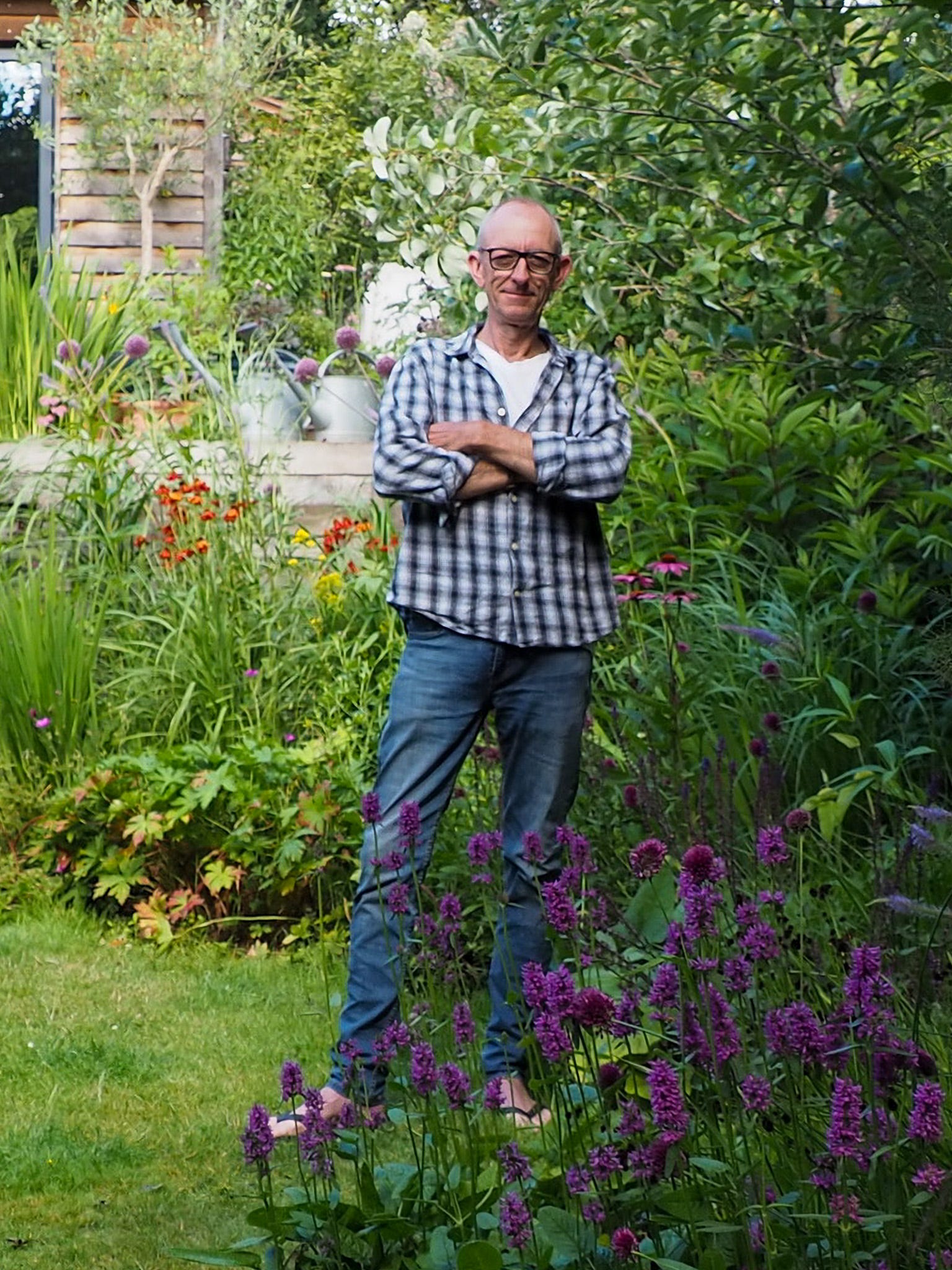
Jules gave up his job so I could chase my dreams. We were earning the same, Jules and I, nothing glamorous, just enough to get by. But he could see what I needed before I could properly articulate it myself. He just, quietly, stepped back and said: go on then. This is yours. Do it.
He meant it completely. Six months after Archie was born, Jules became a full-time house husband - school runs, packed lunches, the whole machinery of family life, held together by him so I could focus on the work. He even went to Capel Manor himself to study garden design, so he could better understand what I was doing and properly have my back. And he cared for the gardens of a handful of our clients, the ones with the larger projects, tending them with such quiet dedication that those clients adored him. Everyone did.
He was my biggest fan and my fiercest critic too. He’d sit at the kitchen table while I agonised over a planting scheme or a studio challenge and he’d listen, properly listen, and then he’d say: you already know what you want to do. Just do it. Whenever I wobbled, whenever something felt too big or too hard, he’d say it even more plainly: Get on with it. I want to see you fly.
The fear of not being able to pay the bills when you have a family to support is, it turns out, an extraordinary motivator. So is being loved like that.
God, I miss him.
I still think about that a lot. How he just stepped back and made room. How he never once made me feel like it cost him anything, even when it must have.
I think about Jack sometimes too when I’m in our garden. The quiet man in Leeds with his kitchen scissors and his coal-black hands and his tiny piece of ground that was entirely his. He didn’t tell me to become a garden designer. He didn’t tell me much at all. But he showed me that a garden could be a sanctuary. A separate world. A place where you got to decide what happened.
I got here the long way round, via raving and New Zealand and a hillside full of lupins and a woman called Janet who handed me plants. Via a careers adviser who saw something I couldn’t quite see yet, and a man who told me to fly.
Here’s the other thing about seeds. They don’t always germinate the first time do they.
Sometimes they need the right conditions.
Sometimes they need a little help.
Sometimes they need a little time in the dark before they know which way is up.
I reckon I was about twenty-three before I found my light. Thank heavens. I finally germinated into good soil and have been casting roots far and wide ever since.
OK. So, that’s the story. Or the beginning of it, anyway.
One more thing before I go. I want to see you. Come and join me for a live on the 18th or 19th July at 12.30 BST – let me know which date would suit you best and I’ll confirm the exact date very shortly. So, keep an eye out.
I’ve got something rather exciting to tell you about the following week, and I want to give you a proper tour of the garden first so you can tell me honestly whether it needs any last tweaks before my very special visitor arrive. That’s all I’m saying for now. Put it in the diary. Details to follow.
Was there a moment, a place, a person who showed you what you were supposed to be doing? Or are you still looking? Tell me in the comments. I read every single one. It might take me a day or two, sometimes a week, life as a single, full time working mum is pretty whirlwind, But when I fonally get a chance to grab a cup of tea, sit down and finally catch up, I genuinely relish every one.
Meanwhile, happy gardening.
All love as ever,

P.S. A heart tells me this is the kind of content you want more of. A share means another gardener finds their way here, and that genuinely matters to me. And the comments - well, that’s where this little community actually happens. The successes, the disasters, the “mine does that too” moments. Come and say hello.·
My Real Gardens is reader-supported. Every paid subscription makes this possible and keeps the garden gate open. If you’ve read this far and it meant something, do consider joining us on the other side.
If you’re new here: My Real Gardens is my personal gardening life, shared honestly, the successes and sometimes the spectacular failures, by a garden designer who’s been practising for thirty years but absolutely came to it the very long way round.
There’s a whole back catalogue over here for you to discover.
Every week, I record the piece as audio, which is perfect for garden pottering. And because this one is free, the audio version is free too.
If you want to know more about my own garden - the combinations, the colours, why I chose them and how you can copy them - my book A Year of Colour is photographed entirely in this garden. It’s dedicated to Jules. You can find it here.
Useful Links: Start Here | How I Start Every Garden Design | Who wants a low-maintenance garden? | My 5am heatwave rounds | A Year of Colour | A Year of Color US Edition | Search The Complete Back Catalogue | My Real Garden Instagram | AMPG Instagram
Comments
Nothing yet. Say the first thing.
Sign in to join the conversation.