
The Industrial Revolution transformed Britain, but at a cost. By the 19th century, smoke filled its cities, and tuberculosis had become one of Europe’s deadliest diseases. Physicians began recommending an unexpected remedy: spend the winter somewhere warm.
So Britain’s aristocracy packed their trunks and headed south. Their destination? Nice.
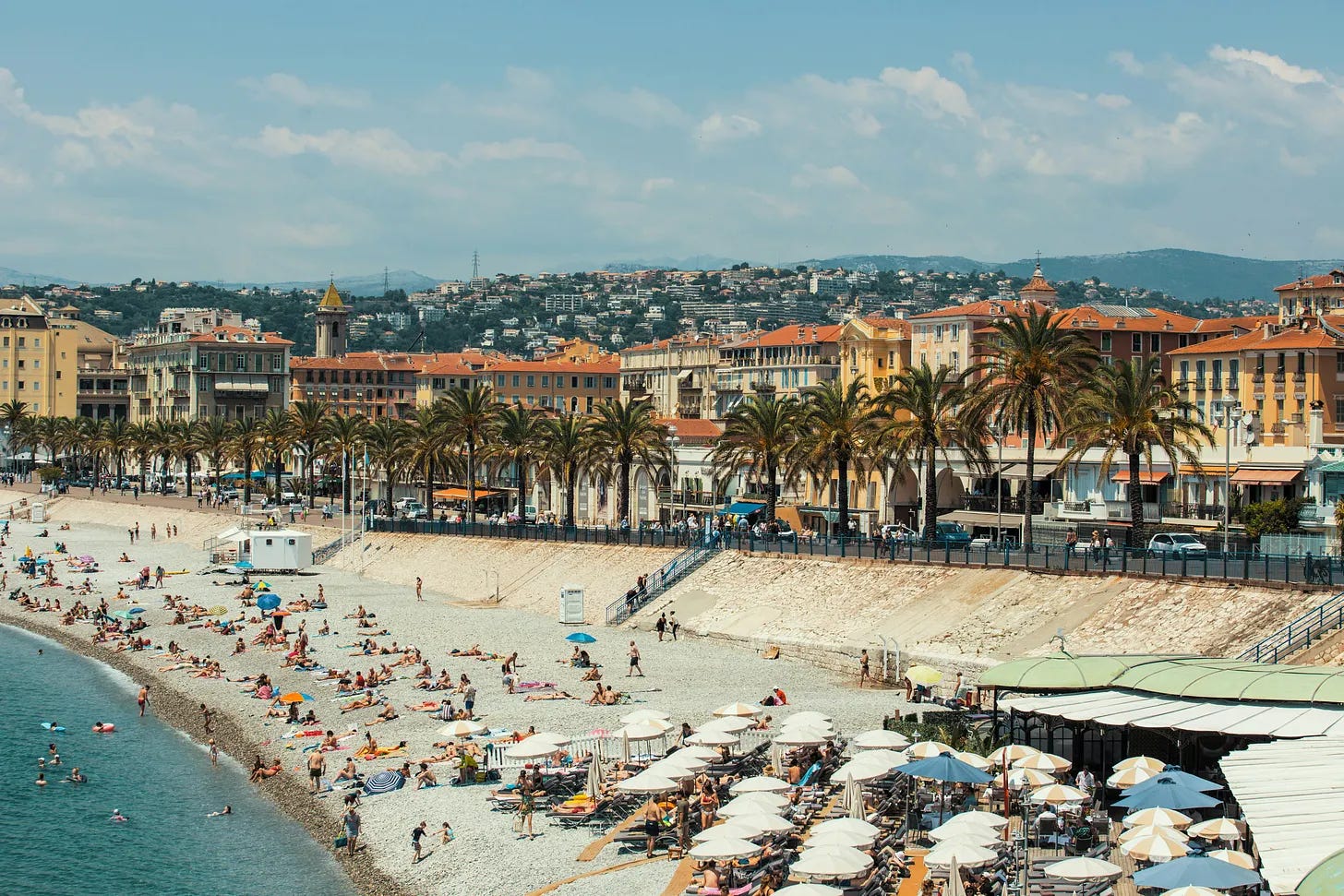
In fact, by the late 18th century, Nice was already home to a thriving British community. They had their own newspapers, theaters, churches, and even real estate agents.
Then disaster struck.
In 1822, an unusually severe frost destroyed the region’s orange groves, leaving many local families without work. The British community decided to help. To create employment, they financed the construction of a seaside promenade stretching along the Bay of Angels.
It became known as the Promenade des Anglais (English Promenade). Today, it’s one of the world’s most famous waterfront boulevards.
The British aristocracy wasn’t the only one enchanted by Nice. Queen Victoria fell deeply in love with the city. Between 1882 and 1899, she visited nine times, spending more than a year there in total. During her very first stay, she wrote in her diary:
“The whole scene, with the mountains rising behind, and the deepest blue sea in the foreground, is really ideal and brilliant beyond belief. I have not time, nor will I attempt to describe it, for no one could believe it, who has not seen it.”
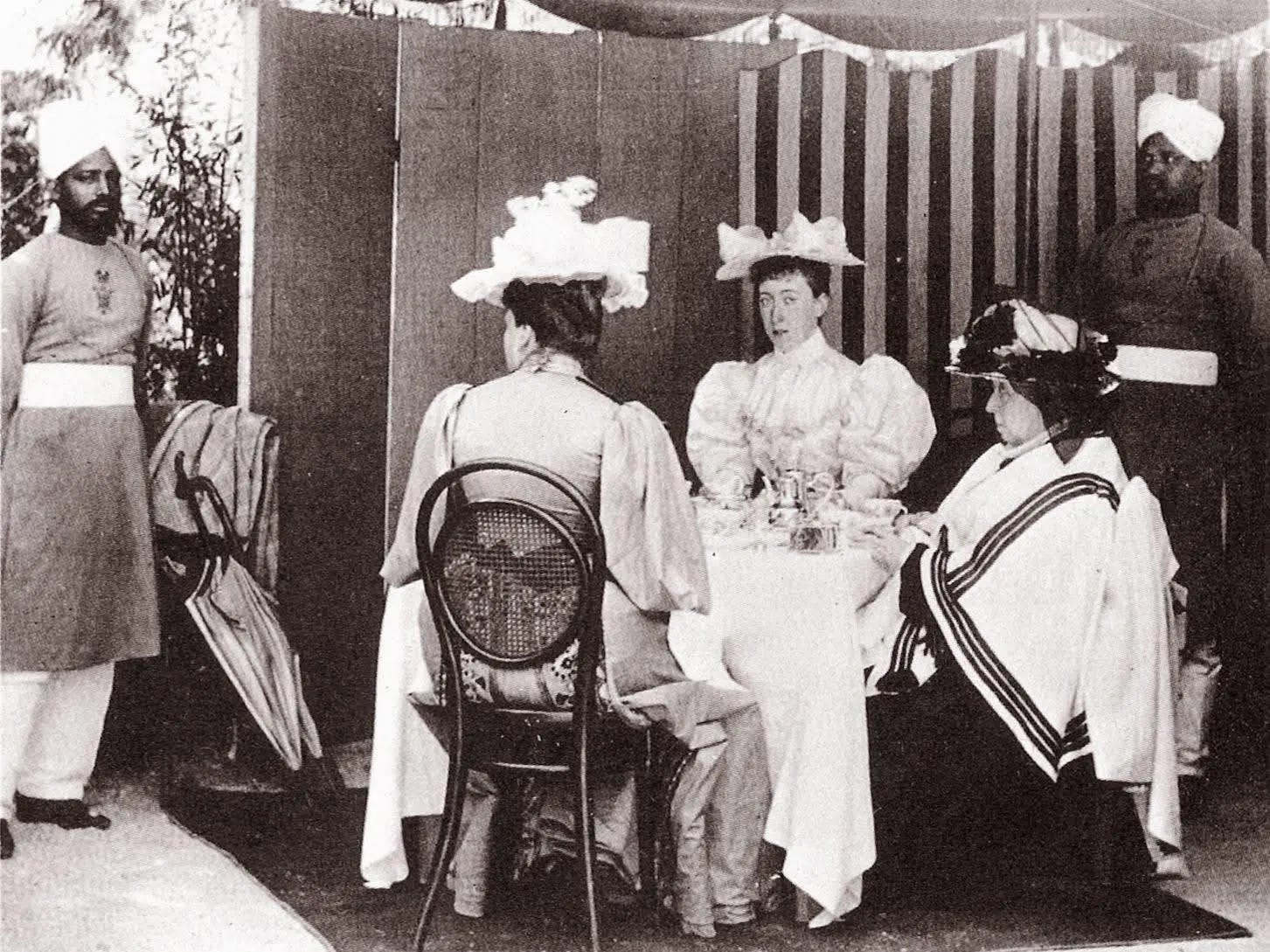
Victoria took her journeys to Nice very seriously. Before each visit, her furniture, bed, horses, and carriages were shipped ahead of her. Because walking had become difficult in her later years, she even traveled through the city’s narrow streets, where her larger carriage couldn’t navigate through, in a small cart pulled by her beloved donkey, Jacquot.
Her affection for Nice became so well known that a hotel was built especially for her: the Hôtel Regina. She traveled with an entourage of around one hundred people, and whenever she arrived, the hotel’s entire western wing was reserved exclusively for the royal party. That’s dozens of rooms!
The building still stands today, although it has since been converted into private apartments. It also has another remarkable connection to history: Henri Matisse spent the final years of his life there.
It’s said that even on her deathbed, Queen Victoria spoke of Nice. According to the story, she sighed, “Oh, if only I were at Nice, I should recover”.
Whether a city can truly heal illness is impossible to say. But one thing is certain: Nice has a way of slowing you down, helping you breathe, and restoring your spirit.
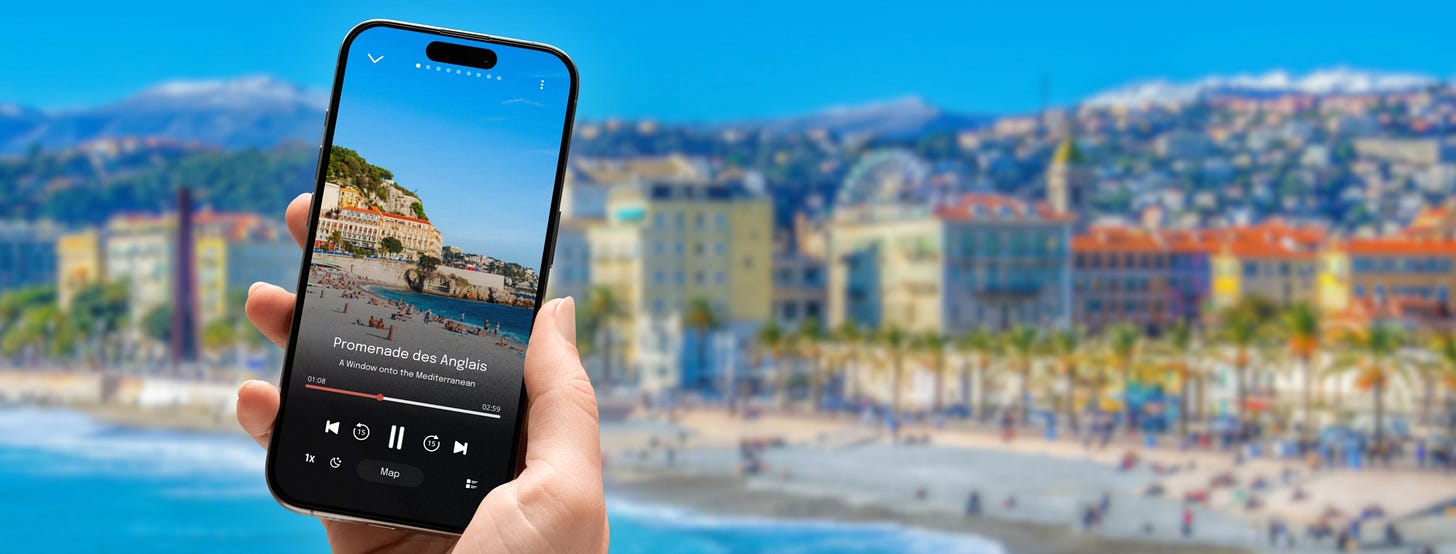
If you’d like to discover Nice step by step, wander its narrow streets while uncovering its history and local legends, and take a break at some of its most charming cafes along the way, Piri app’s new audio tour, A Window onto the Mediterranean, is waiting for you. 🥳
If you’re getting this newsletter, it’s either because you recently used Piri Guide or you subscribed to it yourself. If you don’t want to get these newsletters anymore, you can unsubscribe at any time. We appreciate your time. 😇
Stay inspired and explore more on our Instagram and TikTok! Follow us for travel tips, behind-the-scenes stories, and more adventures!✨
Have a great weekend, everyone! See you next week!👋🏼
Comments
Nothing yet. Say the first thing.
Sign in to join the conversation.