
August is here—the last stretch of summer in the Northern Hemisphere. In theory, it’s a time to slow down, to rest, to soak in the long days. But somewhere around the middle of the year, that all-too-familiar pressure starts to build. You should be further along. More certain. More visible. More… something. And if your path has zigzagged, across cultures, careers, or identities, that little voice can be even louder, whispering the same old myth: you’re late.
Maybe you’re juggling client work just to keep the lights on, while the projects you really want to do keep getting pushed to the bottom of the list. Maybe you're navigating a career shift, putting yourself out there with applications or prototypes or emails that disappear into silence, all while trying to convince yourself you’re not making a huge mistake. Or maybe you're still in a role that no longer fits, a slow grief gathering in the space between your meetings, unsure whether it’s safer to leap or to wait.
Perhaps you're in a season of loss or letting go of a relationship that no longer nourishes you, a version of yourself that once made sense. Or maybe it’s the less visible transitions: finding your place in a new team, adjusting to a new environment, holding on to your joy while the world around you feels increasingly insane.
And amid all this change, a familiar voice rises: Everyone else is doing better. I should be over this by now. Why am I not “there” yet?
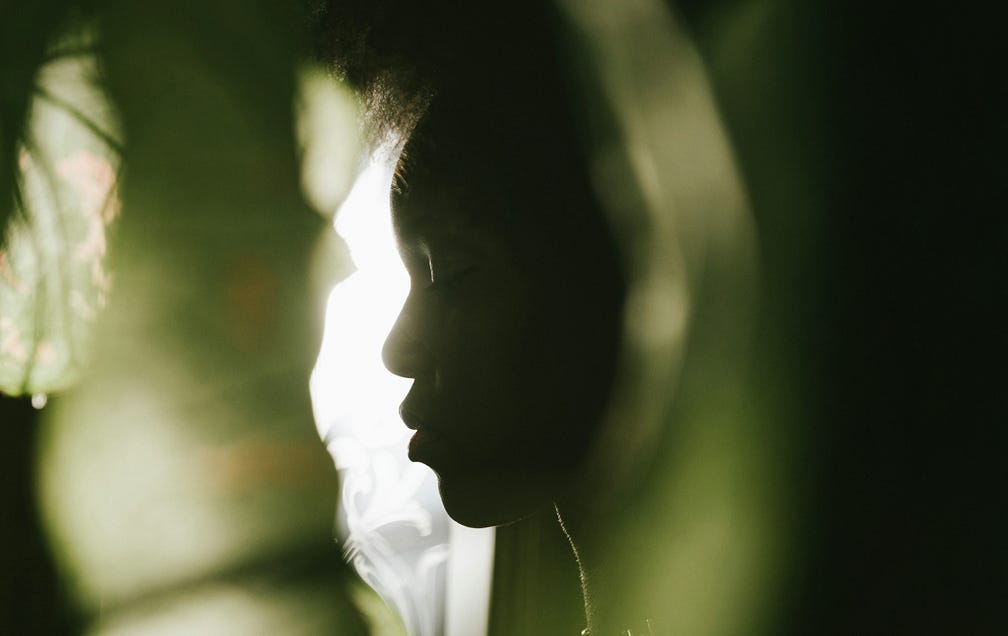
Most of us have grown up with similar stories of what a “good life” or “real success” should look like. These stories become internal scripts about our dreams, our vision, our sense of happiness, and becoming. And when your life doesn’t match the script, shame seeps in, holding us back in ways that might not always be obvious to ourselves or others.
This piece is a gentle offering to unravel five of the most persistent myths that keep us stuck, and remind you that becoming is not a race. You are not behind.
This myth assumes progress is a linear, measurable, externally validated trajectory, that success arrives on a fixed, visible timeline that everyone agrees on. But the reality of most lives, especially those shaped by migration, exclusion, underrepresentation, reinvention, or care work, is far messier.
In the natural world, growth moves in cycles. Trees don’t bloom year-round; harvests don’t follow a strict calendar. Bamboo, famously capable of shooting up over 90 centimeters in a day, spends up to five years quietly building an intricate root system underground before breaking the surface. To an outside observer, nothing seems to be happening. But beneath the soil, a foundation is forming, one that will support sudden, spectacular growth.
You might have spent years surviving, tending to others, grieving, or starting anew. It’s possible that only now you’re beginning to understand what it means to feel safe in your own body. Perhaps your “progress” isn’t marked by a new title or direction but by setting a new boundary, a decision not to betray yourself.
Most importantly, keep moving in the way that’s yours.
It’s easier than ever to glimpse curated highlights of other people’s lives—and mistake those snapshots for the whole story. You see the book launch, the retreat, the new apartment. What remains hidden are the debts, the doubts, the sleepless nights, the moments of deep questioning.
Neuroscience confirms that humans are wired for social comparison. We constantly measure ourselves against others. But this process often distorts reality—elevating others’ achievements while minimizing our own context and effort. That gap widens when their visible milestones stand in stark contrast to our invisible inner work.
Drs. Hillman Batuo speaks to this:
“Moving abroad takes a lot of adjustments, and that's something we sometimes undermine. We often downplay how much it takes to actually uproot yourself from one part of the world and put in another part of the world and make a life for yourself there. Building something that you'll be proud of takes time.
People might force you into this quick money, quick fixes, but those things are not good for you in the long term. Those things just do not build long-term wealth or capacity.
So take your time, build, seek guidance, seek mentorship, have a vision for yourself and plan how you're going to do your things and work on it diligently.”
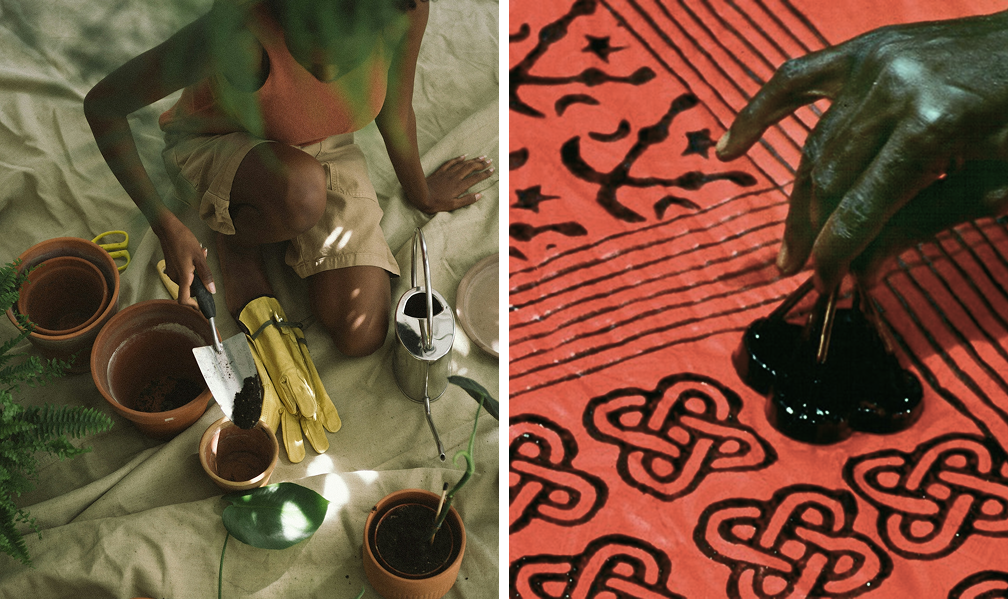
Whether it’s a breakup, a lingering process of grief, a persistent pattern, or the resurfacing of an old fear, many of us carry shame about the things we haven’t “outgrown.” As if healing were a one-time event. As if the body didn’t remember. As if cultural trauma could be untangled by logic alone. But perhaps healing is not about erasing pain, but relating to it differently. Perhaps wisdom looks less like “moving on” and more like learning how to sit with what’s still tender. To greet the familiar ache with a little more compassion each time. Some lessons return because we are ready to meet them at a new depth. Perhaps staying with the trouble is part of the solution.
Grief scholars, somatic therapists, and trauma expats like Bessel van der Kolk remind us that the body keeps score—not just of our own experiences, but of those we inherit. Cultural trauma, as theorized by scholars like Resmaa Menakem, suggests that some wounds live not only in our psyche, but in our nervous systems, in our collective memory, in our bones. These wounds are not always meant to be “resolved” in a single generation. Some are carried, some are transformed slowly, relationally, communally.
To ask “Why am I still dealing with this?” may be the wrong question. A more generous one might be, “What does this pain need from me now?” Or even, “What am I learning by being in a relationship with this part of myself again?”
Perfectionism often disguises itself as care, ambition, or responsibility. But underneath lies a deep fear, of being seen, of being rejected, of not being enough. It thrives in systems with low tolerance for ambiguity or vulnerability, where mistakes are penalized, not welcomed.
But what if the cracks are the beginning of something true?
Across many African traditions, beauty is often found in what carries a story. In Mali’s bogolanfini or Ghana’s adinkra cloth, patterns are made by hand, uneven, and textured. The irregularities are not flaws, but signatures. In Yoruba beadwork, Maasai adornment, or Zulu basketry, variations in color or pattern reflect the maker’s improvisation and adaptability, a living record of the process.
To embrace imperfection is to move through it.
We know it’s not true, and yet, we want to prove it anyway. In a world that has long told us the only person we can rely on is ourselves, where success is often attributed to the myth of the lone wolf, it feels almost natural to internalize it. To believe that self-sufficiency is strength, and needing others is a liability.
But research reminds us of another story. Gallup’s 2024 State of the Global Workplace report found that 20% of workers worldwide experience loneliness frequently at work, with fully remote employees reporting levels as high as 25%—double those in physical offices. Meanwhile, among entrepreneurs, roughly 47% report feelings of loneliness and isolation, with 26.9% citing loneliness as a direct contributor to burnout.
We chase independence, but the cost is often connection. What if our thriving depends not on becoming more independent, but more interdependent? We grow through the relationships that reflect us back to ourselves. We grow through the presence of others who say, “I see you” and mean it.
In a culture obsessed with optimization and competition, a reframing of these myths may feel radical as they invite nuance. Reframing these myths asks us to be with ourselves and with each other in ways that are more alive.
Because how you speak to yourself becomes how you move through the world. Whether you lead a team, care for a family, build community, or simply try to live with a little more truth—your inner stories matter.
So if you find yourself in August wondering whether you’re doing enough, becoming enough, arriving fast enough—pause.
You are not behind.
You are becoming. And that is more than enough.
You’re not late to your life.
You are right on time.
Bridging Worlds by Omek is a space for bold conversations on what it means to lead, build, and belong as bicultural professionals, entrepreneurs, and brands. Join the community and check our brand-new job board!
No posts
Comments
Nothing yet. Say the first thing.
Sign in to join the conversation.