
If you're looking for practical tarot, approachable astrology, and a community that embraces both curiosity and common sense, join us at Modern Mysticism.
Where weird and wise meet.
Tarot is a tool for reflection, not diagnosis.
While certain cards may mirror experiences like sadness, worry, burnout, or hopelessness, they cannot determine whether someone has depression, an anxiety disorder, or any other mental health condition.
If you’re experiencing persistent feelings of depression, anxiety, or emotional distress that are interfering with your daily life, I encourage you to reach out to a licensed mental health professional or your healthcare provider.
Tarot can be a meaningful companion to self-reflection and personal growth, but it should never replace professional mental health care.
We’ve all had those readings.
You turn over a card and immediately think, “Well...that looks concerning...”
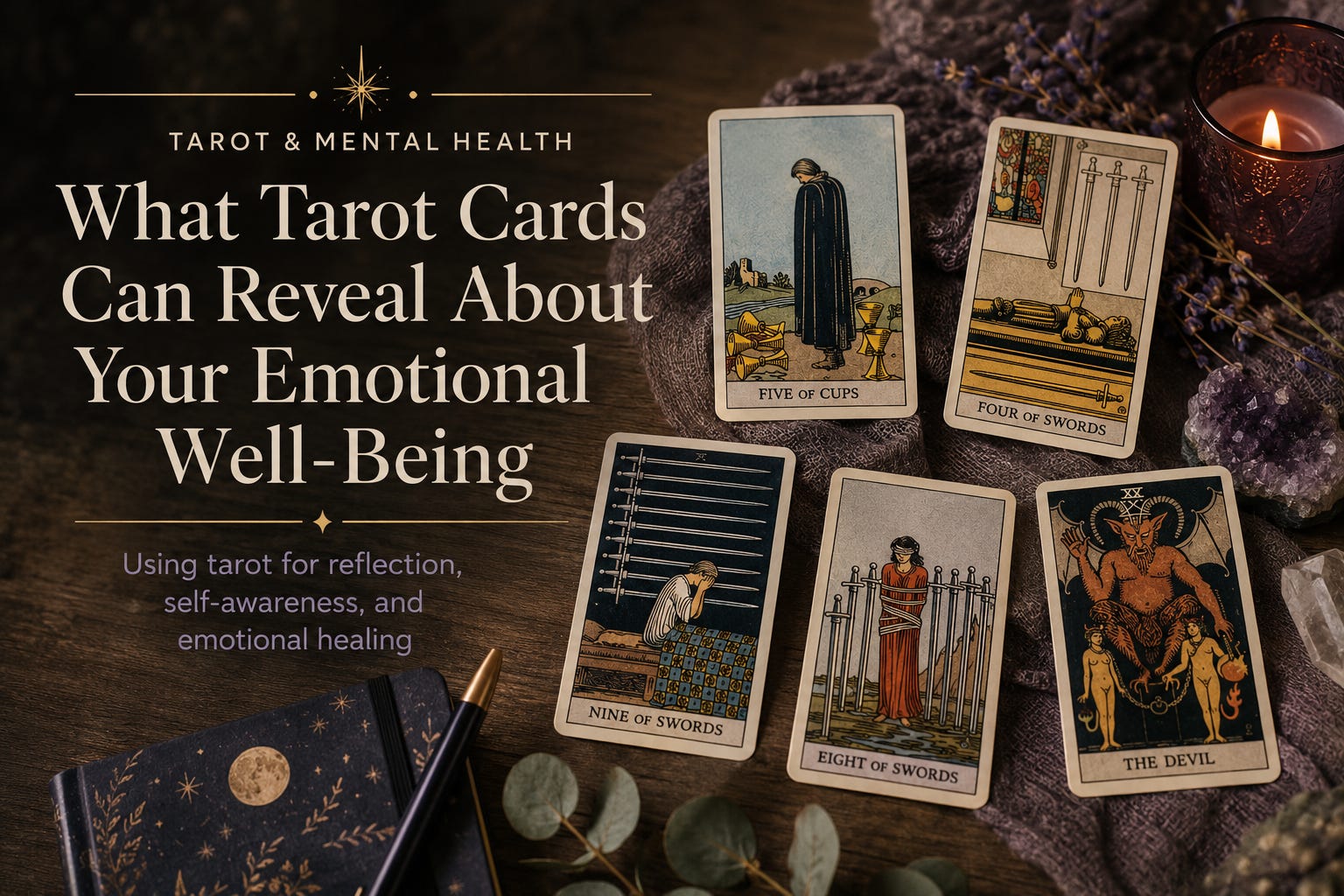
Maybe it’s the Nine of Swords, with someone sitting upright in bed after another sleepless night. Maybe it’s the Five of Cups, standing in the middle of grief. Or perhaps it’s the Eight of Swords, a figure who seems completely trapped by their circumstances.
It’s natural to wonder: “Is this card trying to tell me something about my mental health?”
The answer is yes...but probably not in the way you think. Tarot is not a tool for diagnosing mental health conditions. And it certainly doesn’t replace therapy, counseling, or medical care.
What it does remarkably well is reflect our inner emotional landscape.
It gives shape to experiences that can be difficult to describe, grief that feels all-consuming, worry that won’t quiet down, emotional exhaustion, burnout, isolation, or the longing for hope after a difficult season.
That said, one card can’t determine the entirety of your emotional state. The surrounding cards, the question being asked, the position within the spread, and the reader’s intuition all contribute to the story that’s unfolding.
A Nine of Swords surrounded by healing cards tells a very different story than one surrounded by the Eight of Swords, Five of Cups, and The Devil.
As you read through these cards, think of them less as labels and more as invitations to become curious about your own emotional experience.
Let’s explore some of the cards that often appear when we’re navigating grief, anxiety, emotional exhaustion, or burnout.
Tarot readings don’t always reveal joy, confidence, and clarity. Sometimes they reflect the more difficult parts of the human experience. Things like stress, anxiety, burnout, grief, loneliness, self-doubt, or emotional overwhelm. These emotions are a natural part of life, and it’s not uncommon for them to appear in a reading when we’re navigating challenging seasons.
Rarely does a single card tell the whole story. Difficult emotions often develop gradually and overlap. Stress can lead to burnout. Anxiety may fuel isolation. Grief can leave us feeling emotionally depleted or disconnected from the people around us. Rather than showing one specific emotion, tarot often reveals the emotional journey we’re moving through.
It’s also important to remember that tarot offers symbolism, not diagnoses. No card means someone has anxiety, depression, or another mental health condition. Instead, these archetypes can highlight emotional patterns, internal struggles, or experiences that may deserve our attention and compassion.
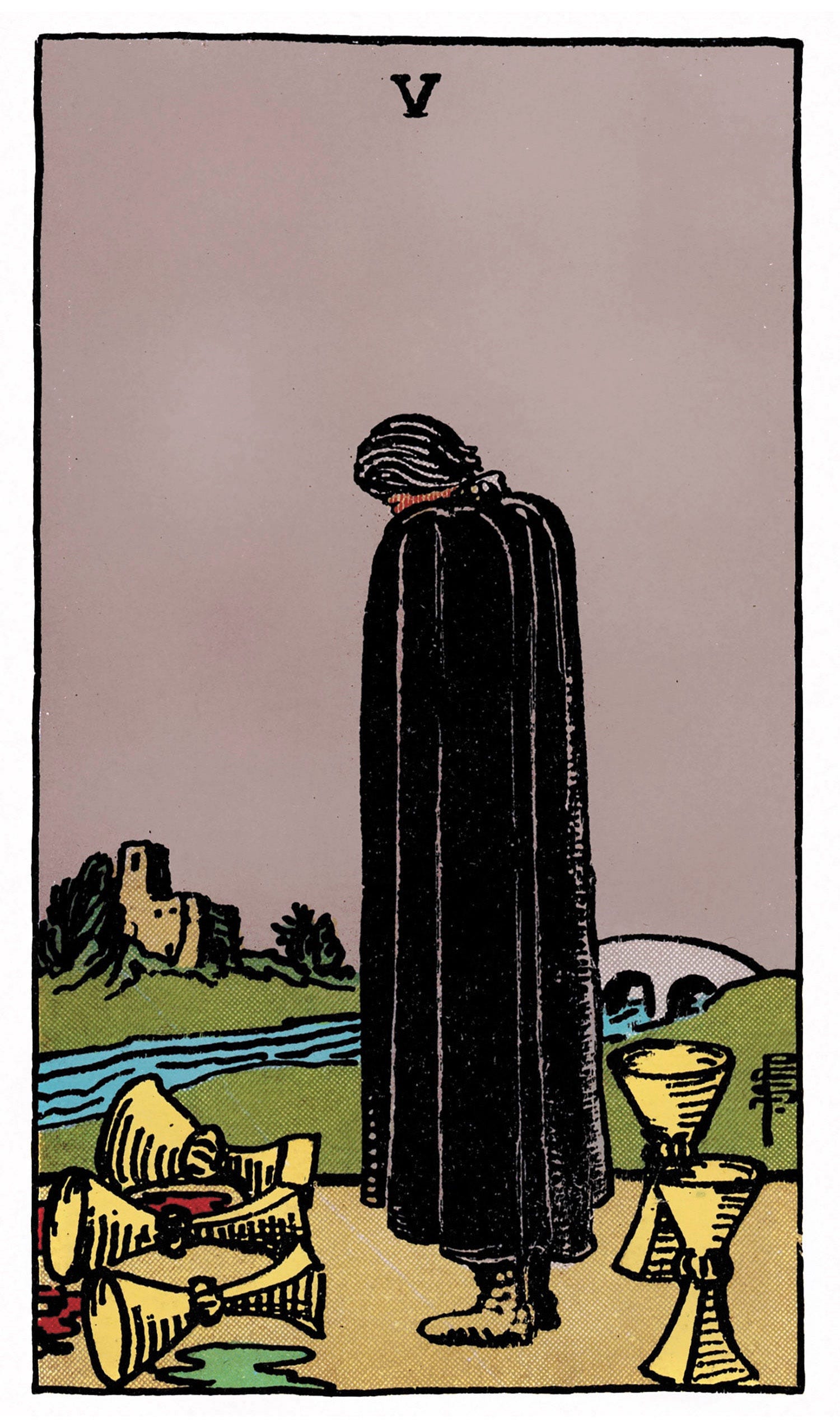
If I had to choose one card that most clearly captures grief, it would be the Five of Cups.
A cloaked figure stands before three spilled cups, completely focused on what has been lost. Behind them, two cups remain upright, unnoticed for the moment.
This is one of tarot’s most compassionate reminders that grief changes our perspective. When we’re hurting, it can become incredibly difficult to see what is still supporting us. Our minds naturally return to what went wrong, what we wish had happened differently, or what we’ve lost.
The Five of Cups doesn’t tell us to “look on the bright side.” Instead, it honors the reality of loss while gently reminding us that our story isn’t over. Healing doesn’t begin by pretending the spilled cups don’t matter. It begins when we’re finally able to turn around and notice what remains.
Questions for reflection:
What loss am I still carrying?
Am I giving myself permission to grieve?
What sources of support might I be overlooking right now?
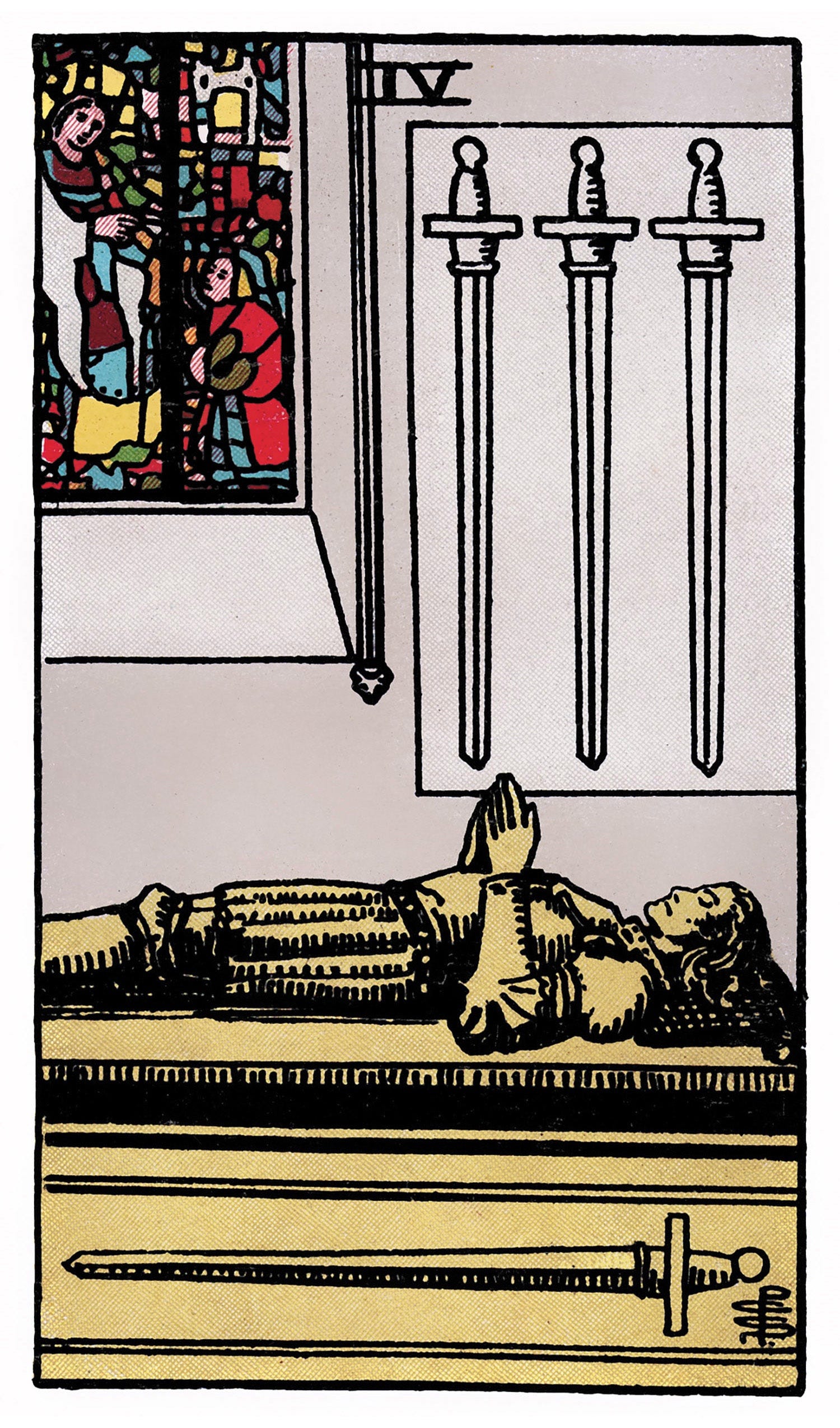
The Four of Swords is often described as the card of rest.
And sometimes, that’s exactly what it is. After stress, grief, illness, or emotional upheaval, we need time to recover. This card reminds us that rest isn’t a luxury, it’s an essential part of healing.
But context matters.
When paired with other challenging cards, the Four of Swords can also reflect withdrawing from the world. Canceling plans. Staying in bed longer than usual. Feeling emotionally numb. Needing quiet because everything feels like too much.
The card itself doesn’t tell us why we’re retreating.
That’s where the surrounding cards and our own honest self-reflection become important. Are we intentionally taking time to restore ourselves? Or have we begun to isolate because we no longer have the energy to engage?
Healthy rest replenishes us. Withdrawal that continues without relief may be a sign that we need additional support, whether that’s reaching out to loved ones, speaking with a therapist, or checking in with our healthcare provider.
Questions for reflection:
Am I resting, or am I hiding?
What would truly help me feel restored?
Is there someone I trust that I could reach out to today?
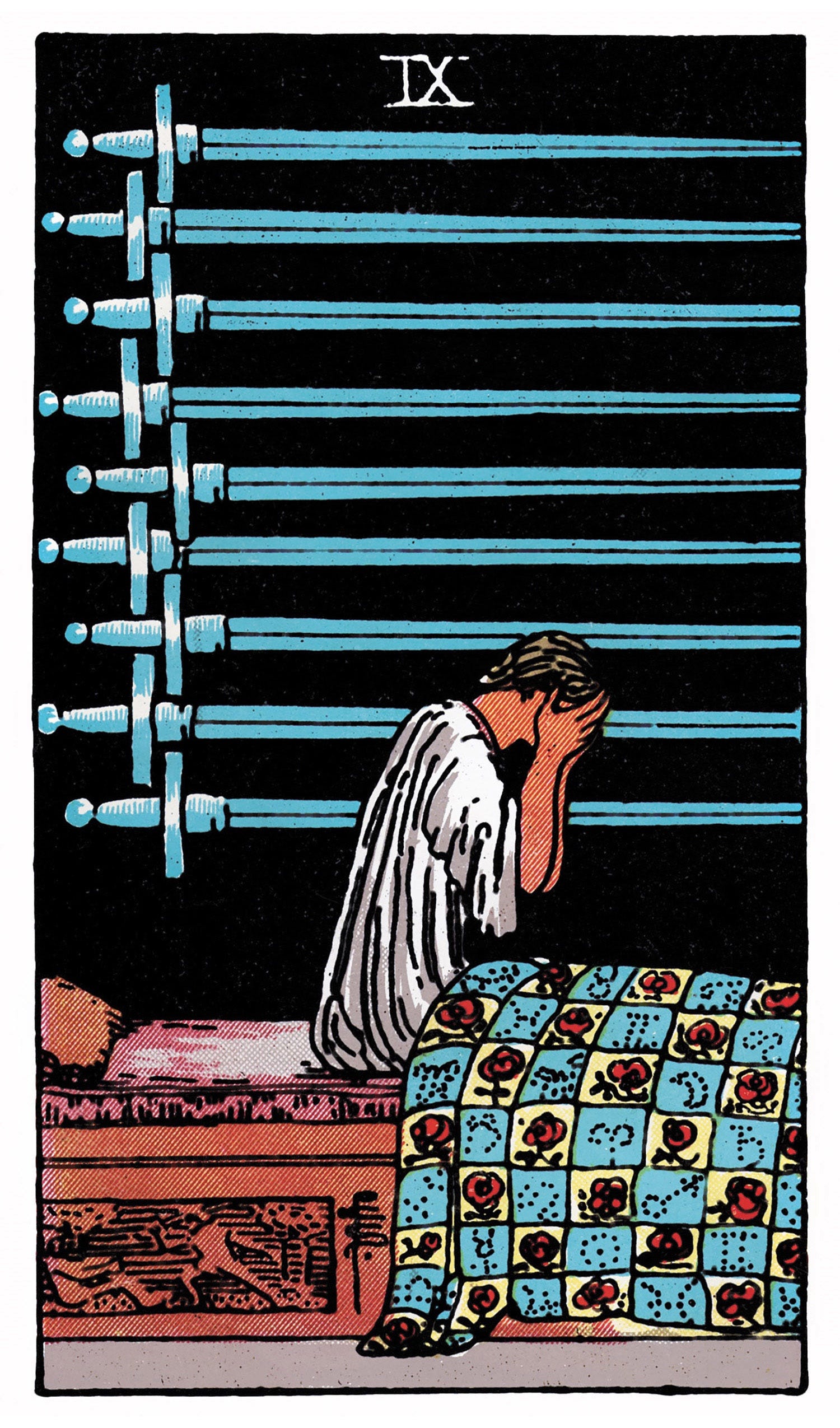
The Nine of Swords is one of tarot’s clearest depictions of an anxious mind.
The image is familiar to anyone who’s ever lain awake at three in the morning replaying conversations, imagining worst-case scenarios, or worrying about things that haven’t happened yet. This card reflects the mind’s remarkable ability to create suffering before reality has caught up.
That doesn’t mean the fear isn’t real.
The distress, sleeplessness, racing thoughts, and emotional exhaustion represented by this card are genuine experiences. The Nine of Swords simply reminds us that our thoughts are not always reliable narrators.
Questions for reflection:
What story am I telling myself?
Is there evidence supporting this fear, or am I filling in the blanks?
What would help me feel safer in this moment?
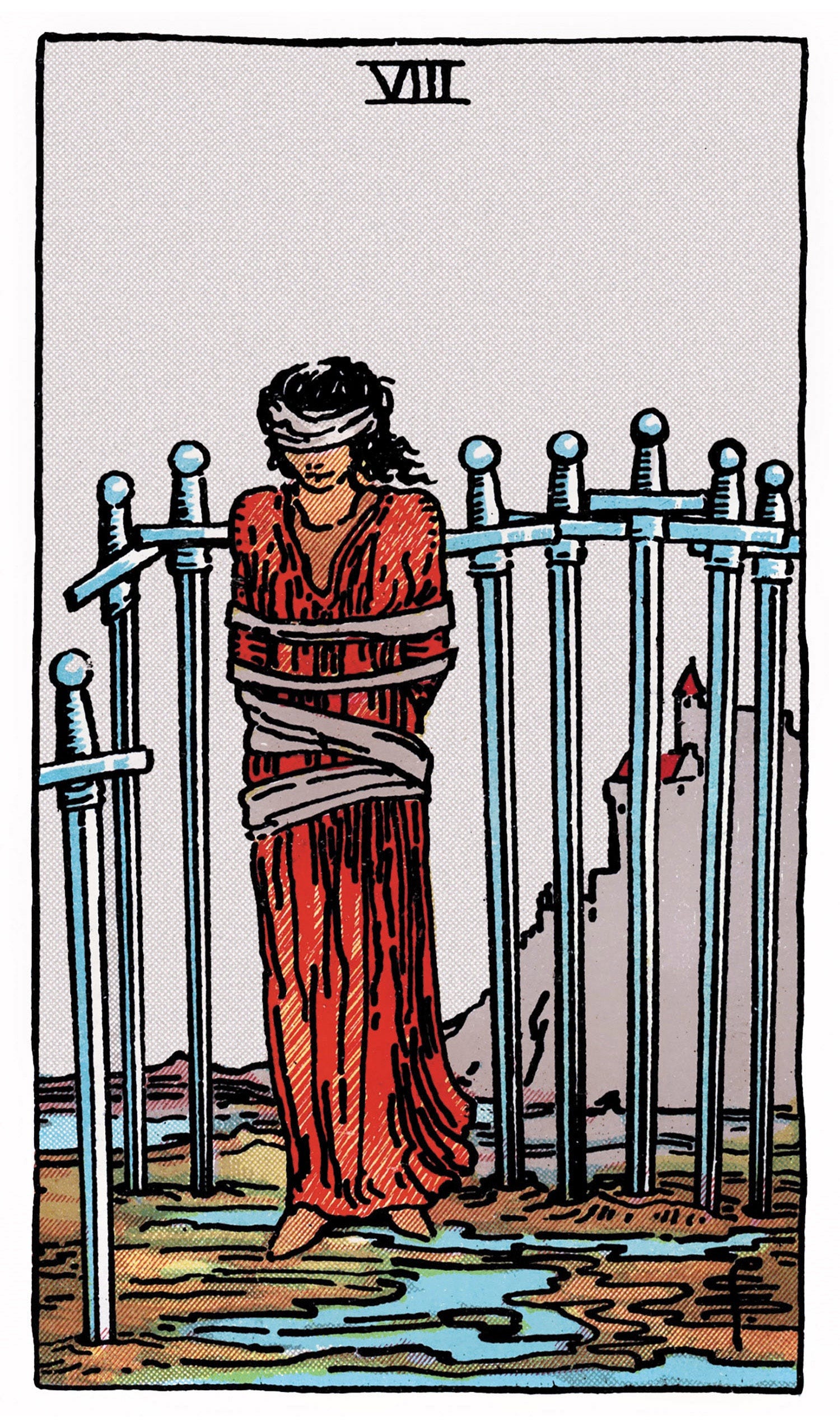
Few cards capture the feeling of helplessness like the Eight of Swords.
Blindfolded and loosely bound, the figure appears surrounded by obstacles with no obvious way forward. Many people immediately interpret this card as being trapped.
But notice something important. The ropes are loose. The swords don’t completely surround the figure. There is space to move.
That doesn’t mean getting unstuck is easy. Emotional struggles often make it difficult to recognize options. When we’re overwhelmed, our world can feel much smaller than it really is.
The Eight of Swords reminds us that while our circumstances may be challenging, our perception can sometimes become even more restrictive than reality itself.
Questions for reflection:
What belief is making me feel stuck?
Am I assuming I have fewer choices than I actually do?
What is one small step I could take today?
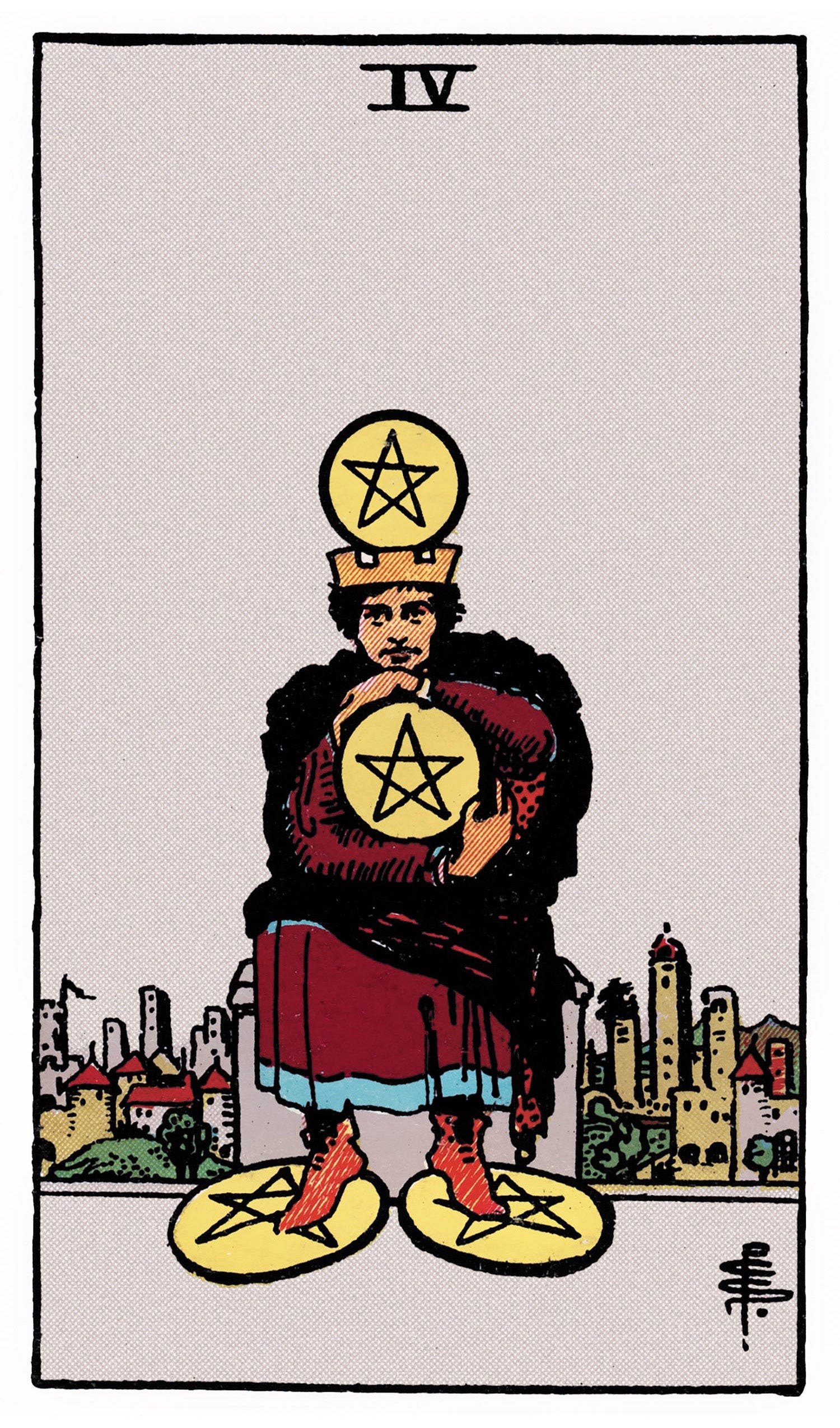
The Four of Pentacles reminds us that control often begins as self-protection. When life feels uncertain, it’s natural to tighten our grip.
We might try to control our schedule, finances, relationships, environment, or even our emotions. Control can create the comforting illusion that if we just hold on tightly enough, nothing bad will happen.
The Four of Pentacles asks us to notice what we’re holding onto.
The figure in the card clutches each pentacle closely. While this protects what they have, it also makes movement difficult. Sometimes the very thing we’re trying to preserve can become what keeps us feeling stuck.
This card doesn’t suggest that planning ahead or creating healthy boundaries is a problem. In fact, those can be incredibly wise responses to uncertainty. Instead, it invites us to ask whether our desire for control has become driven by fear.
Questions for reflection:
What am I trying to control right now?
What fear is underneath that need for control?
Where might I loosen my grip, even just a little, without compromising my well-being?
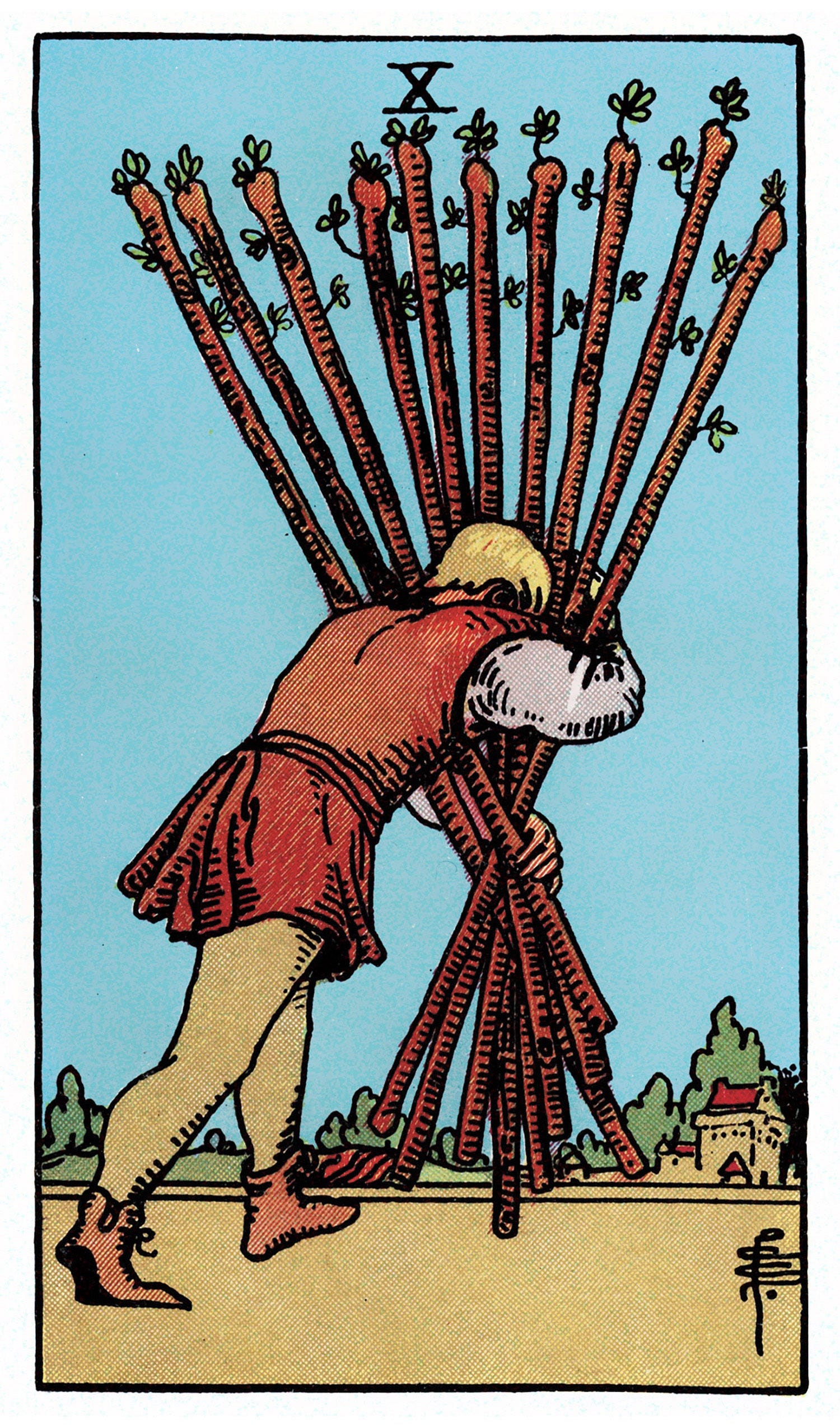
Sometimes emotional distress doesn’t look like sadness or worry. Sometimes it looks like carrying too much for too long. The Ten of Wands can be the card of overload.
Responsibilities, expectations, caregiving, work, and trying to be everything for everyone. Eventually, even the strongest among us become exhausted.
Questions for reflection:
Which responsibilities truly belong to me?
Where am I saying “yes” when I need to say “no”?
What could I set down, even temporarily?
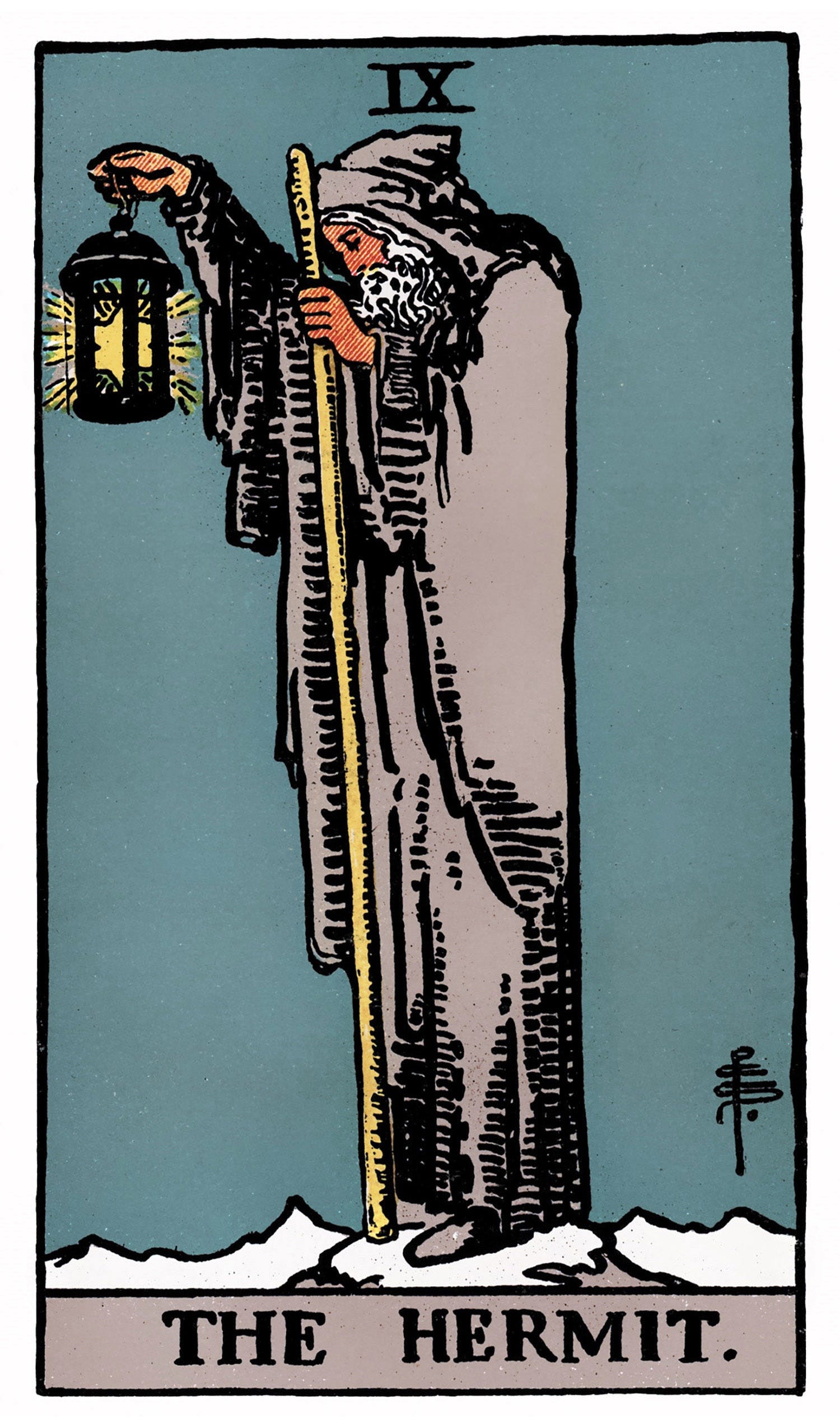
The Hermit is one of my favorite cards.
In its healthiest expression, it represents wisdom, reflection, and intentionally stepping away from outside noise so we can hear our own inner voice. But every card has a shadow.
The shadow side of The Hermit isn’t peaceful solitude. It’s isolation. The difference is subtle but important. Solitude restores us. Isolation disconnects us.
When this card appears, it may be worth asking whether you’re taking healthy space, or whether you’ve unintentionally withdrawn from the very people who could offer support.
Like the Four of Swords, this card invites us to consider whether our time alone is helping us heal or quietly keeping us disconnected. One restores us. The other keeps us from receiving the support we may need.
Questions for reflection:
Am I choosing solitude, or avoiding connection?
Who helps me feel safe enough to be honest?
What small act of connection would feel manageable today?
One of the things I love most about tarot is that it rarely leaves us in the difficult cards forever.
Just as life moves through seasons, so do our readings. After cards that reflect grief, worry, burnout, or emotional overwhelm, we often begin to see cards that point toward hope, resilience, and healing.
Notice that these cards don’t promise immediate happiness. Instead, they remind us that healing is a process, one built through hope, support, resilience, and taking one small step at a time.
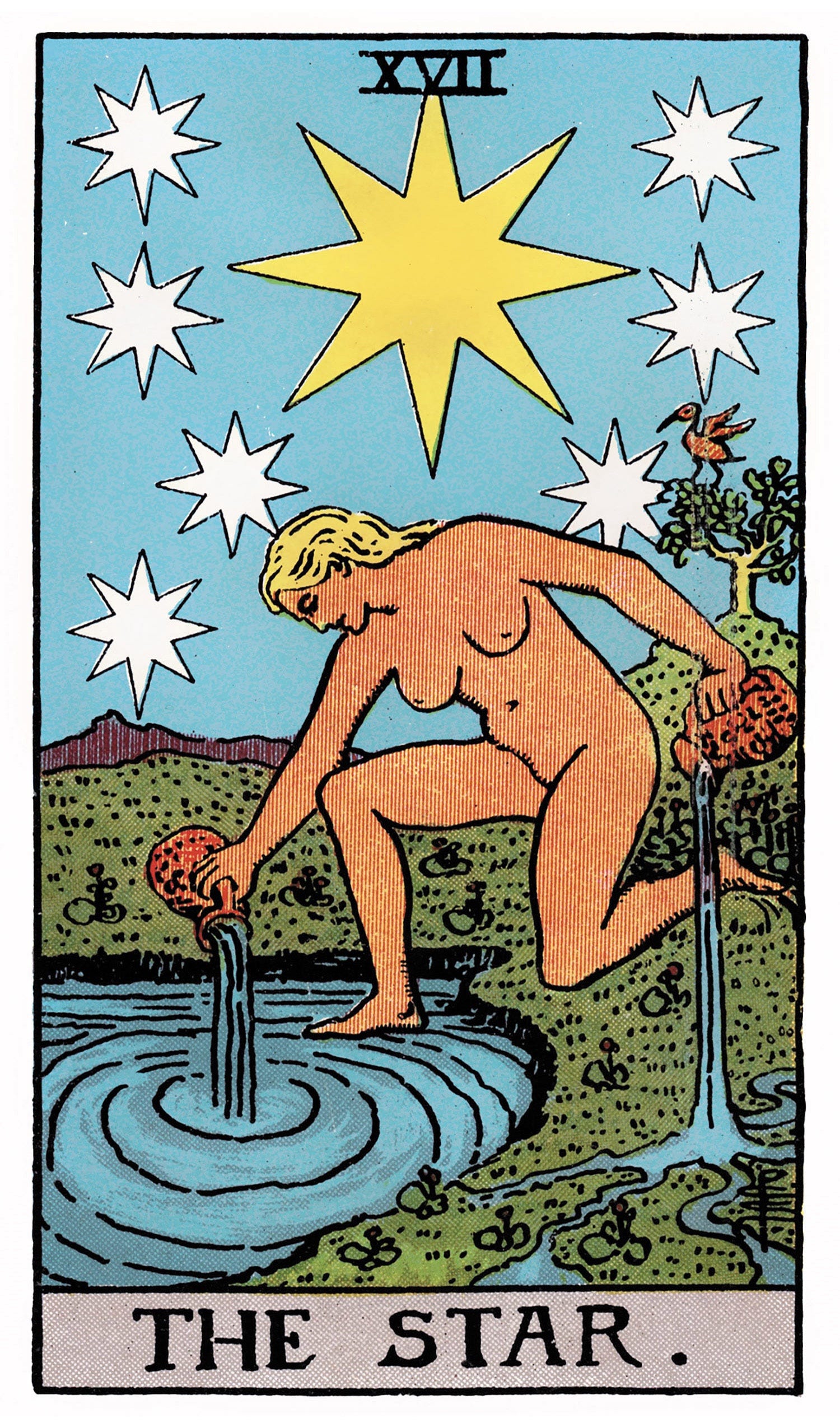
The Star is one of tarot’s most hopeful cards.
It often appears after periods of struggle, reminding us that healing is possible, even if we can’t yet see the finish line. The Star doesn’t promise that life suddenly becomes easy. Instead, it invites us to trust that hope has a way of returning, sometimes quietly, long before we fully believe it ourselves.
Questions for reflection:
Where have I already begun to heal, even if the progress feels small?
What gives me hope when life feels uncertain?
How can I nurture that hope today?
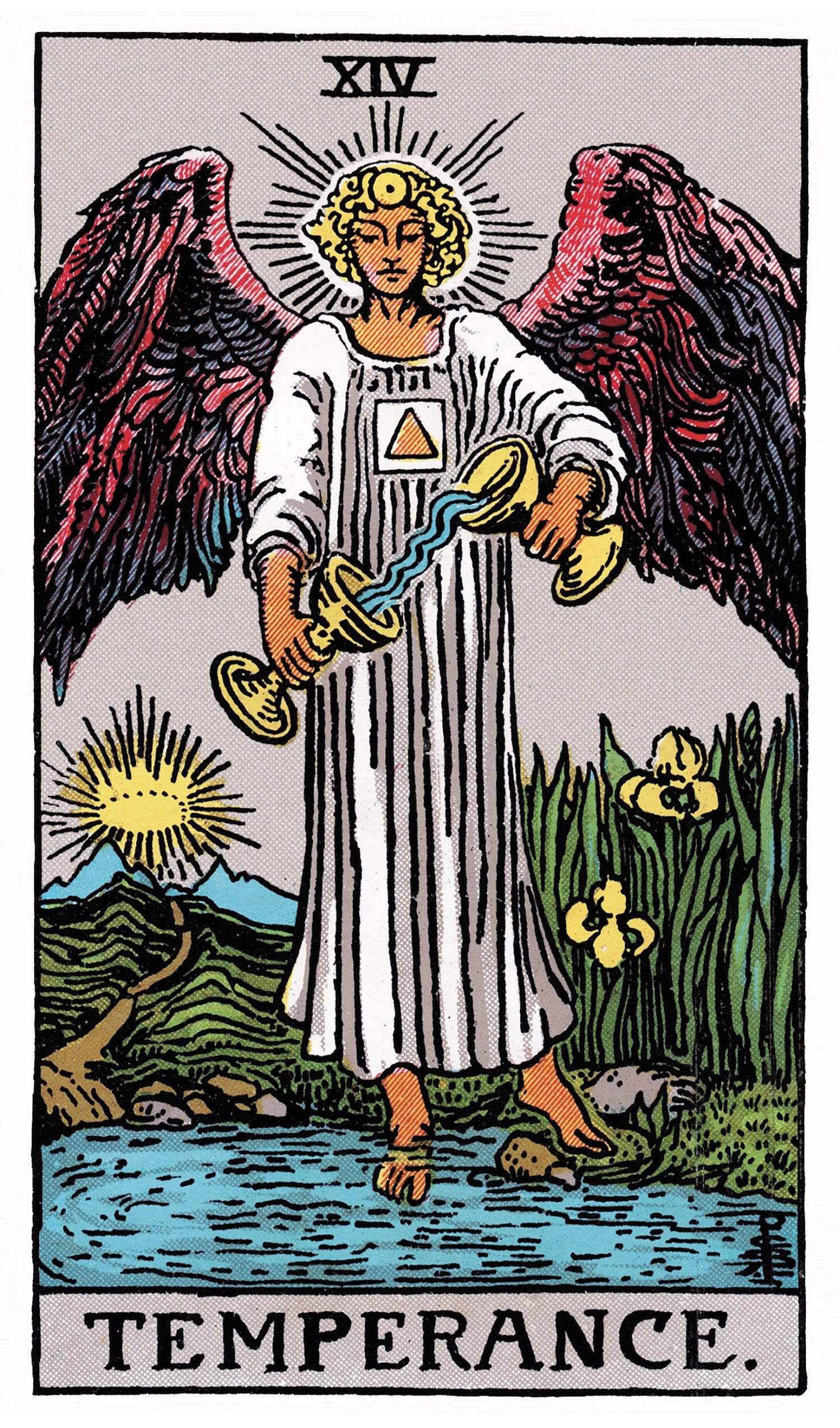
Temperance reminds us that healing is rarely an overnight transformation.
Instead, it’s built through small, consistent acts of care. This card speaks to balance, patience, and emotional regulation. It encourages us to honor the process rather than rushing toward the outcome.
Questions for reflection:
Where am I expecting instant results?
What small daily habit supports my well-being?
How can I show myself more patience during this season?
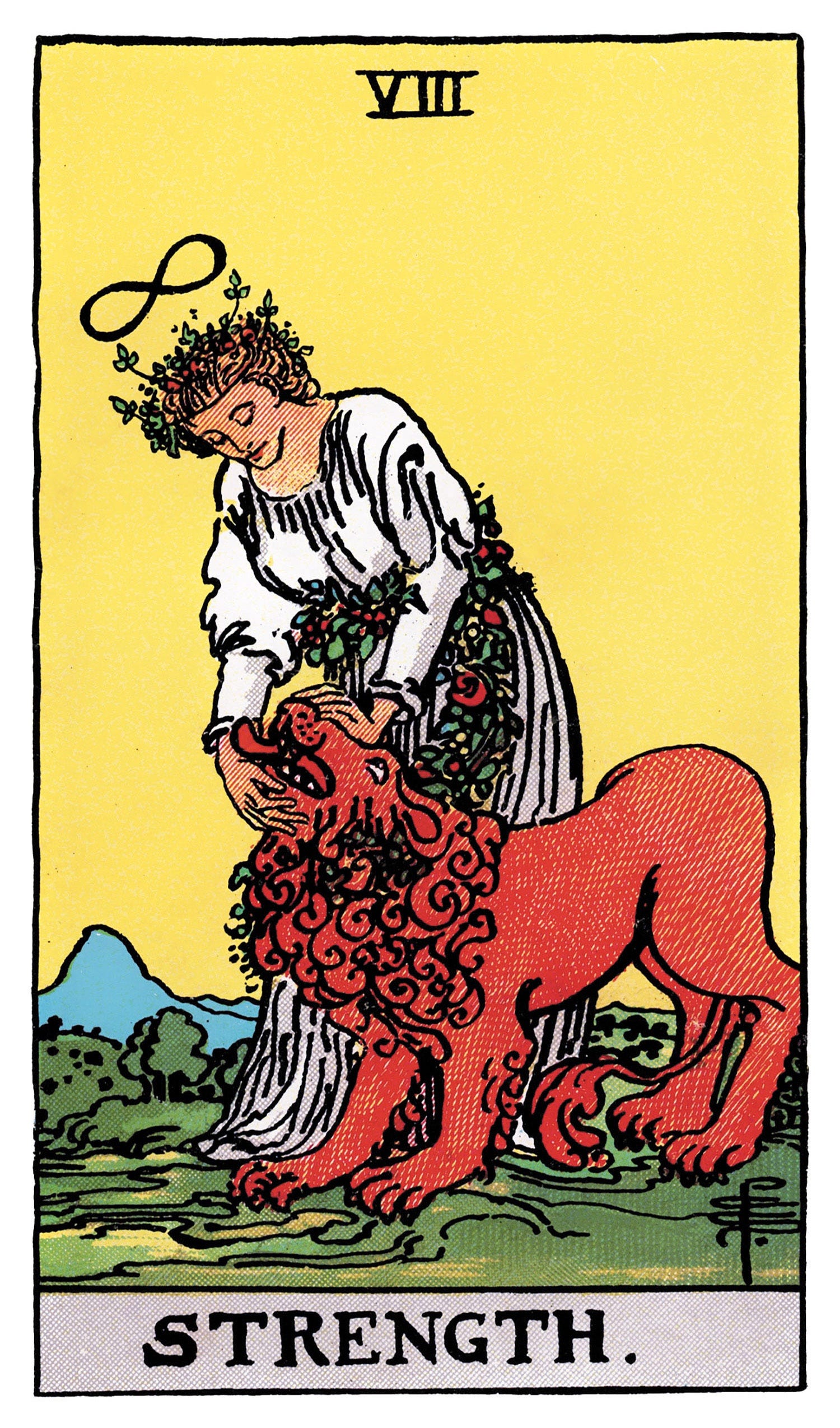
Despite its name, the Strength card isn’t about pushing harder.
It’s about responding with gentleness instead of force. Strength teaches resilience, self-compassion, and quiet courage. It reminds us that some of our greatest victories come not from overpowering our emotions, but from learning to sit with them without letting them define us.
Sometimes the strongest thing we can do is offer ourselves the same kindness we would readily give to someone we love.
Questions for reflection:
How am I speaking to myself?
What would self-compassion look like today?
Where have I already shown quiet strength?
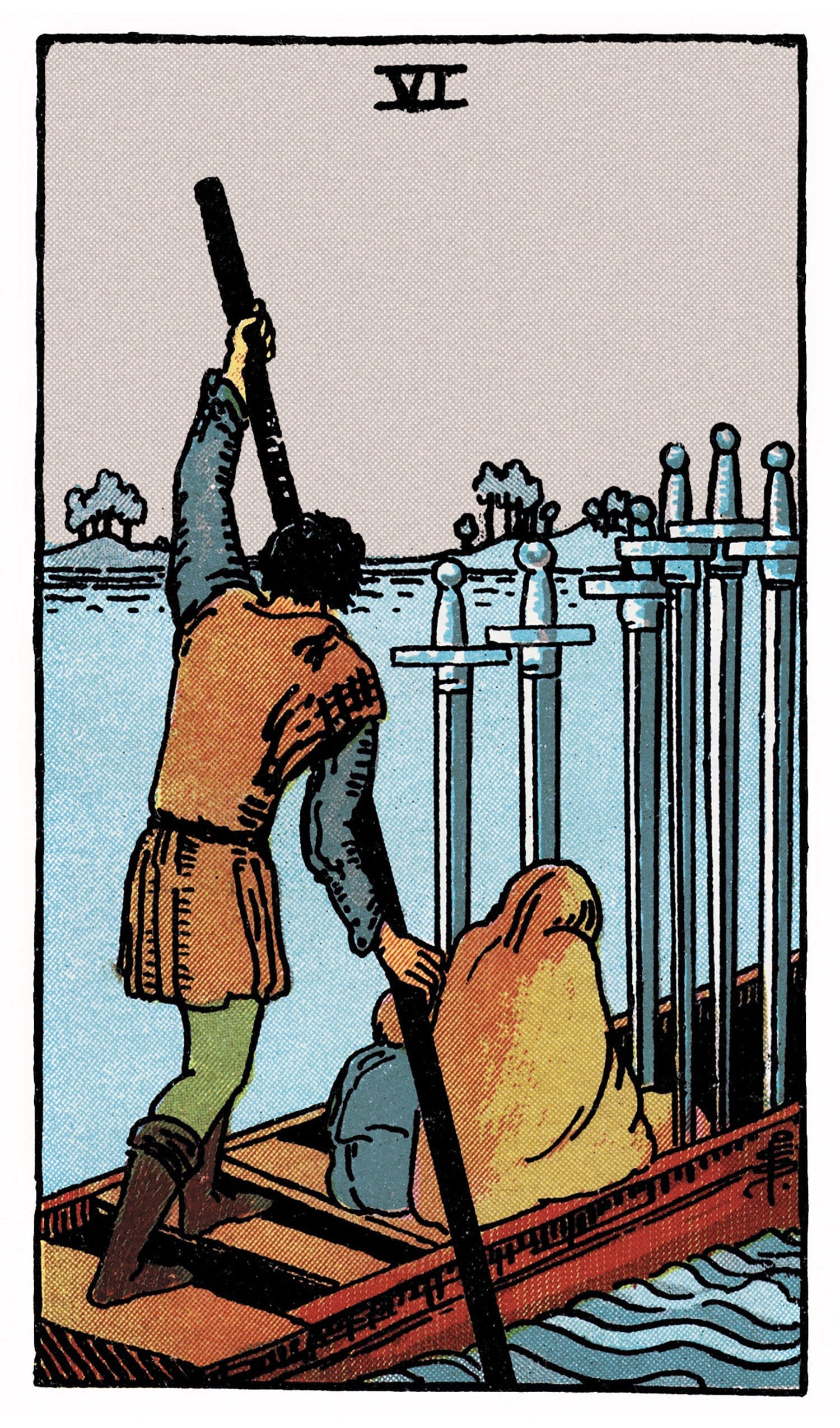
The Six of Swords is a card of transition.
The destination may not be perfect, but it is often better than where we’ve been. This card reminds us that healing is movement. Even if progress feels slow, we’re no longer standing still. Sometimes simply taking the next step is enough.
It reminds us that recovery isn’t about forgetting what we’ve experienced. It’s about allowing ourselves to move toward something gentler.
Questions for reflection:
What am I ready to leave behind?
What does my next step toward healing look like?
Where am I already experiencing calmer waters?
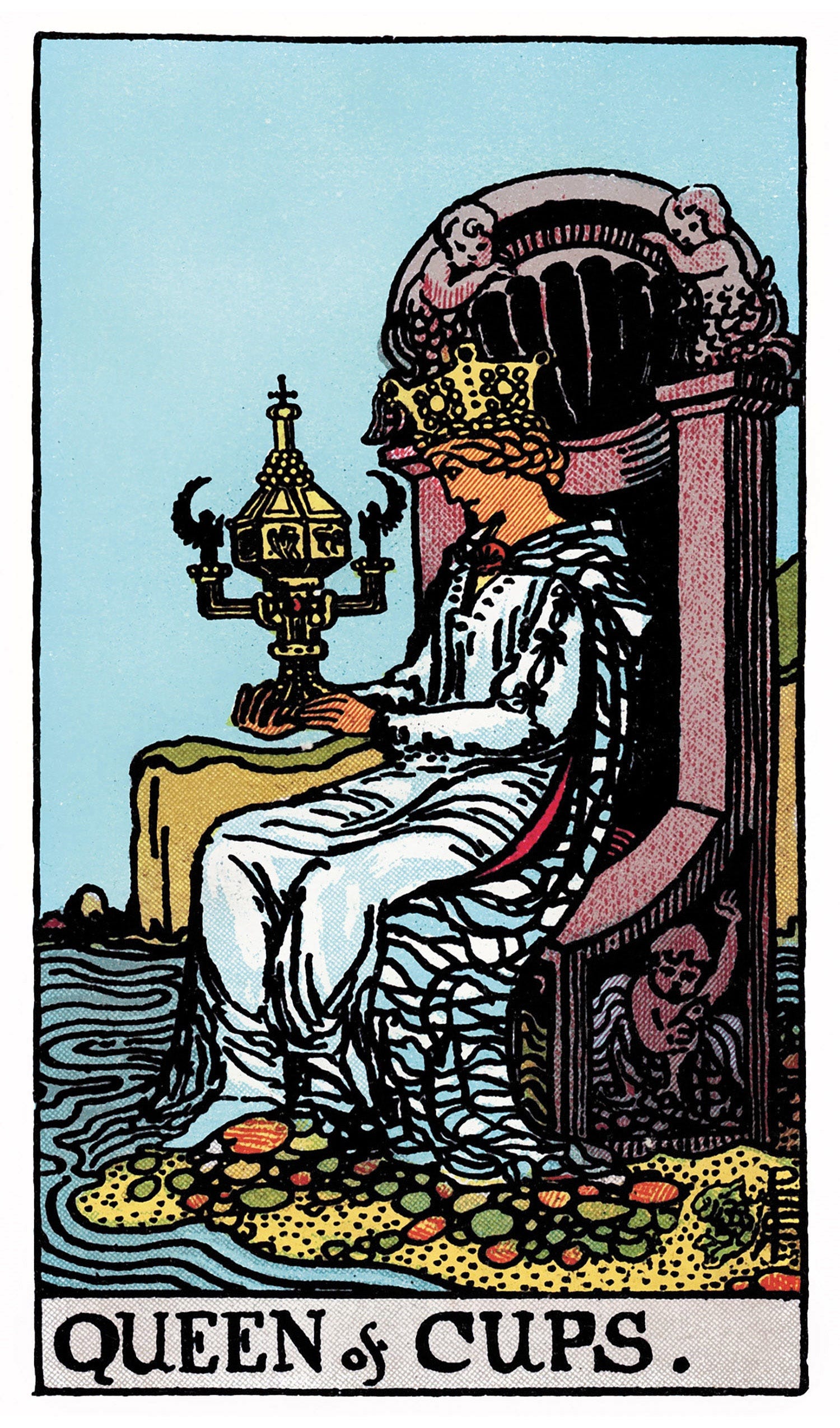
The Queen of Cups embodies emotional wisdom and compassionate care.
She reminds us that healing doesn’t have to happen alone. Whether it’s from trusted friends, family, a therapist, a support group, or another caring professional, this card encourages us to seek out the support that’s available.
There is strength in asking for help. The Queen of Cups also reminds us to extend that same compassion inward. We often become our own harshest critics during difficult seasons.
Questions for reflection:
Who helps me feel emotionally safe?
Am I allowing myself to receive support?
How can I care for myself with greater compassion today?
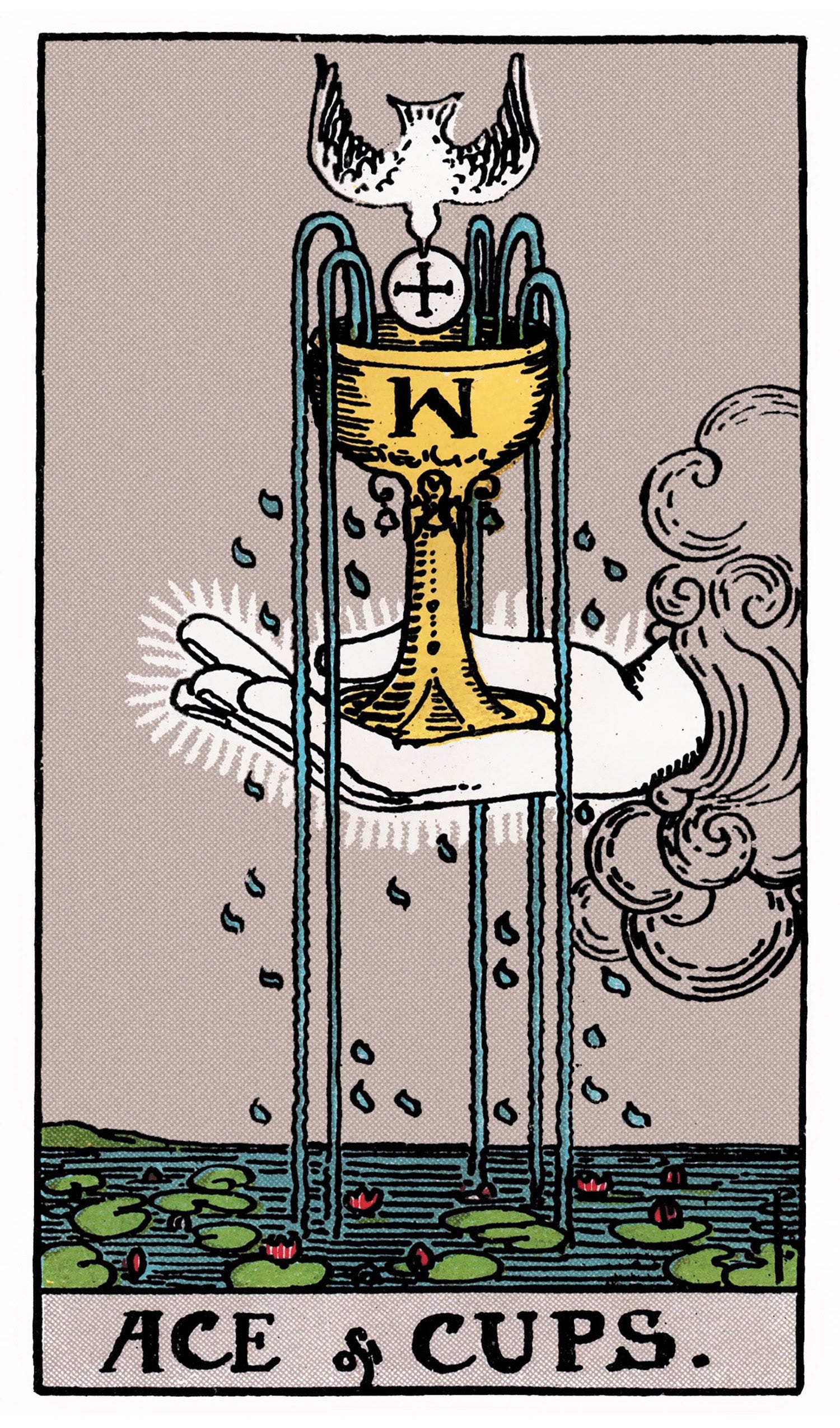
The Ace of Cups represents new emotional beginnings.
After periods of depletion, this card often signals that our hearts are becoming open again to hope, connection, joy, creativity, and healing.
It’s a reminder that difficult seasons do not last forever. There is always the possibility of beginning again. Healing doesn’t erase what we’ve lived through. Instead, it creates space for something new to grow alongside our experiences.
Questions for reflection:
What am I ready to welcome into my life?
Where am I noticing signs of renewal?
How can I remain open to joy, even in small ways?
Tarot is an incredible mirror that offers a rare view into our subconscious. By giving shape to our inner world, tarot invites us to meet ourselves with curiosity instead of judgment.
It reminds us that difficult emotions deserve our attention, not our shame, and that every season, no matter how challenging, has the potential to become part of a larger story of healing and growth.
When we stop asking, "What's wrong with me?"
and instead ask, "What is this experience trying to teach me?"
Tarot becomes a compassionate guide for self-awareness, resilience, and personal transformation.
Want to go deeper?
Paid subscribers receive:
✓ Monthly Survive and Thrive Guide
✓ Resource Library
✓ Printable rituals
✓ Bonus journal workbooks
✓ Practical astrology/tarot via chat
No posts
Comments
Nothing yet. Say the first thing.
Sign in to join the conversation.