
For decades, the narrative was fixed: New York was the undisputed capital of jazz. Los Angeles was just a sunny detour—a place where musicians went to record film scores, cash a tour check, or dodge the winter before flying back east.
That story is dead.
Today, Los Angeles is in the middle of a massive, undeniable jazz renaissance. The momentum is so heavy that even The New York Times recently devoted a feature to the city’s surging scene, spotlighting the massive, inaugural 17-day L.A. Jazz Festival dropping this August. This excitement isn’t built on one artist or a single lucky venue. It is a collision of historic rooms, a fearless new generation, and a diverse audience desperate for music that refuses to stay inside the lines.
Here is why Los Angeles is currently the most important jazz city in America.
The Great Migration West
The biggest difference between today’s L.A. scene and the scene a decade ago is the sheer volume of New York musicians packing their bags.
During and immediately after the pandemic, an entire generation of younger artists relocated west. They didn’t come for isolated gigs; they came simultaneously, creating a new creative community overnight. Bassist Ben Williams, trumpeter Keyon Harrold, guitarist Andrew Renfroe, and keyboard phenomenon Julius Rodriguez are all making L.A. home. They are following the trail blazed by heavyweights like Robert Glasper and Chief Adjuah, who proved you can thrive as a serious jazz artist while remaining deeply connected to hip-hop, R&B, and film scoring.
Last month in Los Angeles, near The Garage, I saw a young guy wearing a hat that read, “El Renacimiento de El Lay”. It reminded me about how the unique language and flavor of Los Angeles has reshaped the landscape of our culture time after time. None of this happens without the locals who laid the concrete. The true architects of today’s L.A. renaissance are the members of the West Coast Get Down.
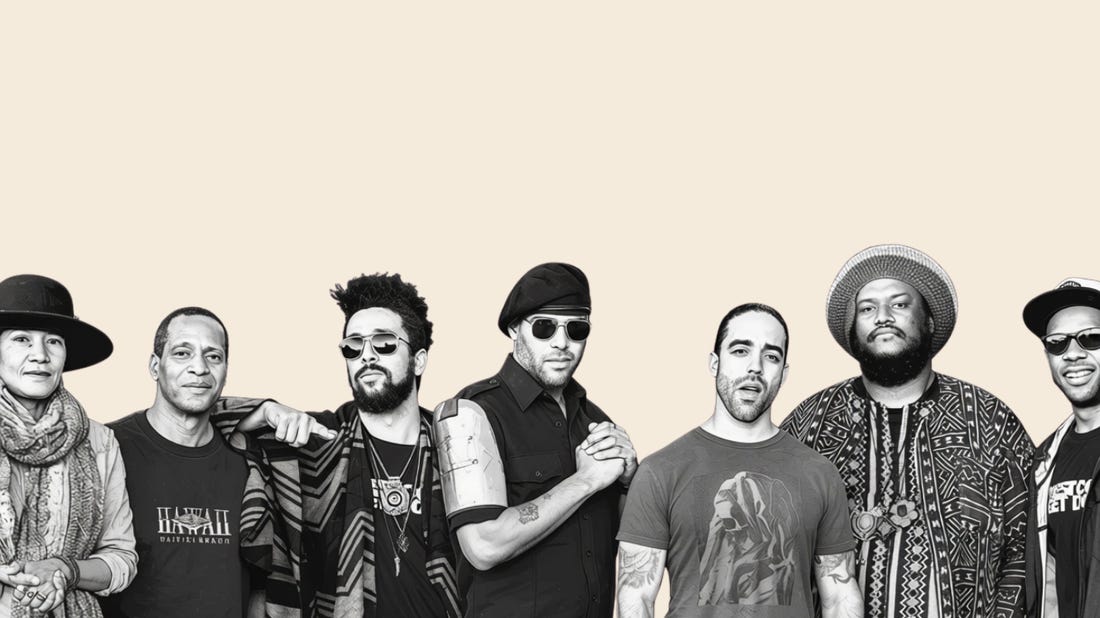
Unlike collectives assembled in stuffy conservatories, these musicians grew up together. They played church gigs, attended the same schools, and developed a collective musical language years before the world caught on.
Kamasi Washington: His breakthrough album, The Epic, forced the mainstream to pay attention to modern jazz.
Thundercat (Stephen Bruner): He effortlessly moves between jazz, funk, soul, and pop. He is the walking epitome of the 80s Clarke/Duke Project: he plays bass like Stanley Clarke and sings like George Duke. His 2020 release, It is What it is, is my favorite work of his thus far.
The Connectors: Multi-instrumentalist/producer Terrace Martin, bassist Miles Mosley, drummers Ronald Bruner Jr. and Tony Austin, pianists Cameron Graves and Brandon Coleman, and the late, great trombonist Ryan Porter.
Collectively, they forged a distinctly Los Angeles sound—one that embraces jazz without treating genre boundaries as sacred.
Eroding the Lines Where Jazz Meets Hip-Hop
Los Angeles feels vibrant right now because its jazz musicians refuse to exist in a vacuum separate from contemporary Black American Music.
The West Coast Get Down crew became central contributors to Kendrick Lamar’s landmark album To Pimp a Butterfly. Since then, their collaborations with Snoop Dogg, Flying Lotus, and countless R&B artists have entirely erased the artificial lines separating jazz from hip-hop. Kamasi Washington even co-wrote “Luther,” the Grammy-winning hit by Lamar and SZA.
Instead of agonizing over whether a track is “jazz enough,” these musicians simply make music. In doing so, they’ve introduced the jazz language to millions of younger listeners who would never set foot in a traditional jazz club.
Every thriving jazz city needs gathering places—rooms where audiences discover talent, musicians trade ideas, and scenes are born. L.A. finally has the diverse infrastructure to support multiple definitions of what jazz can be.
Sam First: Tucked near LAX, this has become one of the country’s premier listening rooms. Intimate and fiercely musician-friendly.
My Take: I’ve been to Sam First twice... kind of. The first time, I saw the amazing vocal group Saje, backed by my friend and recent L.A. transplant Ben Williams on bass. (I even spotted local vocalists like Mark Winkler in the crowd). My second visit? I couldn’t even get in the door. I had to settle for listening to pianist Gerald Clayton from the sidewalk.
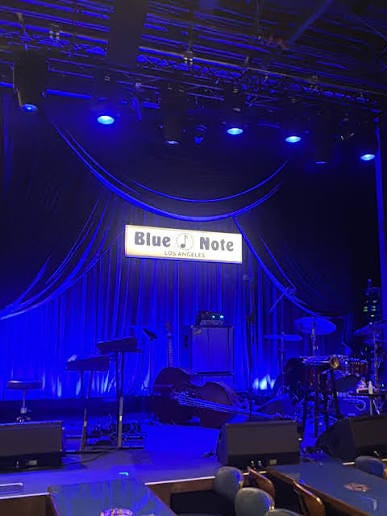
Blue Note Los Angeles: Bringing one of the most recognizable brands in jazz to the West Coast.
My Take: I stumbled on this room entirely by accident last month. My new favorite Airbnb in L.A. is on Sunset, and just a few blocks east, I saw the Blue Note marquee. Luckily, another old friend and recent transplant, Keyon Harrold, was playing that night.
The Baked Potato: The legendary fusion room. It proves L.A.’s jazz roots run much deeper than outsiders realize.
My Take: I started going to the Baked Potato back in the 80s. I saw a young Gerald Albright there, and I’ll never forget a major late-90s gig featuring Lee Ritenour alongside Chicago drummer Oscar Seaton.
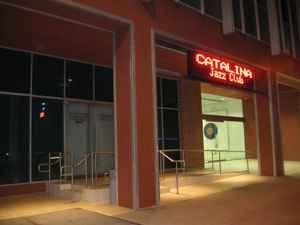
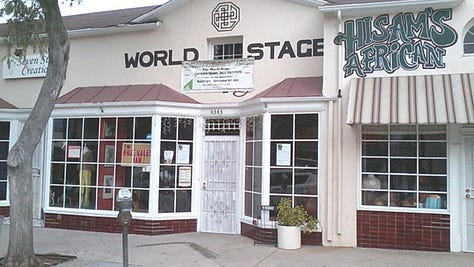
The Historic Pillars: Venues like the Catalina Jazz Club in Hollywood serve as the classic supper-club institution, while The World Stage in Leimert Park (founded by drummer Billy Higgins and poet Kamau Daaood) acts as a spiritual and educational hub for young musicians. (Full disclosure: I haven’t made it to either of these two yet, but they are on the short list).
There’s also the Walt Disney Concert Hall - whose exquisite architecture will be the venue for this years’s NEA Jazz Masters Tribute Concert.

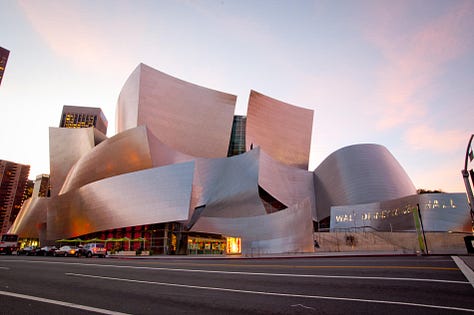
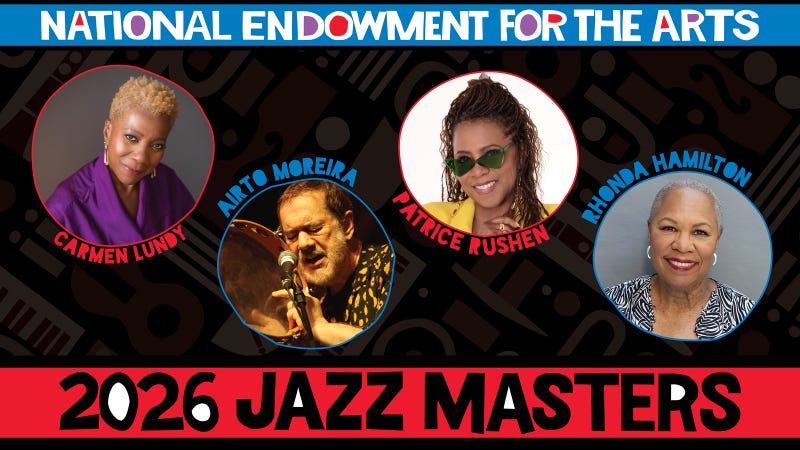
If you need institutional proof that the center of gravity has shifted, look at the National Endowment for the Arts. For decades, New York and Washington, D.C. held a monopoly on jazz honors. But on September 15th, the 2026 NEA Jazz Masters Tribute Concert will be held at the Walt Disney Concert Hall in Los Angeles.
The Class of 2026 is remarkable. Three of the four inductees are Black women who call Los Angeles home:
Carmen Lundy: The visionary vocalist, composer, and educator.
Rhonda Hamilton: The veteran broadcaster (and my former colleague on staff at SiriusXM’s Real Jazz).
Patrice Rushen: The keyboard virtuoso and the sole L.A. native of the group.
Airto Moreira: The Brazilian percussion legend who spent his most influential recording years in Southern California.
This ceremony isn’t just handing out awards. It is planting a flag on the West Coast. Check out their latest announcements at https://www.arts.gov.
Bottom Line: This is More Than a Moment
Every few years, critics try to declare a “jazz renaissance.” Usually, the hype fades.
Los Angeles is different because the infrastructure is permanently in place. Clubs are packed. Universities are churning out killers. Independent labels are flourishing. Hip-hop producers are sitting in the front rows of jazz concerts, and jazz musicians are laying down tracks on rap records.
Could one unexpected hit record send one of these L.A. artists fully into the mainstream pop consciousness? Absolutely. Jazz is always just one undeniable groove away from capturing the public imagination.
But whether jazz becomes commercially dominant again is beside the point. The real story is that America’s greatest musical tradition is actively evolving, in real time, driven by musicians who refuse to recognize the old boundaries. Right now, nowhere embodies that fearless spirit more completely than Los Angeles.
My Creative Escape in Los Angeles
·
Jun 20

Lately, Los Angeles has been feeling more and more like another home away from home. Its not just my rapidly growing network of family and friends, as both myself and Valerie have sons on the coast now, but the other big appeal is SiriusXM’s “Garage” Studio
I’ll see you guys in a couple of weeks back here, where I have another Gateway Jazz mini-playlist and much more of the jazz content you guys love!
Thanks for subscribing, and a huge shoutout to our new Jazz Lifers who joined this month to support My Jazz Life. As always: keep listening and swing safely.
Comments
Nothing yet. Say the first thing.
Sign in to join the conversation.