
With summer arriving, baby birds are leaving their nests. Young Downy Woodpeckers hitch clumsily along the tree trunks and implore their parents for food.
By the time they are out of the nest and we can see them, the fledglings are already nearly full grown and wear the same black-and-white pattern as their parents.
All adult male Downy Woodpeckers have red on the back of the head. The surprise is that many of the babies have some red feathers on the top of the head. Not the back of the head, where adult males are red, but right on top.
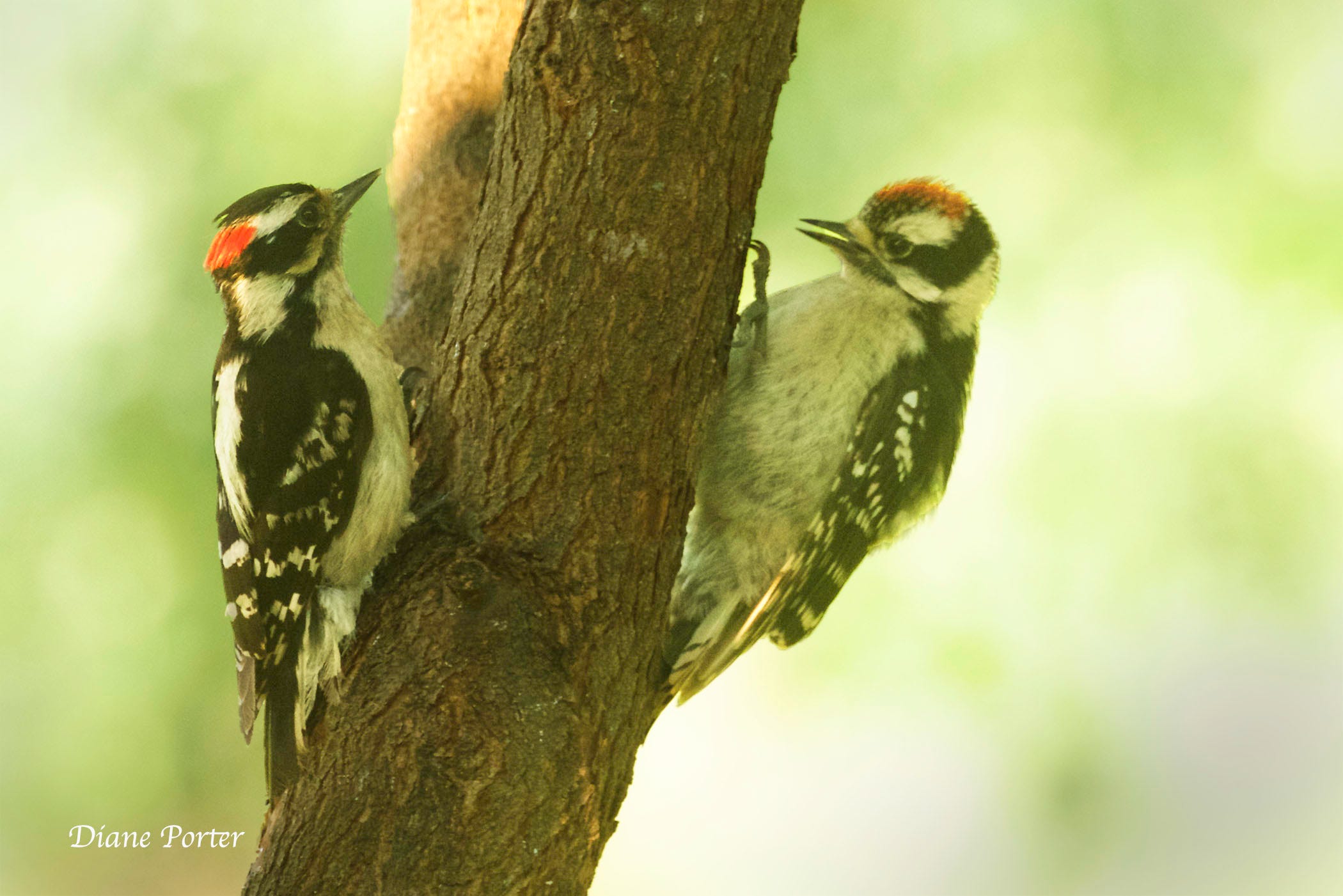
Once you notice it, red on the top of a Downy Woodpecker’s head tells you instantly that you’re looking at a recently fledged bird.
It’s not so bright as the adult’s red patch. (Michael insists it’s really more orange than red.) But those are red or at least reddish feathers on top of the head, and no adult Downy Woodpecker has red there.
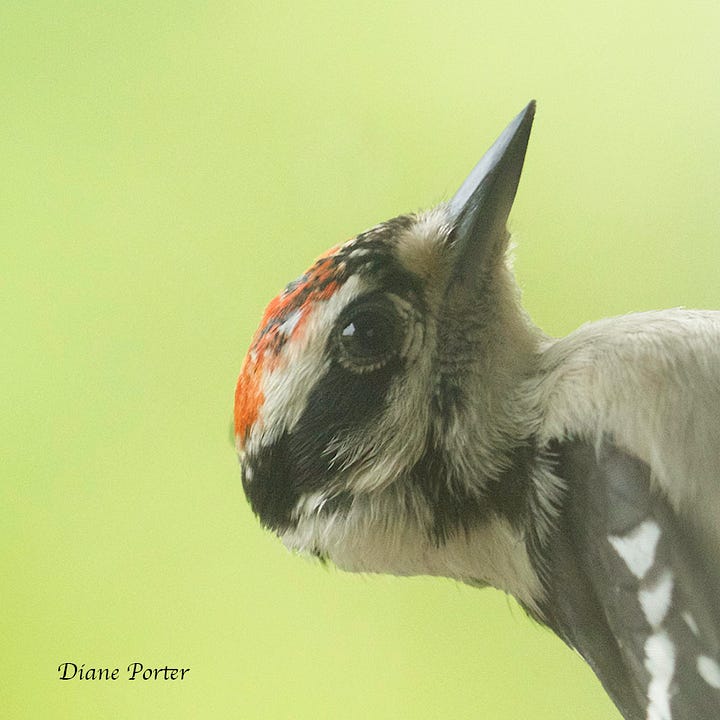
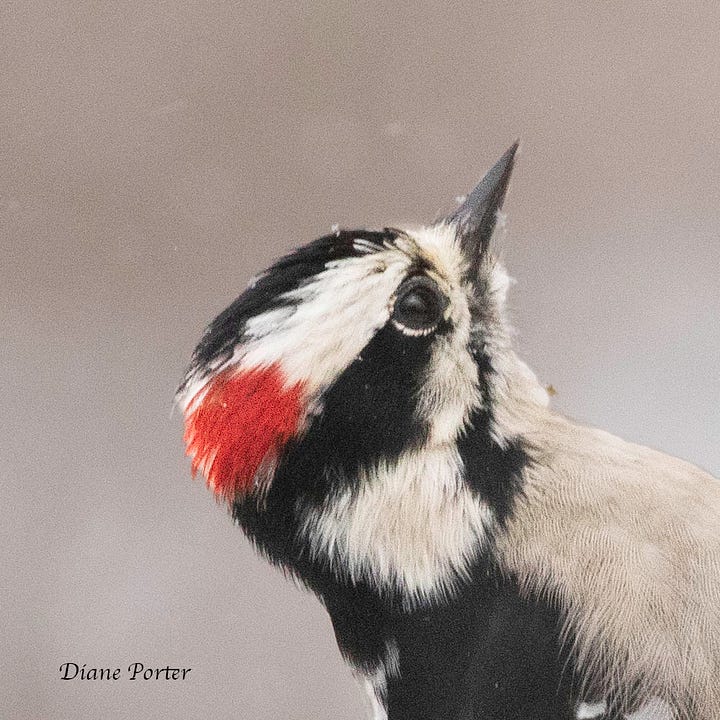
The puzzle deepens because even some young females show traces of red. However, in the females, only the tips of the black feathers on the top of the head may be red, so the effect is more subtle.
Adult female Downy Woodpeckers wear no trace of red feathering. We don’t know why any of their daughters start out with red feathers.
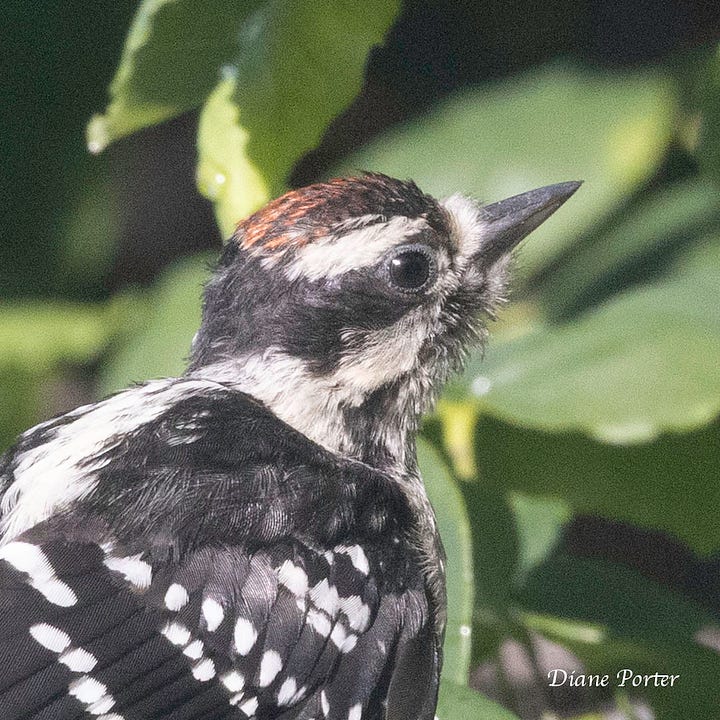
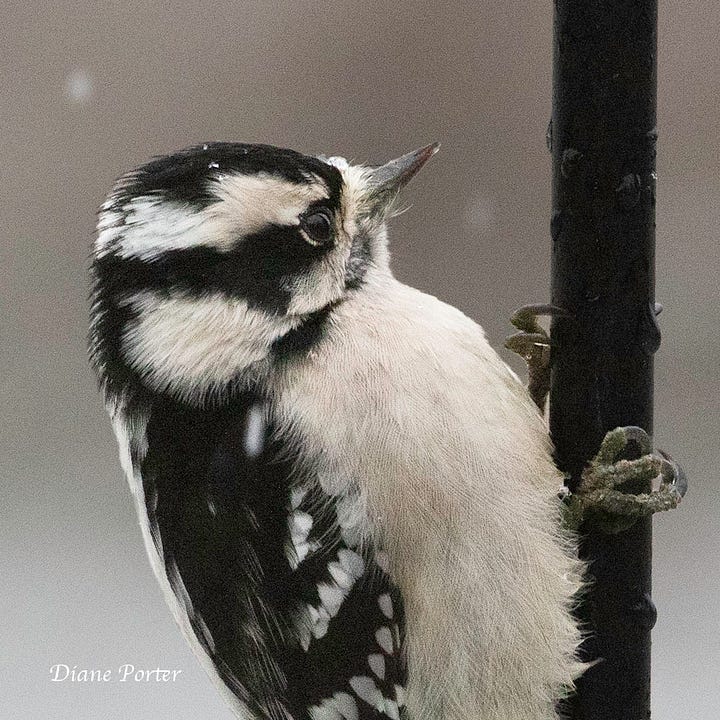
Downy Woodpeckers molt out of their soft juvenile plumage before winter arrives. By the time they are adults, black feathers completely replace the red up top. And the males develop bright red feathers on the back of the head.
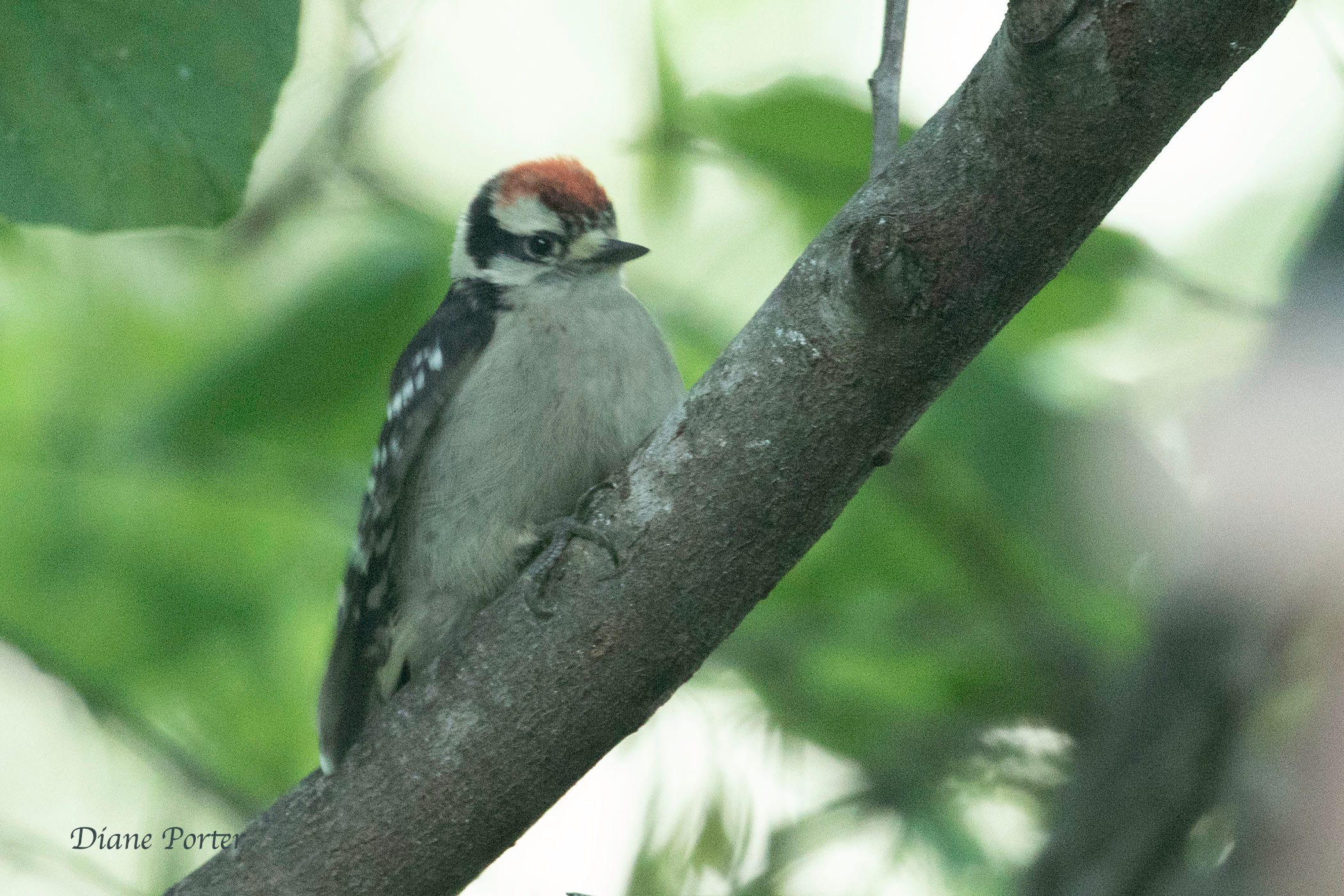
Ornithologists don’t seem to agree about why some baby Downy Woodpeckers have red crowns.
Some have suggested that the red tells adult birds that this youngster is not a rival. Others have proposed that the bright crown helps parents locate and feed their young at the nest hole.
Neither explanation appears to have gained wide acceptance.
Another possibility is that the trait was inherited from an ancestral woodpecker that lived before any woodpeckers we know today. Similar juvenile crowns occur in several related species, including Hairy and Red-cockaded Woodpeckers.
It is a mystery.
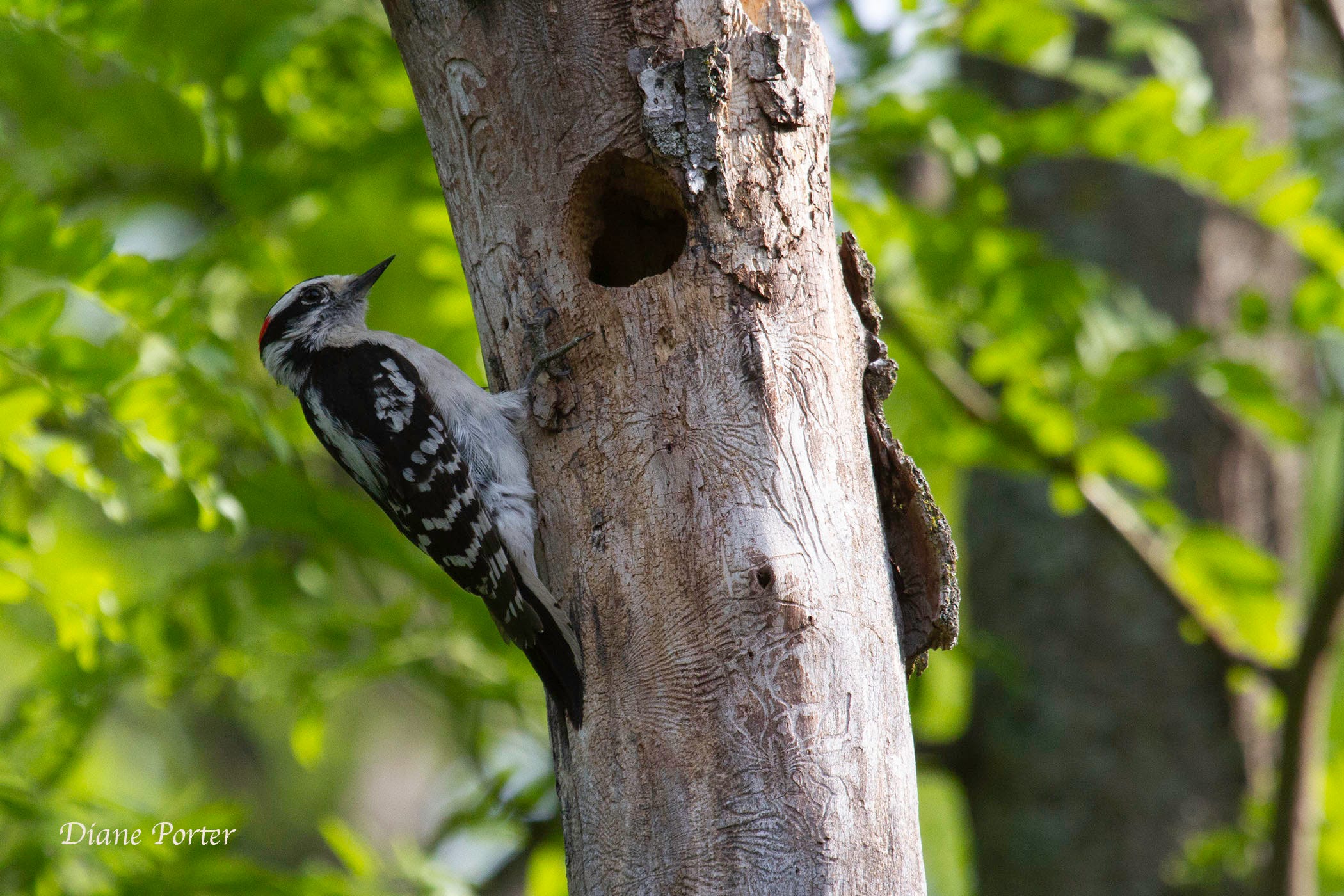
But I do enjoy the thought of four baby woodpeckers snuggled down in a hole in a hollow elm tree, growing black-and-white wing feathers and inexplicable red crowns.
Post script:
After this article was published, Robert Mulvihill a former researcher with the Powdermill bird banding program wrote to share data he collected over several decades. He found that juvenile Downy Woodpeckers with extensively red crowns almost always proved to be males when later recaptured, while those with black crowns proved to be females. A few females showed scattered red crown feathers, confirming that the pattern is not absolute.
See Robert Mulvihill’s article here.
To send this post to a friend, click the green button
Comments
Nothing yet. Say the first thing.
Sign in to join the conversation.