
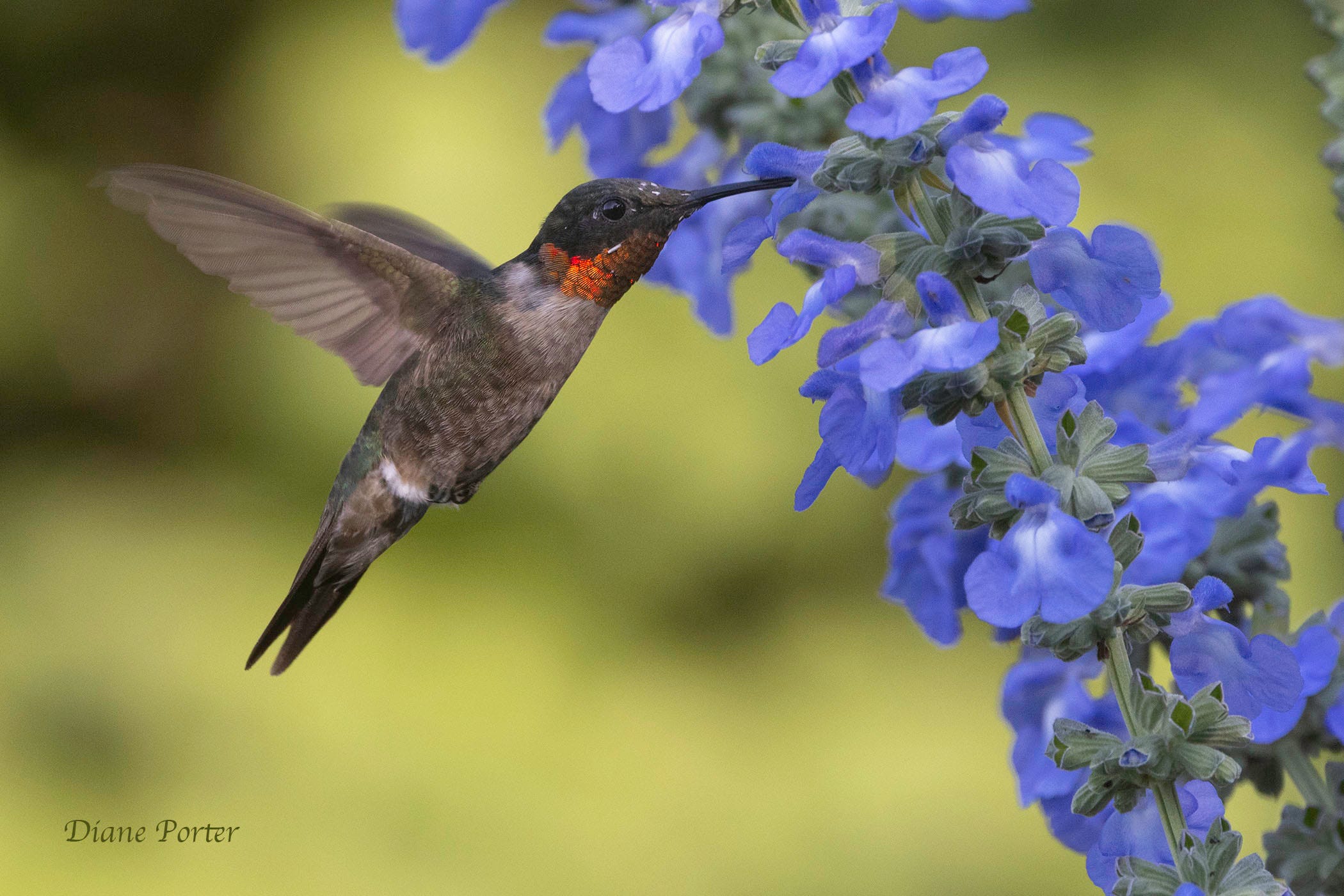
Sitting outside, eyes shut, I know that the hummingbird hovering beside me is a male. He’s slightly smaller than a female. His wings beat so fast they create a high-pitched hum. I open my eyes, and the rubies on his throat dazzle me.
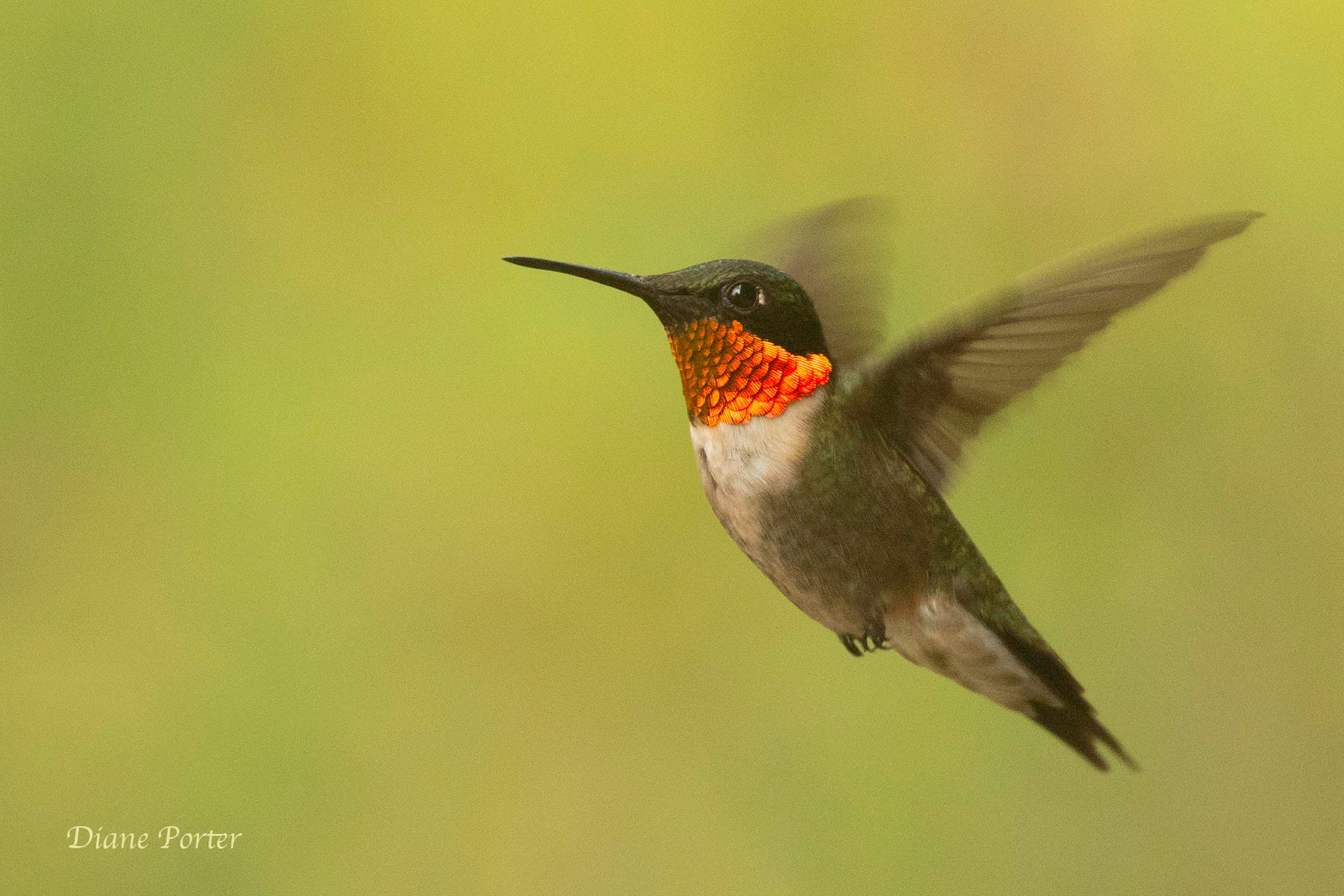
He flashes away as another male zooms in. I watch the two engage, zooming around behind each other like fighter pilots. They accelerate and turn impossibly fast. Each wants the sugar-water feeder all to himself. Females can sometimes visit the feeder at the same time as a male. I wonder if that’s because they’re bigger.
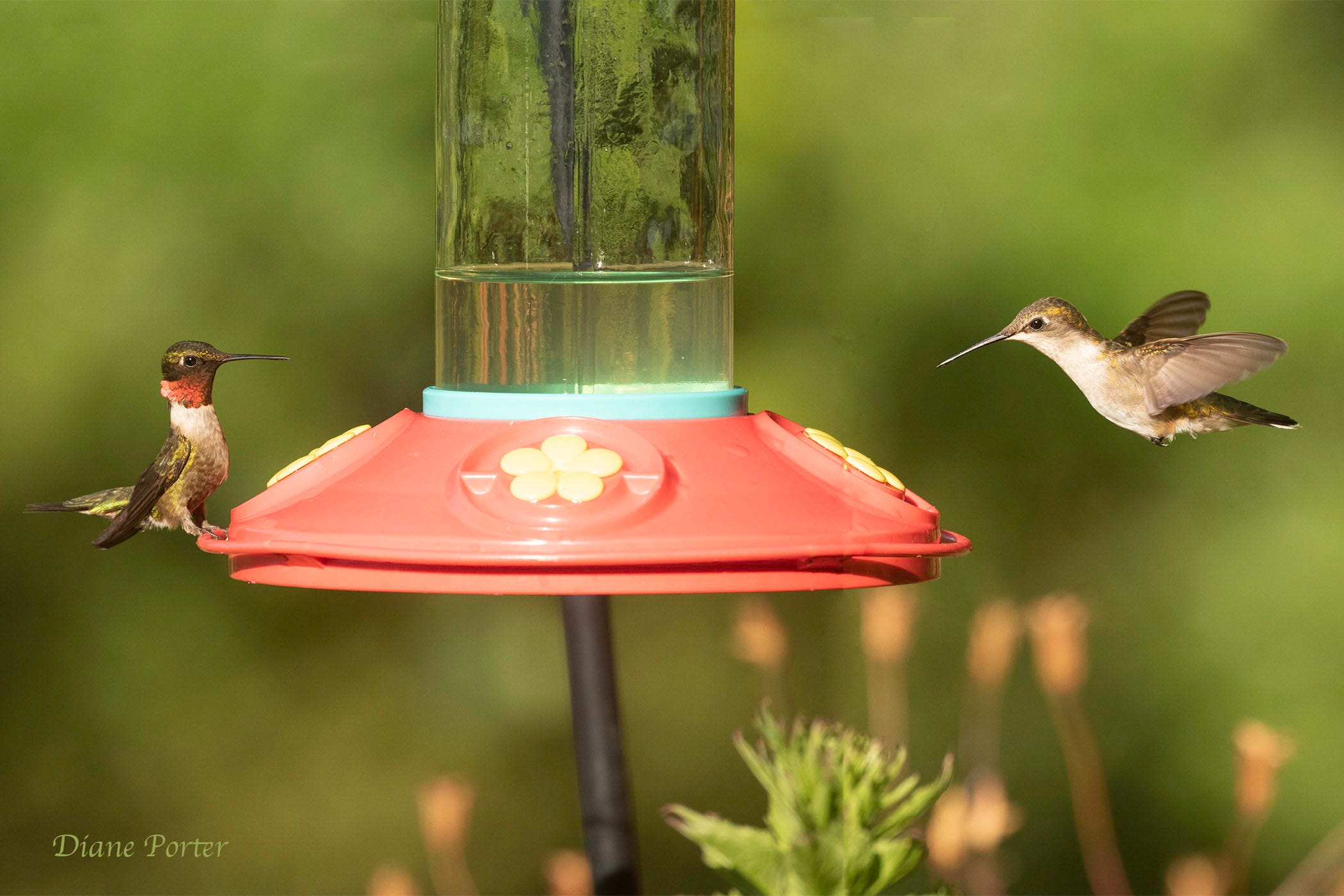
I’m seeing a few more hummingbirds now in mid-August than earlier in the summer. Migration has already begun. The birds in my Iowa backyard today may be travelers from the north, swelling the numbers of those who have spent the season here.
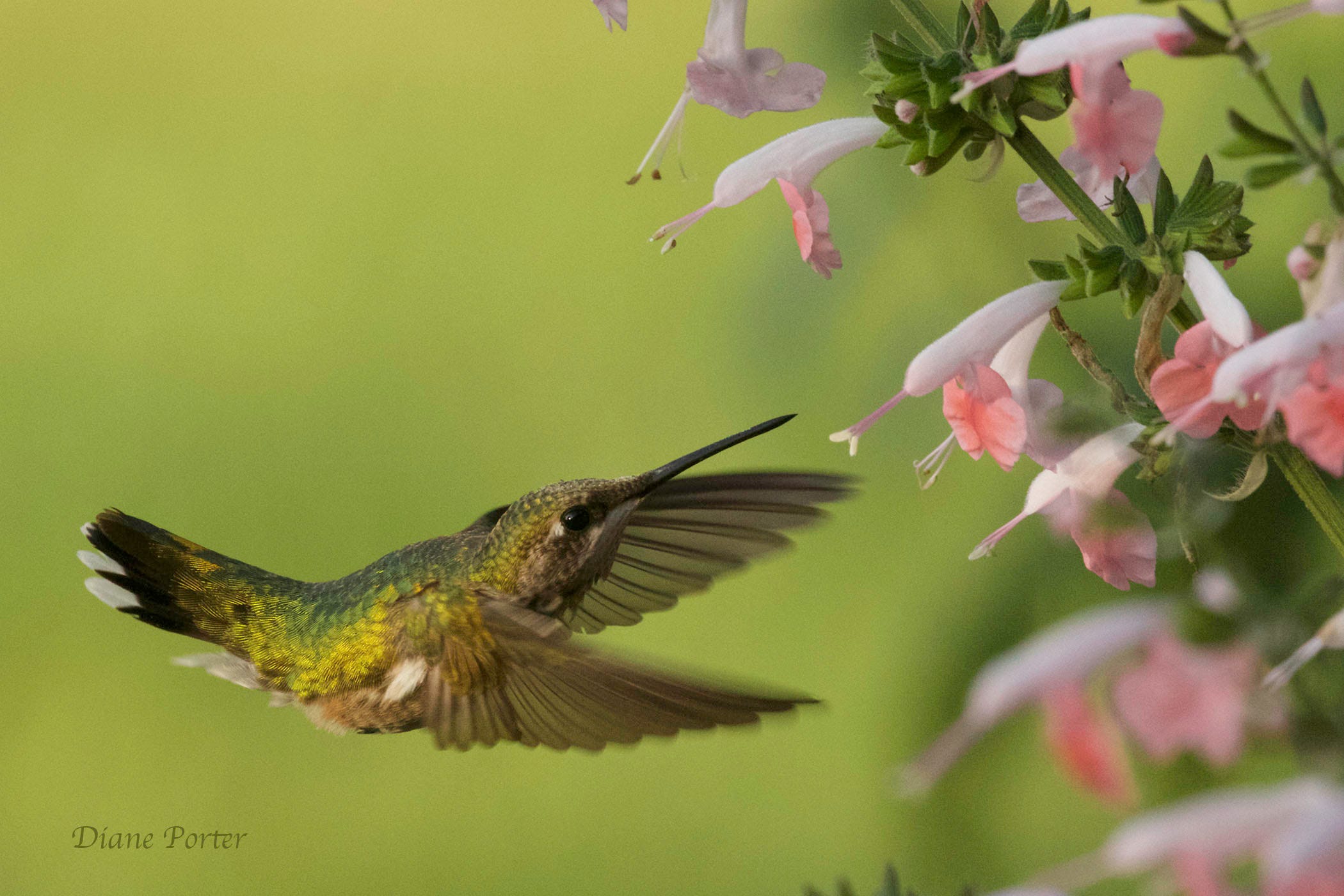
Adult males start moving first. They soon become scarcer, and here they are mostly gone by early September. Still, the total number of hummingbirds around here will probably keep increasing for a while. Sometimes there are more hummingbirds at my feedings in the first week of September than I’ve seen all summer. Much of this is because of birds coming from Minnesota, Wisconsin, and Ontario.
The babes of the year will stay in the area a while longer. They are the last to leave, generally migrating after the adults. The extra time gives them a chance to become fully independent and build the fat reserves they need for migration.
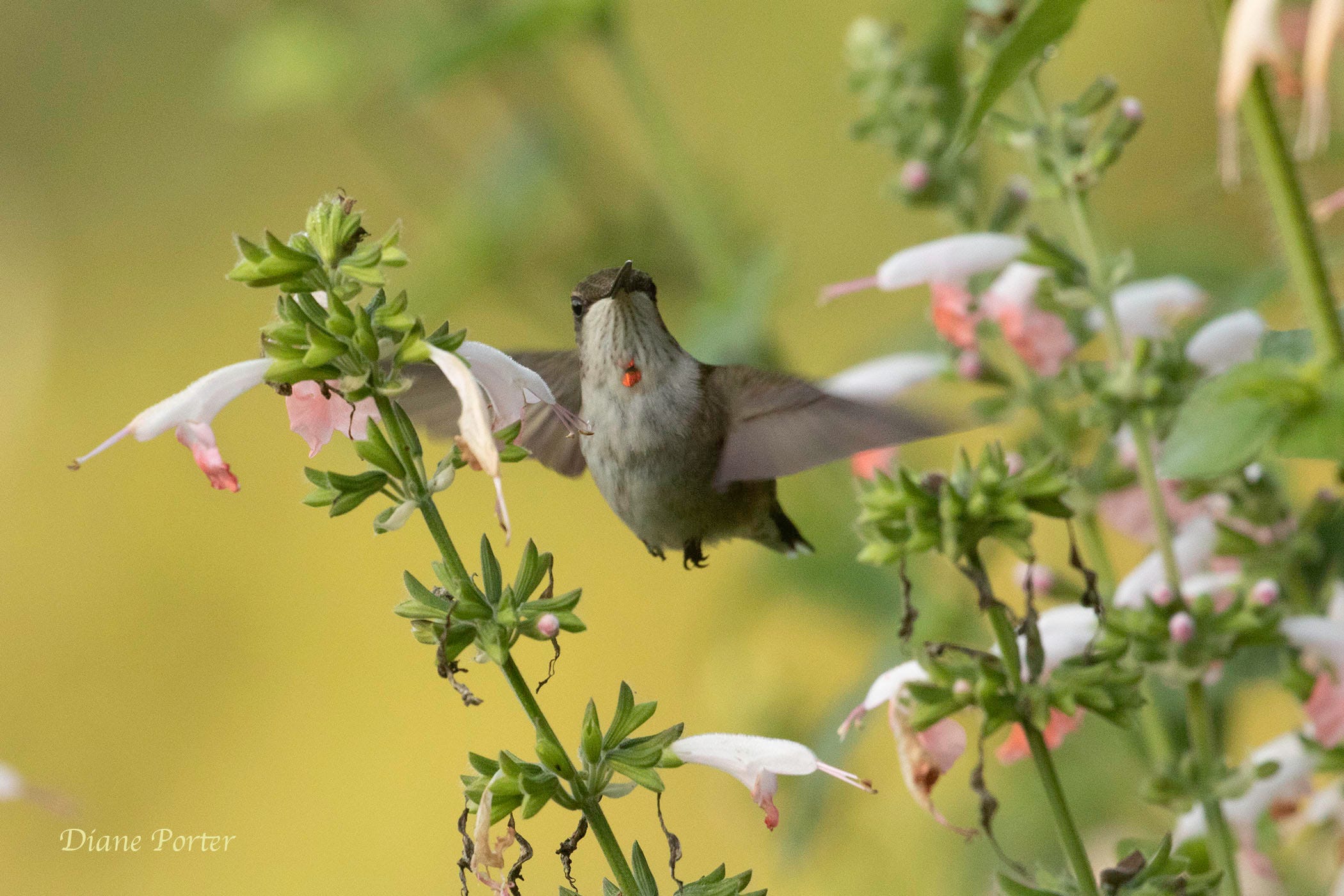
I have never seen a hummingbird in my backyard after mid-September. But leading up to that is a great time to offer sugar water for the hungry birds, drawing the migrants in where they can be watched up close.
Here’s the recipe for hummingbird food. Because the hummingbird population is not huge here, I make a small amount. It’s important to the health of the birds to keep it fresh and free from mold.
HUMMINGBIRD NECTAR RECIPE
Mix 2 cups of water and 1/2 cup regular white granulated sugar (not honey, not raw sugar).
Bringing it to a boil is not required but makes it dissolve faster.
Cool it.
Fill the feeder and hang it outside.
Store the extra in a sealed jar in the fridge for up to one week.
Change the nectar and clean the feeder at least every other day in warm weather.
Even more fun than hummingbird feeders is growing flowers that produce nectar. I choose flowers that are native to Iowa, because they also feed our local pollinating insects and benefit the entire ecosystem.
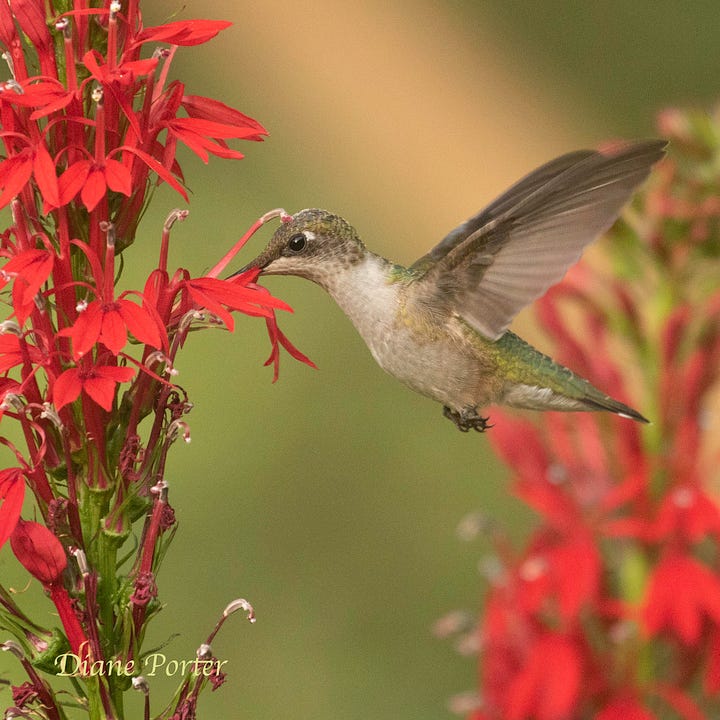
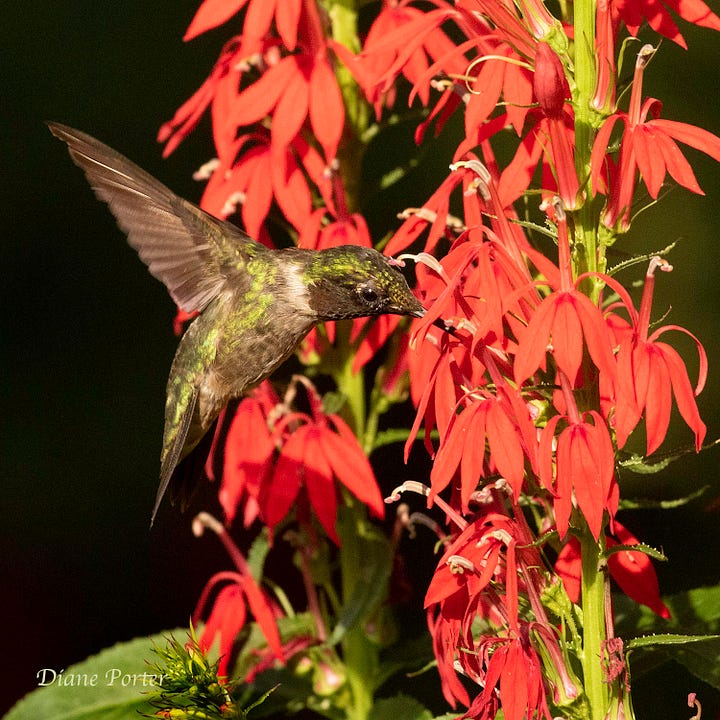
Cardinal Flower (Lobelia cardinalis) is made for hummingbirds. As the bird probes the flower for nectar, it puts its head in exactly the right spot to receive a tap on the forehead. That tap deposits a dab of pollen or picks up pollen from the previous flower the bird visited. Pollination for the flower is achieved while the bird gets an energy-rich sip of nectar.
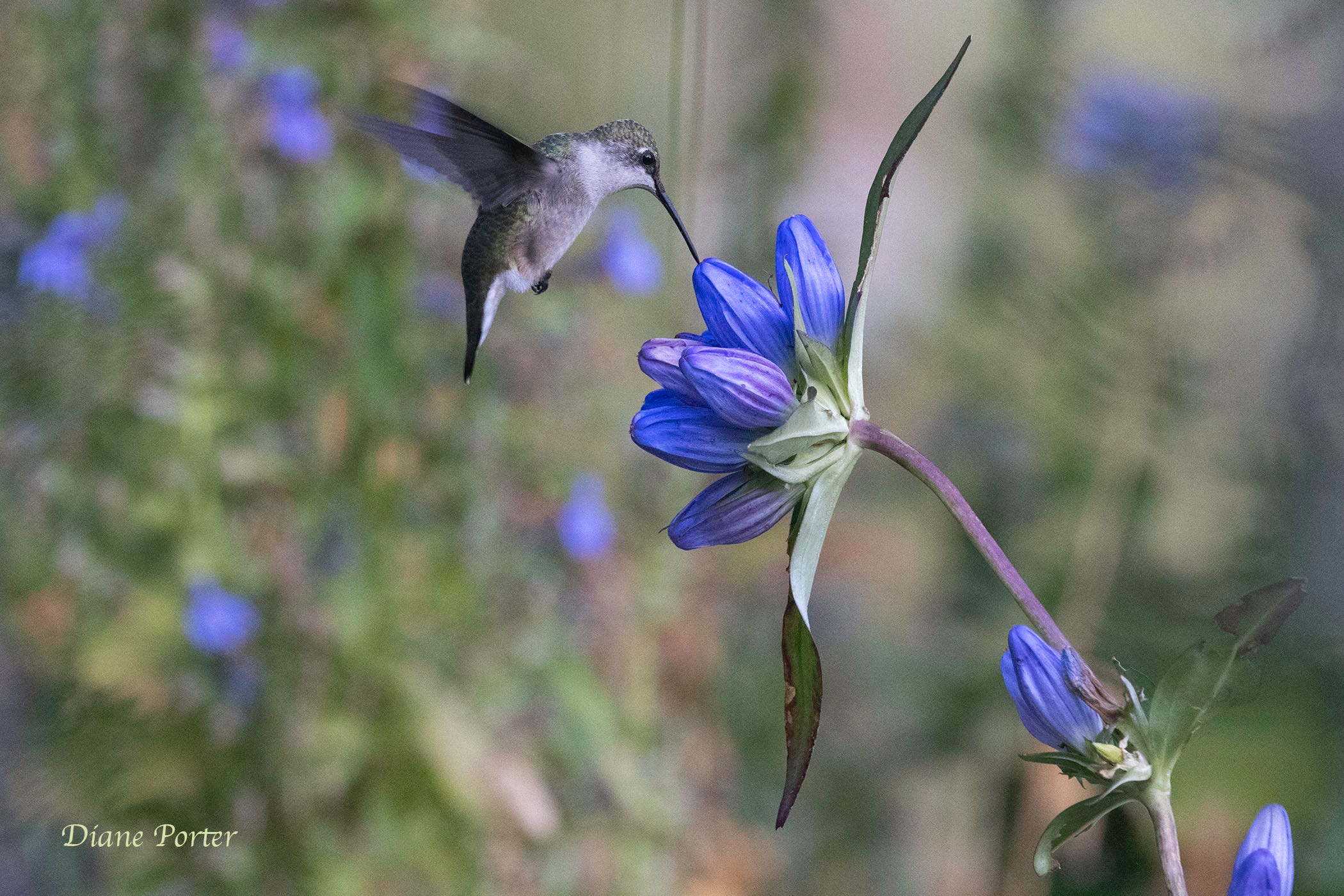
Bottle Gentian (Gentiana andrewsii) holds nectar deep down inside blue blossoms that stay closed and never open up. Blooming late in the summer, they provide nectar right when hummingbirds are migrating and need the extra juice. Hummingbirds do a sort of spear fishing move, hovering above a flower and driving the bill down to reach the nectar.
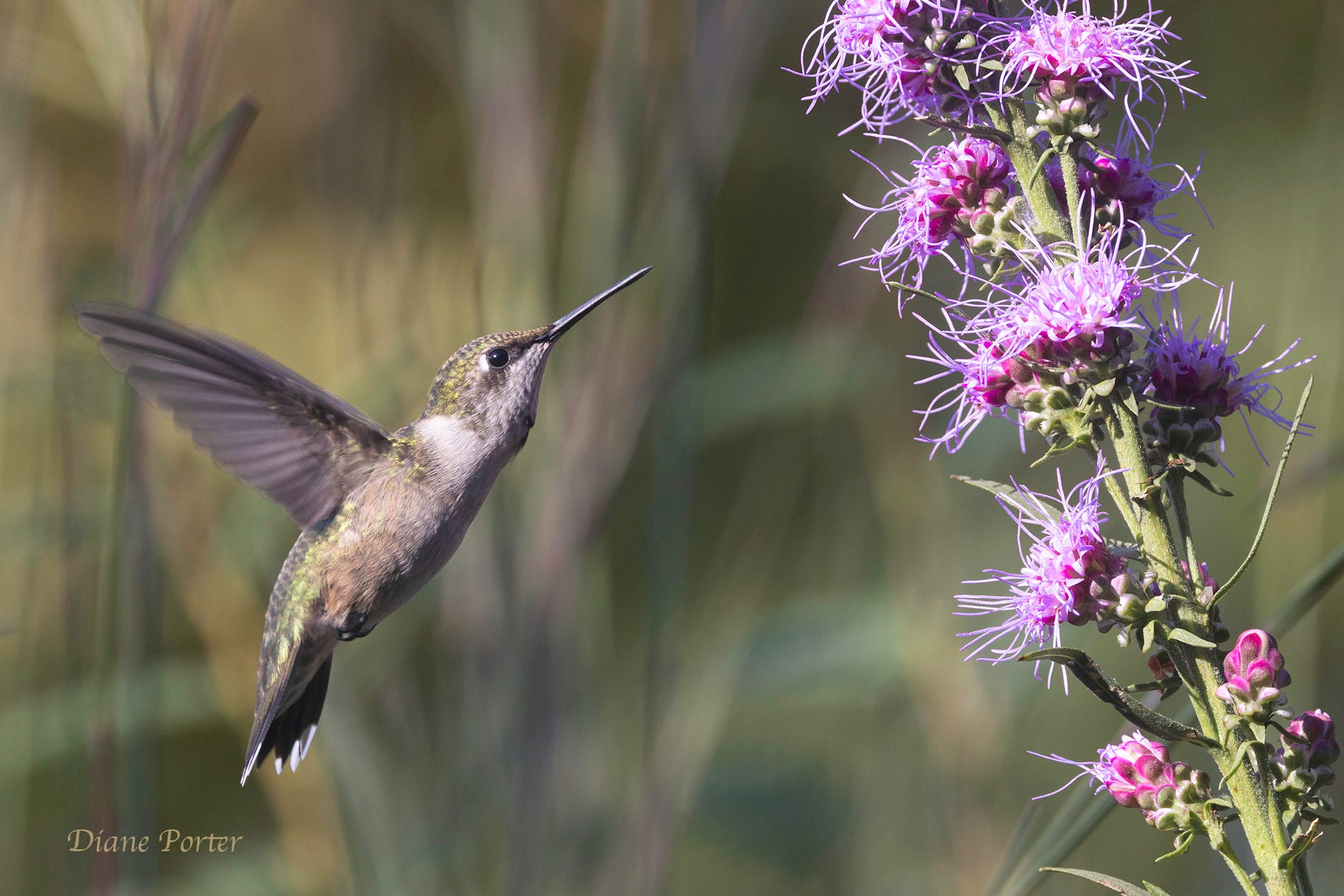
Rough Blazing Star (Liatris aspera) starts blooming in summer and continues sometimes into October. Each button-like flowerhead gives nectar from a jillion tiny florets. A hummingbird can hover by a stalk of Blazing Star and work its bill into them one after another very fast, like the needle of a sewing machine.
Blue Sage (Salvia azurea) is a species of the central and southern Great Plains and parts of the southeastern United States. Although it is rare in Iowa, it has earned its place in my garden not only for its beauty but also because I’ve watched native bees, butterflies, and other insects using it. Not to mention the hummingbirds.
Go forth and enjoy hummingbirds!
A note on plant sources:
There are many nurseries that specialize in seeds and plants of native species for every region. For the MidWest, I especially like Prairie Moon Nursery. See their page on hummingbird flowers here.
Comments
Nothing yet. Say the first thing.
Sign in to join the conversation.