
It’s becoming increasingly common to see people doing work that, until very recently, belonged almost exclusively to a specific profession. Designers write code. Engineers propose and build user experiences. Product managers create interfaces. People in marketing generate illustrations. And thanks to AI, almost anyone can achieve surprisingly good results in a very short amount of time. And I think that’s wonderful.
I don’t believe AI is pushing us back into our own specialties. Quite the opposite. It’s never been easier to cross those boundaries and contribute to disciplines outside your own. But I think we’re starting to confuse two very different things: the ability to execute and the ability to make good decisions.
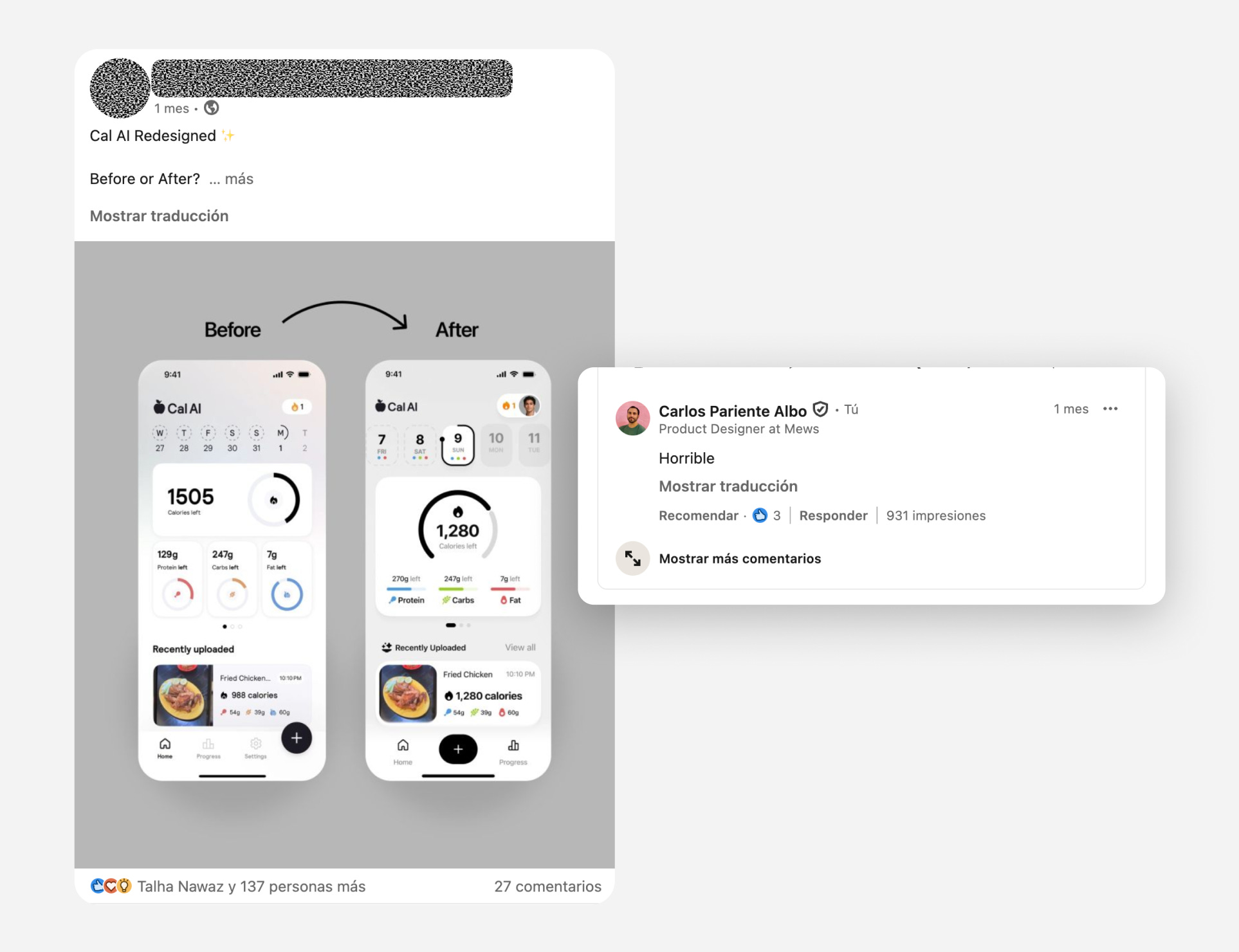
A few years ago, it was relatively obvious who should be responsible for each part of a product because technical complexity acted as a natural filter. If you wanted to compose a film score, you needed to be a composer. If you wanted to dub a movie, you needed to be a voice actor. If you wanted to design an interface, you needed to know how to design.
Today, many of those barriers have almost disappeared. That made me think about cinema.
I’ve been watching The Lion King several times a week lately (anyone with young kids will understand). It’s hard to explain why films like that work so well, but I suspect a big part of it is that every single piece was crafted by people who had spent years mastering that exact craft. The music was written by professional composers. The voices were performed by voice actors whose entire careers revolved around that discipline. Every decision felt like it had been made by someone deeply specialized in that one particular detail.
That wasn’t a coincidence. It was specialization.
Today, it’s much more common to see different kinds of decisions. The main song is performed by a famous artist because they bring commercial appeal. A well-known actor voices a character even though dubbing has never been their profession. The result is still good. It may even sell more tickets. But sometimes something gets lost along the way. It’s rarely a disaster. You don’t leave the cinema thinking the movie is bad because of those decisions. You simply feel that something doesn’t quite fit. And years later, those small choices often make the work feel tied to a particular moment rather than timeless.
I think the same thing can happen in software. AI is making it possible for almost anyone to build a convincing interface. And that’s an enormous advantage for teams. We’ll have more ideas, more autonomy, and much more speed.
But building something is no longer the hard part. Choosing the best solution still is. Because tools generate options. Judgment eliminates them.
And developing judgment is still an extraordinarily slow process. It comes from years of studying products, making mistakes, recognizing patterns, understanding context, and, above all, making hundreds of small decisions whose consequences are rarely obvious.
That’s why I don’t think the real value of many professions ever came from knowing how to use a particular tool. It came from knowing when a decision was the right one, even when several options looked perfectly reasonable.
Maybe that’s the most interesting shift AI is bringing us. For years, execution was the scarce resource. Now execution is becoming accessible to almost everyone. What remains truly scarce is judgment. And I suspect that, because of that, it will become one of the most valuable skills of the next decade, alongside creativity, although that’s a reflection for another day.
No posts
Comments
Nothing yet. Say the first thing.
Sign in to join the conversation.