
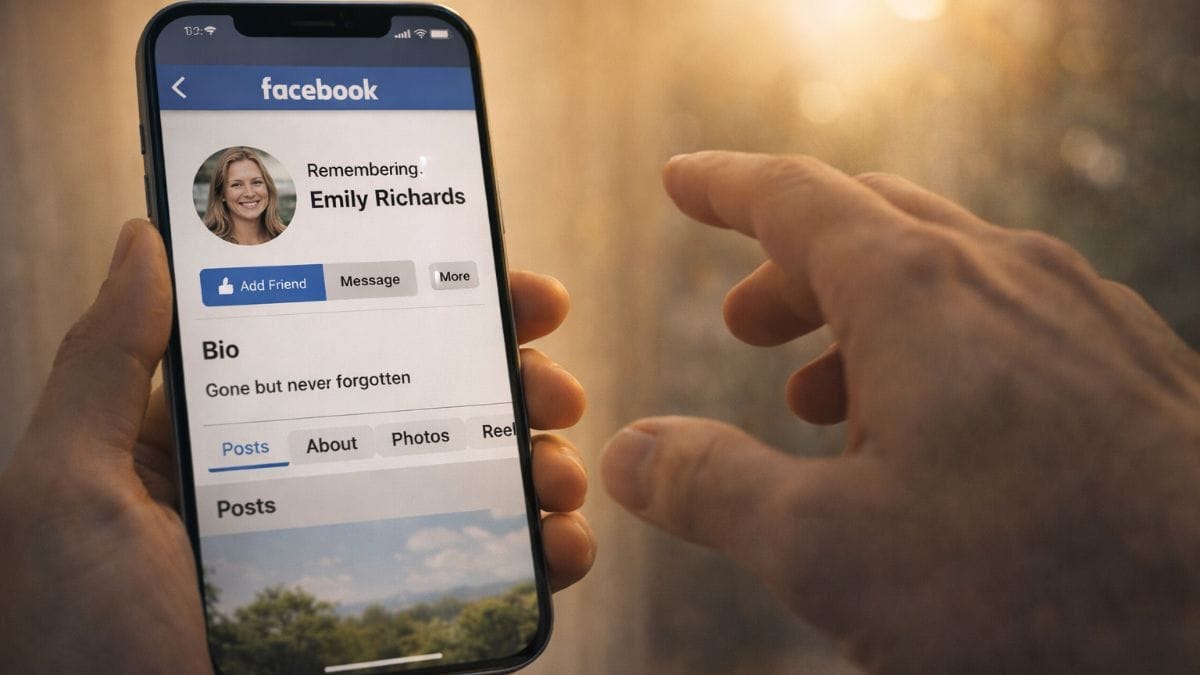
Image: ChatGPT
TL;DR
Meta was granted a U.S. patent for a system that trains AI on your posts, comments, chats and voice messages to simulate you after you die.
AI can post, respond to DMs and do audio and video calls in your name.
Don’t want that for you? I’ve got the fix.
Read time: 2 minutes

Here’s something I read that you need to know about. Meta owns a patent that could turn everything you’ve ever posted into a digital ghost.
The U.S. Patent Office granted Meta U.S. Patent 12513102B2. The filing describes a system that trains an AI on your posts, comments, chats, voice messages and likes, then deploys a bot that responds to your friends’ posts, answers DMs and simulates audio and video calls.
In your voice. With your face. After you die.

The filing is direct about the use case. The AI simulates you “when the user is absent from the social networking system, for example, when the user takes a long break or if the user is deceased.”
Meta would probably call this a virtual assistant for people on vacation. But they specifically wrote death into the patent. That’s one very long vacation.
The patent notes the impact of account inactivity is “much more severe and permanent” if the user is deceased and can never return. Translation: Your death is a business problem.
This technology is the proposed solution. What the industry calls “grief tech” has been building toward exactly this. Startups have been doing it for years. Now one of the largest companies on Earth holds the legal right to do it at scale.

Facebook has a legacy contact feature that most people have never touched. Meta buried it deeper in 2026. Here’s the current path.
On Facebook: Settings & Privacy > Settings > Accounts Center > Personal Details > Account ownership and control > Memorialization. (Depending on your device, OS and more, these steps might be a tad different. Poke around until you find it.)
From there, you have two choices. Assign a legacy contact, a trusted person who manages your profile after you’re gone. Or choose to have your account permanently deleted after your death. Either puts you in control. Leaving it blank gives that decision to Meta.
Send this to someone who has a Facebook account and has never once thought about what happens to it when they’re gone. Use the icons below.
Comments
Nothing yet. Say the first thing.
Sign in to join the conversation.