
We live in a world where almost nothing requires waiting. Hunger, boredom, desire, distraction…each can be satisfied with a tap of the thumb. If you need it, click. If you want it, click. If you don’t have the cash but you have credit, click.
In this kind of world, self-reliance is no longer just admired; it is worshiped. Independence is praised, dependence is avoided, and needing help is quietly treated as weakness.
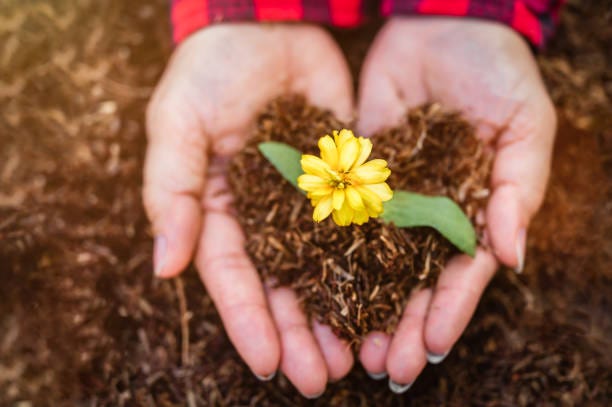
My grandmom always told me, “You are never closer to God than when your hands are in the dirt.” This is probably one of the most profound simple truths I’ve ever been told.
When I first began to ponder how Americans became so distant from God, this simple statement provided insight. Our culture today fails to recognize that we are dependent on God for everything. Living with the façade of self-sufficiency is a dangerous game. How many of our jobs today appear to be completely independent of God?
I can imagine that one’s success as a stockbroker, business owner, or mechanic can seem reliant on nothing other than intelligence, hard work, and ingenuity. In the land of plenty, our abundance blinds us to how truly fragile our strength, resources, and lives really are. The more our lives revolve around industry and technology, the more our work and daily rhythms shift from nature-based living to artificial environments and we slowly pull away from divine reliance. Our concrete towers stand as if proclaiming that we are the “masters of our own fate.” The less our hands are in the dirt, the easier it becomes to believe we do not need God to meet our daily needs. Self-sufficiency blinds us to God’s provision and presence.
If you are like me, you probably do not need a garden to feed your family. This is unique to the modern age and culture of great abundance. While I cannot claim to have tried providing my family with fresh vegetables I’ve grown myself, I can tell you about my flowers.
Every year, as the snow gives way to the first sneak peek of green shoots from my spring flower bulbs, my hope abounds. Flower season is my favorite season. It is where I see and experience the greatness of Elohim, the mighty Creator God. I see His love for me in the delicate details of each unique flower. I see the brilliance of the colors, and my heart races with joy. I feel the love of the Father when my hands are in the dirt and my heart connects with His.
These moments also remind me how fleeting life is, despite all my work and achievements. Verse after verse, the Bible is filled with analogies describing the ephemerality of flowers, grass, and our lives:
“For He knows our frame; He remembers that we are dust. As for man, his days are like grass; he flourishes like a flower of the field; the wind passes over it, and it is gone, and its place remembers it no more.” Psalm 103:14–16
Isaiah 40:7 tells us that only the Word of God endures forever:
“The grass withers, the flowers fall when the breath of the Lord blows on them; indeed, the people are grass. The grass withers and the flowers fall, but the Word of our God stands forever.”
Spend a few days alone in the wilderness or day in the hospital and you are quickly reminded of human frailty and our inability to truly control anything. The moment we come face-to-face with our physical fragility is the moment we become painfully aware of our total dependence on Someone greater than ourselves. When we recognize that self-sufficiency is an illusion, we begin to understand that God is calling us to shift our focus from dependence on self to divine reliance, and then our lives change.
There is a palpable yearning in our culture to experience the supernatural. People are searching for something more, something to heal spiritual ache, cure loneliness, and give weary minds and bodies rest. We were never meant to be independent. We were designed to look to God for provision, direction, and strength.
The more time we spend with God, through His Word and prayer, the more familiar we become with His character. We grow in relationship with Him as we relinquish our false identity rooted in “inner strength and skill.” We are humbled by the realization that nothing we have is truly ours; everything is a gift from our Father. Our breath is His breath. Our faith is a gift He gives us to nurture and grow. Our dreams are His dreams for our lives. Even the bright green color that heralds spring and the joy I feel when I see it is a gift. I know that when God created that very specific shade of green, He thought of me, “My baby girl Jessie is going to love this color green.” I know it beyond a shadow of a doubt—because it brings me joy.
Can you imagine what the world would witness if we, as Christians, drew close to God, laid down our prideful self-reliance, and became humbly dependent on Christ? The world would see the glory of God. Our lives would become a living display of His matchless power, endless love, and boundless kindness. We would boldly live without the illusion of self-sufficiency and joyfully proclaim the greatness of our God!

In what areas of my life do I most rely on my own strength, skill, or resources rather than on God?
How has living in a culture of convenience and abundance shaped my view of dependence on God and on others?
When was the last time I felt truly aware of my dependence on God? What circumstances brought that awareness?
What does “self-sufficiency” look like in my daily life? How might it be subtly blinding me to God’s provision and presence?
How does time spent in creation or with my “hands in the dirt,” literally or figuratively affect my awareness of God?
Comments
Nothing yet. Say the first thing.
Sign in to join the conversation.