
This article was previously published on my Patreon for all subscribers on September 20, 2025. The friend I reference as a bone-carver in this article, Luaith Bodin, passed away unexpectedly two weeks ago and while her music and roleplaying game are still available on the site listed, friends online are currently uncertain what happens to funds from BandCamp. We are working on a project to archive her work but it is not currently public.
I recently finished a gift for Riah I had promised nearly a year ago, but had put off because I had spent all that time trying to clear off the desk in my office -- yes, I know, that’s a ridiculous reason; I have two desks. But hey, I used to have three. You have to make some sacrifices when you move in together.
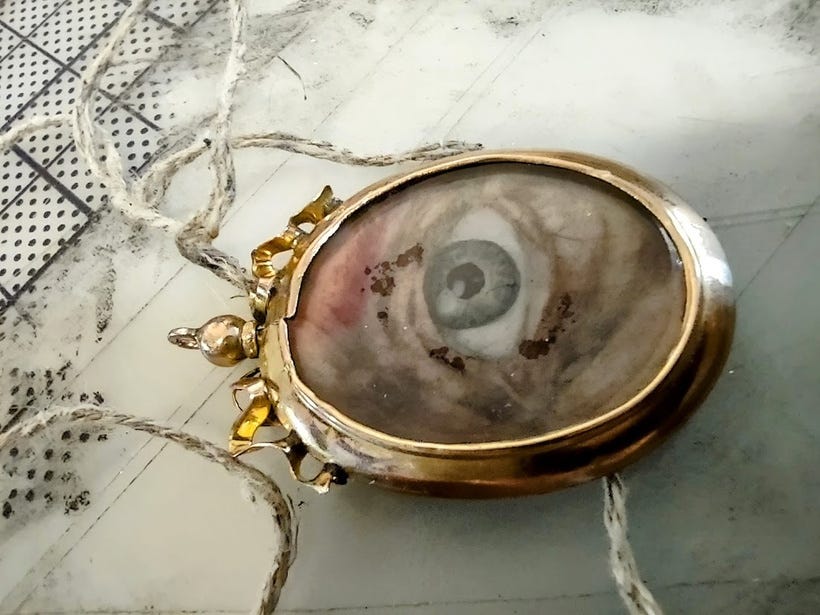
I thought I had sealed it well with wax, but the painting inside wound up getting wet. I’ve taken it apart for conservation, and I’m having trouble getting it back into the locket after re-waxing. So I’ll take the chance now to talk about what this thing is in the first place.
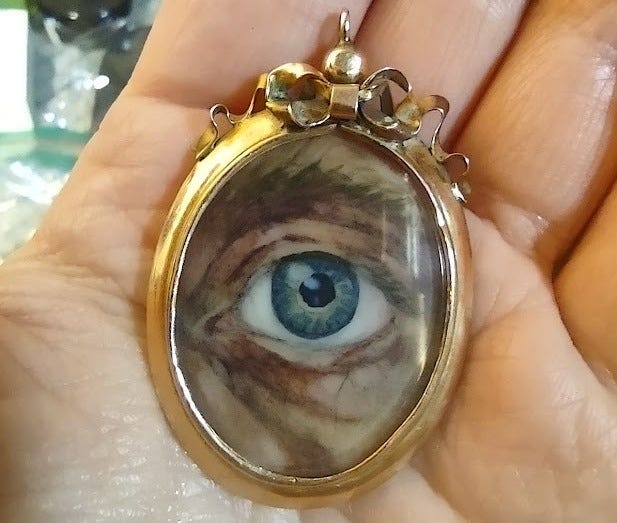
So a lover’s eye was a kind of 18th-century miniature painting; you’d give an image of your eye to your romantic partner as a token of affection. These were often painted in watercolor on ivory and placed in little glass lockets. In a bit naughtier form, they were sometimes painted on the inside of chamber pots.
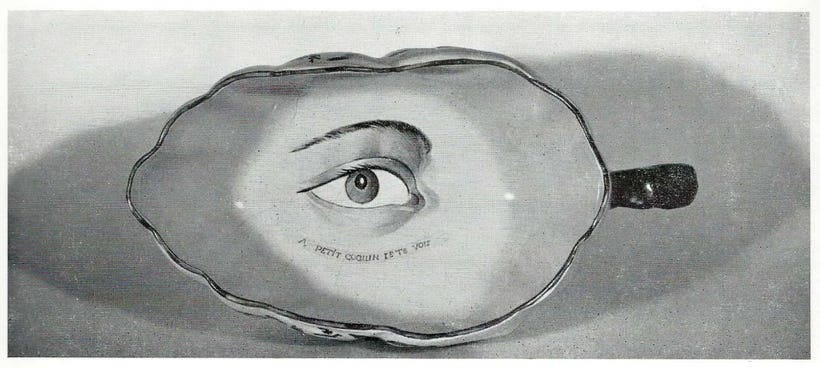
Riah, being a historian and a romantic, asked me to paint one of myself. They managed to get one of these antique lockets, and then I spent a while thinking about the surface: you can’t really get your hands on ivory anymore, at least not through regular channels. I am of course not going to fuck around with ivory. Some particularly hardcore art conservators have been known to burn the tusks of mammoths preserved in the Siberian permafrost to substitute for authentic ivory black pigment. In common practice, we use bone char from cattle and pigs. I typically mix an umber with dioxazine violet.
What I could get were tagua nuts. I suppose I could have gone with bone, but I had been curious about vegetable ivory for a while, and I didn’t want to trouble my friend the bone-carver. We had gotten a plastic substitute for ivory for a project on historical transmasculine prosthetics (archaedildology) that we presented to the University of Victoria’s “Moving Trans History Forward” Conference,** and while this seemed the only viable solution suitable for something on this scale, for a small item, I wanted to stick to natural and historically accurate materials. I decided to consider the humble nut.
Tagua is a type of palm whose large, dense (when unripe, they are soft and edible, much like other palm nuts) nuts have been used as a substitute for ivory since at least the late 1800s, for small items like buttons and dice. And, you know, we could still be making these things out of tagua nut -- I suppose the issue is that, barring a complete overhaul of the economic and political system in which centrist liberals are continually locked into begging the far right to grant monkey-paw wishes then going into fits of self-loathing and lateral blame (okay, okay, punching every direction but up) once the finger curls, we’d likely be trading pumping our own neurons full of microplastics for the unseen underpaid labor of whoever’s going to be carving them. Today, tagua nuts are often made into beads and small sculptures. Since I needed slices of a particular dimension, I contacted a seller (One World Projects) and told them my specifications, and got a personal response from an employee named Phil, who sent photos in advance of three slices to make sure they were large enough for my purposes. Thanks, Phil!
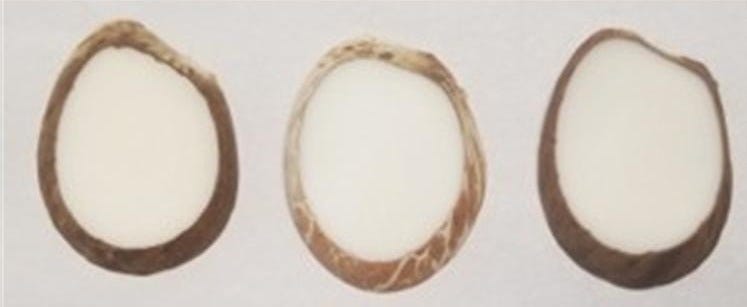
Of course, I was unable to get any pre-sliced pieces thin enough to fit inside the locket, but I was prepared for that: I was going to grind at least one (the extras were in case I fucked up) down with a dremel and sandpaper from their original 4mm thickness to under 1mm. This process turned out to be easier than expected; I created a jig out of little wooden toothpicks taped to the table and just kind of ground the hell out of it. This is thin enough that the tagua nut is translucent when held up to a light, as I imagine a piece of paper-thin ivory would have been. I begin to appreciate why the Victorians chose this material.
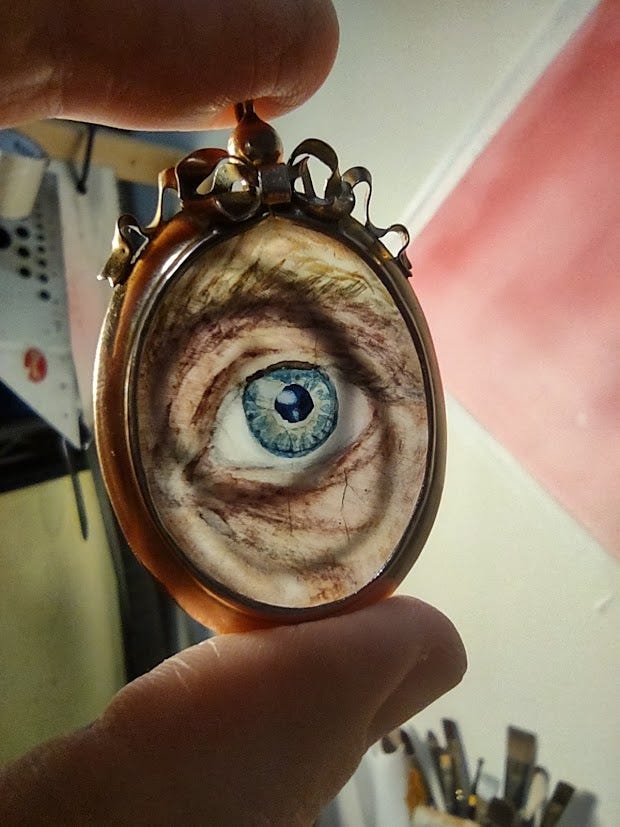
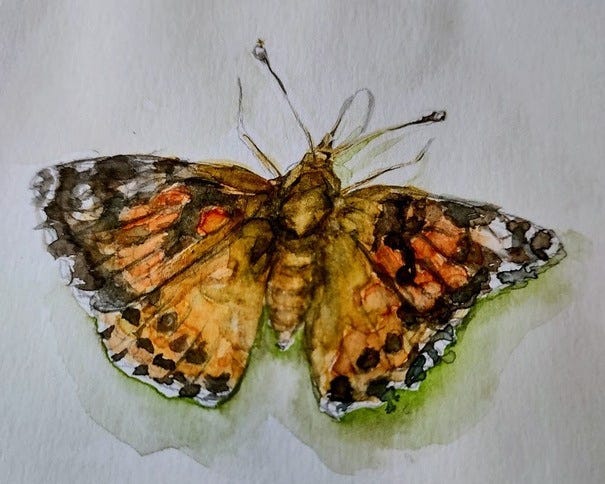
Okay, so the other reason I had procrastinated on this project was that lover’s eyes were traditionally painted with watercolors, and the watercolors I currently owned were below student grade. The actual catalyst that inspired me to get my desk clean and start work was the opportunity to take a free botanical illustration class at the Prospect Park boathouse, upon completion of which I would receive a set of professional-quality watercolors.
I learned a bit about the history and practice of botanical illustration: for example, it was the early botanical illustrator Maria Sibylla Merian who discovered and documented the life cycle of butterflies in 1705; until this point, spontaneous generation, the idea that complex organisms arose directly from non-living matter such as mud or rotten meat, was the common explanation for the phenomenon of metamorphosis in Europe. I learned some of the technical aspects as well: what parts of a plant or animal to draw, from what angles, how to measure them and so on, as well as some notes on how to identify species and make species clearly identifiable.
I painted the eye in a small mirror then sealed it with a cold wax I made from combining melted encaustic medium (beeswax and Damar varnish) with mineral spirits according to precise instructions designed to prevent it from spontaneously combusting in my kitchen. I hit the wax with a heat gun and polished the surface with a soft rag.
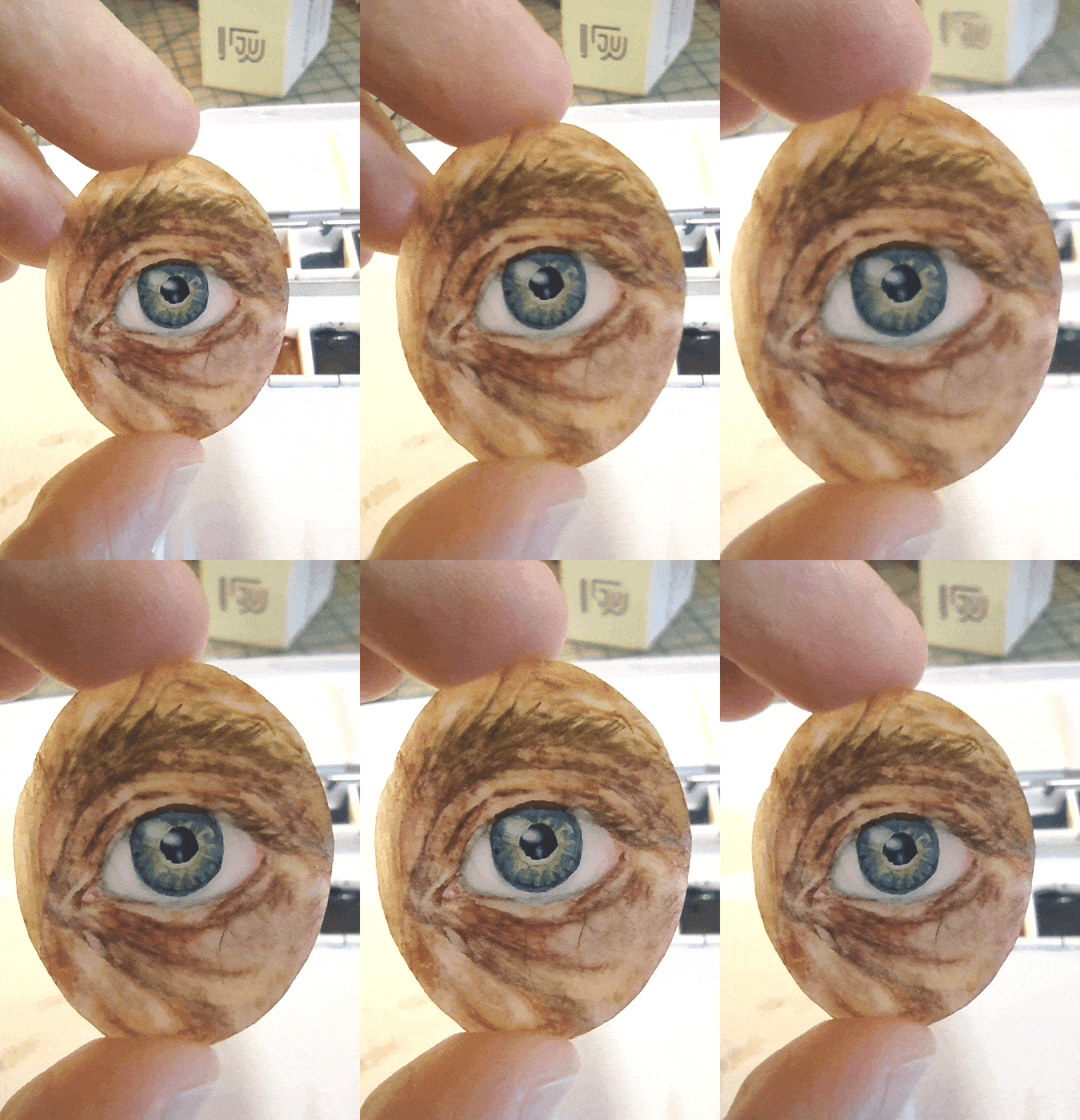
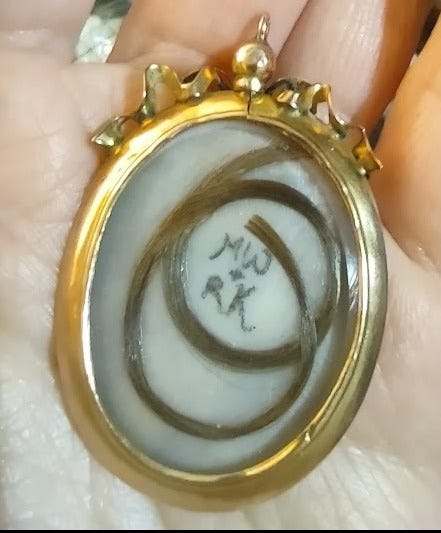
Victorians were also into hairwork and Riah had expressed interest in this as well so I did the best I could to attach a lock of my hair to the back: I’m not skilled at this, and my hair is notoriously slick like Teflon. I’ve had trouble even dyeing it. The traditional glue for this was gum arabic, so that’s what I used. Unfortunately, either the moisture or the tension from the glue began to immediately warp the surface, and I did my best to press it flat. This is been a continued issue when trying to repair it: The originally flat slice of tagua nut has become curved like a lens. I’ve tried to flatten in simply by putting it back in the case and not pressing the cover all the way shut. After applying a thicker layer of wax, the wax kept rubbing off on the interior of the glass, creating white marks on the surface.
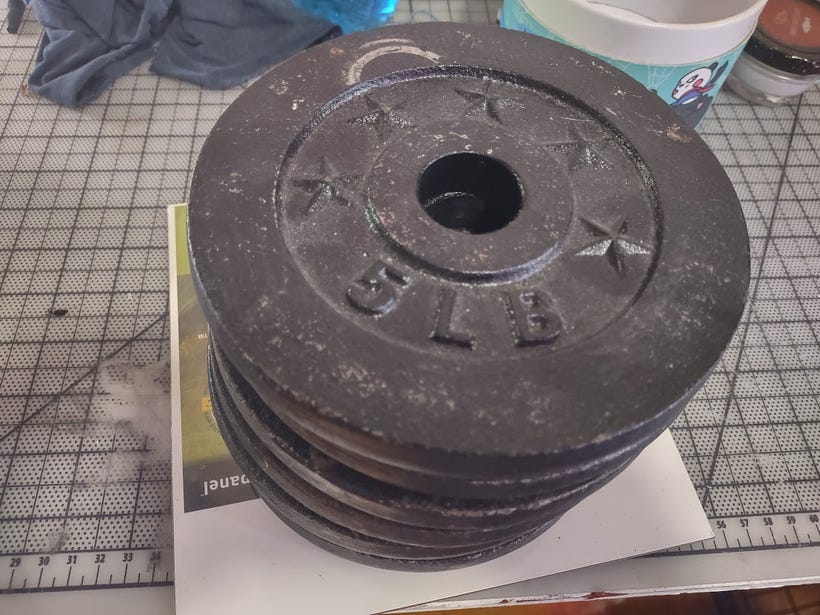
I remembered that I’d forgotten to polish the wax upon the second coating and did so, but this wasn’t enough either, so I pressed the painting under thirty pounds of weight. This reduced the bowing enough that I was able to get it back into its case just in time for Riah’s 36th birthday.
There is still a bit of wax pressed against the glass, but it no longer leaves white marks, so I think this will have to do -- I don’t want to risk making it worse. The locket was strung on a handmade strand of strong multi-ply yarn that Riah had made with a drop spindle.
*It’s been difficult for us to access scholarship on this because we can’t read French. https://galerie-metairie.com/contents/fr/CDLC%2011%20-%20Les%20Bourdabloues.pdf
Notes added May 2026:
**The video of our presentation is available on Youtube.
***The glass turned out to be in the locket backwards, and fit much better once reversed. I still need to get a chain for it.
End note: Lover’s eyes were popular through both the 18th and 19th centuries. I took inspiration from sources from multiple time periods and I have repeatedly referenced the 18th century while describing 19th-century practices for this reason.
Milo Wissig (he/him) — small paintings, long [th]reads, trans rites, OSHA violations. More work: Patreon | Website | Instagram | Substack
No posts
Comments
Nothing yet. Say the first thing.
Sign in to join the conversation.