
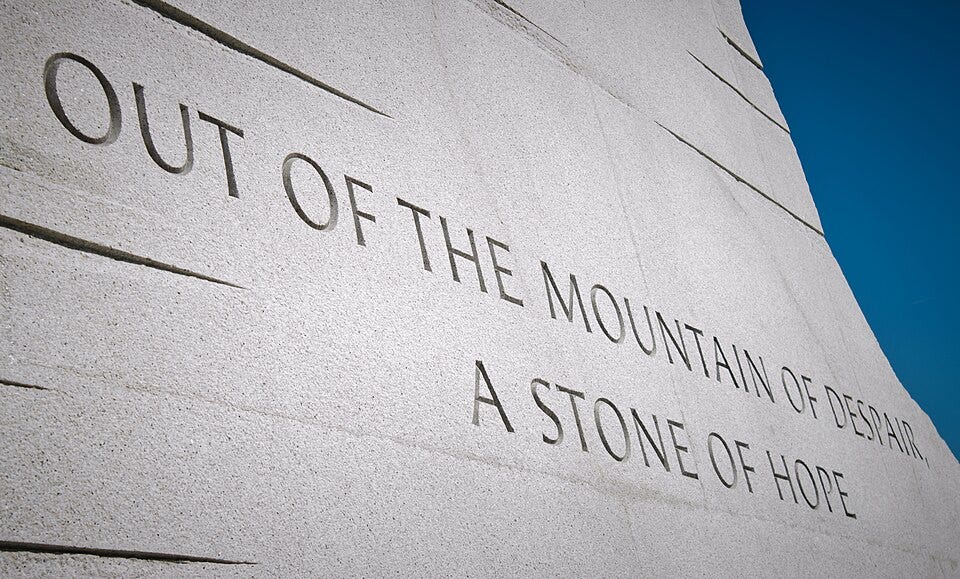
When I first started this column, my idea was to share my insights with others, incorporating a bit of history, a touch of storytelling and providing hope by sharing some good examples for creating a resilient, sustainable, just and equitable food system. Recent global developments and chaos stole the smile from my face and hope from my pen. However, without hope, we isolate ourselves from others. Without working with others, we lose our opportunity to work for change, and without the dream of change, we trap ourselves in a state of despair and hopelessness. We surrender without any action. Hope comes from individuals and groups who continue to raise their voices despite all odds: thinking, searching, organizing, and working together.
I also wanted to interview some friends and talk about others who are no longer wıth us who inspired me, who have made significant contributions to our understanding of the agri-food system. It is a long list, but I promise to start doing it slowly, with the hope that some of my friends will volunteer to help me by publishing their case studies of inspiring people on this page.
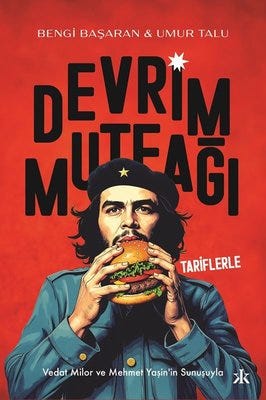
Before getting into today’s story, I would also like to mention a biographical collection in Turkish by two journalists from Turkey, Bengi Başaran and Umur Talu I read recently. Umur Talu and I were at Boğaziçi University many years ago, about the same time. Umur has an admirable career as a union activist, a journalist, and an academic who also ran as a candidate for the Labour Party in Istanbul in 2023. In Devrim Mutfağı (Kitchen of Revolution), Başaran and Talu presented a creative collection of biographies of revolutionaries who have made a significant impact on world history through their ideas and actions for change and how they relate to food. The book is more about the kitchens and tables of revolutionaries than it is about revolutionary kitchens. It is about food (and cooking) habits of a long list of people such as Oliver Cromwell, J.J. Rousseau, Napoleon Bonaparte, George Washington, Harriet Tubman, Karl Marx, Frederick Engels, Simon Bolivar, Garibaldi, Rosa Luxemburg, Lenin, Emma Goldman, Antonio Gramsci, Hannah Arendt, Mahatma Gandhi, Mao, Fidel Castro, Che Guevara, Martin Luther King, Nelson Mandela and more. The book begins with a quotation from Simon de Beauvoir: Cooking is revolution and creation, very nicely summarizing the intention of the book. It was refreshing to read about the food and kitchen habits of these famous actors of social change, which were as revealing (and shocking) as hearing what mom and dad were doing in the bedroom. I wish they would provide a more extended version of this book, and in other languages, too.
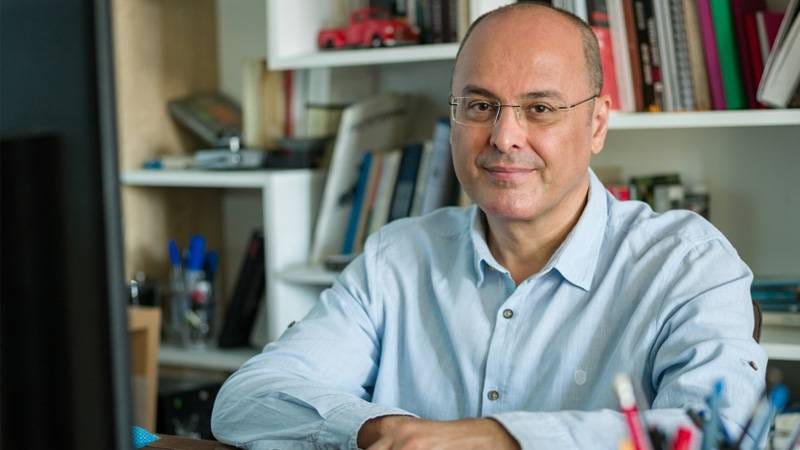
I like to begin my writing about foodies with a friend who has been passionately fighting for food safety in Turkey. In early June, I had a conversation with Dr. Bülent Şık, with whom I participated in drafting a food strategy for Istanbul. I have been familiar with Bulent’s work and some of his books, Çocuklar ve Gıda Güvenliği (Children and Food Safety), Mutfaktaki Kimyacı: Yiyip İçtiklerimiz Ne Kadar Güvenli? (The Chemist in the Kitchen: How safe is what we eat and drink?), Nehirler ve Çocuklar - Büyük Menderes Havzasında Yavaş Şiddetin Görünümleri: Rivers and Children - Manifestations of Slow Violence in the Great Menderes Basin) for a long time.
A Wikipedia article summarized Bülent as a “Turkish food engineer, environmental and human rights activist and a whistleblower. He was convicted after disclosing the results from a government study on environmental pollution and carcinogens.” Together with Hilal Elver, former United Nations Special Rapporteur on the Right to Food from June 2, 2014, to May 1, 2020, and Gökhan Günaydın, along with a small team of researchers, we drafted a food strategy for the Metropolitan Municipality of Istanbul in 2021.
I also knew that he was one of the academics who lost his job (as a deputy director of the Food Safety and Agricultural Research Center at Akdeniz University) after signing a petition "calling for peace between Turkish forces and Kurdish militants in southeast Turkey” in 2016.a document signed by several academics in Turkey and abroad in 2016.
He told me his story about a research project he conducted for the Ministry of Health in Turkey during the early 2010s. When his findings of dangerous levels of toxicity in some food and water samples did not lead to any action by the Ministry after several months, he decided to publish them in an opposition newspaper to inform the public about the dangers. The Turkish government claimed that the newspaper’s publication violated the confidentiality clauses, which prohibit the revelation of the findings unless approved by the authorities. Subsequently, he was sued for "revealing confidential information as well as provoking outrage among the public". In 2019, he was sentenced to 15 months in jail for "disclosing information about duty" while he had been acquitted of "providing prohibited information". Amnesty International has criticized the trial, describing Şık as a whistleblower. Şık was acquitted in 2025 of the remaining charge.
In my exchange with him, I did not hear any bitterness. He said that as a researcher, he was accountable to the public, and he did what he could even though it cost him his job and many years of agony.
As to our Istanbul food strategy: nothing much happened. It still stands on the website of the Istanbul Planning Agency (IPA). With a population of 16 million, Istanbul faces many of the vulnerabilities associated with unplanned growth and food system issues.
A 2022 report by IPA and KONDA revealed that a significant portion of Istanbul's residents were struggling to meet their basic needs. Some 71.5 percent of the survey respondents mentioned economic problems, especially housing and rental prices. 70.1 percent of respondents said they could not buy the food they wanted due to financial difficulties, and 61.7 percent said they were concerned about having access to sufficient nutrition. Among the lower-income respondents, this rate was over 80 percent. Over 62 percent of respondents and 86.3 percent of respondents with lower income said they had to reduce portions because they could not afford adequate food.
The election of Ekrem İmamoğlu as mayor in 2019 had created further problems, as the central government under President Erdoğan has been placing several roadblocks in the way of the city's governance. I told the story of challenges faced by the public restaurants established by the municipality in an earlier column. The arrest of Mayor İmamoğlu on corruption charges in March 2025 led to public protests.
The threat of silencing critical voices, whistleblowers, defenders of fundamental human rights and freedoms or political opponents is an increasing concern in many parts of the world. A letter signed by over 600 food, nutrition, and agricultural scholars, students, workers, practitioners and organizations that was delivered to Prime Minister Mark Carney and Minister of Foreign Affairs Anita Anand, demanding an immediate escalation of Canada’s response to Israel’s use of mass starvation as a tool of genocide against the Palestinian people. It was amazing to see so many people signing this document, yet I also sense that even more hesitated going pubic for various personal safety concerns. If we are stuck between hope and despair, I will go for the former, no matter how difficult
it may be.
No posts
Comments
Nothing yet. Say the first thing.
Sign in to join the conversation.