
Reading Mark Carney’s speech in Davos had eased my New Year anxieties a bit. It was not an optimistic speech. But an honest admission that they all knew that the “rules-based international order” was “partially false” (polite way of saying a lie). In reality, Carney added, “the strongest would exempt themselves when convenient. That trade rules were enforced asymmetrically. And we knew that international law applied with varying rigour depending on the identity of the accused or the victim.” This fiction was necessary, he admitted, as long as the American hegemony provided “public goods: open sea lanes, a stable financial system, collective security and support for frameworks for resolving disputes.”
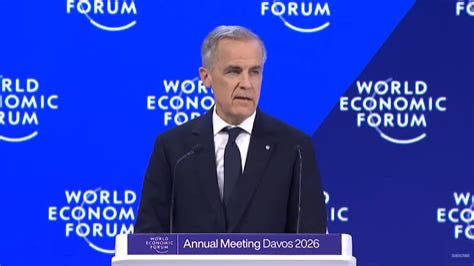
He was diplomatic but very clear that “great powers have begun using economic integration as weapons. Tariffs as leverage. Financial infrastructure as coercion. Supply chains as vulnerabilities to be exploited.”…. “The multilateral institutions on which middle powers have relied — the WTO, the UN, the COP — the very architecture of collective problem solving, are under threat.” He ended with a prescription of “values-based realism” or principled pragmatism.
Hearing Carney’s reaction to the War on Iran on February 28th made me wonder where the principles went. It took him a few days to remember them when he admitted that “the current conflict is another example of the failure of the international order.”
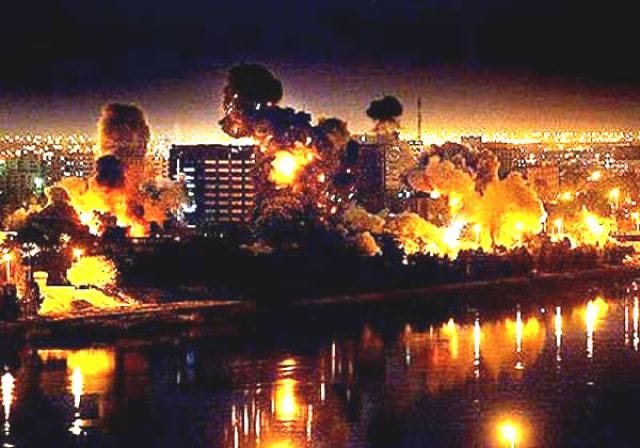
I was in Iraq in January 2003 with an international team led by War Child Canada to write a report on the potential impacts of a possible war on Iraq. Our report was published on January 30, 2003. Our Common Responsibility: The Impact of a New War on Iraqi Children. The Iraq War started on March 20th, 2003. The reason for the War was given as Iraq possessing Weapons of Mass Destruction and supporting al-Qaeda. Both excuses were proven to be false. By 2006, the Lancet survey estimated 655,965, and in 2007, an ORB survey estimated 1,033,000 Iraqi deaths resulting from the War. (For more recent numbers, see: Spagat 2024). The Canadian Council for Refugees estimated that an estimated 2.2 million people were internally displaced, and another 2.2 million Iraqis have fled the country as refugees. Tons of depleted uranium are used in bombs, and various studies are finding very high rates of congenital birth defects, cancers, immune system dysfunctions, kidney failure and other genetic disorders among Iraqis and US War veterans and their children. As is typical of many other disasters, the Western response has been minimal. Between January and June 2007, 36 Western countries accepted 19,800 asylum seekers from Iraq, and Canada took 129 of them. Most of the refugees were living in neighbouring countries with far fewer resources.
Food insecurity was already a major problem during the Sanctions Regime, which lasted from 1991 to 2003. We documented in(Koc, Das and Jernigan, 2007) some of the early food insecurity figures by the end of the Iraq War. Global Alliance Against Hunger and Poverty (GAFS) reported in 2024 that 30.60% of Iraqis could not afford a healthy diet.
Since the Iraq War, we have seen regime change operations in Libya, Syria, Yemen and Venezuela, the war in Ukraine, genocide in Gaza, civil wars in Sudan, Ethiopia, Somalia, and many other countries in Africa. The latest is a brutal embargo on Cuba, and now a war in Iran. Most of these were not even justified by the pretense of a “rules-based international order” that Mark Carney mentioned in his speech.
In his London Review of Books (LRB) Blog Eskandar Sadeghi-Boroujerdi argues that “the rhetorical labour that accompanied the invasion of Iraq, however flawed or dishonest, has largely been abandoned”. He blames this on “a morbid symptom of an international system in crisis. “The certainties of the United States’ hegemonic stewardship of the ‘international rules-based order’ have been deformed beyond recognition by the Gaza genocide, but no alternative architecture has cohered in their place. Instead, there is a politics of gangster imperialism that has neither international nor domestic consent.”
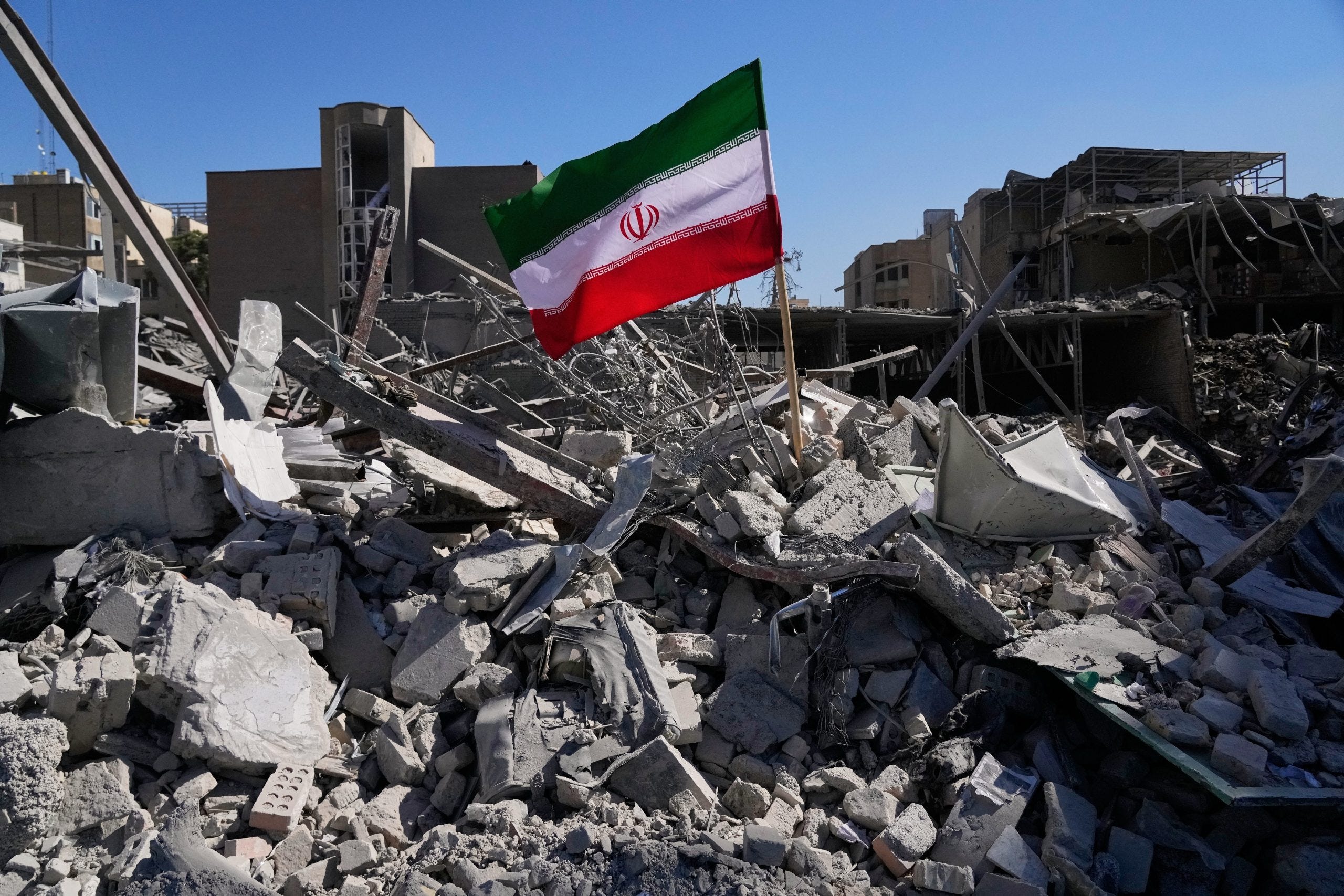
I am writing this column on the 5th day of the joint attack of the US and Israel on Iran. Several Iranian leaders were killed; airports, ports, and major industrial and energy facilities were destroyed, and schools and hospitals were bombed. By the end of this war, possibly many thousands of people would be killed throughout the region, and millions more would lose their livelihoods and be displaced. In a country of 93 million people with diverse ethnic groups and political perspectives, an externally imposed regime change operation, even if successful, could only bring decades-long civil war, millions more refugees, and further instability throughout the region. Iran was already suffering a food security crisis, partly due to climate change, water shortages, trade sanctions, and poor policies. The war, by destroying ports, water facilities, and roads, will reduce food availability by lowering domestic production and making it harder for imports and foreign aid to reach the people.
In short, this war is not likely to bring democracy in Iran, make the US Great again, make Israel safer, bring peace and stability in the region and certainly not get Trump a Nobel Peace Prize.
We must also remind ourselves that we, too, are not immune to the ill effects of these wars. As the silenced witnesses of these horrors, we pay the dividends to the powers that bring us these wars in the form of higher inflation, rising unemployment, cuts in public services, more surveillance, lesser freedoms and democracy. The BBC reported that “gas prices have spiked and global stock markets tumbled as the conflict in the Middle East intensified and concerns grew over how long it will last”.
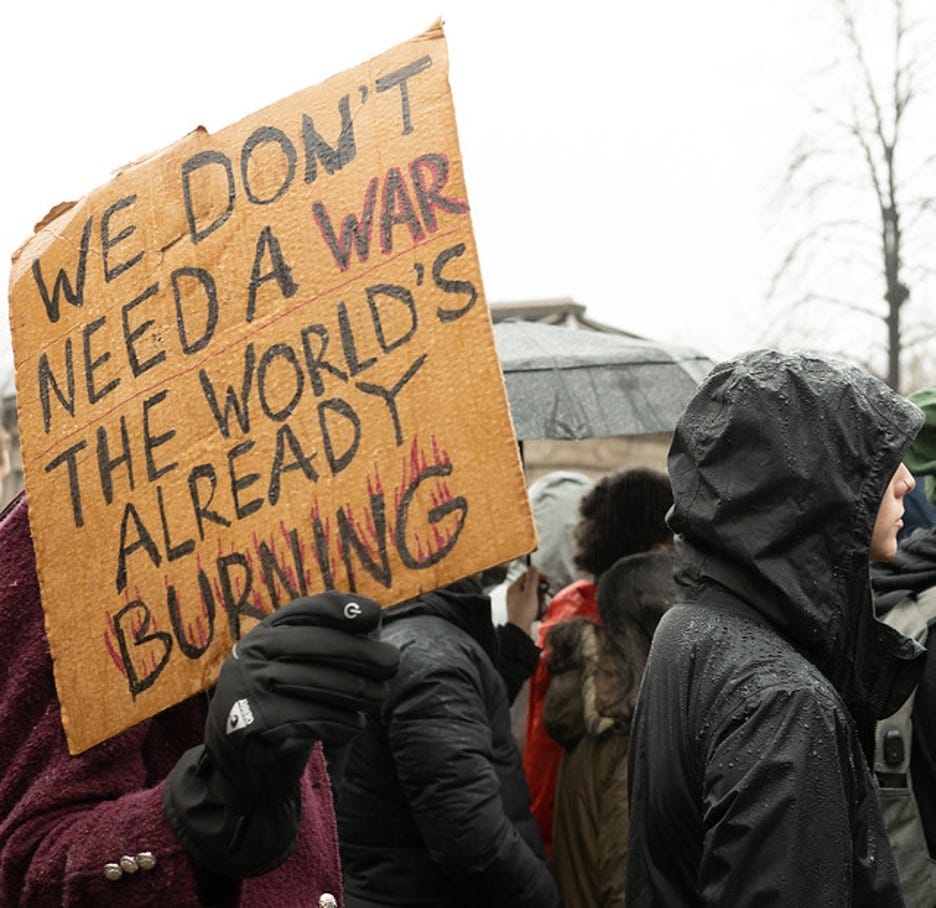
Colonial and imperial wars bring death, destruction, and poverty, not democracy, not freedom, not food security!
No posts
Comments
Nothing yet. Say the first thing.
Sign in to join the conversation.