
MusicEXP is a weekly newsletter exploring the intersection of video games and music, edited by Mat Ombler. Subscribe to receive weekly round-ups of the latest music and gaming stories, and monthly deep dives into trending topics. For more music and gaming news, make sure you listen to the GXM Podcast, which I co-host with Thomas Quillfeldt.
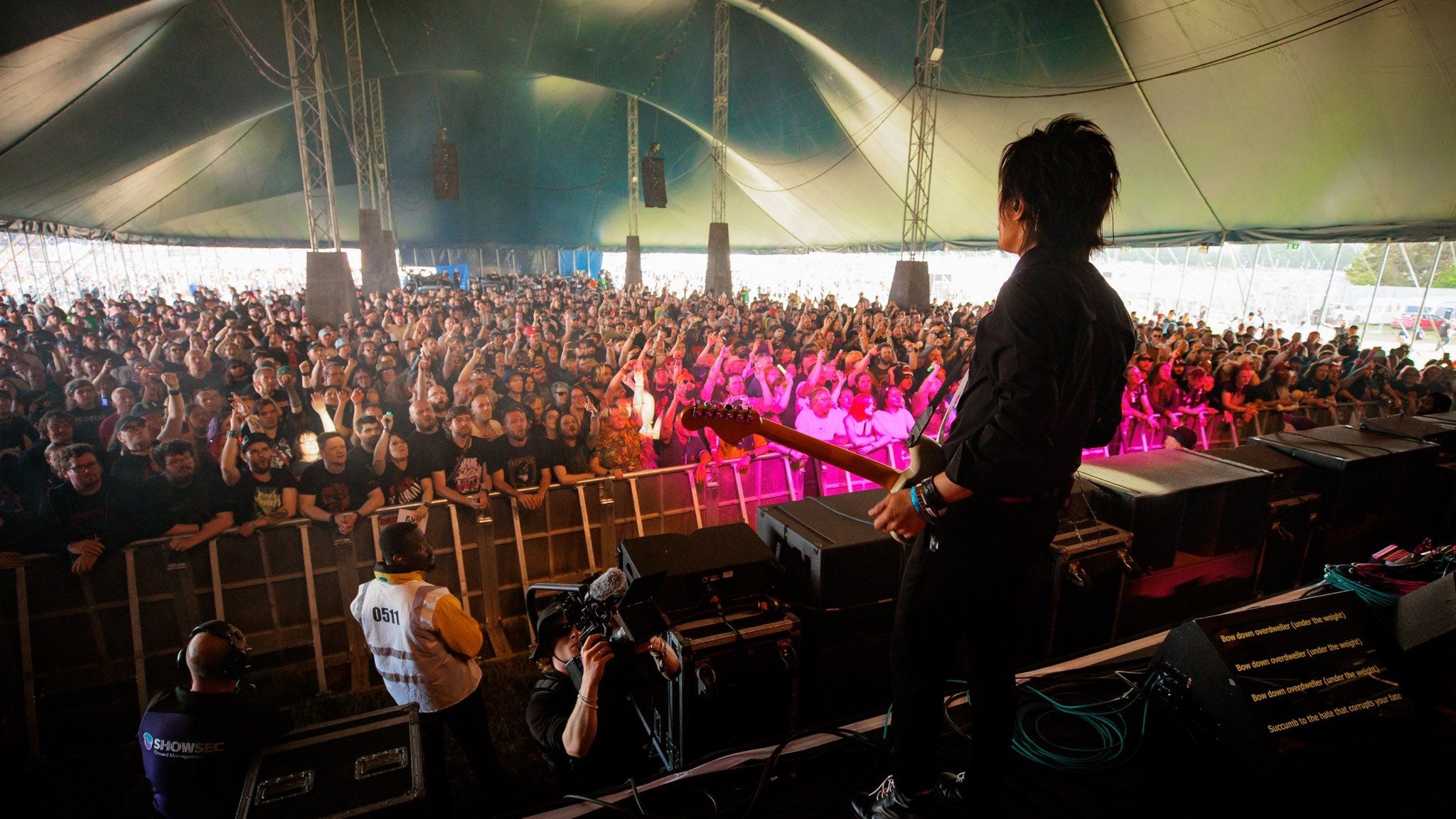
Something unusual happened at this year’s Download Festival. A Japanese band called The Primals performed. While that name might not be as recognisable as headliners such as Limp Bizkit, Linkin Park, and Guns ‘N’ Roses, it didn’t stop thousands of rock and heavy metal fans from cramming into the festival’s Dogtooth Stage to catch them.
In their home country of Japan, The Primals sell out 15k capacity arenas such as Tokyo’s Nippon Budokan. And while they have a modest 70k monthly listeners on Spotify, they have millions of fans around the world who listen to their music every single day in Final Fantasy XIV, an online role-playing game with 30 million registered players.
Yes, The Primals are technically a video game cover band. They were formed in 2014 by Square Enix’s composer and sound director, Masayoshi Soken, to perform rock and metal arrangements of music from Final Fantasy XIV at fan festivals.
Since then, they’ve released three studio albums, two live albums, and collaborated with Architects vocalist Sam Carter on original tracks like “Endwalker” and Rage Against the Machine’s Tom Morello and Beartooth’s Caleb Shore on “Everything Burns”.
This affinity with rock and heavy metal music makes The Primals a natural choice for a festival like Download, even more so when data from Luminate identifies rock music as the most popular genre amongst gamers.
So why are partnerships like this such a rarity in 2026?
For years, music festivals have quietly ignored one of the world’s largest and most passionate fanbases: gamers. The music industry is struggling to cultivate the next generation of superfans while the games industry has been nurturing them for decades.
Of course, they do this by creating and selling the latest games and downloadable content, but players show their love by creating art, fan fiction, community events, YouTube channels, esports teams, Discord servers, music arrangements, covers, and remixes, and attending video game concerts (often in cosplay).
Video games and video game music are more popular than ever before. Last year, the video game industry surpassed $200 billion in global revenue. The soundtrack for Clair Obscur: Expedition 33 surpassed half a billion track streams in less than a year while securing record-breaking chart positions, and there are more than 30 different video game concert productions touring the world this year, regularly selling out 2-3k capacity venues.
Game music concerts consistently sell tickets, gaming audiences overlap with key festival demographics, and the industry has the largest reach in the world. But most music festivals have been slow to embrace video games or engage with game studios.
That’s without mentioning the fact that some of the biggest music performances in the world have directly taken place in games or at industry events.
Snoop Dogg, Eminem, and Ice Spice’s musical tribute to Juice WRLD in Fortnite (Remix: The Finale) drew 14.3 million concurrent players. Performances from artists such as d4vd, Royal & the Serpent, and Snoop Dog at The Game Awards in 2024 reached an estimated 154 million people.
Here’s what I’d love to see more of at music festivals:
Live video game music performances to bring in new attendees. Make these performances exclusive to convert more players.
Collaborate on co-branded physical merchandise and in-game digital merchandise.
Create sponsorship packages offering branded stages or event space to activate and showcase the latest games.
Community meet-ups and social events at festivals.
Exclusive opportunities to play the latest games.
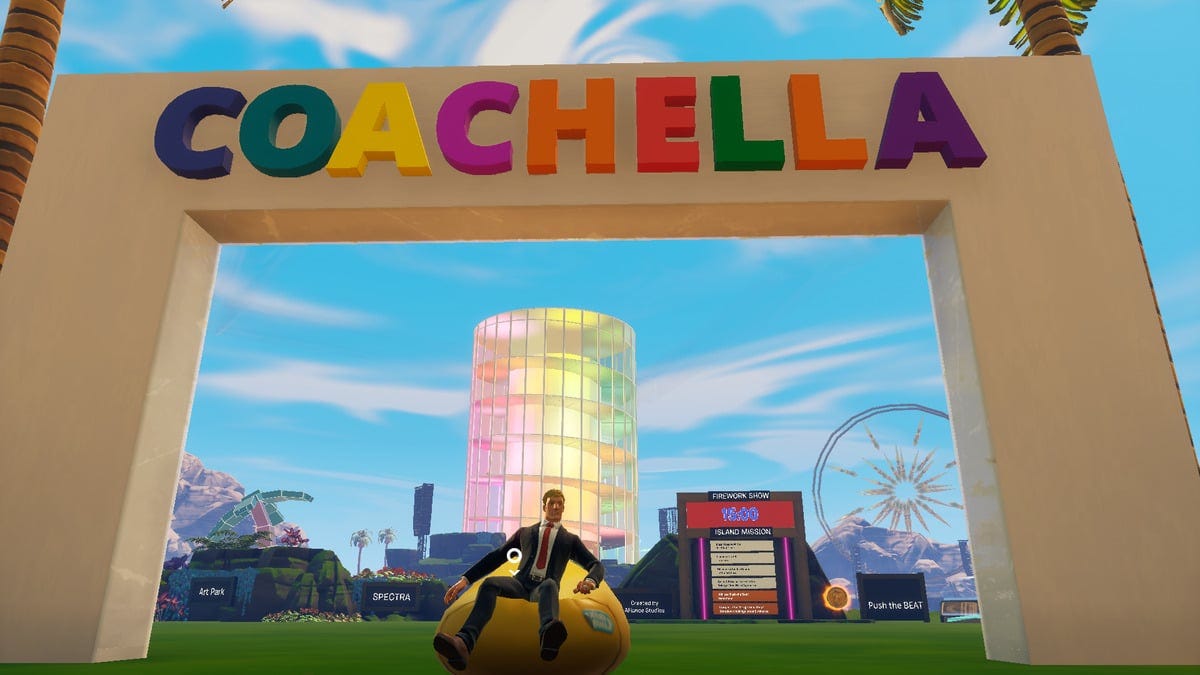
Build twinned digital experiences in supported video games (similar to what Coachella did with Epic Games for Fortnite) to engage fans all-year-round rather than once a year.
Festivals could collaborate with game studios to create more diverse programming that appeals to wider audiences.
Festivals benefit from tapping into the audiences of their gaming partners while creating fun experiences on-site for attendees. Game studios get an amazing location to activate campaigns and appeal to new audiences.
I had friends who attended Download Festival who said how amazing it was to experience the branded Final Fantasy XIV area which Square Enix had built. It had playable games, a gaming area, and an engraving machine for guitar picks. Download Festival attendees loved it, and I know it converted some players in the process. I’ve also seen several social media posts from people who say they made the journey from Japan just to see The Primals.
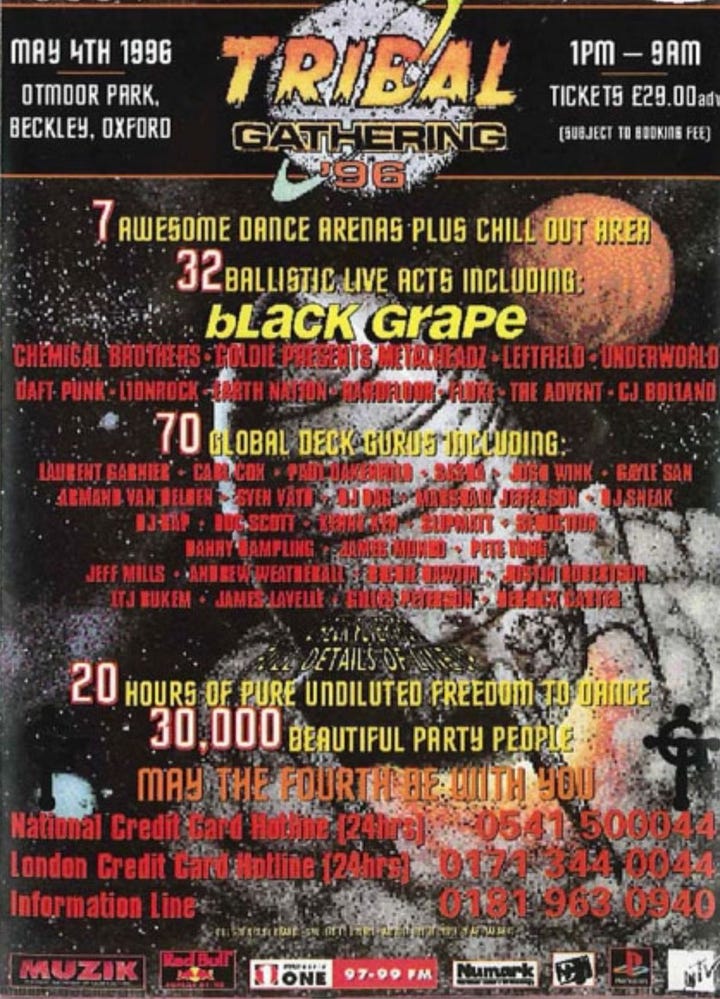
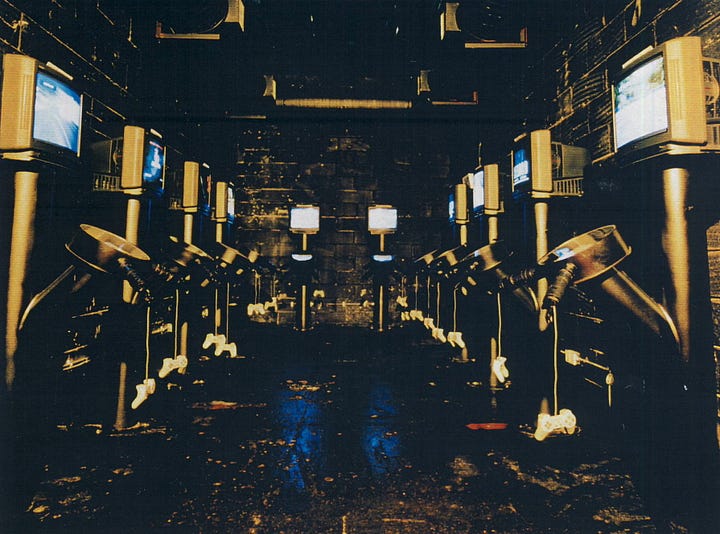
Someone who’s no stranger to the benefits of putting video games into festival spaces is Glen O’Connell, former PR manager at Liverpool-based game studio Psygnosis, best known for developing PlayStation’s sci-fi racer Wipeout, the world’s first rave-inspired video game.
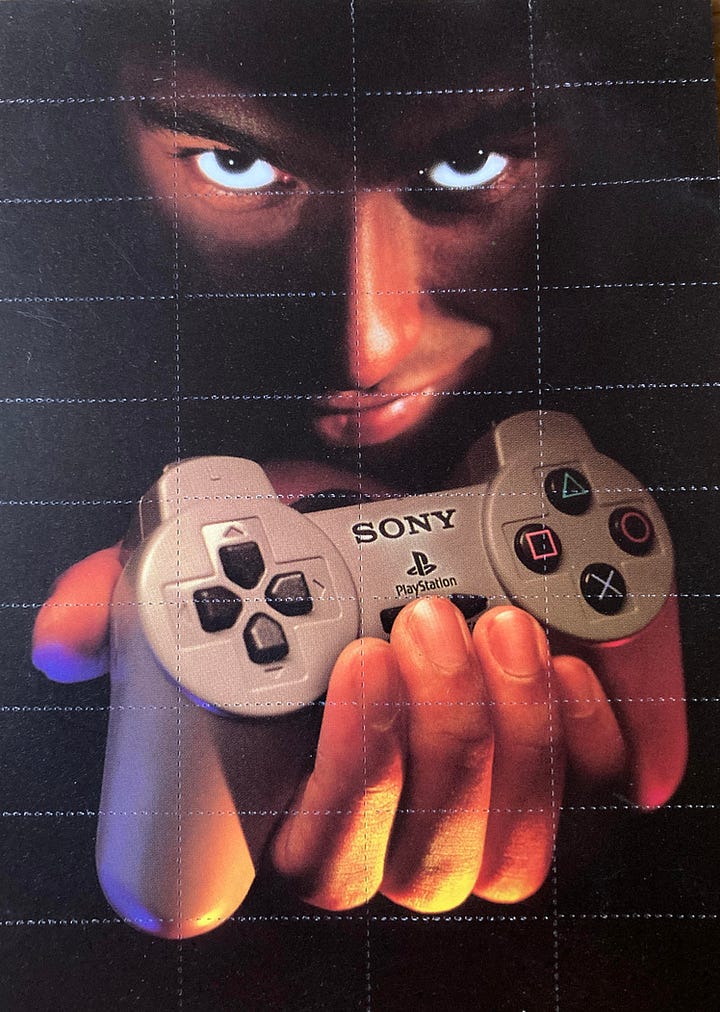
Under the stewardship of marketing manager Geoff Glendenning, PlayStation’s launch strategy in the UK and Europe was to set itself apart from “child-friendly” competitors Nintendo and SEGA by appealing to an older market and tapping into club culture. Music was an important part of that strategy, and naturally, so was Wipeout with a licensed soundtrack featuring bangers from Leftfield, The Chemical Brothers and Orbital.
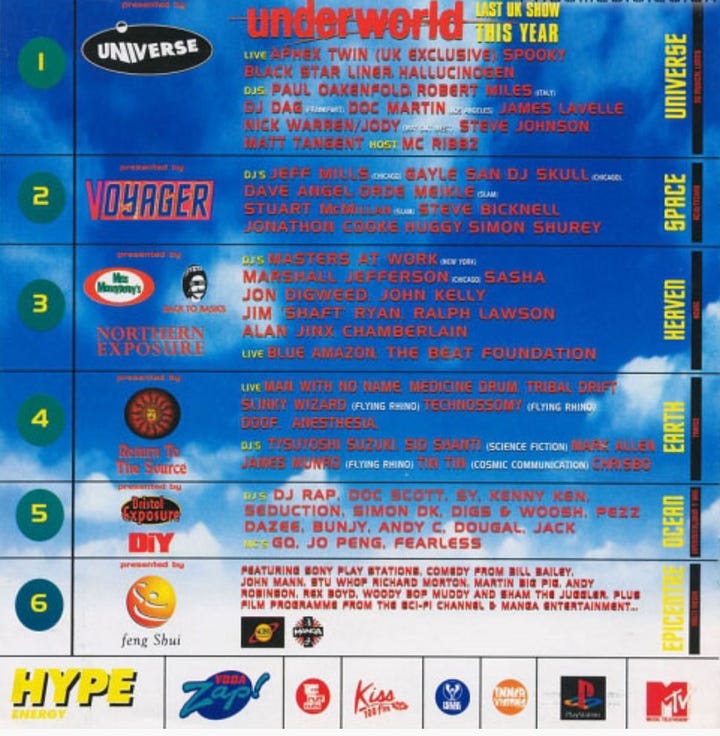
PlayStation consoles were given to DJs and set up in “Chillout Rooms” in 52 of the UK’s most iconic nightclubs. PlayStation became a key sponsor for festivals like Tribal Gathering, T in the Park, and Big Love Festival, making the iconic PS logo impossible to miss on festival flyers and even marketing materials that doubled as roach cards.
O’Connell and his team would carefully choose the festivals they activated at, prioritising those with line-ups featuring the same artists as their games. This meant that even if you’d never held a PlayStation controller, the games you were playing felt familiar.
“Drawing a connection between your game, the things your target audience already love, and being able to show where these things join – there’s massive value in that,” says O’Connell. “Especially because it’s not consistently being done by game companies.”
While PlayStation was one of the first game companies to go truly all out at music festivals, it was by no means the last. The launch of Guitar Hero and Rock Band in the mid ‘00s saw both games pop up at major music festivals around the world, while music-focused games like Brütal Legend (featuring Jack Black and Ozzy Osbourne as characters) headed to Download Festival to break world records for the largest ever assembly of air-guitarists.
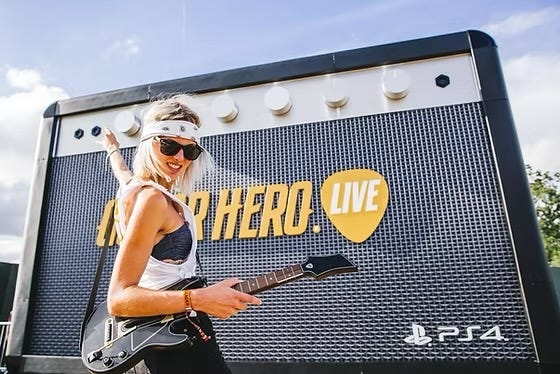
In 2015, for the launch of Guitar Hero: Live, Activision and its agency Sense Marketing built The Amp, a 30ft gaming rig built from shipping crates, double-stacked and skinned to resemble a massive guitar amp. On the lower floor, people played the game. Upstairs, they got an exclusive VIP backstage experience with their own personal drinks rider.
I’ve spent most of this piece focusing on how music festivals could be doing more to engage with the video game industry, but this requires some level of effort and buy-in from the games industry too. Ultimately, we’re talking about mutual collaborations and a sharing of ideas between both sides to make cool stuff happen.
It’s also worth mentioning that while smaller festivals are struggling, the bigger ones aren’t exactly struggling to sell tickets. This is in stark contrast to the current state of the video game industry, where indies are thriving and the biggest game franchises are experiencing a decline in sales and player numbers.
I won’t bore you with the complicated details contributing to this decline - largely a mix of franchise fatigue, market competition, and wider economic factors - but there’s a sound argument to be made that the games industry should be doing more with music festivals rather than the other way around. Let me explain why.
While activations like those mentioned above used to be a familiar sight at major music festivals, game studios and publishers have largely moved away from these big OOH activations to allocate budget into highly-targeted digital marketing campaigns or partnerships with gaming influencers.
This runs the risk of the games industry just speaking to itself, rather than engaging the millions of people in the casual market who don’t identify as gamers, or others who grew up on games like Wipeout, Guitar Hero, FIFA and Tony Hawk’s Pro Skater but haven’t picked up a controller since because they’re waiting to spoken to.
The video game industry’s biggest and most surprising moments of growth have come from appealing to new audiences. Nintendo Wii became the best-selling console at the time by appealing to the “casual market”. Roblox became the biggest games platform in the world by having almost no barriers to entry. And Nex Playground has achieved the near-impossible feat of successfully entering the console market by combining physical movement and gameplay with an accessible price tag.
Marketing budgets for big games and franchises regularly exceed $10 million and sometimes $100 million for the biggest titles.
More of that budget should be spent on engaging people outside of the games industry rather than giving so much of it to gaming influencers. Activations at music festivals can help achieve this while also creating cultural moments that players will remember for a lifetime.
For O’Connell, this is about meeting your audience in the places they spend their time.
“Game studios can’t just expect players to come to them,” he says. “I think game companies would be so surprised about how quickly you can bring them back to your space once you’ve built that trust and credibility.
“Every time we did an activity, whether it was early on with Psygnosis or mid to late 2000s with EA, we saw value almost every single time. These weren’t experiments. We’d go back to these places again and again and again because it was always commercially viable.”
Here are some more recent collaborations that are worth a shout-out (please let me know if I’ve missed anything!)
Streets of Rage composers Motohiro Kawashima and Yuzo Koshiro played Sonar Festival
Coachella has partnered with Epic Games since 2022 to activate in Fortnite
Radar Festival (UK) introduced a music and gaming market in 2023
UK Metalfest Bloodstock collaborated with Bethesda on a gaming area promoting DOOM: The Dark Ages.
French metal festival Hellfest partnered with ARTE, SoWhen and Zorbe to co-produce ARTE Riff Mountain, a Fortnite Island built around the Hellfest universe.
Sega Atlus partnered with Download Festival to launch Shin Megami Tensei 5 in 2025
There are plenty of big game releases sneaking up that have a strong link with music, whether it’s the upcoming Wu-Tang game, Dead as Disco, Stage Tour or remakes for Crazy Taxi, Streets of Rage, and Jet Set Radio. But more activations like those mentioned above require greater cross-collaboration and better communication between festival organisers and game studios/publishers.
“Most of these other industries, including music, are desperate to engage with gaming audiences, but they don’t know who to contact,” says O’Connell. Similarly, game studios and publishers won’t know who to reach out to on the music side. Things like this don’t require massive budgets. They just require some outside-the-box thinking. If you’ve got the right game, a genuinely cool idea, and some sort of budget, people will usually bite your hand off.”
Shout-out to the vintage T-shirt collector who wrote a FIVE-THOUSAND-WORD journalistic report getting to the bottom of… whether some incredibly rare Aphex Twin T-shirts are real or not.
August Burns Red, Bad Brains, and Black Flag have been added to the latest season of EA’s Skate.
Wiz Khalifa appears in the latest update for Hitman: World of Assassination as the elusive target Taylor Graves, but you’ve only got until 5th July to take him down.
Maarten from MUSICx spoke to game composer Pav Gekko to learn more about how music, gameplay and story are intertwined in Spirit of the North 2.
I missed the last two weeks of MusicEXP as we’ve been very busy at Laced Records! You can now pick up the soundtracks for Stellar Blade, Return to Silent Hill and the first three Halo games on vinyl.
All of the music that Hospital Records put together for the latest Forza game is now available on vinyl, too.
The Royal Academy of Music has named game composer, Gareth Coker, in its 2026 honours list.
Warner Music China has announced a strategic partnership with Dream Maker, China’s leading internet artist company.
A German medieval band, In Extremo, performed one of their hit songs as an Easter Egg in the 2001 game, Gothic. Modern remakes of older games usually result in the removal of licensed tracks, but this in-game concert experience still exists, much to the delight of fans.
Virtual idol group Plave are kicking off a world tour in September, their first since debuting in 2023.
I’ve been lucky enough to attend several game concerts in the last couple of weeks, all of which were excellent. Make sure you check out The Music of Square Enix if it’s touring near you, and keep an eye on what the Game Music Foundation are planning for the next Game Music Festival, because the Persona jazz concert they put on over the weekend is genuinely the best game concert I’ve ever been to - and I’ve been to over 40!
Speaking of game concerts, Gaetano Fazio from SOHO Live spoke to Death Stranding composer Ludvig Forssell for an insightful chat about the recent Death Stranding concerts - a must-read for any game music or live music fan.
The Police drummer, Stewart Copeland, wrote all the music in the first three Spyro the Dragon games, but won’t be returning for the new one.
The latest Humble Bundle is music-focused and includes a massive saving on ten excellent rhythm games, including Trombone Champ and Evergrace 2.
A world tour for virtual artist Hatsune Miku recently wrapped up, with more than 100,000 people in attendance at the dates!
Nex and HYBE have announced a new partnership to launch a unique BTS-branded experience on the console.
Moment of Triumph is the last soundtrack you’ll ever hear from Destiny 2 as Sony announced its ending updates for the game.
Ice Nine Kills have released a new track promoting their appearance in a new update for the survival horror game, Dead by Daylight.
“The Land” is a new track from Olivier Deriviere’s upcoming score for Resonance: A Plague Tale Legacy, and you can listen to it here.
Metaphor ReFantazio has been confirmed for the Nintendo Switch 2, so here’s a reminder that the main vocalist on the soundtrack - an actual Buddhist monk - performs in a crossover jazz band called Nam Jazz Experiment.
No posts
Comments
Nothing yet. Say the first thing.
Sign in to join the conversation.