
On the discipline of remaining mind and the cost of relaxing at the wrong moment.
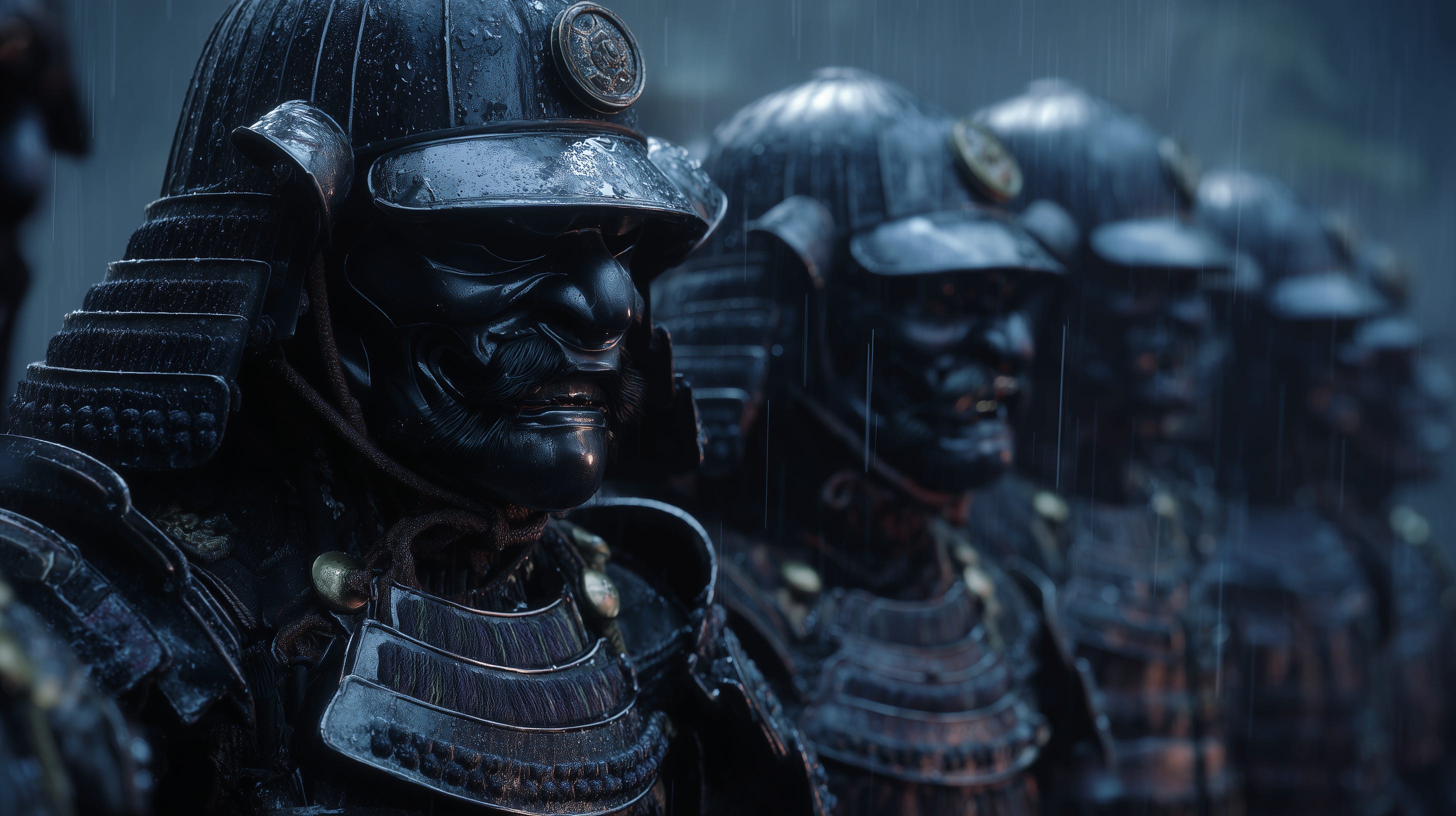
勝って兜の緒を締めよ
After victory,
tighten your helmet.
Katte kabuto no o wo shimeyo · Japanese Proverb
People understand discipline as something you apply at the beginning. The decision to begin, the commitment to start, the courage to enter. What the Japanese tradition understood, and what the rest of the world has largely forgotten, is that the most dangerous moment is not the beginning. It is the moment after.
The arrow has left the bow. The strike has landed. The victory has been declared. The work has been submitted. The conversation has ended. And in that moment, almost without exception, the human mind does something predictable and fatal: it relaxes.
It releases the tension it has been holding. It exhales. It files the moment under completed and moves its attention elsewhere. And in doing so, it abandons the very awareness that produced the result it is now celebrating.
The Japanese called this awareness Zanshin (残心). Remaining mind. The consciousness that does not conclude when the action concludes. The discipline of staying present not just through the effort, but through everything that follows it.
“Zanshin is a state of relaxed alertness. The literal translation is remaining mind.”
— Classical Budo teaching
Note the precision of that definition. Relaxed alertness. Not tension. Not vigilance in the anxious, white-knuckled sense. The warrior after the strike is not braced for the next attack. He is simply still present. Still inhabiting the moment fully. Still the same man who entered the encounter, not a diminished version of him who has begun the process of leaving it.
This is what the proverb is naming. After victory, tighten your helmet. Not because another enemy is coming, though he may be. But because the habit of presence does not suspend itself for celebration. The man who loosens his helmet in the aftermath of winning is not resting. He is practicing the habit of inattention. And habits, in the Japanese tradition, are everything.
THE ARCHER WHO DOES NOT MOVE
弓道 · Kyudo · The Way of the Bow
In Kyudo, the traditional Japanese practice of archery, there is a moment that confuses every Western observer who encounters it for the first time. The arrow has been released. It has left the bow, crossed the distance, and struck the target. The outcome is decided. There is nothing left for the archer to do.
And yet he does not move.
He holds his position. Arms extended, body still, gaze fixed on the point where the arrow landed. He remains in the form of the shot long after the shot has ended. Not for ceremony. Not for aesthetics. Because in Kyudo, the release is not the end of the action. It is a moment within it. The action includes everything that follows, and the archer’s discipline does not conclude until he has fully inhabited that everything.
What is being trained here is not the shot. Any competent archer can learn the mechanics of the shot. What is being trained is the quality of attention that makes the shot possible, and the understanding that this attention cannot be switched on for the moment of release and switched off immediately after. It is either a constant state or it is not a state at all. It is a performance.
The archer who drops his arms the moment the arrow leaves the bow is an archer who was never fully present. He was waiting for the moment to end. Zanshin says the moment does not end when you decide it does. It ends when it ends. Your job is to remain inside it until it does.
Comments
Nothing yet. Say the first thing.
Sign in to join the conversation.