
On the philosophy of masterlessness — and why the most powerful state available to the serious practitioner is the one most people mistake for loss.
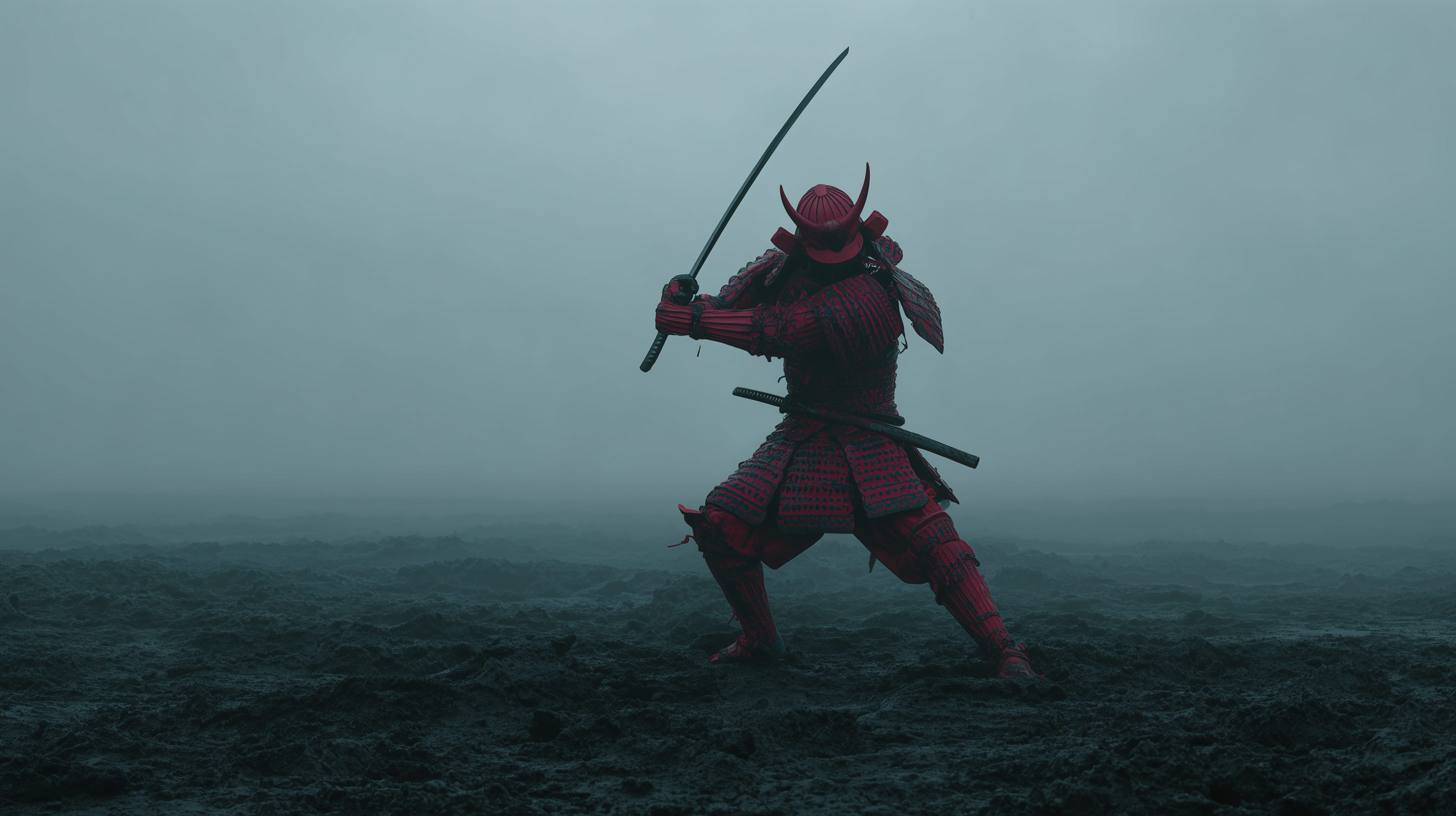
In feudal Japan, to be a Ronin was to be a man without a lord. Without a household. Without the social structure that gave the samurai his identity, his income, his place in the order of things. It was, by the standards of the time, a condition of shame. A signal that something had gone wrong.
Musashi was a Ronin for most of his adult life. He never bound himself to a lord’s household. Never accepted the stipend and the sustained service that came with formal retainer life. He wandered. He fought. He refined his understanding of the way in the only laboratory available to a man with no institution behind him: the unforgiving reality of his own experience, measured against the most honest standard he could find, which was the outcome of sixty duels against the finest swordsmen in Japan.
He won all sixty. Without a master. Without a household. Without anyone to answer to but the way itself.
The world read his Ronin status as a deficit. History revealed it as the prerequisite for everything he became. And the distinction between those two readings is the entire subject of this piece.
The word Ronin is written with two characters. The first, 浪, means wave. The second, 人, means person. A wave person. A man tossed by the currents of circumstance, belonging nowhere, anchored to nothing. The image was not intended as a compliment. In a society built on hierarchy, obligation, and the precise mapping of every person to their designated place within it, the Ronin was the man who had fallen off the map entirely.
Some became Ronin through the death of their lord. Some through the dissolution of their clan. Some through disgrace, through conflict, through the kind of rupture with authority that the social order of feudal Japan was designed to make as costly as possible. However they arrived at the condition, what they shared was the same sudden confrontation with a reality that most people spend their entire lives successfully avoiding: the absence of an external structure to organize their existence around.
No master meant no instruction. No stipend meant no security. No household meant no identity conferred from outside. The Ronin had to become, out of pure necessity, the thing that most people never become out of pure comfort: entirely self-governing.
“You must understand that there is more than one path to the top of the mountain.”
— Miyamoto Musashi, The Book of Five Rings
Here is what the social order of feudal Japan could not afford to admit: that the Ronin’s condition, stripped of the shame the culture attached to it, was not a diminishment of the warrior’s path but its most complete expression.
Comments
Nothing yet. Say the first thing.
Sign in to join the conversation.