
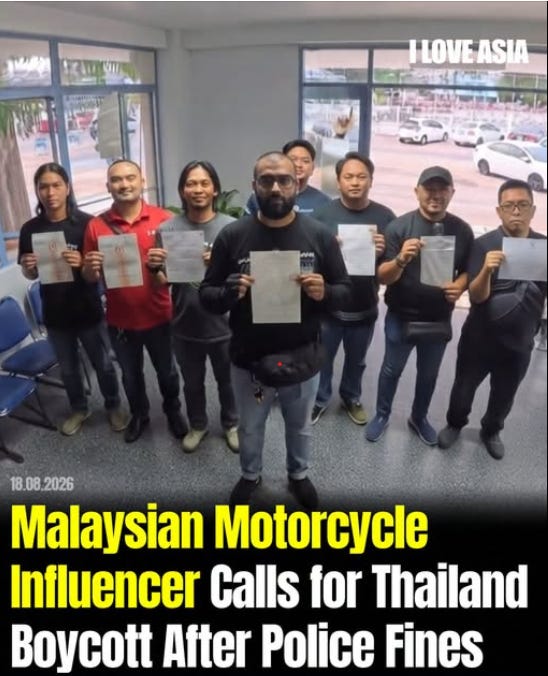
A convoy of 17 Malaysian motorcyclists faced a lengthy traffic stop in Hat Yai last week that has ignited frustration and calls for a boycott of Thailand. Social media influencer Tok Singa described how the group was stopped by a Thai traffic officer, escorted to a police station, and held for nearly three hours.
Riders reported receiving multiple summonses for flashing rear lights, allegedly noisy exhausts (some claimed to be factory-standard), missing documents left at their hotel, and licence issues, with Thai police rejecting digital or photo-less versions. They said they were warned of possible lock-up if fines were not paid promptly. Total claimed: around 15 tickets for 15,000 baht.
Hat Yai police countered that they spotted clear violations of modified flashing lights and loud exhausts, while directing traffic, stopped the group, and after inspecting all bikes issued only nine tickets totaling 12,000 baht on vehicles that actually breached rules. Thai law requires constant (non-flashing) tail lights and limits exhaust noise; foreign riders must carry proper physical licences or an International Driving Permit.
Critics highlight a perceived double standard. Many local Thai motorbikes circulate with no rear lights at all, heavily modified parts, or exhausts completely removed or altered, yet police action against them appears rare in everyday enforcement. Foreign visitors and Malaysian riders often report stricter scrutiny, with fines feeling selective.
The threat of detention for delayed payment is not unique to this case; riders and other tourists have described similar warnings becoming more frequent during stops, turning routine checks into high-pressure situations.
The episode has fueled posts on Facebook urging Malaysians to boycott Hat Yai and Thailand more broadly. This comes as Thailand’s tourism sector already shows softness, where foreign arrivals reached about 19.76 million from January to mid-August 2026, down roughly 2.9% year-on-year, with weekly figures also declining. Malaysia remains a key short-haul market, so any sustained pullback could add pressure at a sensitive time.
While Thai authorities insist enforcement is equal and focused on safety, the combination of disputed fines, process complaints, visible local non-compliance, and detention threats has left many Malaysian riders feeling targeted. Whether the boycott gains real traction remains to be seen, but the episode underscores ongoing tensions over how traffic rules are applied to visitors versus locals.
Comments
Nothing yet. Say the first thing.
Sign in to join the conversation.