
Most Christians assume baptism belongs to pastors, church buildings, and scheduled services. The New Testament does not.
When people believed in Jesus, disciples baptized them. Mostly immediately. Sometimes in homes, rivers, or water beside the road.
Baptism was never meant to be complicated. If you are helping someone repent, believe, and follow Jesus, you may be the person who baptizes them.
Here’s where people get stuck, so let’s be direct.
If you are participating in a church gathering, honor the leaders of that gathering. Don’t use baptism to make a point, challenge their authority, or start a reform campaign. We are not called to be agitators.
But when you lead someone to faith as you make disciples, obey Jesus. The New Testament does not reserve baptism for paid clergy. Jesus told his disciples to make disciples, baptize them, and teach them to obey. So honor leaders in their gathering, and obey Jesus in the harvest.
Consider Ananias. Luke introduces him simply as “a disciple” (Acts 9:10). Jesus sends him to baptize the newly converted Saul, who would become the apostle Paul (Acts 9:17–18). If an ordinary disciple could baptize a future apostle, baptism cannot belong only to a professional class.
Baptism belongs inside disciple making, not inside a professional religious class.
Can any Christian baptize someone? Biblically, yes. This isn’t a rebellion against pastors. It’s obedience to the Great Commission Jesus actually gave.
Before you build your practice only on tradition, look at what actually happened. Read Matthew 28:18-20. Then look at every baptism story in Acts and ask three questions: Who was baptized? When? Who baptized them?
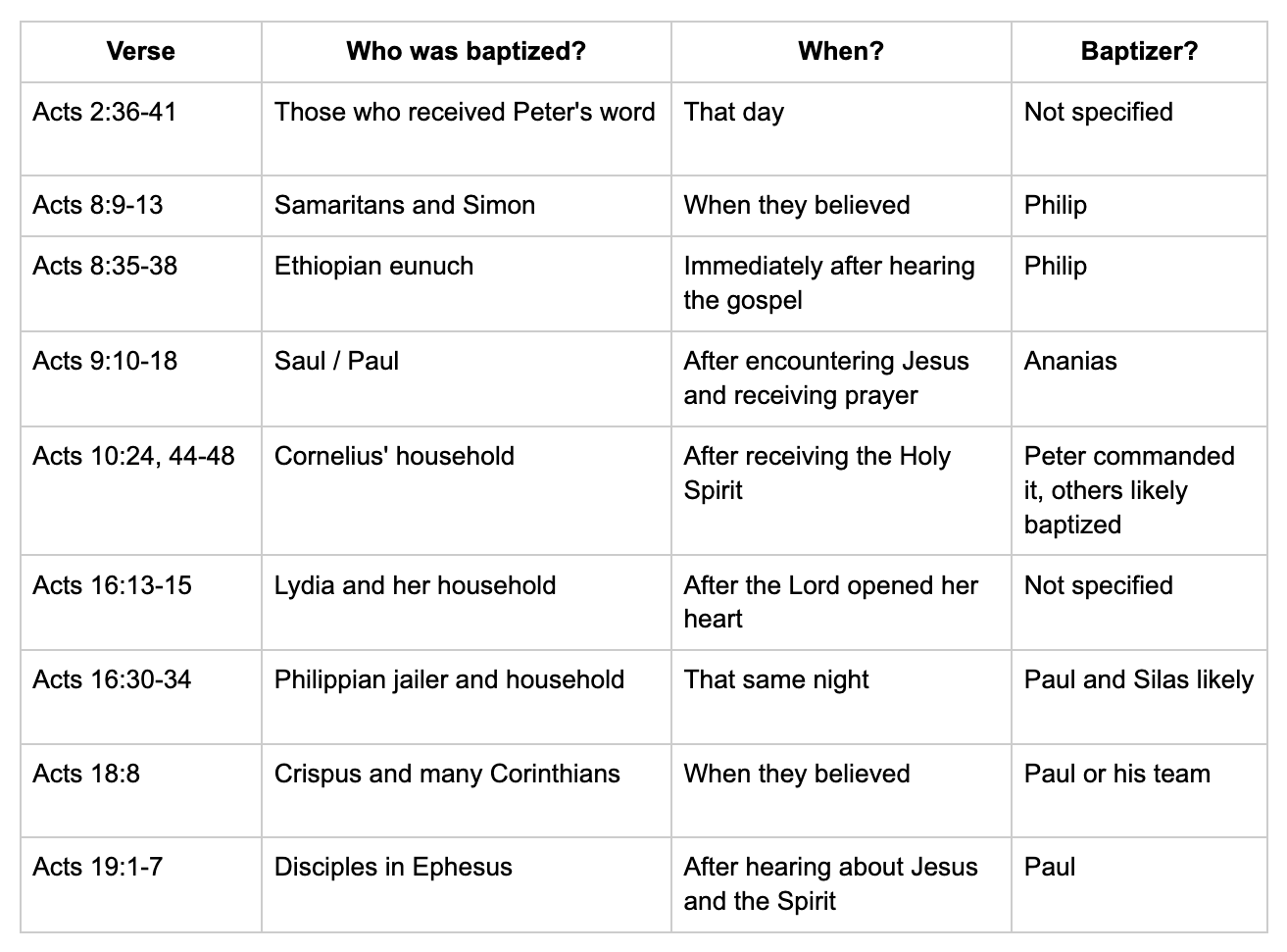
The Baptism Pattern Study - Download PDF
The pattern is hard to miss. People heard the good news, responded in faith, and were baptized quickly.
It wasn’t a graduation ceremony after years of proving themselves. It was an early act of obedience for people turning to Jesus being baptized by disciples without any special qualification. The question is not, “Who is important enough to baptize?” The question is, “How much of the Great Commission are you willing to obey?”
We skipped past it to get to the burning question of who can baptize, so circling back now: baptism is a public declaration. It says: this person has repented, trusted Jesus, and is now following him.
Think of a wedding ring. The ring doesn’t make someone married. The covenant does. Take off the ring and you’re still married. But the ring still matters, because it publicly announces the covenant to everyone watching.
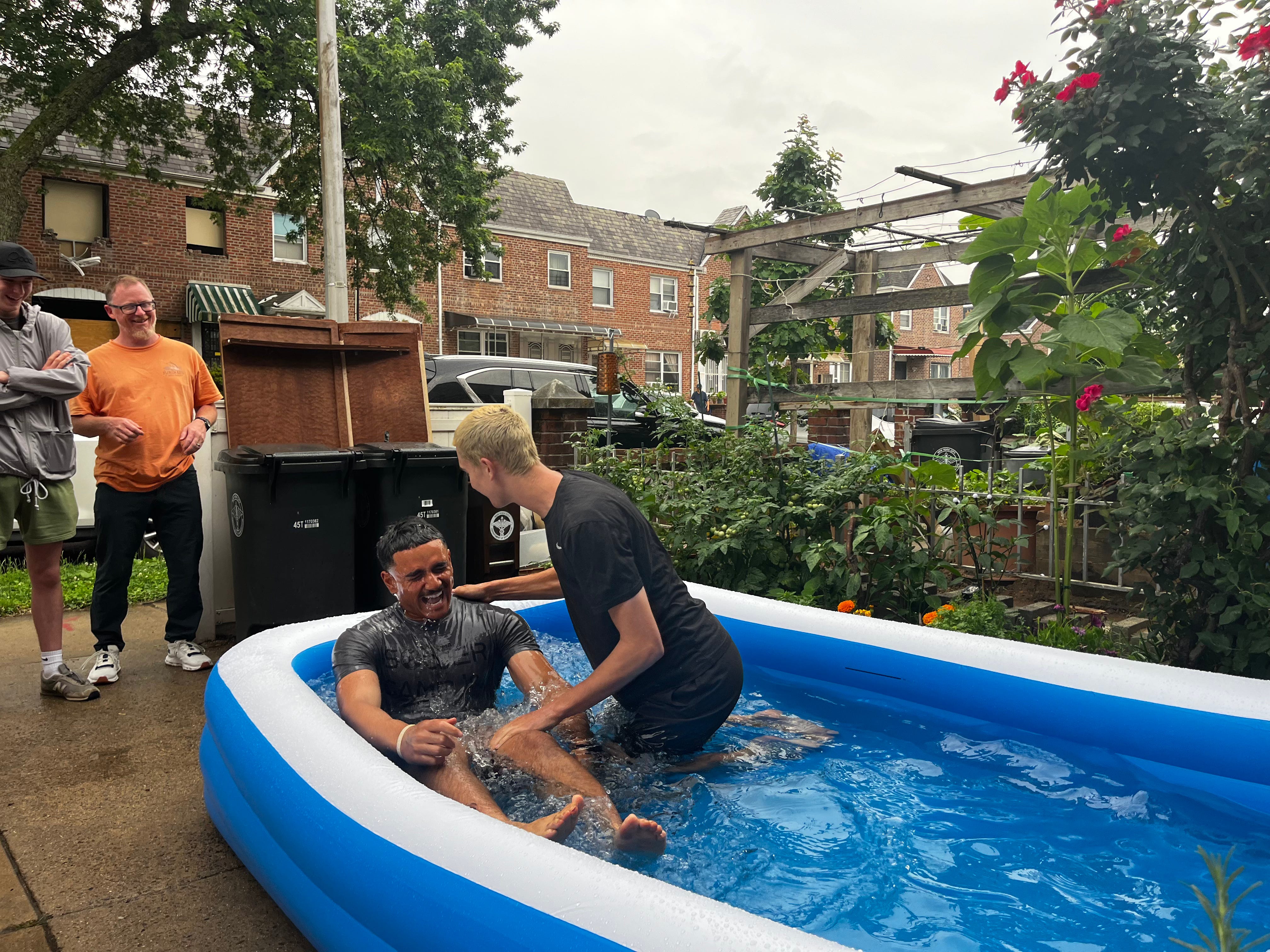
Baptism works the same way.
The water doesn’t save you. Jesus saves you. Baptism is the public sign that it already happened.
Baptism is not what saves you, but it is the first public sign that you have been saved and now belong to Jesus.
Paul ties baptism to death and resurrection in Romans 6:3-4. Jesus commands it in the Great Commission, Matthew 28:18-20. Peter connects it to repentance in Acts 2:38. Same thread throughout: turn to Jesus, then say so publicly, in water.
Someone is ready for baptism when they have:
Heard the gospel
Repented of sin
Believed in Jesus
Chosen to follow him publicly
That’s the bar. Not a class. Not a waiting period. Not a doctrine exam.
Baptism is not a graduation ceremony for mature Christians. It is an act of obedience and lordship for new disciples.
Don’t overthink maturity here. Baptism isn’t for someone who has it all figured out. It’s about Lordship. Is Jesus their leader? If so, baptism is a green light next step.
Here’s how to baptize someone, in six steps.
Step 1: Ask for their confession of faith.
“Do you believe Jesus died for your sins, rose from the dead, and is Lord?”
“Are you turning from your old life to follow Jesus?”
“Do you want to be baptized today as a public sign of your faith in him?”
Step 2: Gather witnesses if possible.
Baptism is public. It doesn’t need a crowd, but it shouldn’t happen in secret with no one else knowing.
Step 3: Use water.
A bathtub, pool, lake, river, or ocean all work. You can baptize someone at home. Immersion is the normal biblical picture: going under is death and burial, coming up is resurrection (See Acts 8:38).
Step 4: Announce the baptism.
This is what to say when baptizing someone following the Great Commission pattern found in Matthew 28:18-20:
“Because you have trusted in Jesus and chosen to follow him, I baptize you in the name of the Father, the Son, and the Holy Spirit.”
Step 5: Lower them into the water and raise them back up.
Have the person stand or sit in the water. Tell them they can plug their nose if they want. Place one hand behind their upper back or shoulder and use the other hand to support their arm or wrist. Gently lower them under the water and bring them right back up. Take your time. Safety over looking smooth.
Step 6: Pray over them.
“Father, thank you for making [Name] new in Jesus. Fill them with your Spirit. Teach them to walk closely to You and obey everything Jesus commanded. Make them fruitful. Use their life to lead others to you. Amen.”
Baptism is not the finish line. It is the starting line.
After baptism, help the new disciple:
Understand their identity as a follower and fisher of people
Share their story
Share the gospel
Make a list of people they know
Begin obeying Jesus with others
Gather with believers
Learn to make disciples
(Start with the 4 Questions)
Do not celebrate the baptism and then move on without making sure discipleship happens.
Baptism should lead immediately into discipleship, obedience, community, and mission. If it never leads there, we have stopped short of what Jesus commanded.
Delaying baptism forever
Turning baptism into a performance
Baptizing someone who is only trying to please people
Disconnecting baptism from discipleship
Treating baptism as optional for someone who wants to follow Jesus
Making the process more complicated than Scripture does
Before baptizing someone, make sure:
⃣ They understand the gospel
⃣ They have repented and believed in Jesus
⃣ They want to follow Jesus publicly
⃣ You have water
⃣ Witnesses are present if possible
⃣ Someone is ready to disciple them afterward
Simple baptism words:
“Because you have trusted in Jesus and chosen to follow him, I baptize you in the name of the Father, the Son, and the Holy Spirit.”
Do I need to be a pastor to baptize someone? No. Jesus gave the command to make disciples and baptize them to his disciples, not only church leaders. (Matthew 28:19–20; Acts 8:36–38)
What should I say? “I baptize you in the name of the Father, the Son, and the Holy Spirit.” (Matthew 28:19)
What if someone was baptized as a baby? In the New Testament, baptism follows repentance and personal faith. If someone later chooses to follow Jesus, they should be baptized as a believer. (Acts 2:38; Acts 8:12; Acts 18:8)
How soon should someone be baptized? As soon as they repent, believe, and understand what they are doing. In Acts, baptism usually happened quickly. (Acts 2:41; Acts 8:36–38; Acts 16:33)
Do not turn baptism into a ceremony people have to earn or wait months to receive.
When someone repents and believes, help them obey Jesus. Find water. Gather a few disciples. Hear their confession. Baptize them.
Then teach them to do the same for others.
Learn how to multiply disciples like Jesus.
Upcoming: “4 Questions to Get Started Making Disciples”
(Wednesday, August 19th at 3PM ET).
Use four simple questions to choose one person, start one conversation, and plan next steps.
Comments
Nothing yet. Say the first thing.
Sign in to join the conversation.